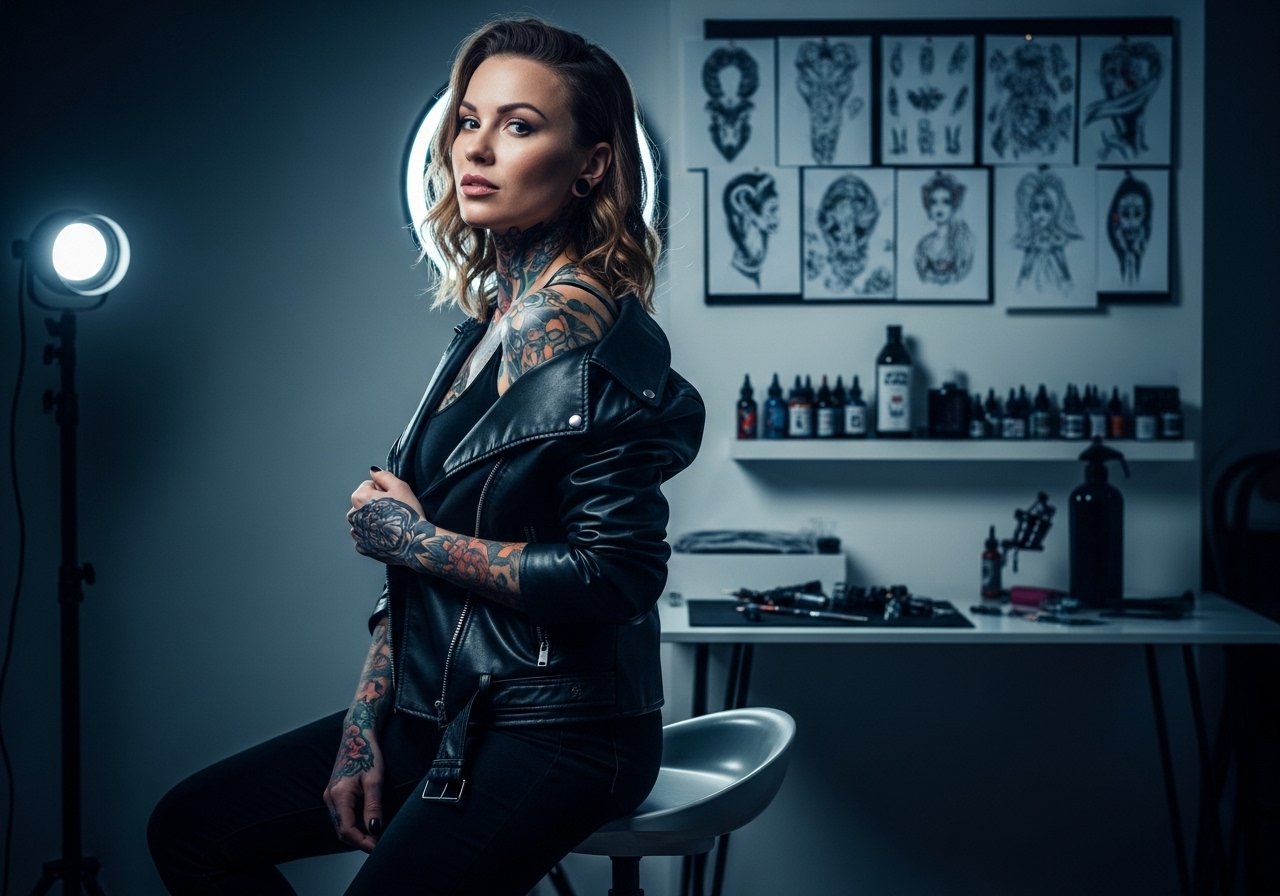
Fine line Day of the Dead tattoos read delicate and personal in photos, but the choices you make before the needle hits skin decide whether that tiny calavera still looks crisp in five years. Placement, spacing, and the exact line weight matter more than the reference image. Start here for minimalist sugar skulls and floral accents that age into quiet geometry rather than a blurred patch.
1. Micro Calavera on Inner Forearm
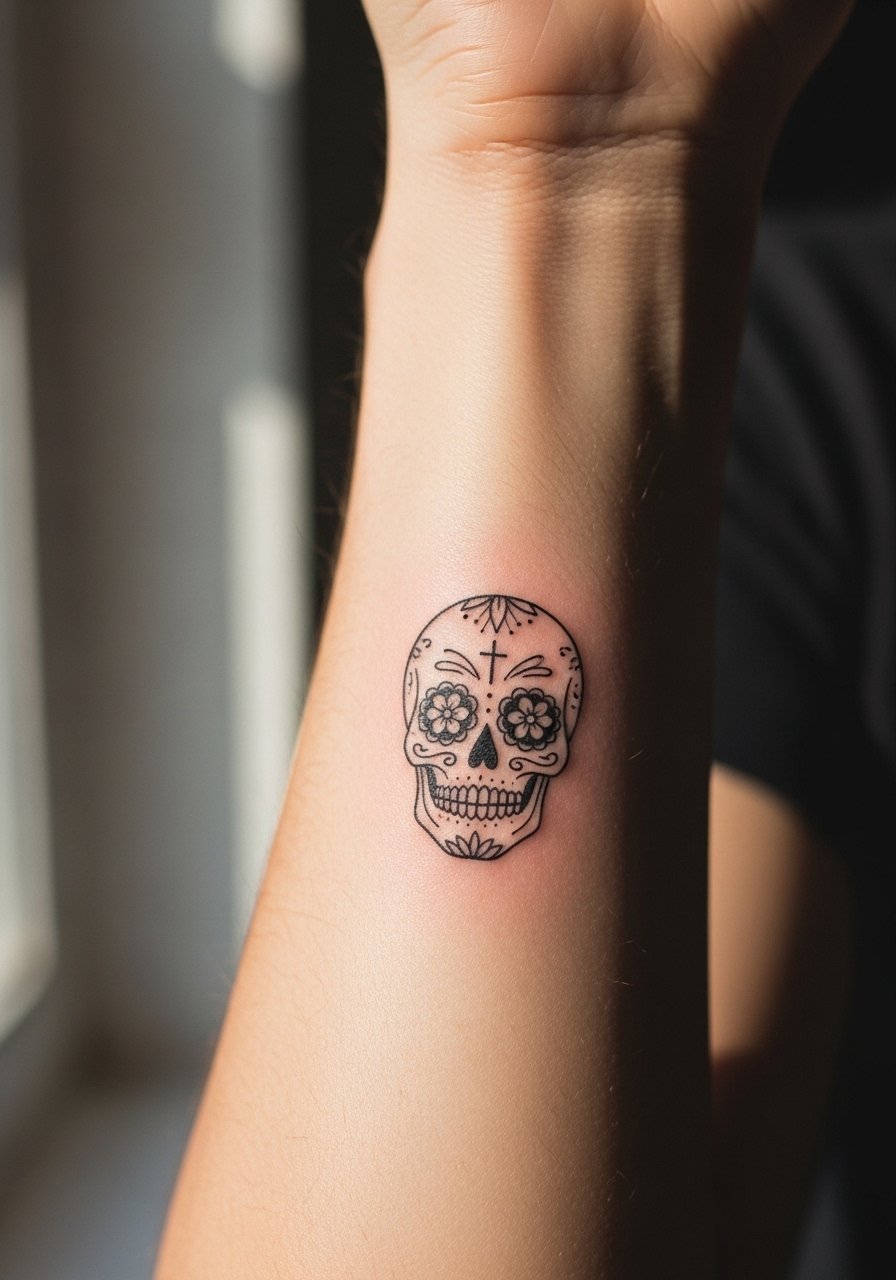
This placement shows off thin linework without crowding the design. Fair warning, the inner forearm gets more sun exposure than people expect, so ask your artist for slightly bolder contour lines than a hairline sketch. During the consultation say you want single-needle linework with a little breathing room between eye sockets and floral ornaments. At six months the lines will crisp up as scabs fall away, and by year three a light touch-up is common for delicate details. A common mistake is cramming extra tiny dots into the cheek area, which merges over time. For showing it off, rolled sleeves or a loose button-down shirt frame the forearm without competing with the art.
2. Minimal Sugar Skull Wrist Band
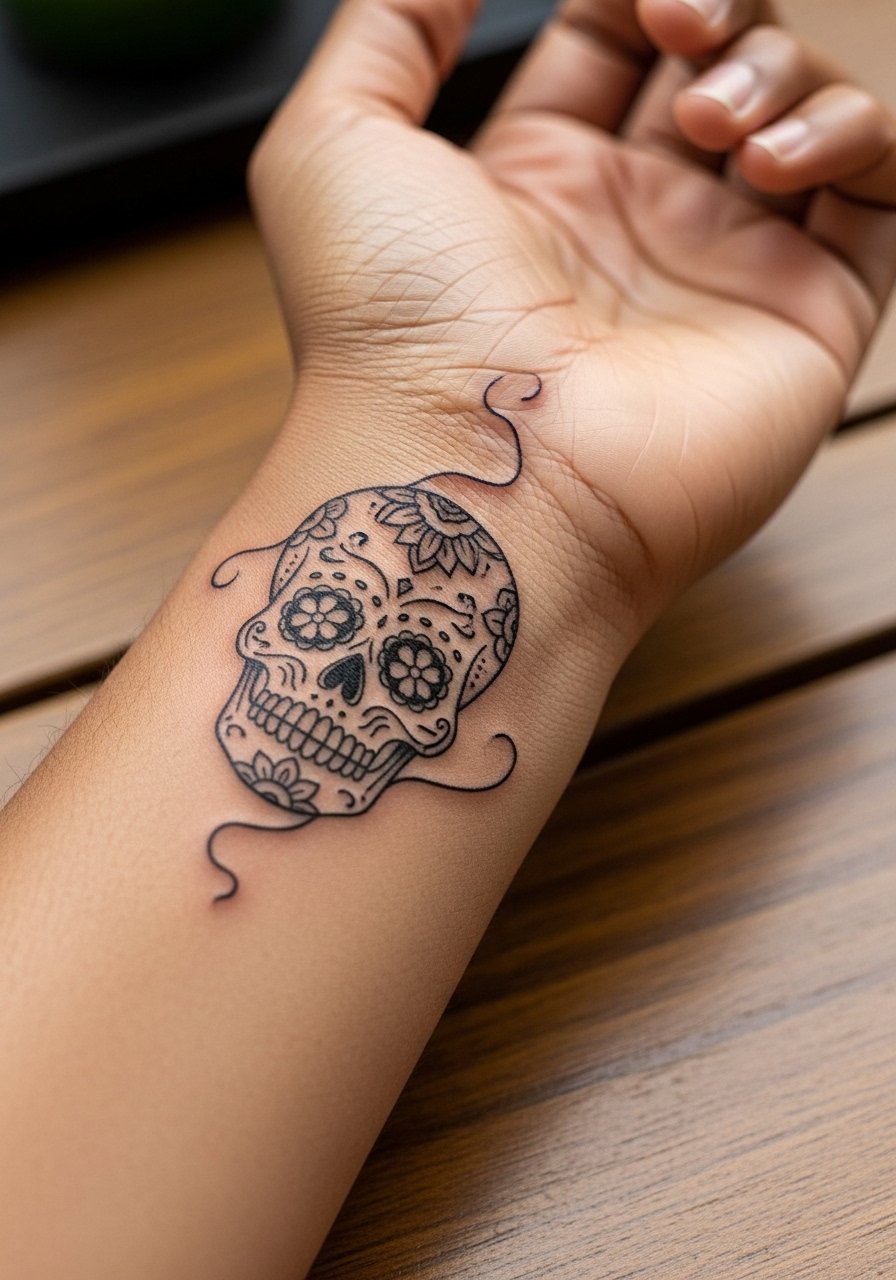
Wrist ink is playful and visible, but the skin there moves a lot. For a band of tiny calaveras, request slightly thicker outer lines and open negative space inside each skull. Expect a one to two hour session depending on how many repeats you want and plan for touch-ups around year two. Pain is moderate because the wrist sits closer to bone. A mistake is asking for ultra-tiny teeth and shading that the wrist cannot hold. Pair this with stacked dainty bracelets or a thin chain bracelet so the tattoo peeks between jewelry and stays the focal point.
3. Single Finger Mini Skull
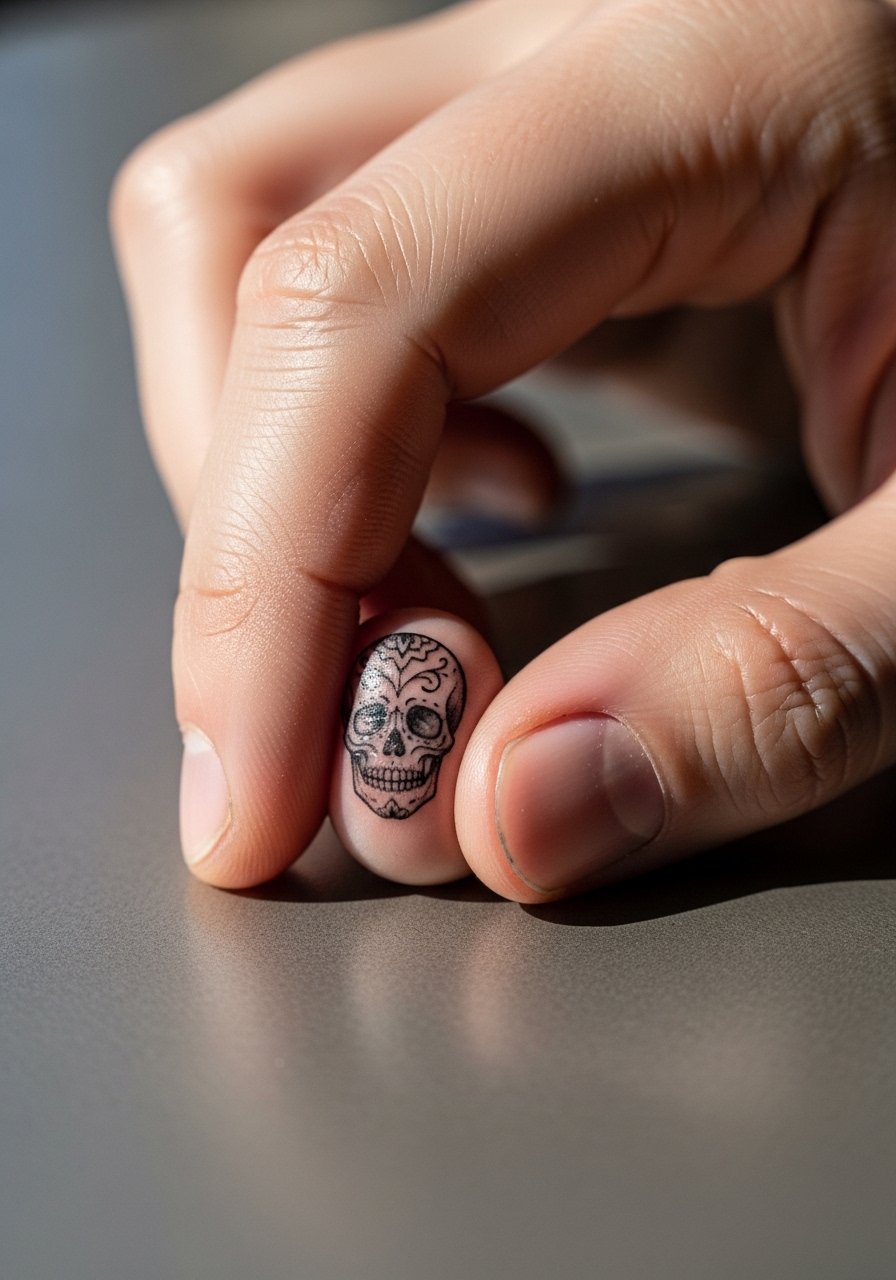
Finger tattoos are charming but high risk for early fading and blowout. If you want a mini calavera here, tell the artist you prefer bold contour and minimal interior detail. Fingers heal differently from flat areas, so expect a touch-up within the first 12 to 18 months. The session is quick and briefer than larger placements, but the skin is thin and sensitive. A common error is asking for lace-like filigree inside the skull. For showing it off, keep rings minimal or choose thin stackable bands that do not rub the ink during healing. Also keep in mind that some workplaces still frown on visible hand tattoos.
4. Collarbone Calavera Accent
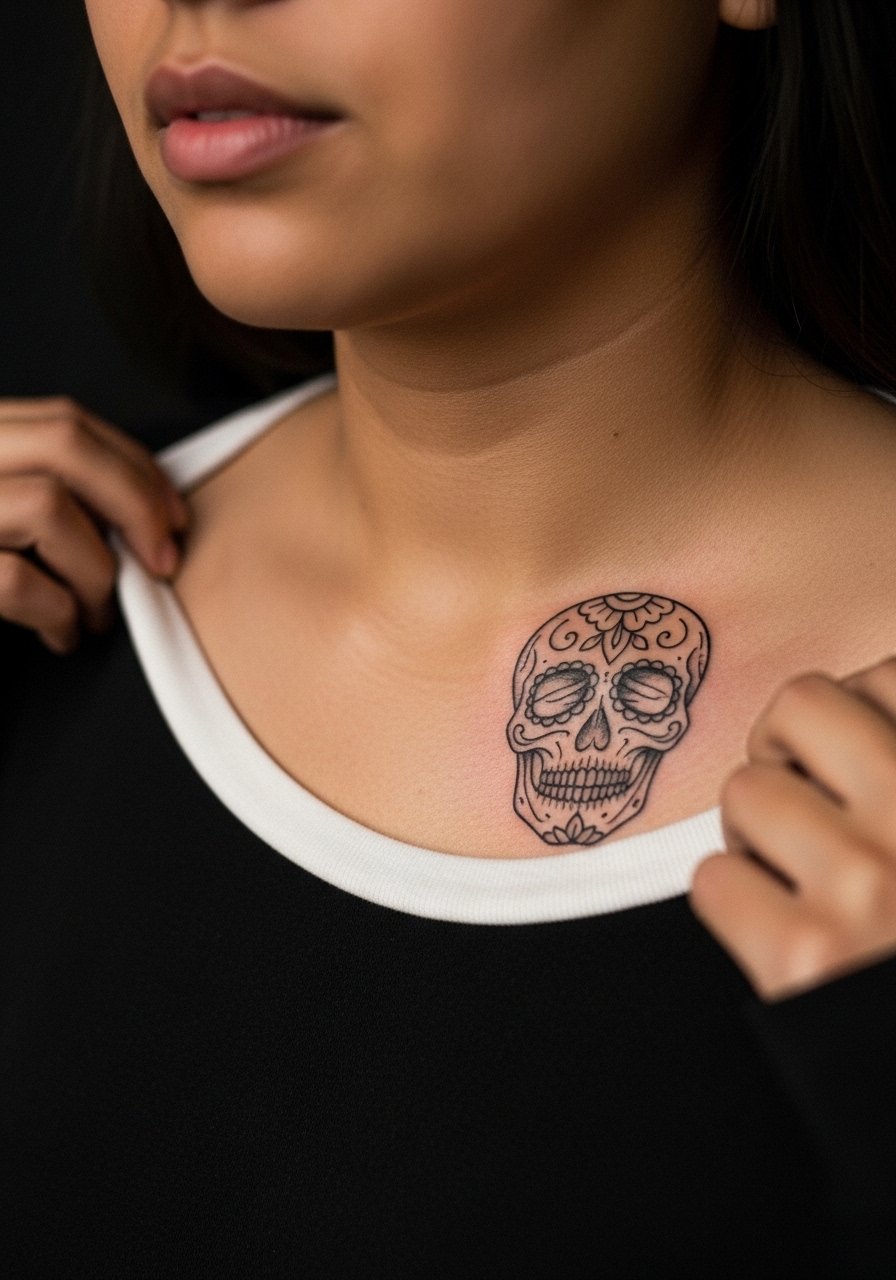
The collarbone is excellent for a small, elegant sugar skull with botanical elements. The skin here is thin and moves with breathing, so ask for slightly wider spacing in ornate areas. Most artists recommend a single session under two hours for a compact collarbone piece. Expect tenderness and some scabbing that looks obvious under low collars. A mistake is packing too many tiny roses around the skull. For evening wear, an open-front cardigan or wide-neck blouse highlights the placement and keeps the tattoo visible without exposing more skin than necessary.
5. Ankle Outline Skull
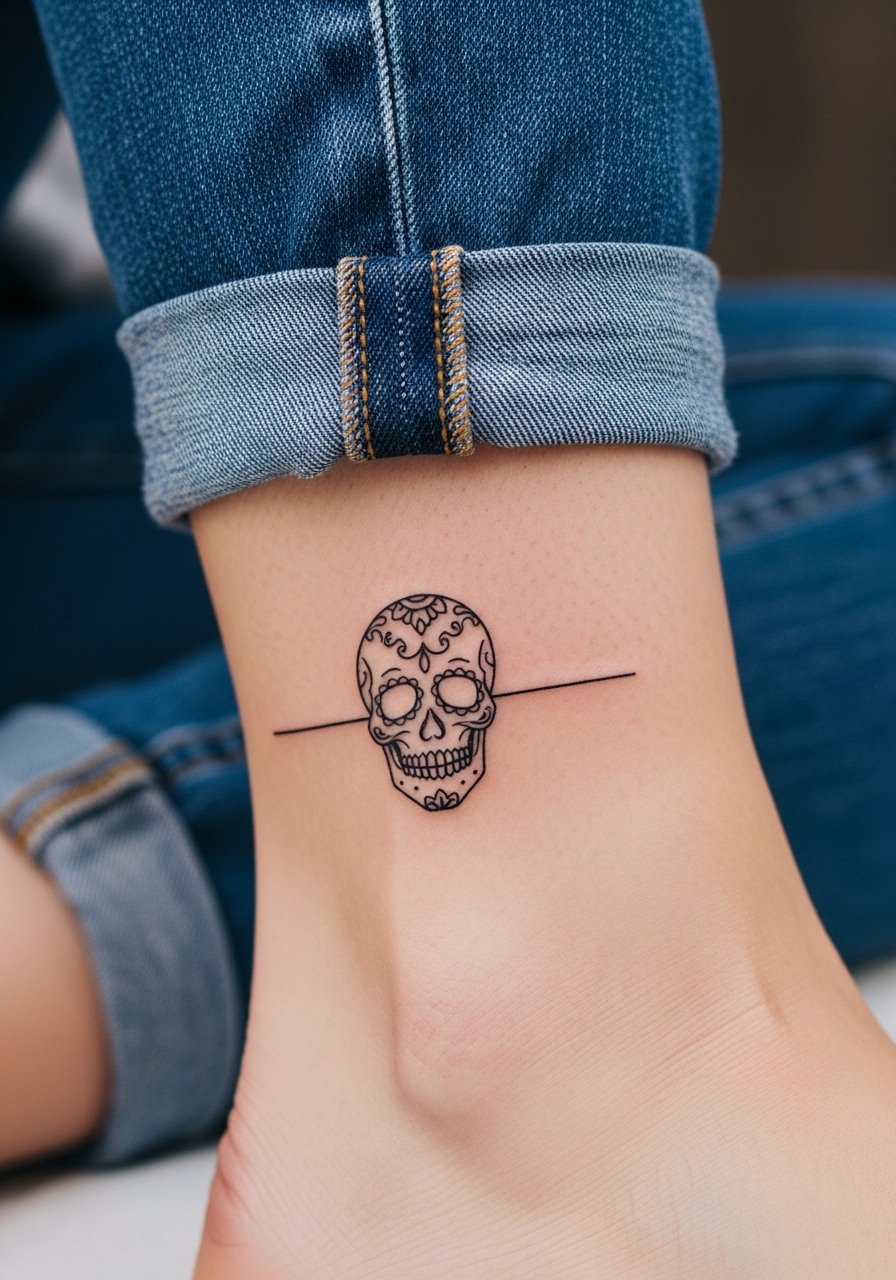
Ankle placements read delicate and work well for linear skulls and tiny floral sprigs. The biggest risk is friction from shoes and socks in the first two weeks, so the artist may advise avoiding tight footwear. Sessions are short, but healing is slower because of movement and circulation. Common mistakes include placing dense shading too low where it will blur. For showing the design, sandals or cropped pants help. You can recommend a pair of minimalist leather sandals on cool days so the tattoo stays visible without constant rubbing.
6. Behind-the-Ear Tiny Calavera
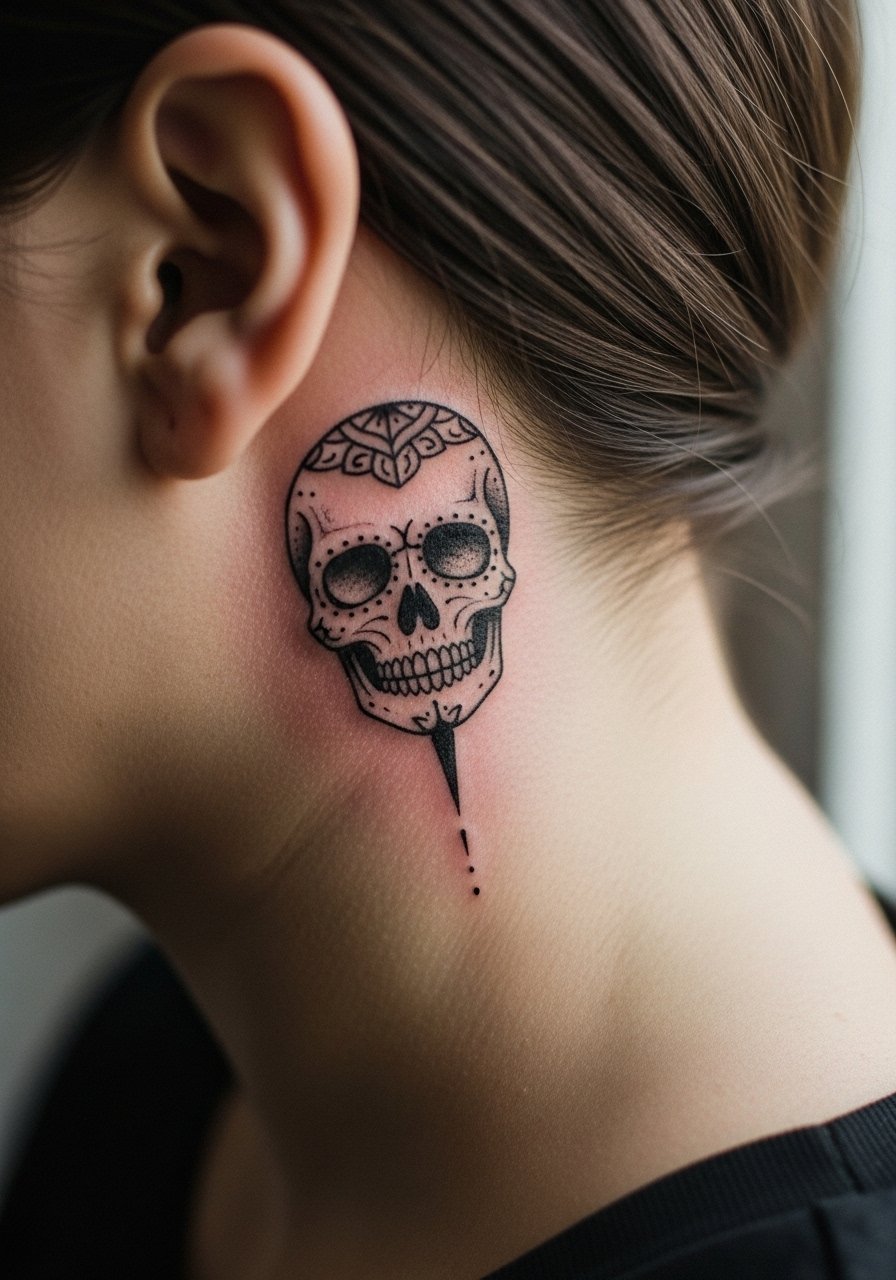
Behind-the-ear placements are subtle and personal. The area needs a delicate hand because the skin is thin and sits near cartilage. Ask your artist about needle depth and whether they prefer whip shading or stipple for tiny floral dots. Expect higher touch-up likelihood if you wear heavy earrings that brush the area. If you plan to hide it for work, hair length is an easy control. Because this placement sits near the hairline, a short note about aftercare is usual in consultation. The session itself is quick and can feel sharp for a few seconds when working around the curve of the skull.
Studio Day Picks
The first six ideas above include wrist, forearm, ankle, collarbone, and behind-the-ear spots, so a few specific items smooth the session and early healing.
-
Transfer stencil sheets. Helpful for previewing how a tiny calavera sits on curved areas like the wrist and ankle before the needle starts.
-
Medical-grade adhesive film roll. Keeps small wrist and finger pieces protected from friction during the first few days.
-
Low-residue topical numbing cream. For especially bony spots like the ankle or collarbone this can reduce chair time without affecting linework when used as directed.
-
Fragrance-free gentle body wash. Cleans delicate healing areas without stripping or irritating the thin linework in micro skull designs.
-
Aquaphor healing ointment. Thin layers during the first week lock in moisture for tiny linework without occluding needle channels.
7. Ribcage Micro Calavera Cluster
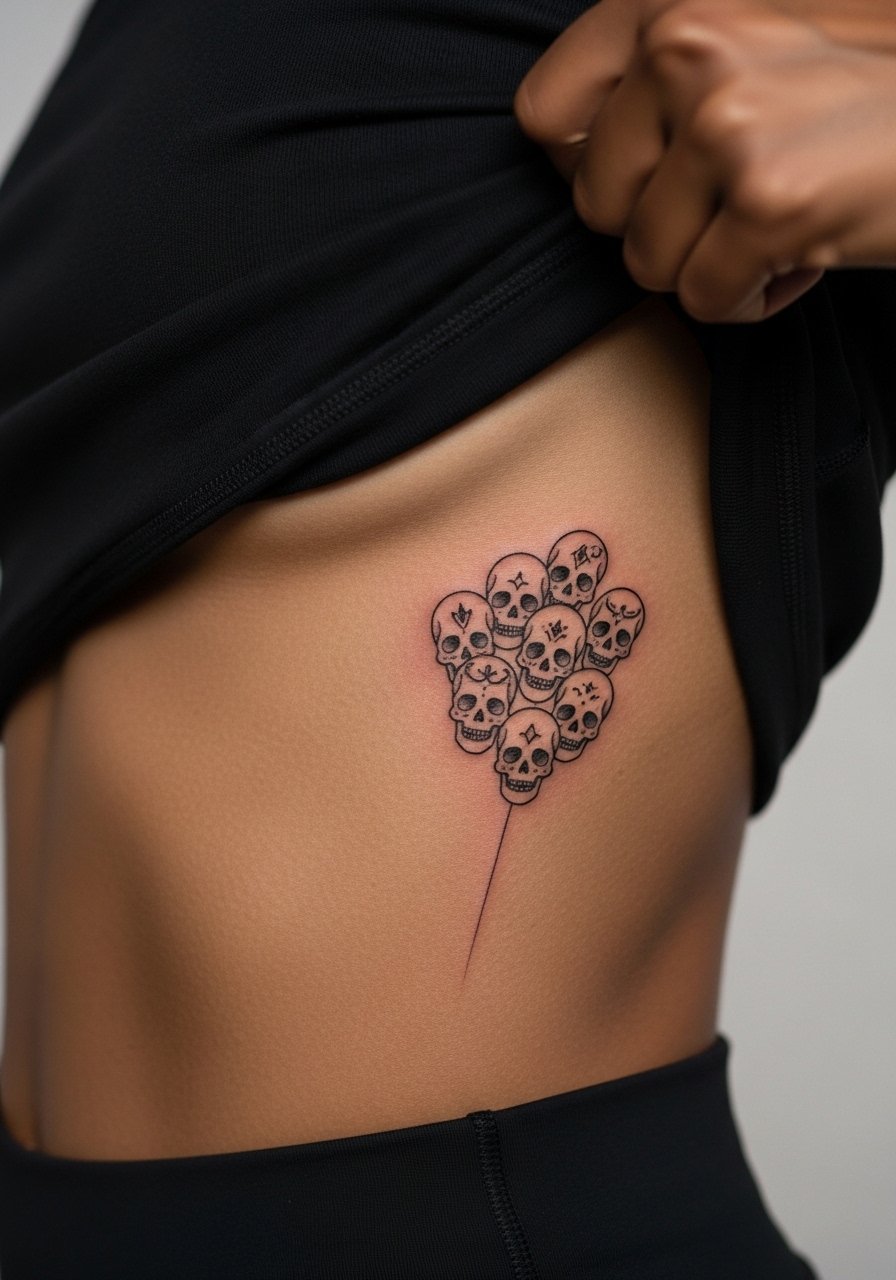
Rib tattoos spark debate among artists. One camp says fine line on ribs blurs within two years because the skin stretches and breathes. The other camp argues that with correct needle depth and larger spacing it keeps crisp for longer. My take is the truth depends on both the artist's technique and your body movement. If you want multiple tiny calaveras here, ask for more negative space and avoid tiny interior dots. Pain is high for this placement, and sessions can be split. Expect touch-ups at year two if you favor very thin single-needle lines. For those worried about exposure during the session, bring a zip-up hoodie you can lift only on one side.
8. Sternum Single-Line Skull
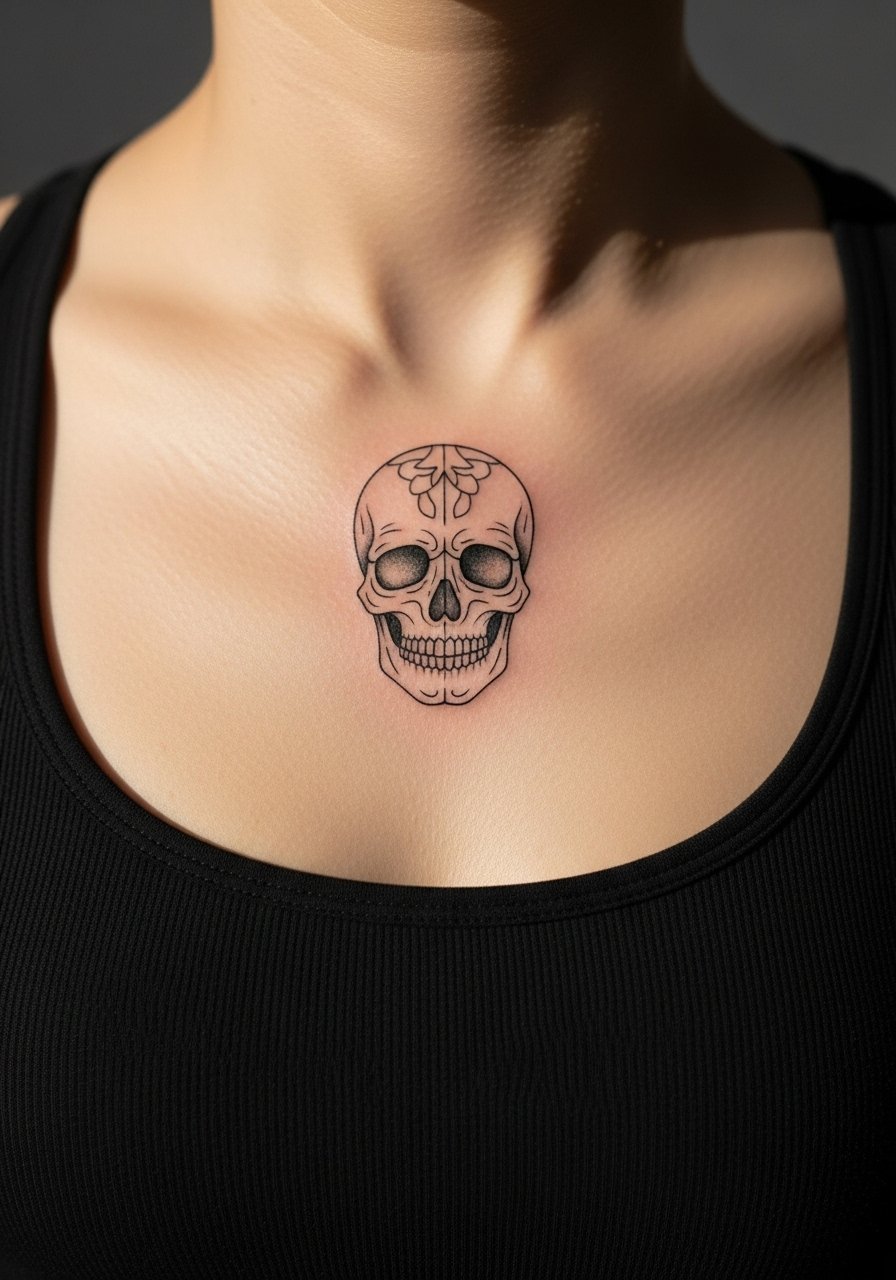
Sternum work reads intimate and bold even when the linework is minimal. The area needs careful needle control because the skin is tight and the motion of breathing pulls at fresh ink. Many artists treat sternum pieces as medium pain with slow sessions to avoid uneven saturation. A common mistake is trying to fit too much ornamentation into the narrow sternum strip. For the session wear a supportive sports bra you can loosen to expose just the area, and expect a touch-up window around year two for crispness. Some clients prefer a slightly thicker outline here to help the skull age with less blur.
9. Tiny Calavera on Upper Arm
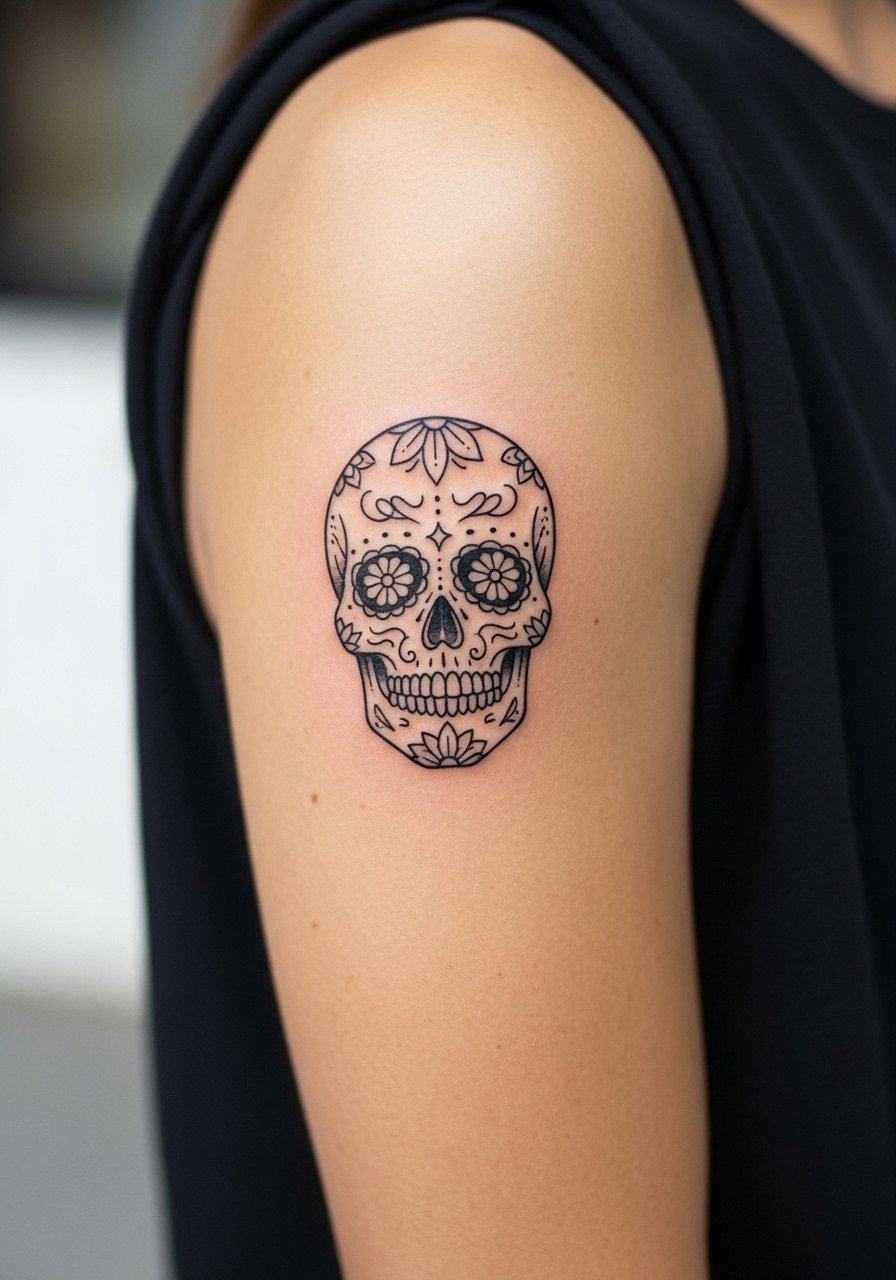
The outer upper arm is forgiving for delicate Day of the Dead motifs because the skin is thicker and the area sees less direct sun. This makes it a smart place for single-needle details with low blowout risk. Tell your artist you want stipple shading rather than solid black fills for tiny eye sockets and floral motifs. Sessions are comfortable and usually under an hour for a small skull. A common mistake is placing the skull too close to the shoulder crease where movement causes early softening. For showing it off, a sleeveless linen top makes the piece visible while keeping wardrobe minimal.
10. Shoulder Blade Mini Calavera
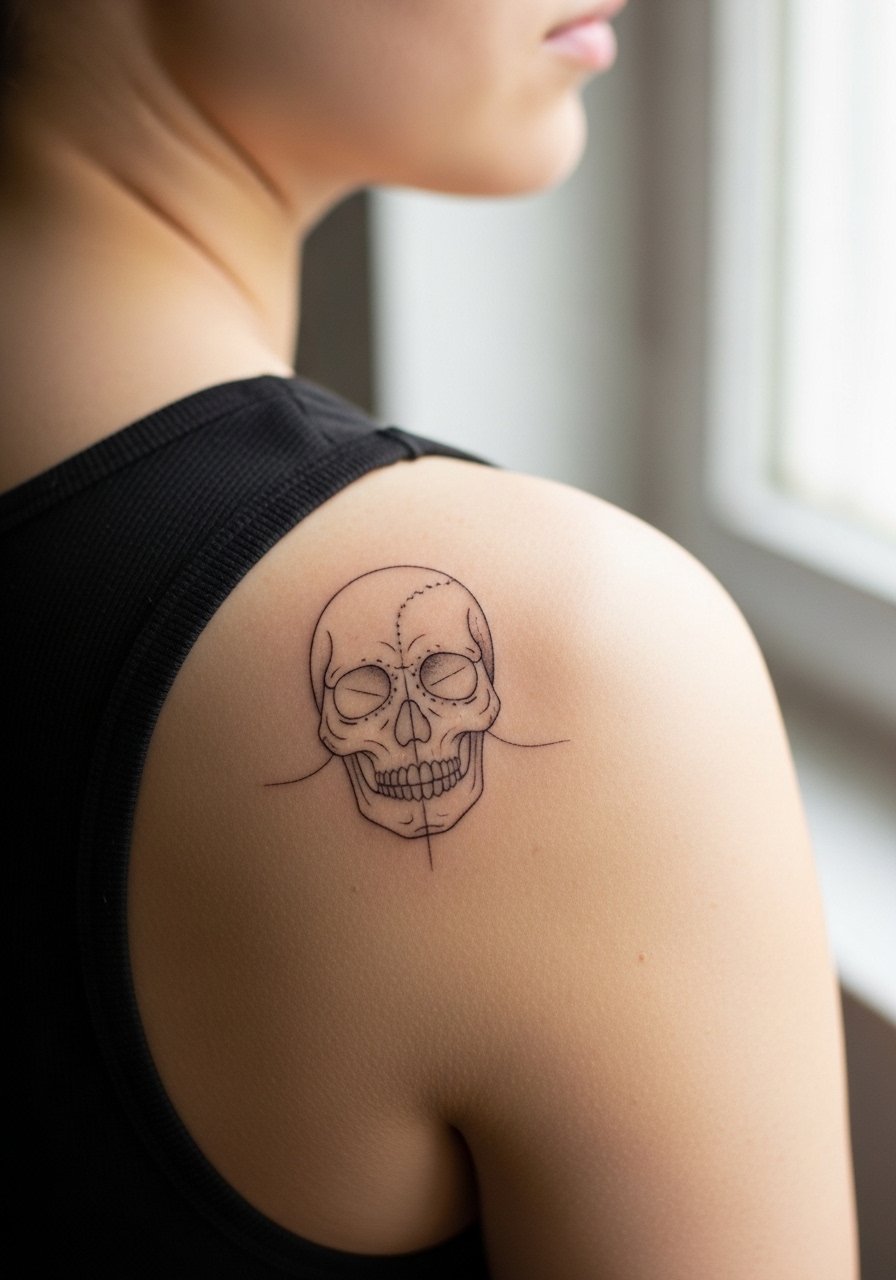
The shoulder blade holds linework well because of its flat surface. It allows slightly more internal detail in a small skull than areas that curve. If you plan a cluster later, place the skull offset so future elements can flow without crowding. Session discomfort is low but positioning can make it feel awkward after an hour. A mistake is requesting dense dot shading in a tiny space that will merge as it heals. For the appointment wear a loose tank top you can slip off one shoulder so the artist has access and you stay comfortable during the session.
11. Calavera Ankle Chain
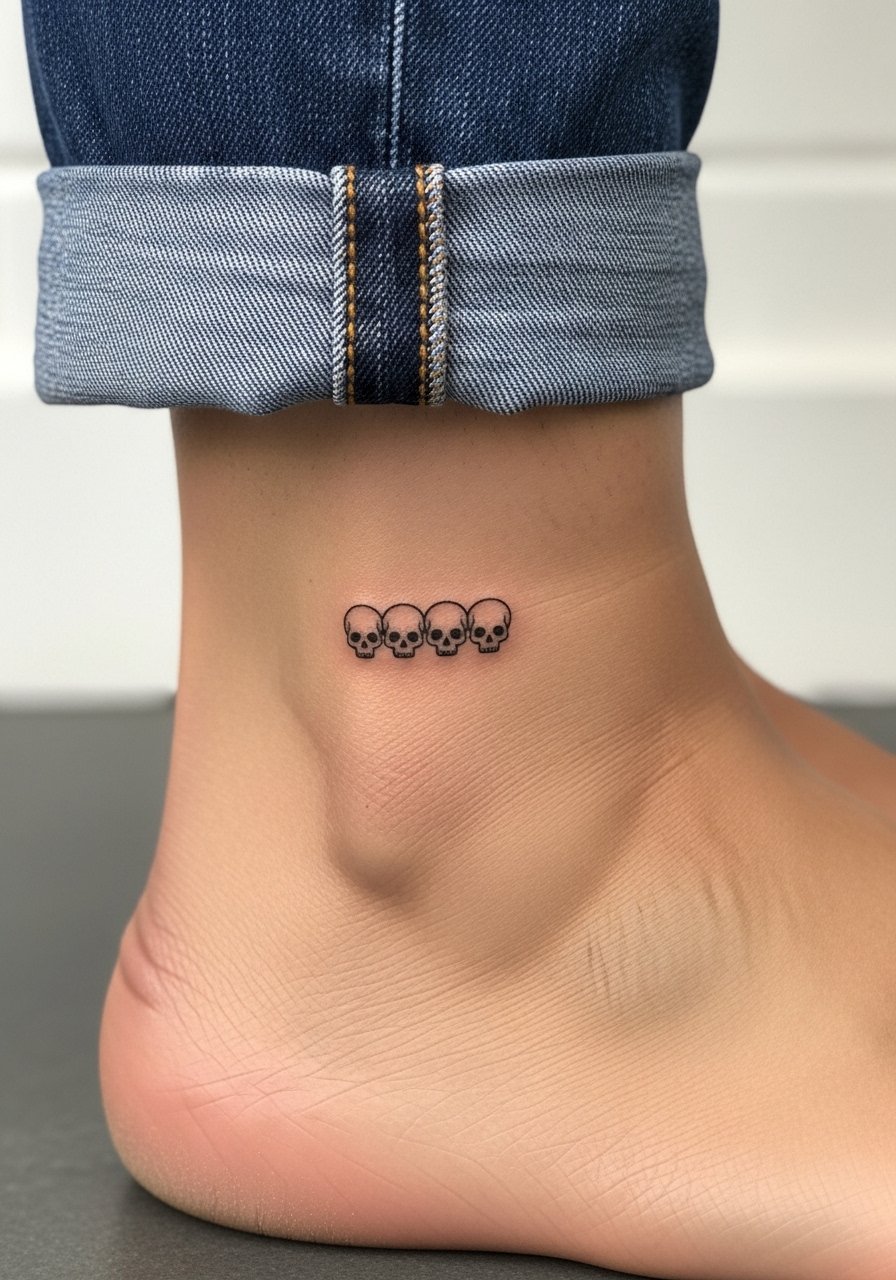
A chain of micro skulls along the ankle reads like jewelry and travels well with cropped hems. The main technical issue is friction from shoe collars and socks. Tell your artist you want outer lines a touch thicker and no heavy solid fills. Healing can take two to three weeks before you can resume regular shoe wear comfortably. A real mistake is asking for too many repeated tiny details that the ankle cannot hold. For showing it off, cropped pants and low sandals are ideal and keep the piece visible without excess rubbing.
12. Back of Neck Scripted Calavera Tag
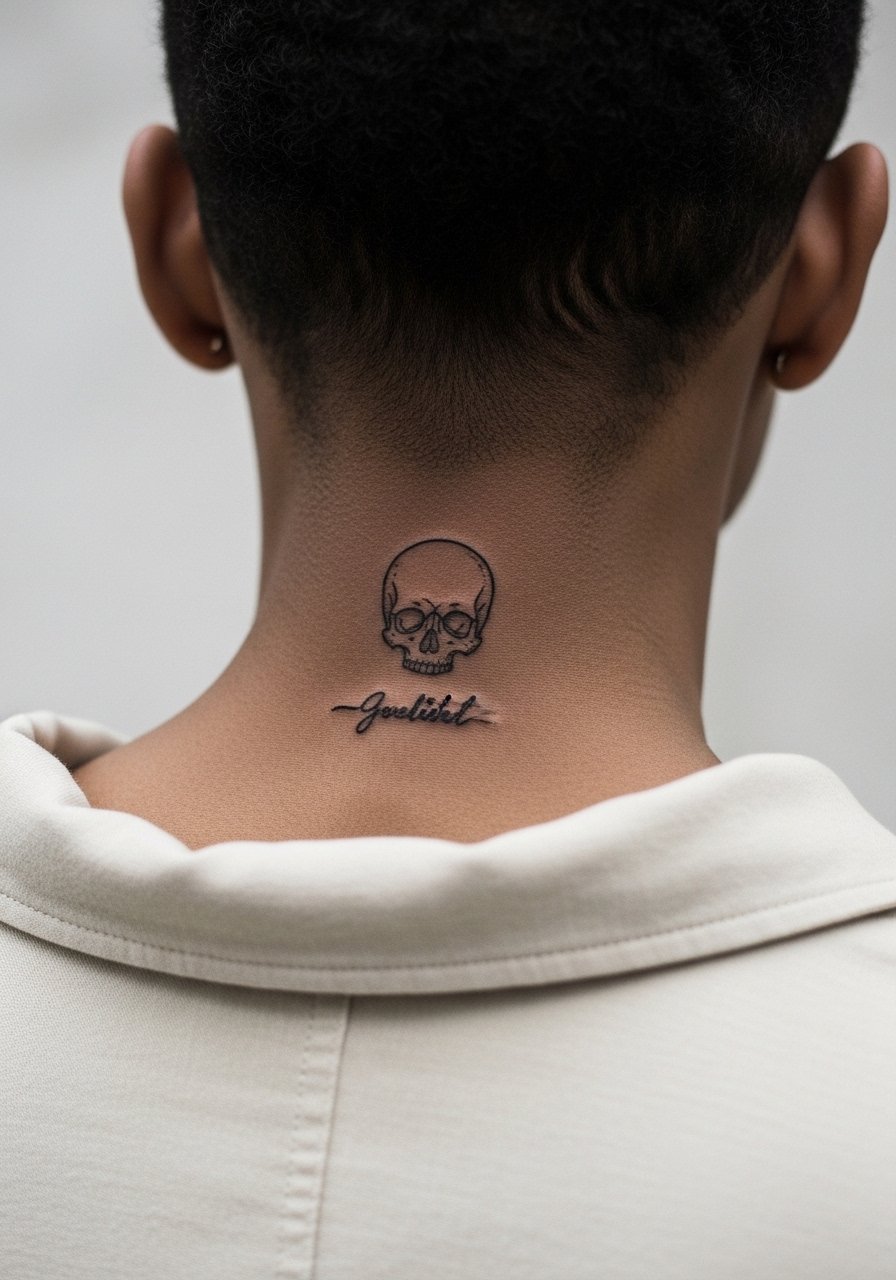
The nape is subtle and sits at the edge of visibility under most hairstyles. The skin here tolerates thin lines, but the area experiences friction from collars and hair. During the consult mention whether you'll wear hair up often, because exposure alters fading. Expect a quick session if the piece is small. A mistake is choosing dense lettering next to single-needle skull lines. If you need to hide it for work, wide-neck shirts help. For after the session, follow the studio's recommended covering protocol during showers and sleep to minimize rubbing.
13. Thigh-Side Floral Calavera
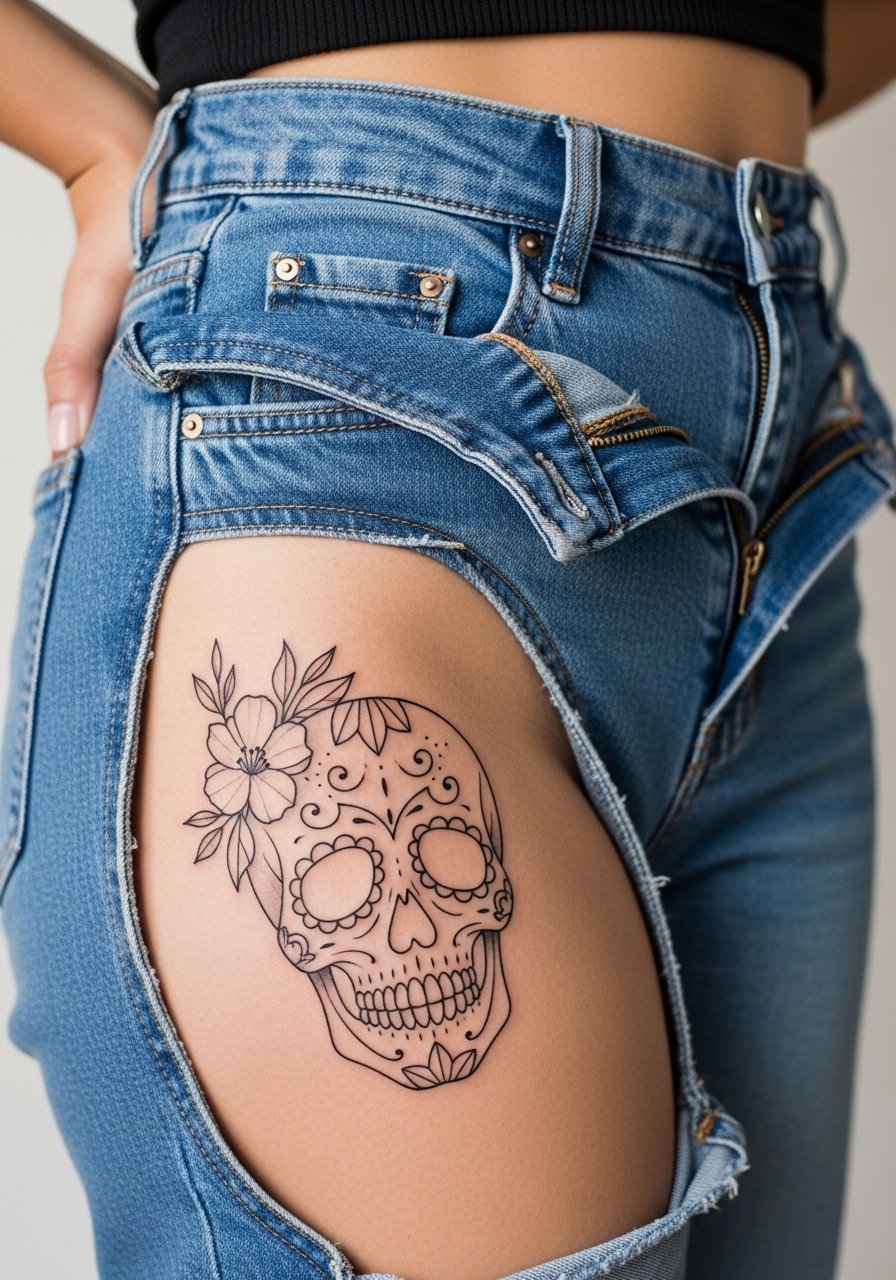
The upper thigh gives room for a slightly larger minimal skull and botanical frame. This placement ages well because it avoids constant sun and friction from sleeves. Pain is moderate and sessions are comfortable. A good consultation note is to specify negative space between the skull and the flowers so the design does not merge over time. A mistake is stacking too many tiny petals close to the jawline of the skull. For the appointment wear loose shorts or high-waisted pants to allow the artist access without feeling exposed. For show-off looks, high-waisted skirts or cutout swimwear reveal the piece when you want it visible.
14. Lower Back Single-Line Calavera
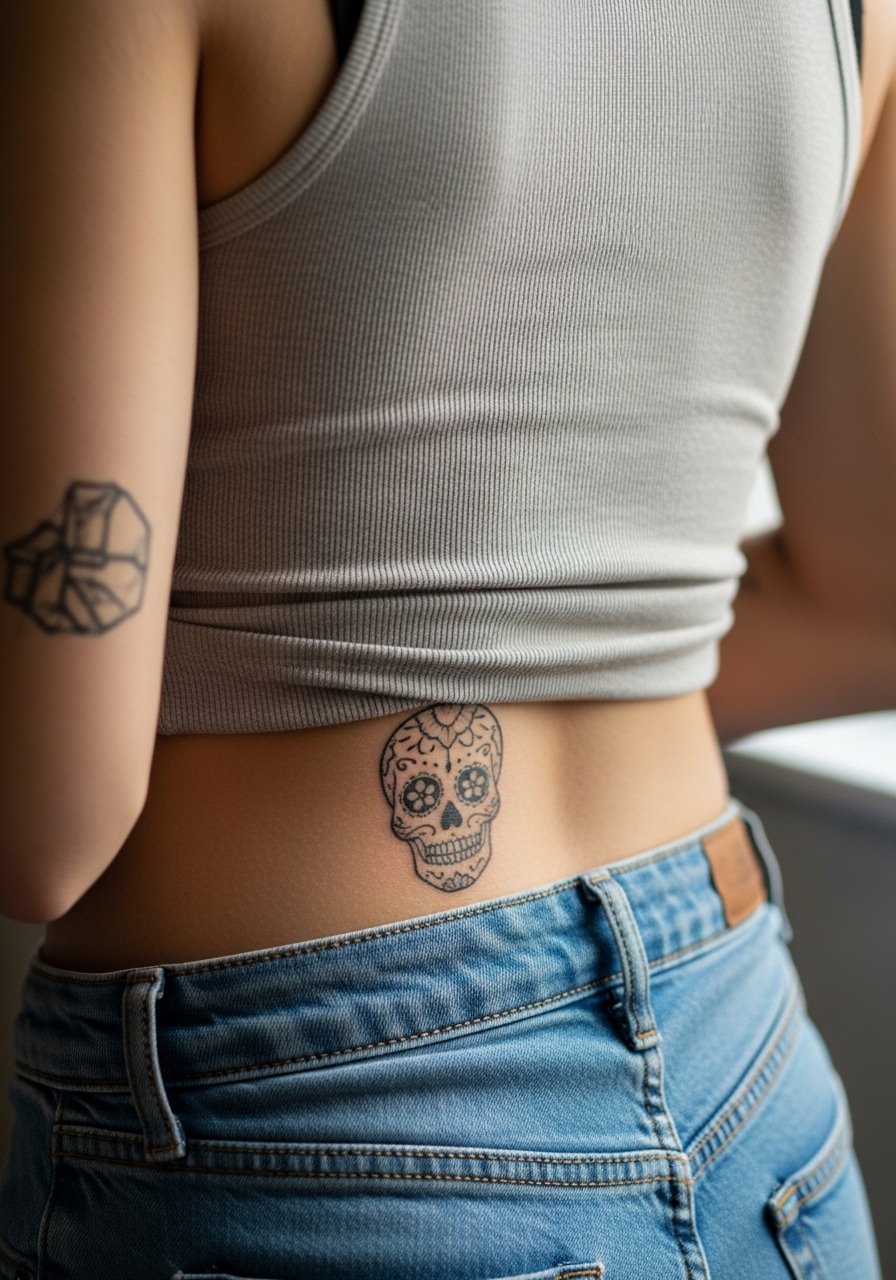
Lower back pieces sit flat and can hold thin linework nicely. The main risk is long-term stretching if you gain or lose significant weight in that area. Ask your artist about spacing and avoid dense interior ornamentation if you expect body changes. Sessions are moderate in duration and pain. A common mistake is trying to place text too close to the skull, which competes for space as the skin shifts. Because this placement is near clothing waistlines, choose high-waisted bottoms during healing so seams do not irritate the tattoo.
15. Hip Micro Skull
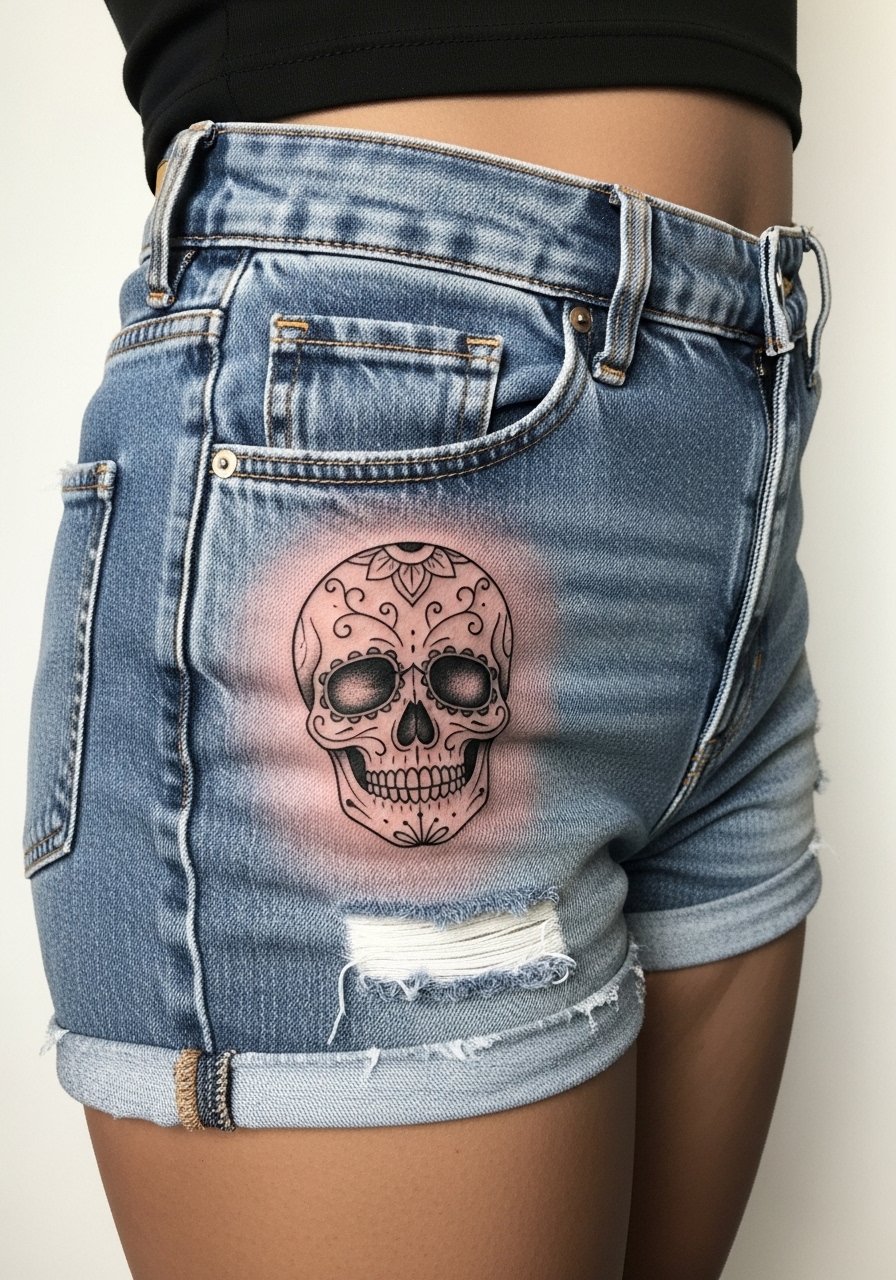
Hip placements are intimate and allow for playful placement off the bone or nestled atop. The skin can be less consistent, so a consultation should cover whether you want the skull centered on the hip bone or offset toward the thigh. Pain ranges from moderate to high depending on proximity to bone. A common mistake is asking for fine stippling close to the waistband where friction will blur details. For the session wear loose bottoms you can shift without removing clothing and minimal underwear that still gives the artist clear access.
16. Small Hand Calavera Accent
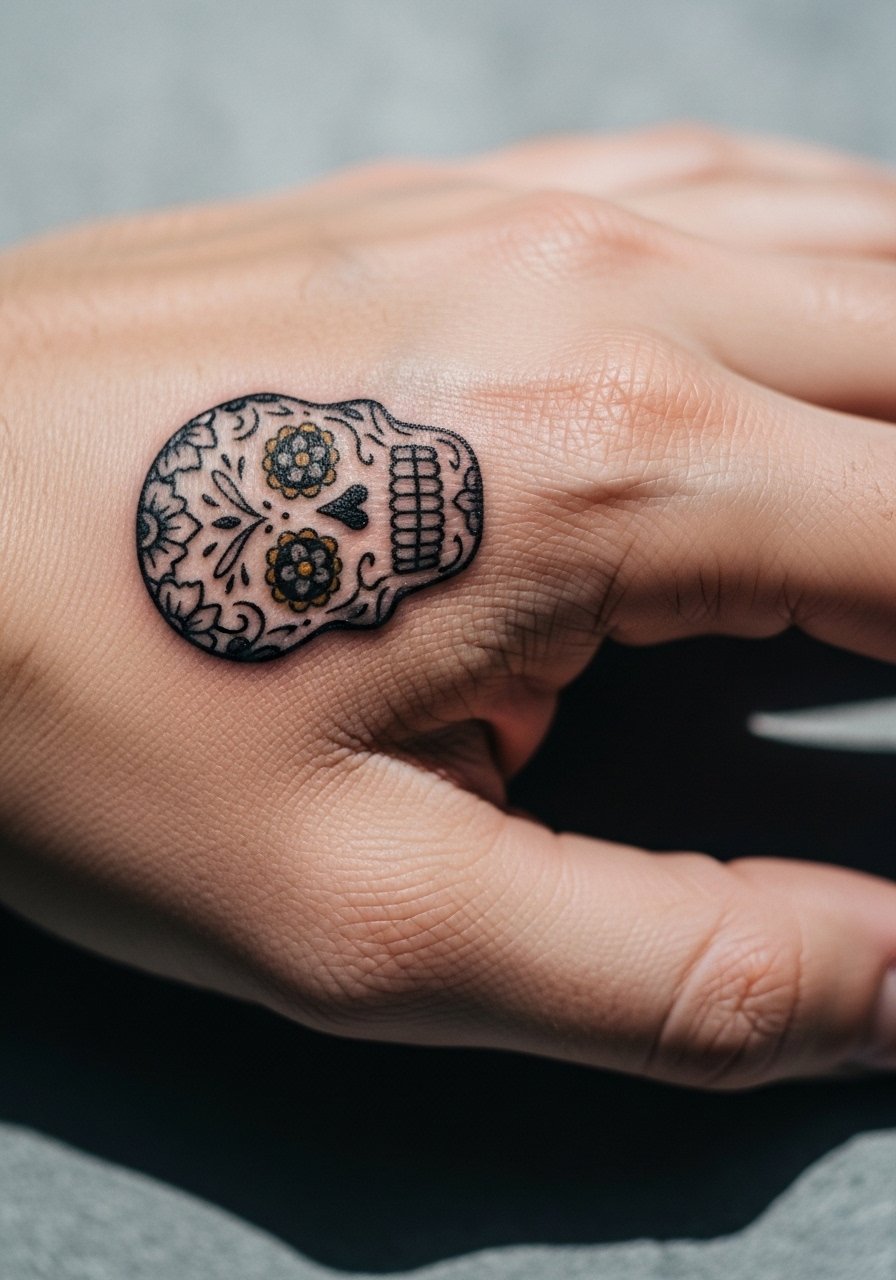
Hand tattoos age faster than people expect because of constant washing and sun exposure. For minimalist calaveras here, request bold contour and restrained interior detail. Artists often warn clients about early fading and suggest planning for touch-ups at year one. A mistake is trying to cram floral filigree into the knuckle area. For showing the piece while minimizing friction, choose slim rings and avoid heavy daily lotions on that hand. A simple bracelet can direct attention to the hand without rubbing the new ink during healing.
17. Petite Calavera Behind Rib Ornament
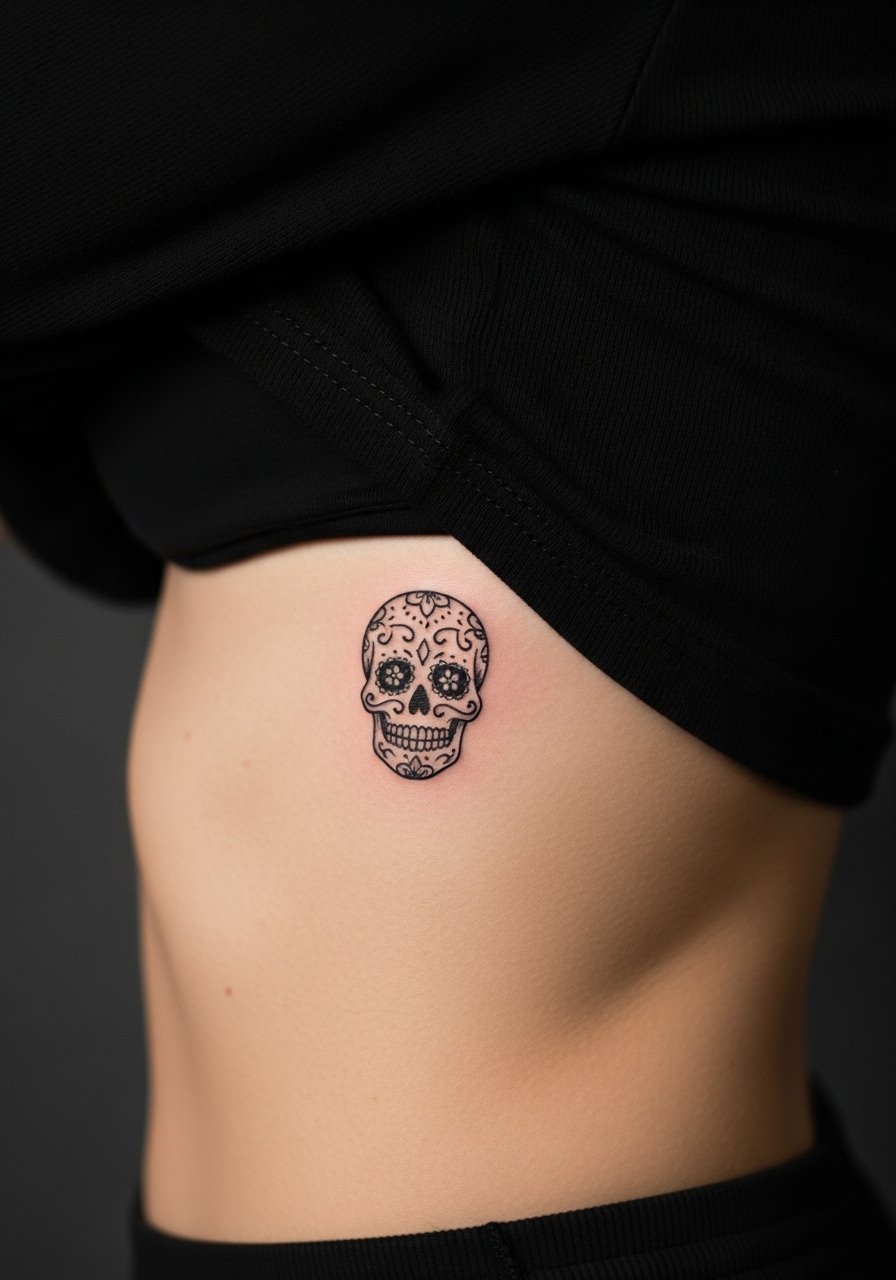
This tucked placement is intimate and reads like a private talisman. The surface there moves a lot, so spacing is critical. When you consult, ask the artist about wider intervals between internal details. Pain is higher and sessions may be split. A common error is over-detailing the jawline and teeth in a tiny space, which later blurs. If you plan to expand into a side rib composition, leave breathing room around the skull now so future elements can connect naturally.
18. Tiny Calavera on the Calf
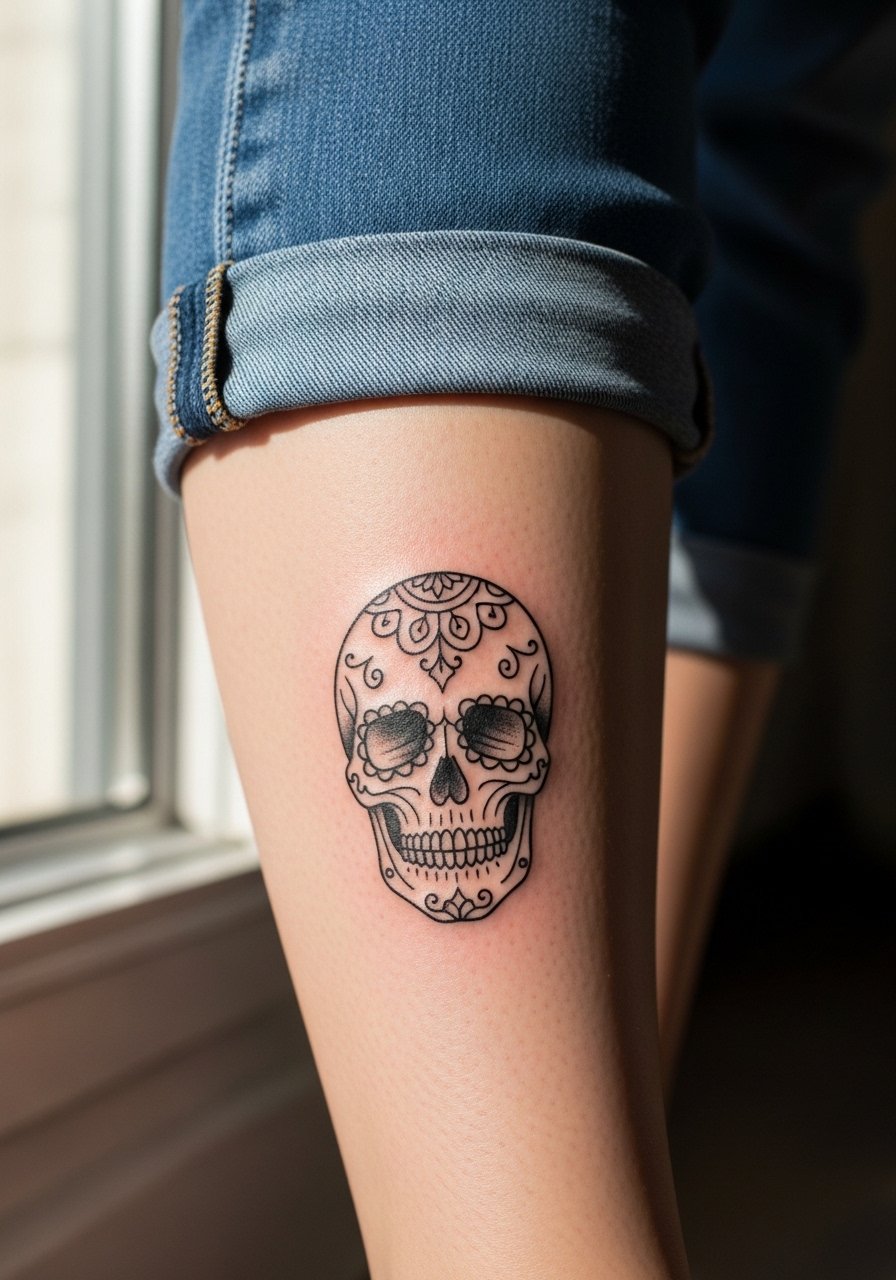
The calf is a forgiving area for minimalist designs because the skin is thick and the surface is broad. Fine line skulls here keep crisp for longer than on hands or ribs. Tell your artist you want a little more negative space to allow for future additions like vines or script. Sessions are comfortable and touch-ups are rarely needed before year three for thin lines. A mistake is clustering too many tiny decorations around the skull. For casual showing, rolled jeans or cropped trouser legs work well and keep the tattoo visible without daily exposure to sun.
19. Minimal Calavera Near Clavicle Chain
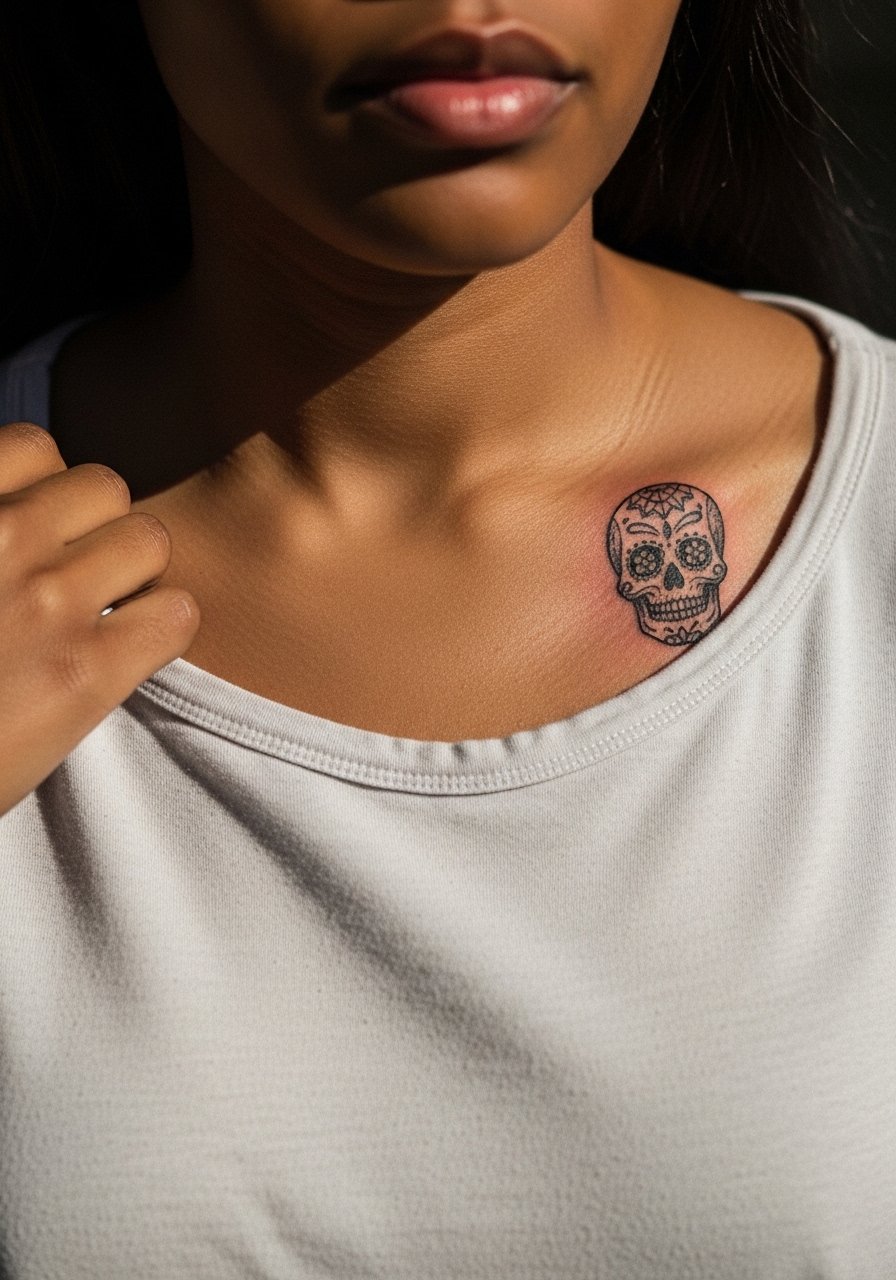
A calavera beside the clavicle reads like jewelry and pairs naturally with necklace silhouettes. The skin is thin and moves with breathing, so ask for slightly bolder outer lines and minimal interior dots. Sessions are short but can be uncomfortable near bone. A common mistake is overfilling the surrounding floral work which competes with the necklace area. For showing the piece choose a thin chain pendant necklace that sits above the skull without crowding the design.
20. Tiny Mandala-Edged Calavera on Outer Thigh
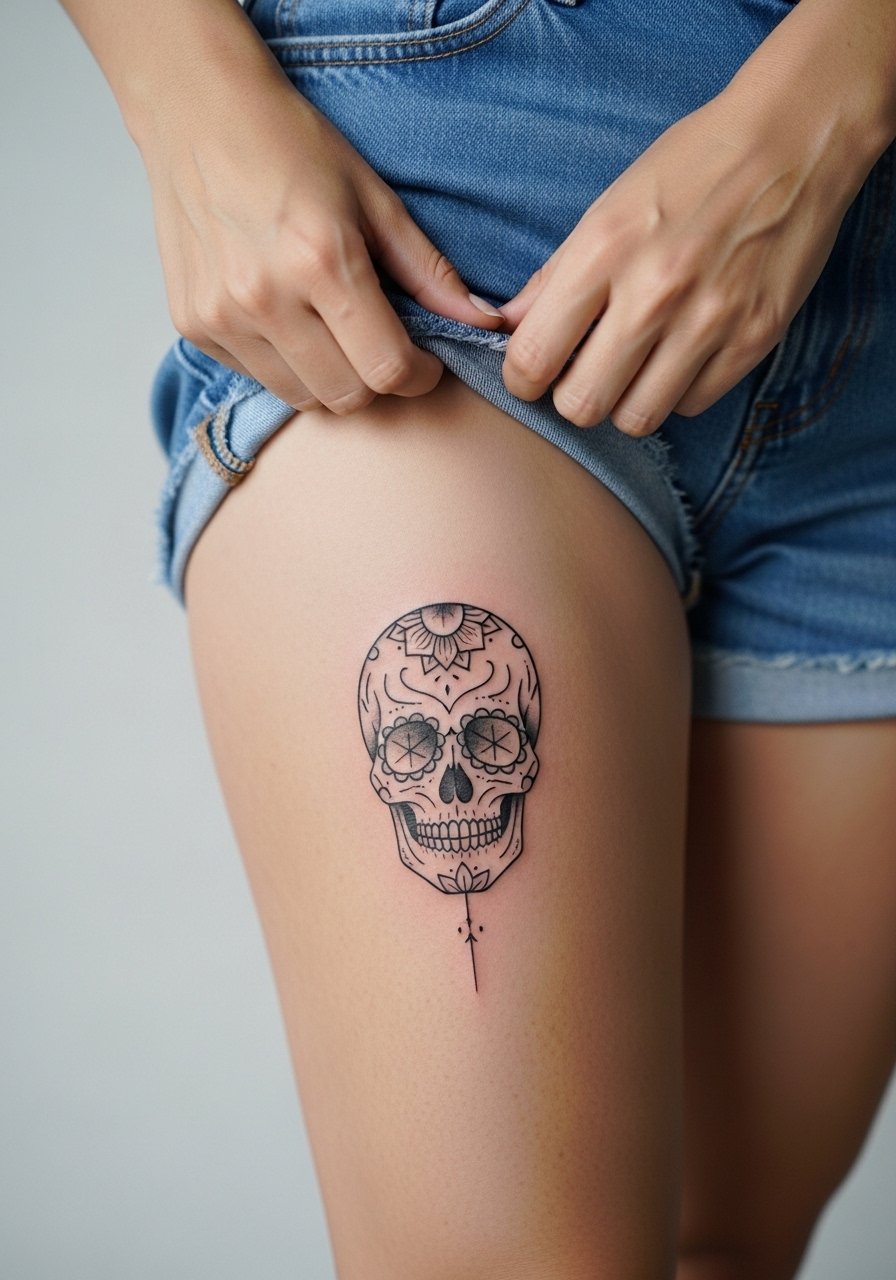
The outer thigh accepts delicate combined motifs like a small skull framed by a simple mandala edge. This spot avoids daily sun and friction, so fine internal detailing holds better here than on wrists. Tell the artist you want stipple shading instead of solid fills for the mandala to keep the piece airy. Sessions are comfortable and you can usually finish in one sitting. A common mistake is asking for a dense mandala pattern too close to the skull. For showing off the design, high-waisted shorts or skirts reveal the outer thigh without excessive exposure.
21. Tiny Vertical Spine Calavera Stack
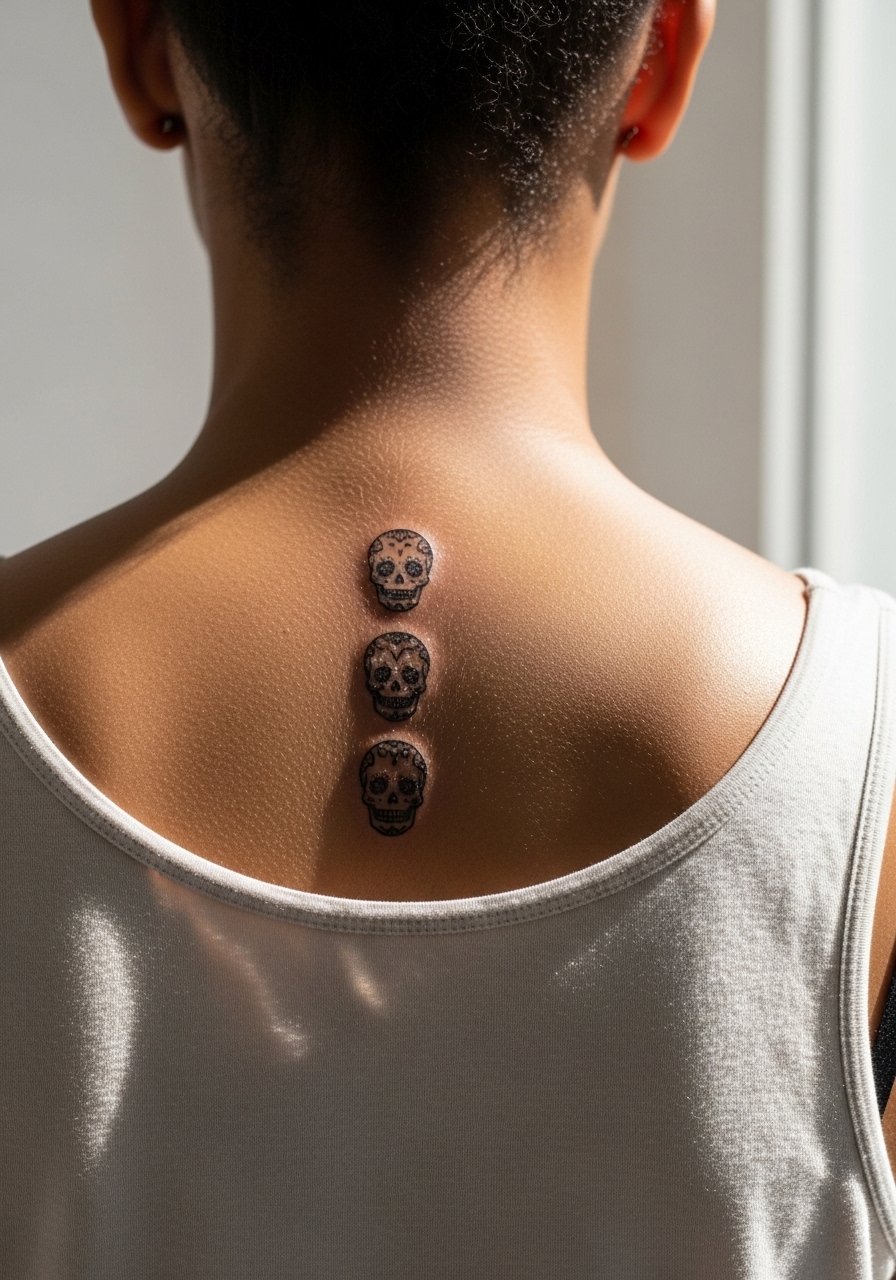
A vertical stack along the upper spine reads architectural and subtle in minimalist linework. The spine area is forgiving for vertical compositions, but movement and posture affect early healing. Request that the artist leave clear spacing between skulls so they do not merge as the skin settles. Sessions may require repositioning to keep your posture comfortable. A mistake is crowding additional small elements between stacked skulls. For the session wear a button-up or tank you can move aside so the artist has clear access without you being uncomfortable.
Frequently Asked Questions
Q: Will a minimal line Day of the Dead tattoo on my ribs blur faster than on my forearm?
A: It depends. Ribs move with breathing and the skin is thin, so ultra-fine single-needle lines are more likely to soften there. The forearm generally holds fine lines longer because the surface is flatter and gets less stretch. If you want ribs, ask for slightly wider spacing and be prepared for a touch-up around year two.
Q: How should I dress to the studio for an ankle or calf Calavera piece?
A: Wear pants you can roll up easily or shorts you do not mind shifting a little. For ankle pieces bring low socks or sandals so the artist can access the area without you removing too many garments. A loose drawstring short is a practical choice for thigh and calf sessions.
Q: Are Day of the Dead motifs cultural appropriation, and how do I show respect?
A: These images come from Mexican Día de los Muertos traditions, so many people choose subtle variations rather than direct replicas of culturally specific iconography. A respectful approach is to discuss symbolism with your artist and consider incorporating personal elements that acknowledge the source without copying sacred or ritual objects verbatim.
Q: How often do minimalist skull tattoos need touch-ups?
A: For most placements expect at least one touch-up within two to three years for very thin lines. Visible spots like hands, fingers, and wrists often need earlier refreshes. Less exposed areas such as the outer thigh or upper arm usually hold cleanest and can go longer without work.
Q: Is there a risk of blowout with single-needle calaveras?
A: Yes, especially on soft, thin, or highly mobile skin. Blowout risk rises on fingers, the inner thigh, and near rib bones if the needle goes too deep. Ask the artist about their single-needle experience and for portfolio examples of healed work in the same placement.
Q: If I want to expand a tiny calavera into a larger Day of the Dead piece later, what should I tell my artist now?
A: Ask to leave breathing room around the skull and avoid saturating nearby skin with dense shading. Tell the artist you plan a future extension so they can orient the skull for flow and composition. That early planning saves awkward reworks later.