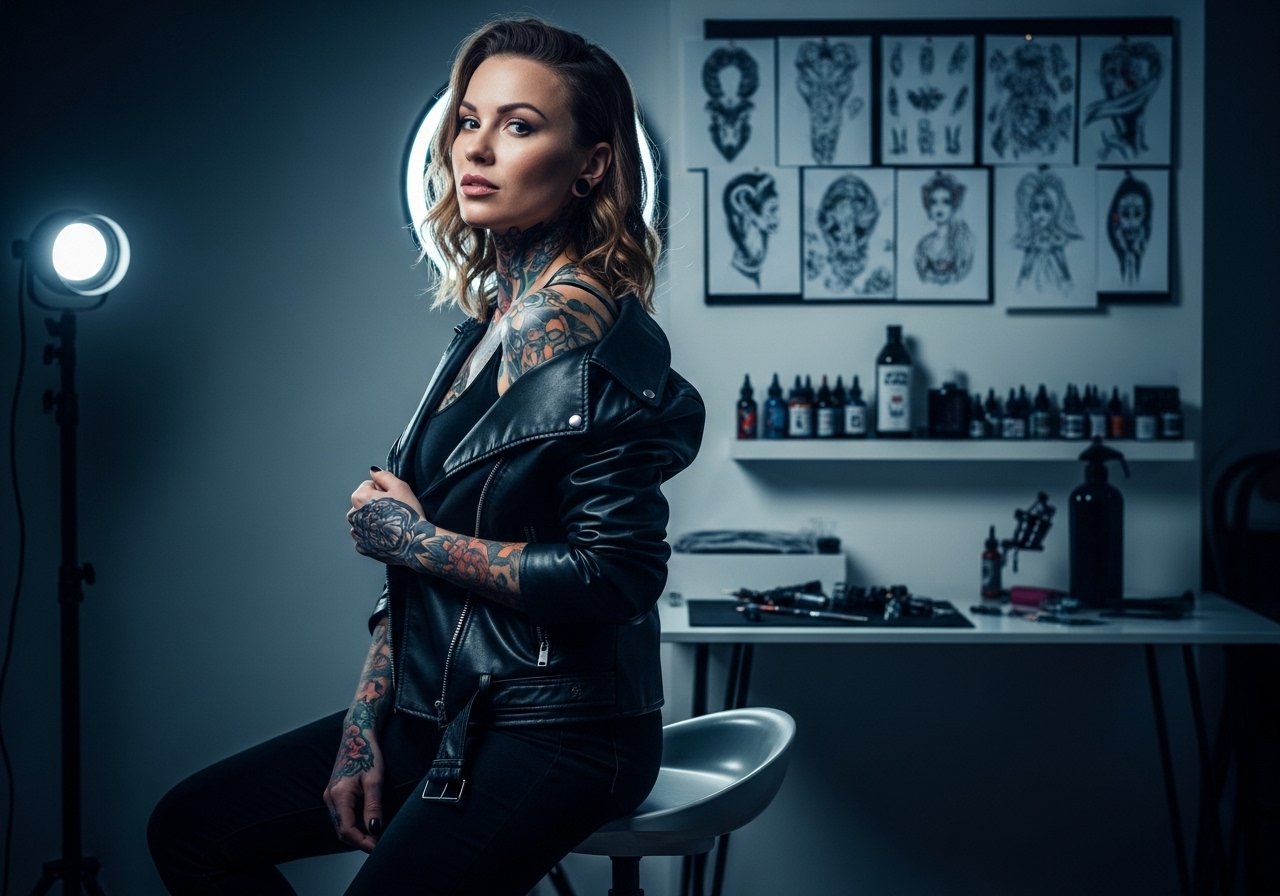
Fine line butterflies are all over mood boards right now, but the ones that still read crisp at year three are not always the flashiest. Small, realistic butterflies with careful spacing and correct placement tend to survive daily wear better than ultra-tiny pieces packed with detail. Read on for practical, wearable ideas that balance realism with longevity, plus what to say in the chair so your wings still look like wings after a few summers.
1. Fine Line Monarch on Inner Forearm
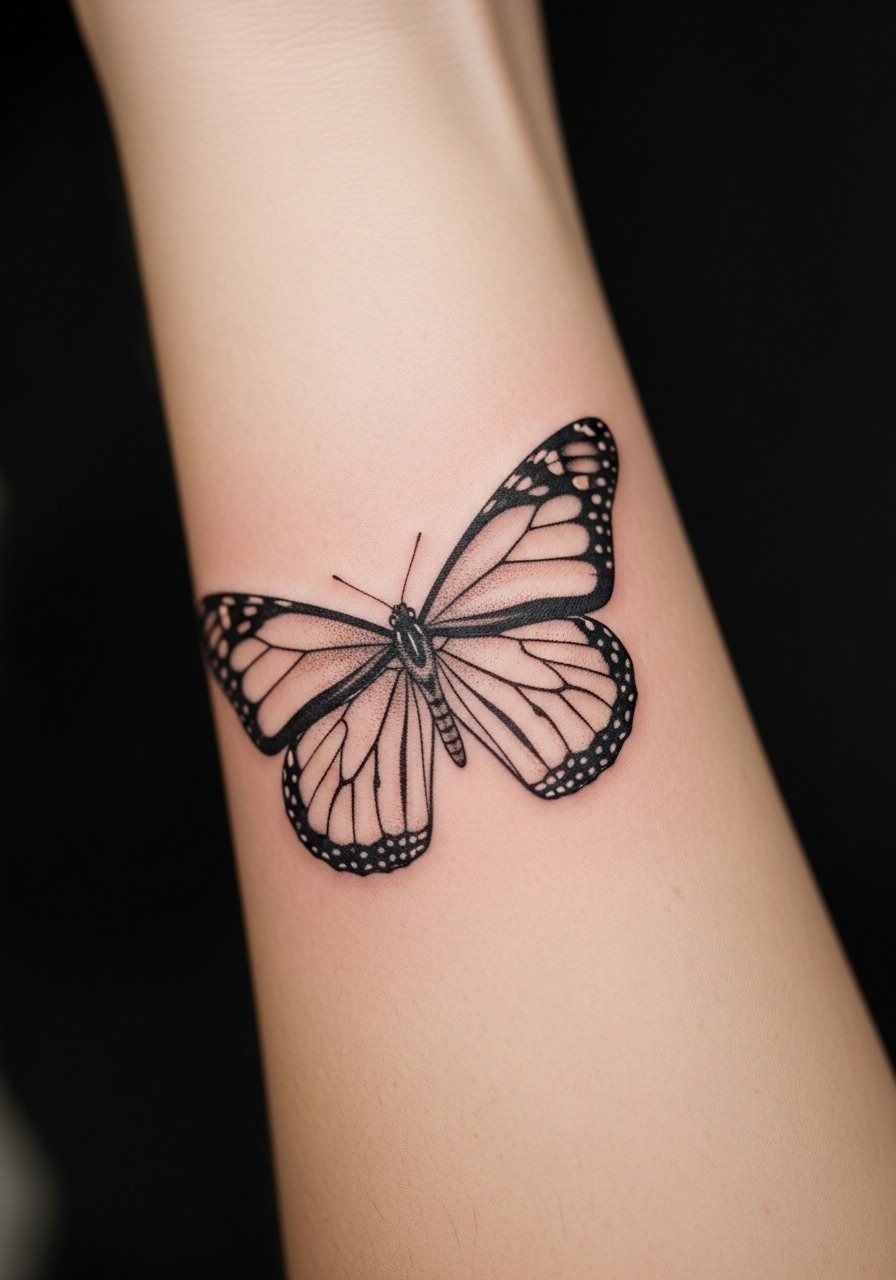
I recommend this when you want a visible piece that ages predictably. Tell your artist you want the wing veins slightly bolder than the rest of the pattern so the main shapes hold as saturation softens. Pain is mild on the inner forearm and a single session of 30 to 60 minutes usually does it. Common mistake is packing too much micro detail into a tiny footprint, which blurs noticeably by year two. Expect a touch-up window around year two to three for fine line crispness. For showing it off, roll sleeves and pair with a minimalist gold watch to frame the forearm without covering the wings.
2. Micro-Realism Blue Morpho on Upper Shoulder
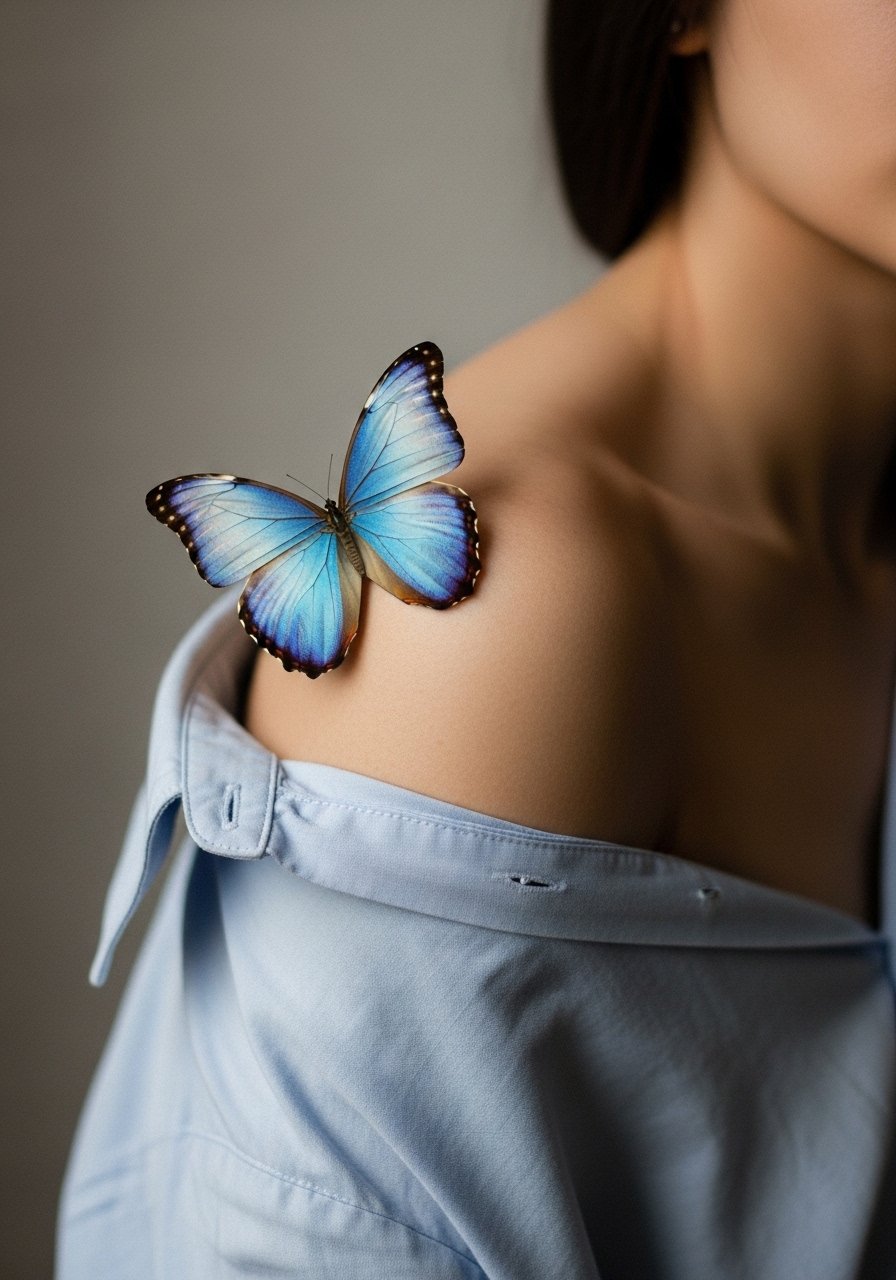
Shoulder placement gives you room for slightly larger wings and better saturation. When you consult, ask for medium needle groupings and moderate saturation to keep color from turning muddy with sun exposure. Sessions run 45 to 90 minutes for a realistic butterfly of this size. Blowout risk is low here compared to hands and ribs. One real mistake is asking for full bright color without planning sunscreen use. If you like open-back dresses, pair this with an open-back midi dress to let the wings show on warm days. Expect color to soften by year three and a possible touch-up by year four.
3. Tiny Realistic Finger Butterfly
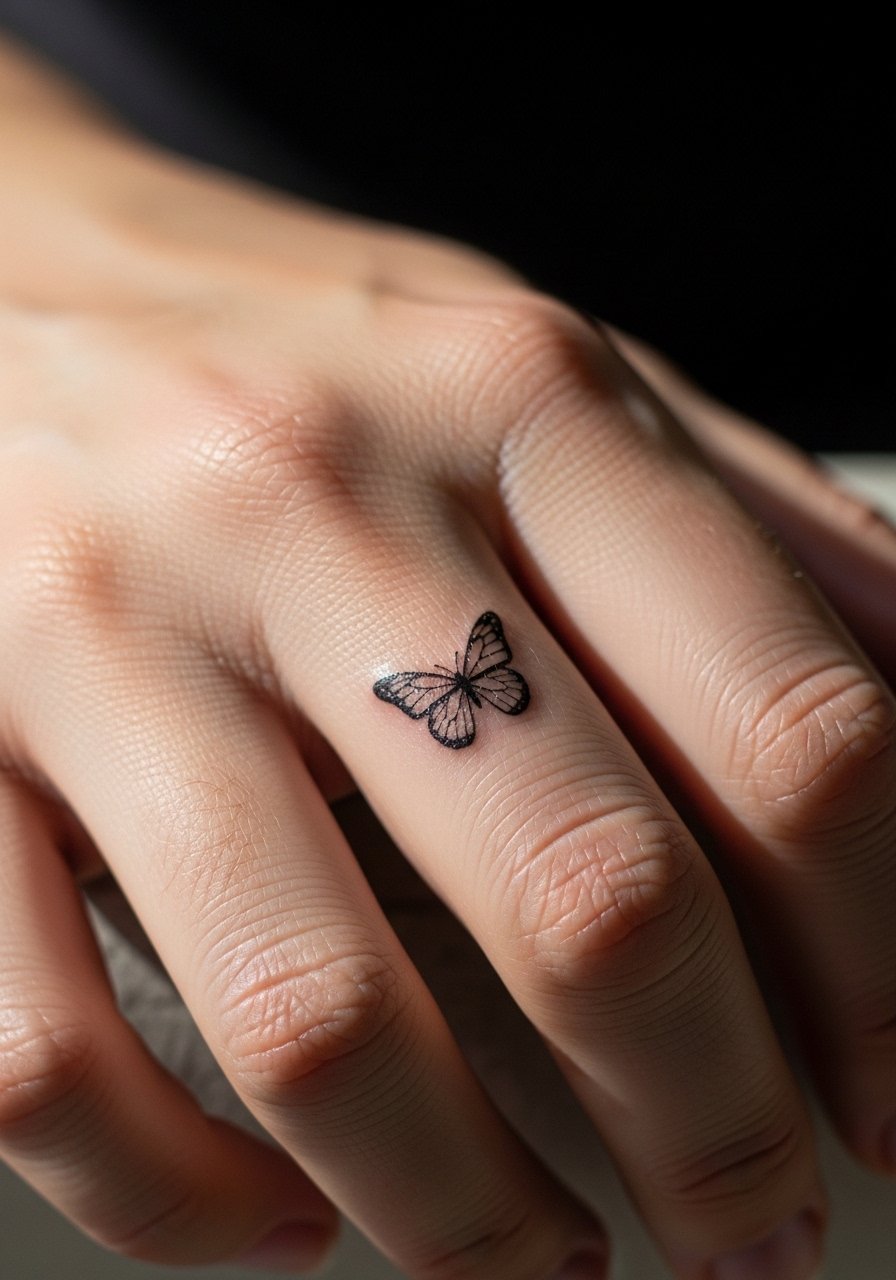
Finger tattoos read intimate and fragile. Fair warning, finger skin moves and washes a lot so touch-ups are common. Tell your artist you prefer slightly thicker linework and a simplified wing pattern for longevity. Sessions are quick, under 30 minutes, but you may need a touch-up within the first year. Blowout and fading are the main risks. For sessions, wear gloves or loose sleeves so the artist has clean access and you do not irritate the fresh ink afterward. Hand-friendly jewelry helps the look, try a thin stacking ring set to complement without covering the butterfly.
4. Blackwork Silhouette on Nape of Neck
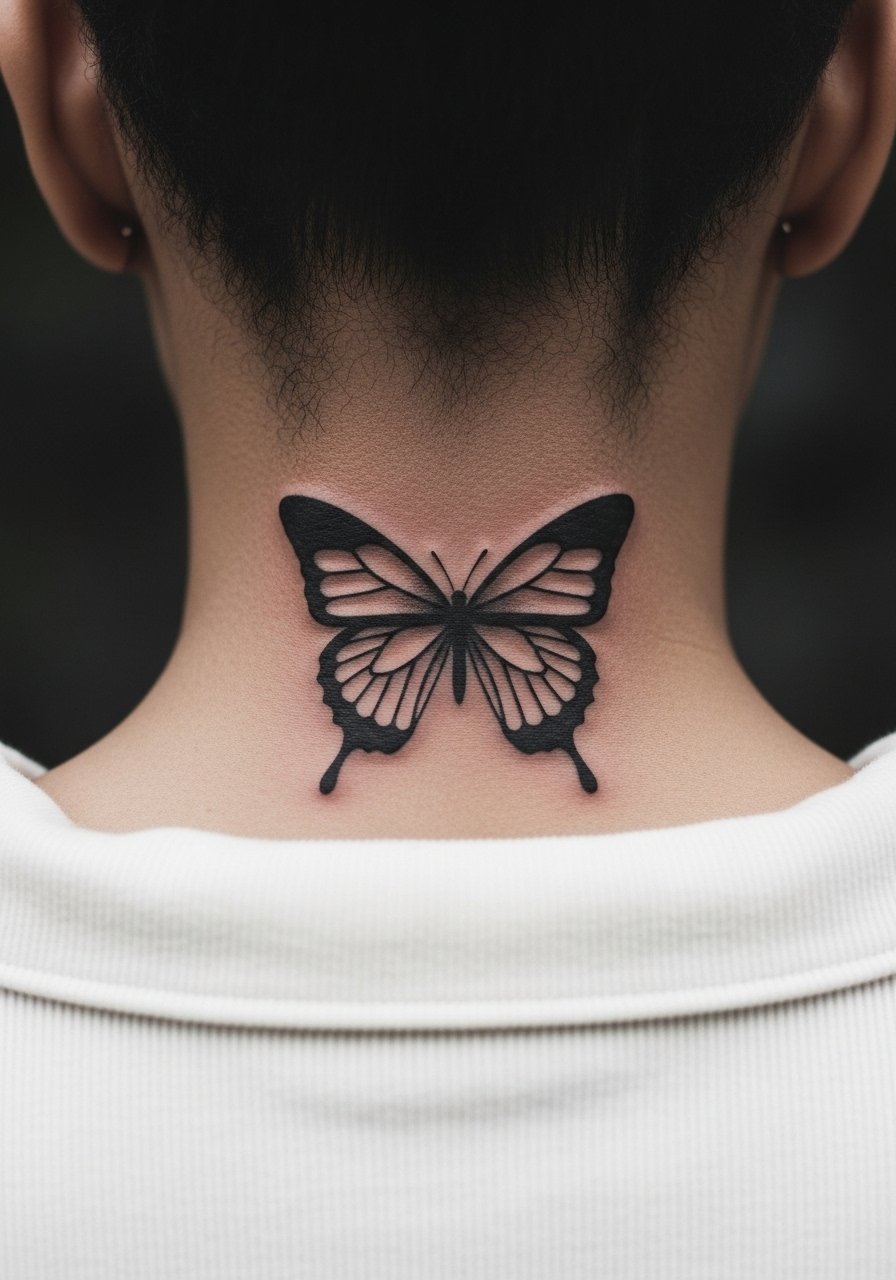
The nape is visible but sensitive. Expect a moderate pain level and a session under an hour for a silhouette. Ask for solid saturation at the initial session because touch-ups on neck skin can be tricky. One debate artists mention is whether dense black holds on this skin. One camp says bold blackway ages very well here. The other camp warns about line softening from natural neck movement. Ask the artist about their approach before booking. For dressing, pair with a wide-neck blouse to reveal the tattoo without overexposing the area.
5. Stipple-Shaded Butterfly on Ankle
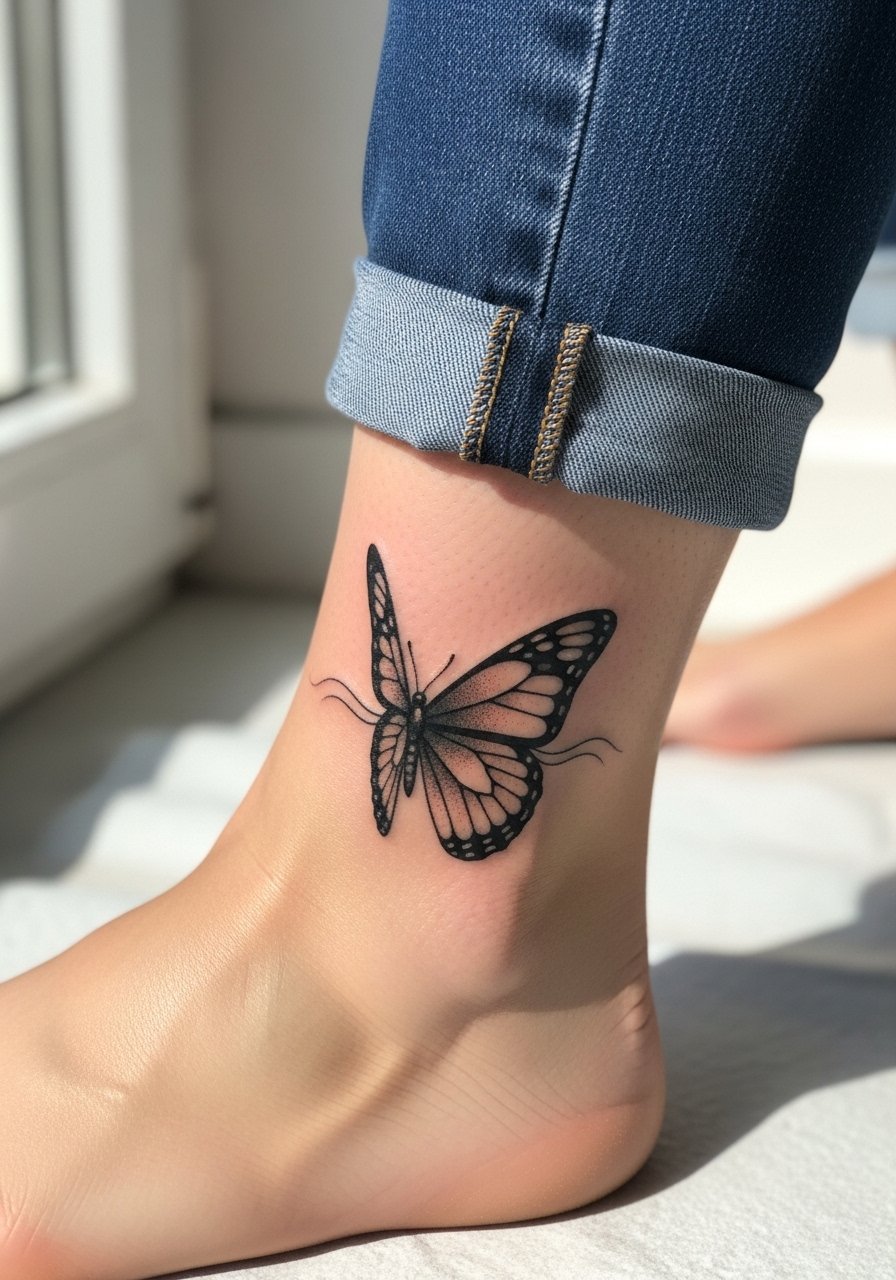
Ankle pieces are great for detail that only shows occasionally. Pain is moderate because of the thin skin and bone proximity. Ask for stipple shading instead of heavy color to keep the texture readable as the ink settles. Sessions usually last 45 minutes. A common mistake is placing the wings too close to the ankle bone which invites faster fade. For showing it off, sandals or a delicate anklet frame the tattoo without rubbing it. Expect touch-ups at year two if you walk a lot or frequently wear tight shoes.
6. Realistic Butterfly Along the Collarbone
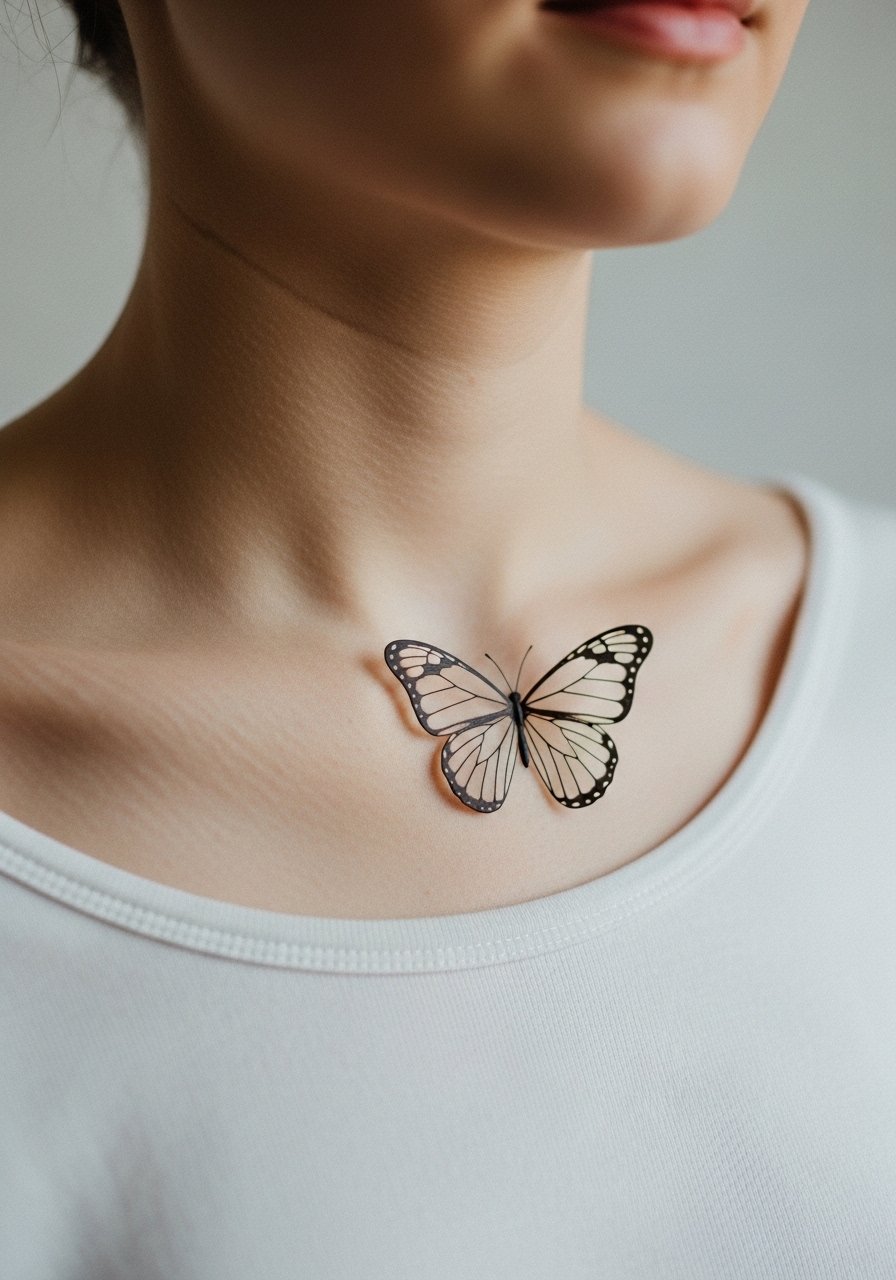
Collarbone pieces read elegant and stay relatively visible. The area moves with breathing so ask for slightly stronger outline contrast to help the wings keep shape. Sessions are 30 to 60 minutes depending on size. One mistake is placing too much tiny detail right on the bone where healing can be patchy. Pair this with a thin chain pendant necklace that sits above the design so jewelry complements without crowding. Touch-ups at year three are common if you expose the chest to a lot of sun.
Studio Day Picks
Those first six pieces include wrists, ankles, collarbones, and fingers, so the prep and first-week needs differ from larger back or thigh sessions.
- Stencil transfer paper kit. Lets you and your artist preview exact placement on the skin, which is crucial for collarbone and finger pieces that look different in real scale.
- Topical numbing cream. Use as directed to ease sensitivity for ankle and collarbone sessions without compromising linework.
- Thin protective film roll. Useful for small areas like fingers and ankles that face friction from daily movement.
- Fragrance-free gentle body wash. Keeps healing fine line work clean without stripping oils, especially for forearm and chest tattoos.
- Aquaphor healing ointment. Thin layer during the first few days helps prevent scabbing that can rob fine details from delicate butterfly wings.
7. Watercolor-Accented Butterfly on Outer Calf

Watercolor accents can add life without bulky saturation if done with restraint. Tell your artist you want the color as a soft wash under the linework so the structure remains readable as pigment fades. The calf is forgiving for touch-ups and sits in a low-friction zone. Sessions take 60 to 120 minutes depending on size. Mistakes include bleeding color into the linework area on purpose. For showing it off, wear a flowy midi skirt or roll trousers to let the splash of color peek out. Expect color to need a refresh sooner than black linework.
8. Minimalist Realistic Butterfly on the Wrist
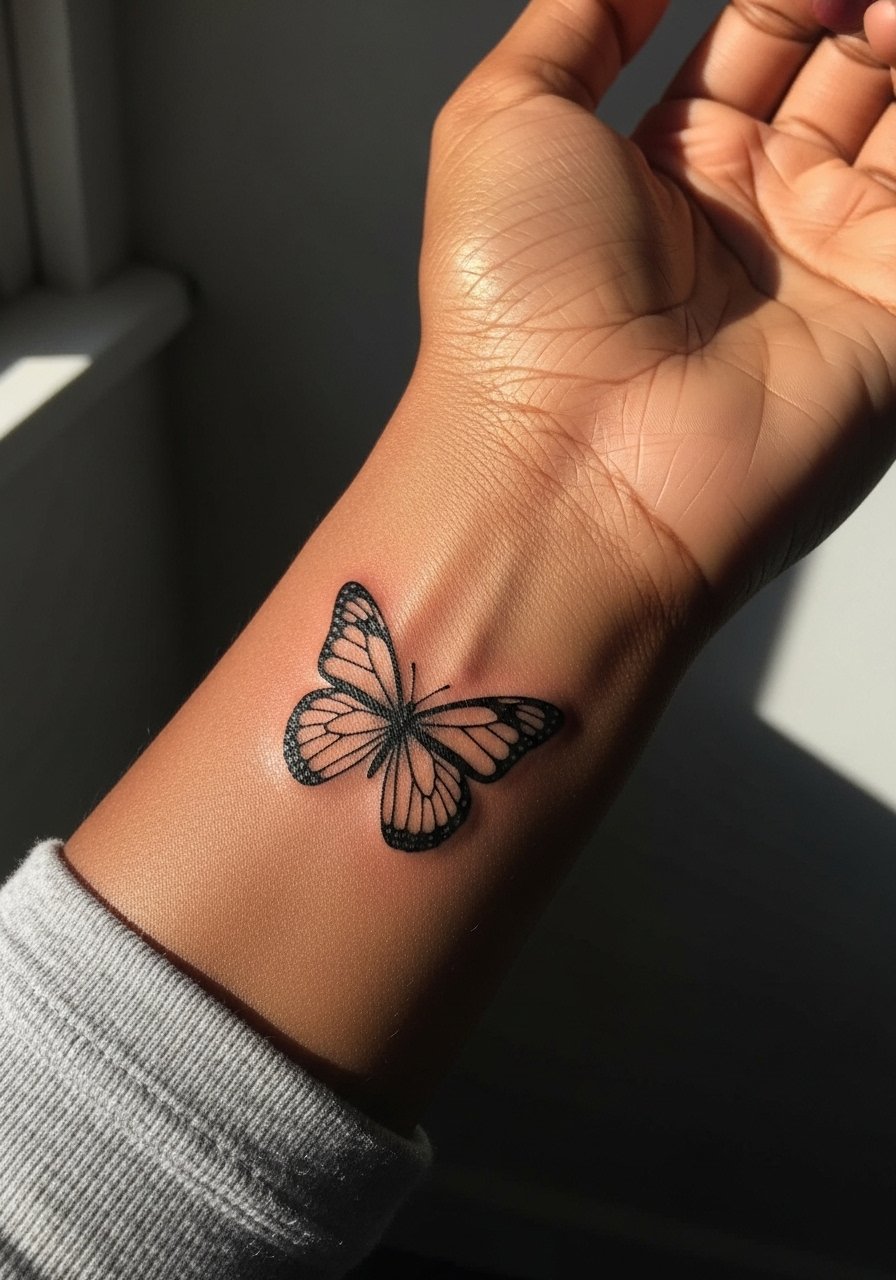
Wrists get a lot of sun exposure and washing so plan for a design that uses slightly stronger linework and simplified wing details. During consultation, show examples of line weight you like and ask for durable spacing between vein lines. Sessions are quick, 20 to 45 minutes. Common mistake is asking for ultra-thin hairline veins that disappear within a year. For the session, wear a loose button-down shirt you can pull aside. A stacked bracelet look pairs well once healed. Touch-ups may be needed at year two.
9. Single Wing Tattoo on Sternum
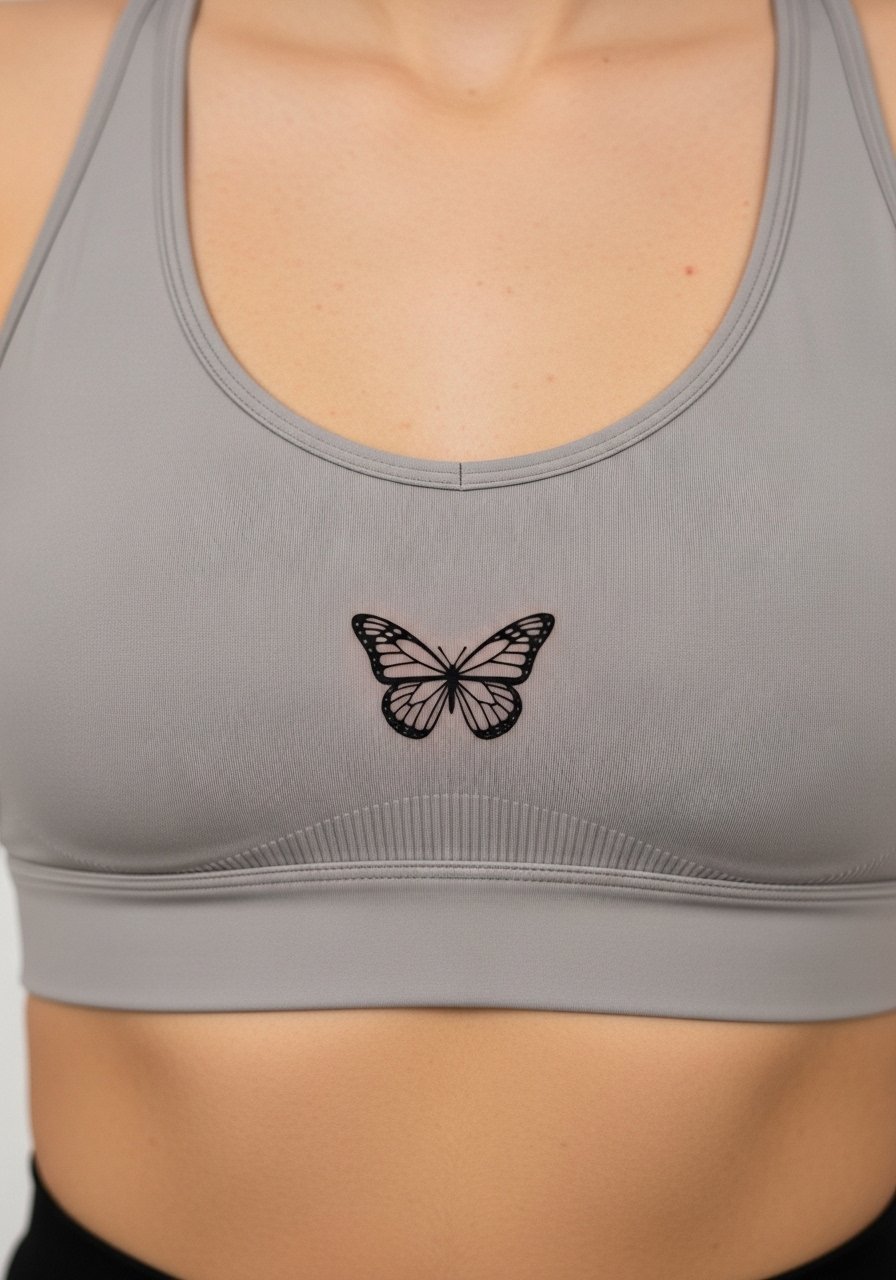
Sternum pieces are intimate and sensitive. Expect a higher pain level and a longer session if you opt for shading. This placement needs an artist experienced with chest contour work. One camp of artists says fine line here blurs too quickly. The other camp argues correct depth and spacing keeps the result readable. Ask the artist where they stand before booking. For the session, wear a strapless or zip-up top that gives clean access while keeping you comfortable. Because of movement and sweat, plan for a touch-up around year two to three.
10. Tiny Flying Pair on the Shoulder Blade
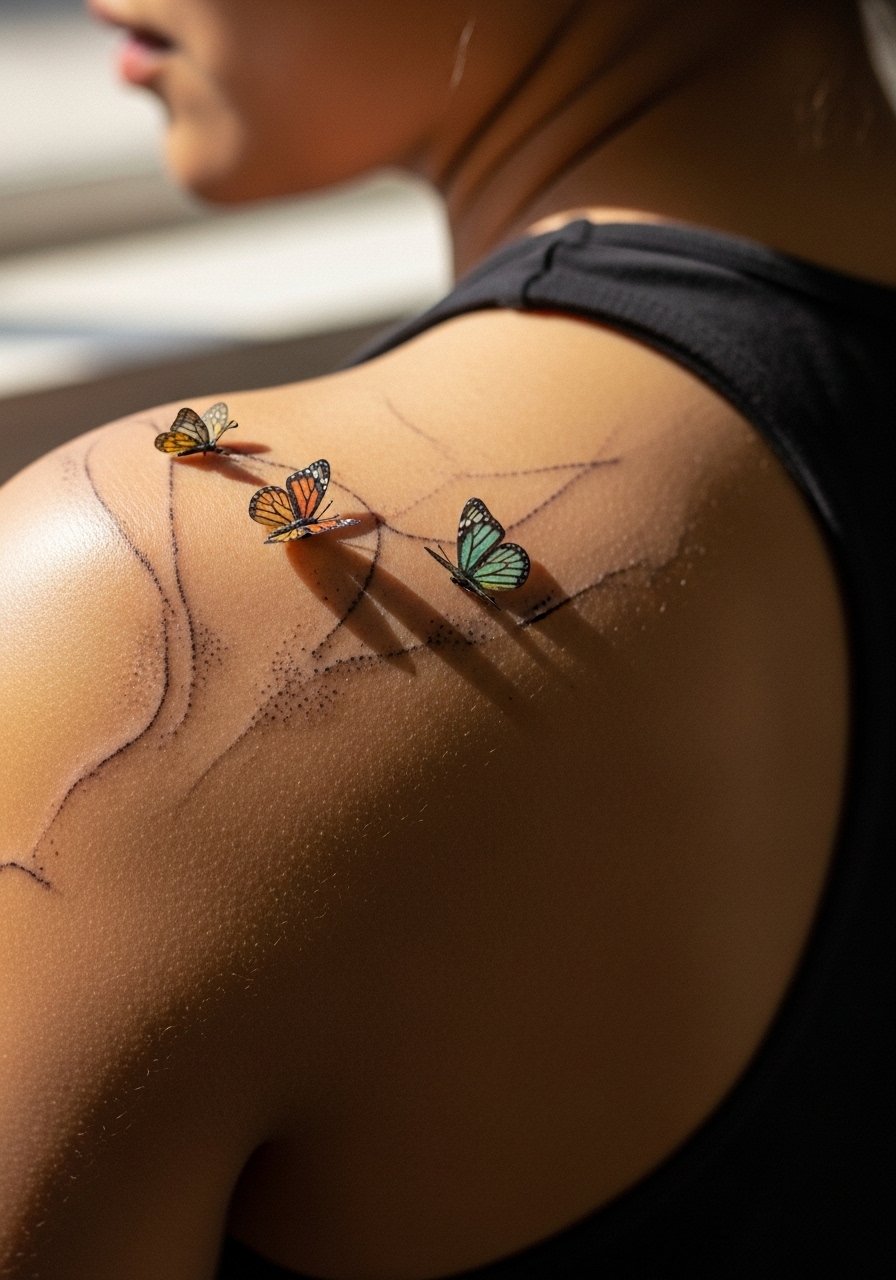
Shoulder blade allows a small cluster with room to breathe. Tell the artist you want slightly increased spacing between the two to prevent merging as the skin ages. Pain is low and sessions are short, 30 to 60 minutes. A common mistake is crowding multiple motifs into a tiny patch. If you like open-back tops, pair this with an open-back slip dress to show movement when you walk. Expect the shapes to soften over years and a small touch-up to sharpen lines at year three.
11. Geometric Wing Overlay on Outer Thigh

Thigh skin is forgiving for detail and larger compositions. Ask for a balance of realistic wing veins and simplified geometric elements to avoid a busy look. Sessions can be longer, 90 minutes to two hours. One common issue is compressing too much dot work into narrow spaces where it will cake during healing. For the session, wear high-waisted shorts so you can expose only the tattoo zone without discomfort. Touch-ups are generally easier here than on hands or feet.
12. Antique-Ink Realism on the Side Rib
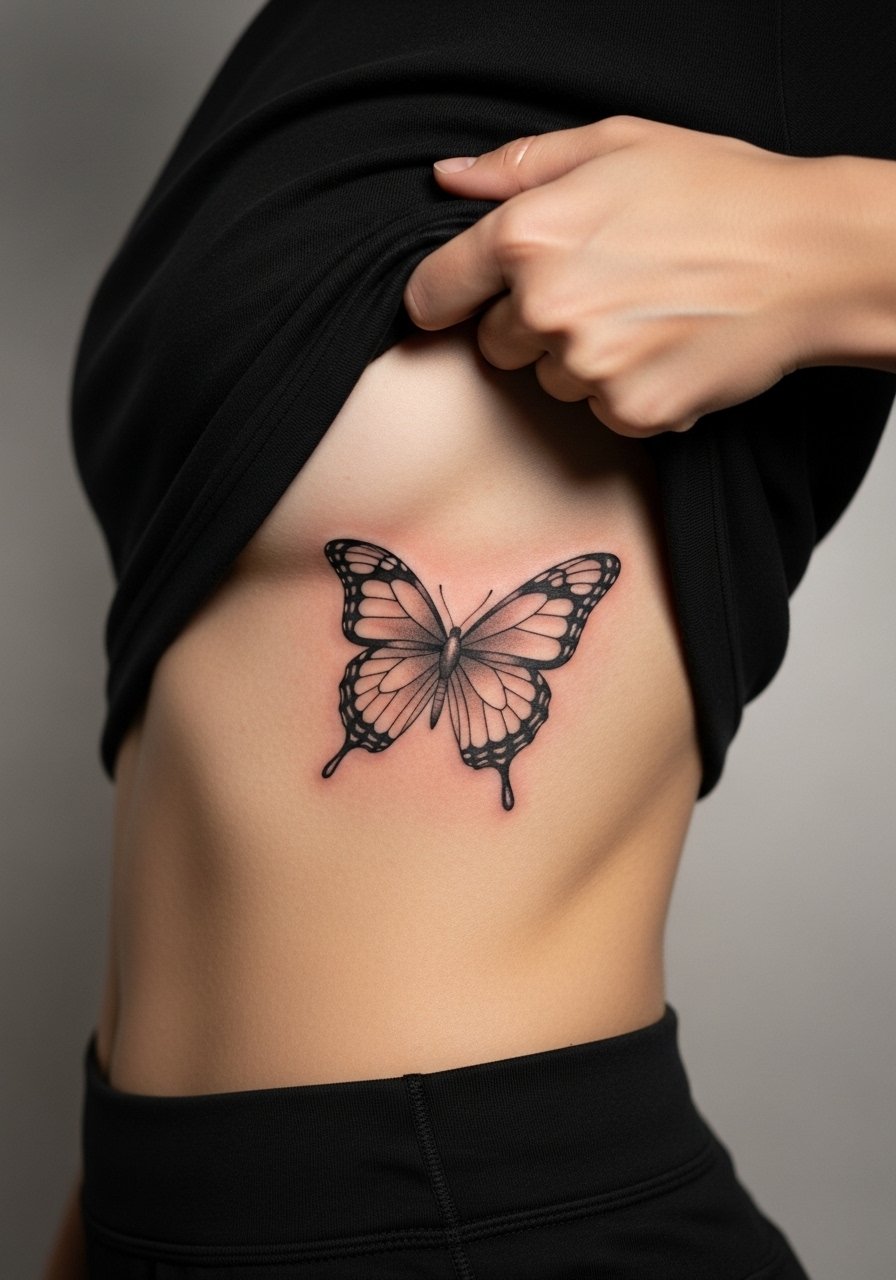
Ribcage tattoos are notorious for pain but reward you with roomy canvas. Tell your artist you want modest negative space around the wings to help aging. Artists divide into two camps on fine line ribs. One camp says the skin stretch makes lines blur fast. The other camp says correct needle depth and spacing work fine. Ask where your artist stands and look for healed photos on ribs in their portfolio. Sessions run longer and may be broken up. Wear a cropped top or zip hoodie you can shift for access. Expect a touch-up at year two or three.
13. Realistic Butterfly Behind the Ear
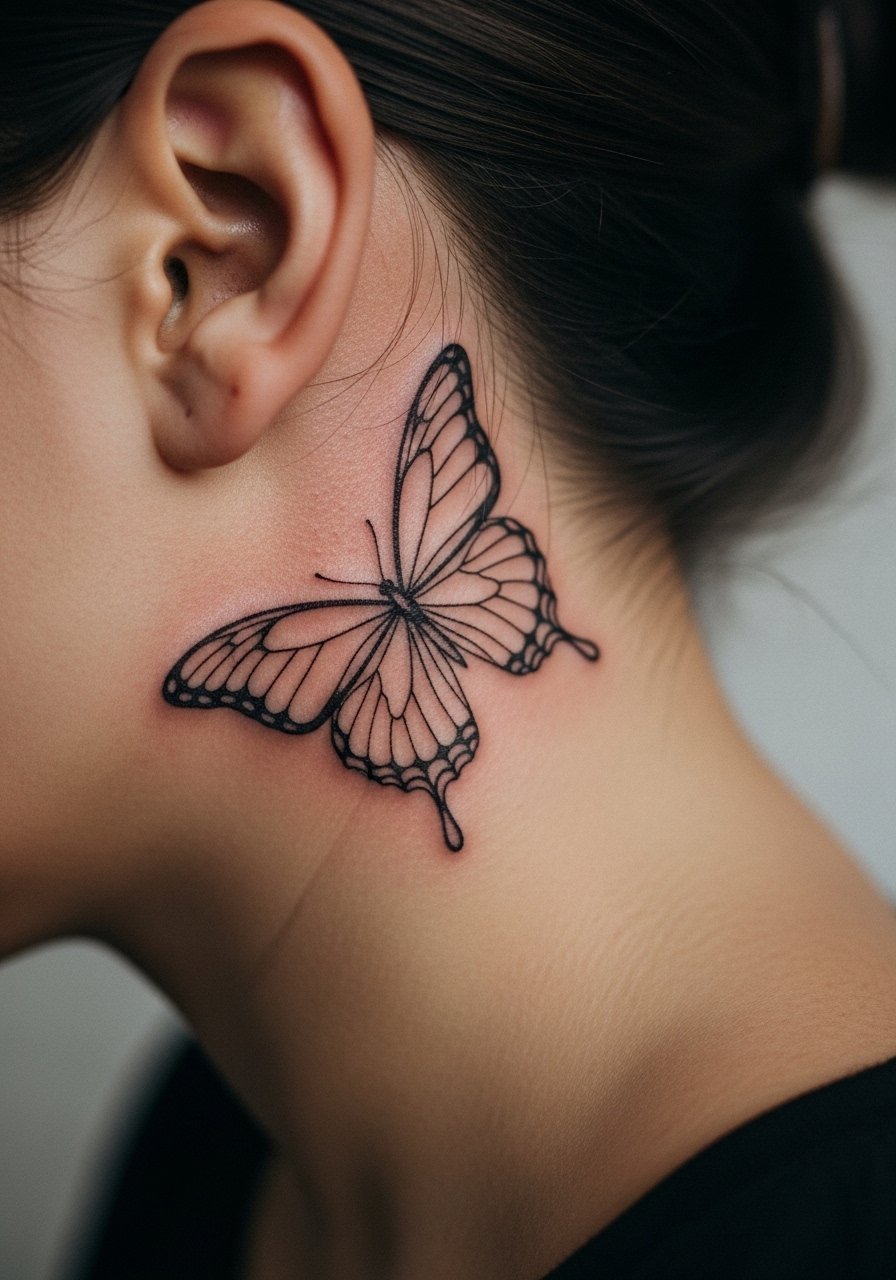
Behind the ear reads delicate and private. The area requires precision because the canvas is small and movement from hair can irritate healing. Ask for simplified veins and slightly bolder anchor points near the wing base so the design does not vanish. Sessions are quick, under 30 minutes. Consider a lightweight silk scarf for travel while healing to keep long hair off the area. Because of limited skin thickness, touch-ups are common within the first year.
14. Dot-Work Realistic Butterfly on the Lower Back
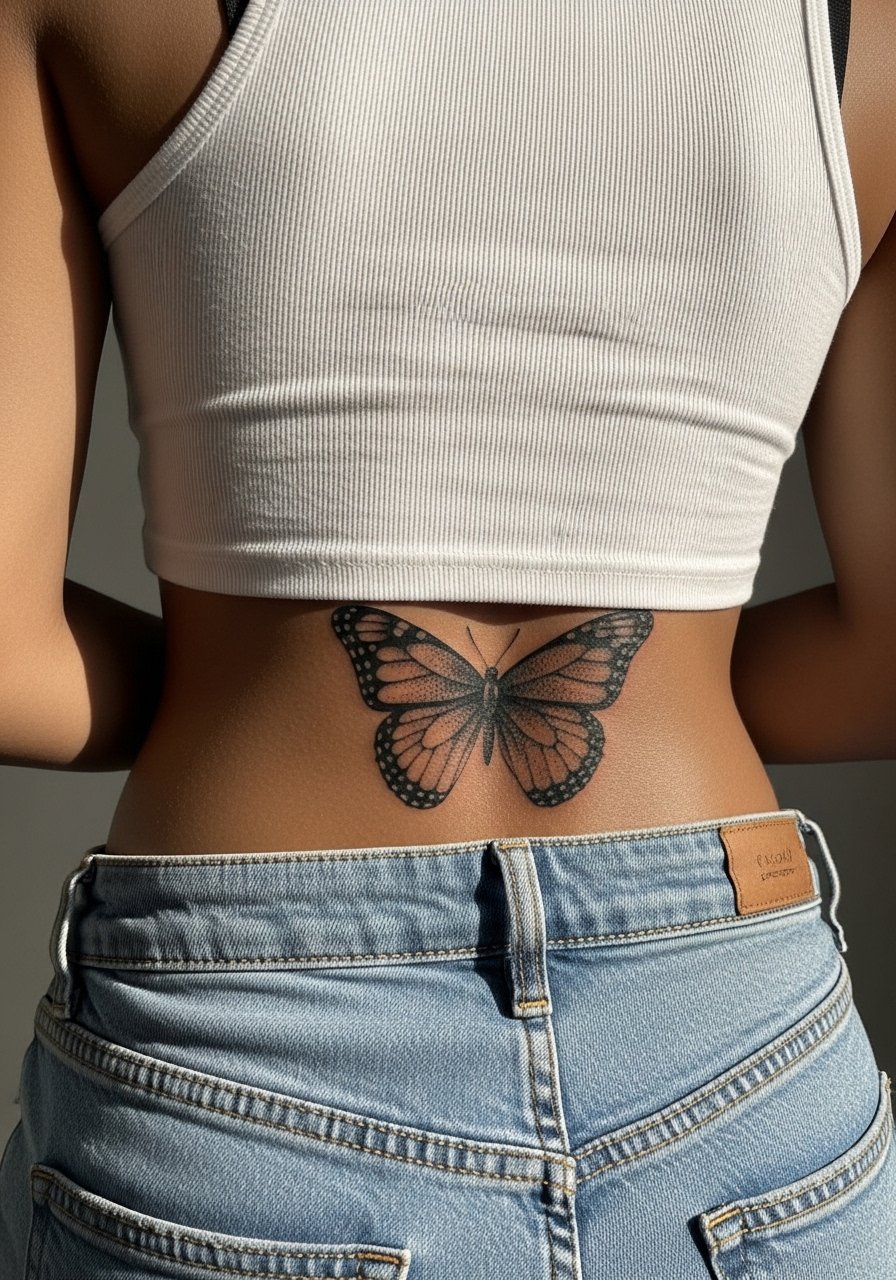
Lower back skin handles dot-work well and gives room for subtle detail. Tell the artist you want denser stipple near the wing base and lighter dots toward the edges to keep a soft fade. Sessions vary from 60 to 120 minutes. Avoid placing the wings too low where waistbands rub during healing. For showing it off, select a low-rise skirt or crop top pairing that reveals the area without constant friction. Touch-ups are straightforward here if needed.
15. Realism with Script Accent on the Rib

Combining small script and realism demands spacing. Tell your artist to place the word off to one side so the ink does not overlap the wing detail. Pain is high on ribs and sessions may be broken up. One mistake is cramming script into a dense part of the wing. The script will blur faster than the wings, so expect a separate touch-up for the lettering. For the session, a strapless or zip hoodie is best to allow access and modesty. Consider which words you want long-term since letter touch-ups are common.
16. Minimalist Shadowed Butterfly on the Thigh Crease
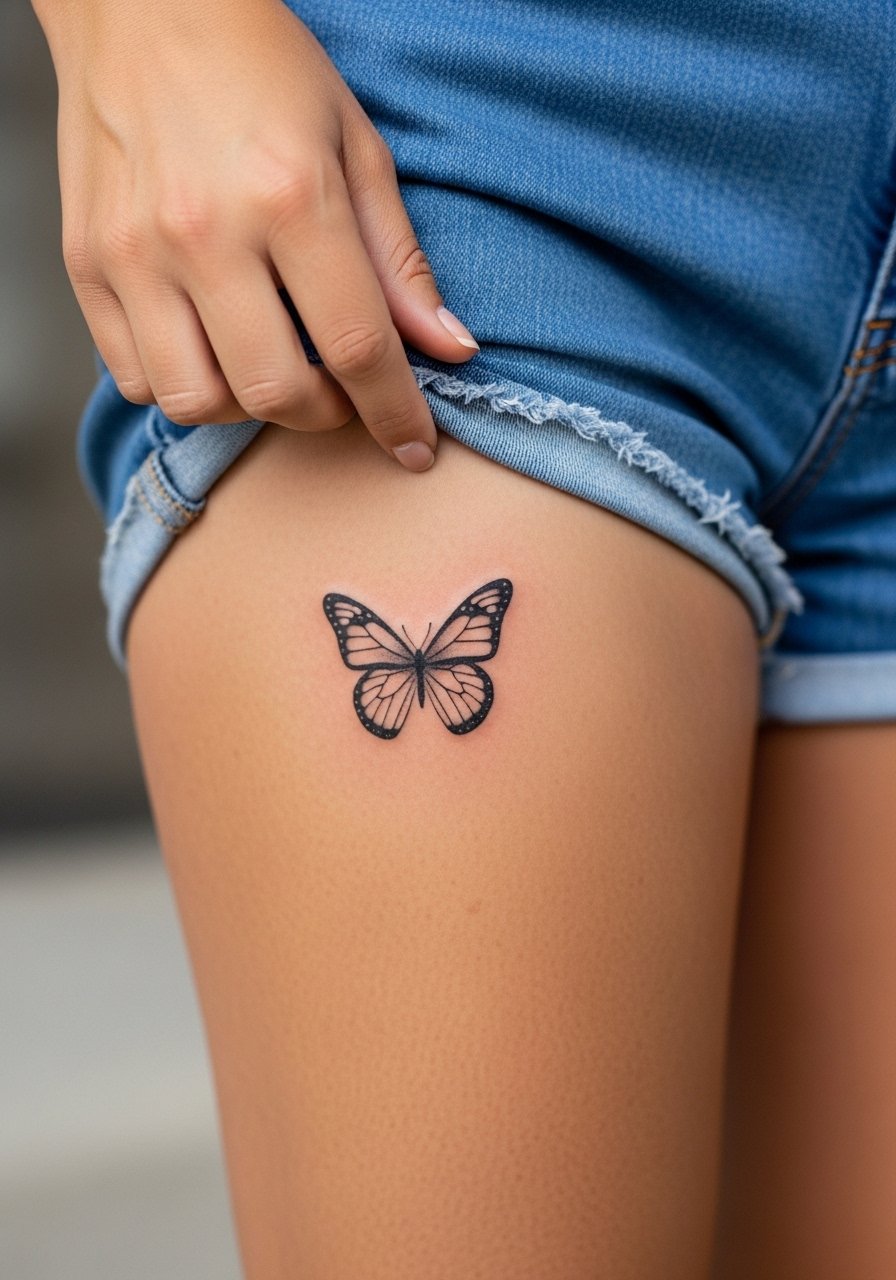
Inner thigh tattoos sit in a private spot that heals differently. They are sensitive and require careful aftercare. Tell your artist you want the shadow as a soft wash under clear linework to keep shape during movement. Sessions are medium length and often done in one sitting. For the session wear loose pants or a wrap skirt for easy access. Because this is an intimate placement, styling tips focus on session comfort rather than show-off outfits. Expect touch-ups after the initial healing window.
17. Realistic Butterfly Over the Elbow Crease
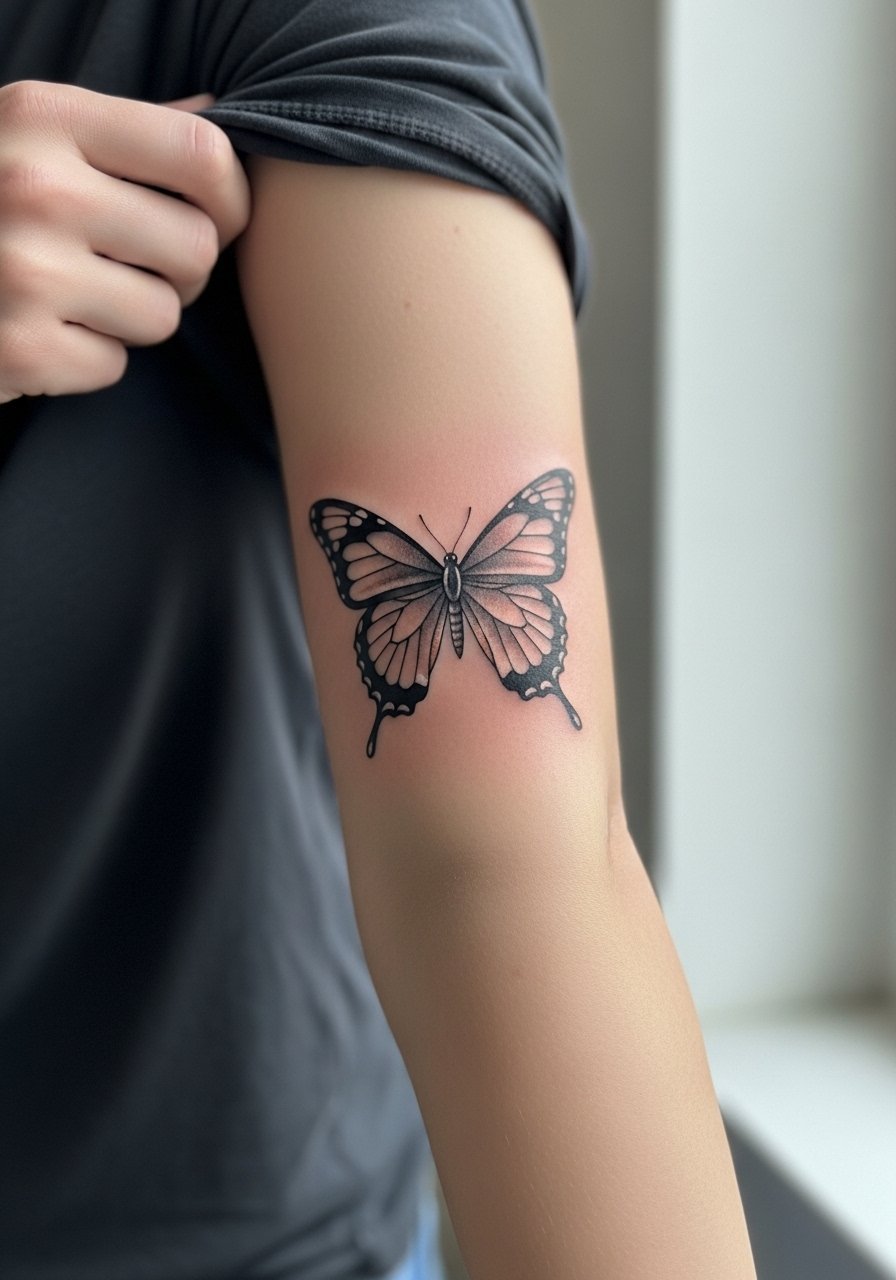
The elbow crease is high friction. Lines here blur faster because the skin folds repeatedly. Ask for simplified wings with durable anchor points and avoid tiny veins crossing the crease. Sessions can sting more due to thin skin over bone. One mistake is insisting on intricate detail exactly over the fold. For the session wear a short-sleeve tee you can roll up comfortably. Plan on a touch-up at year one or two to maintain clarity.
18. Realistic Butterfly on the Back of Hand
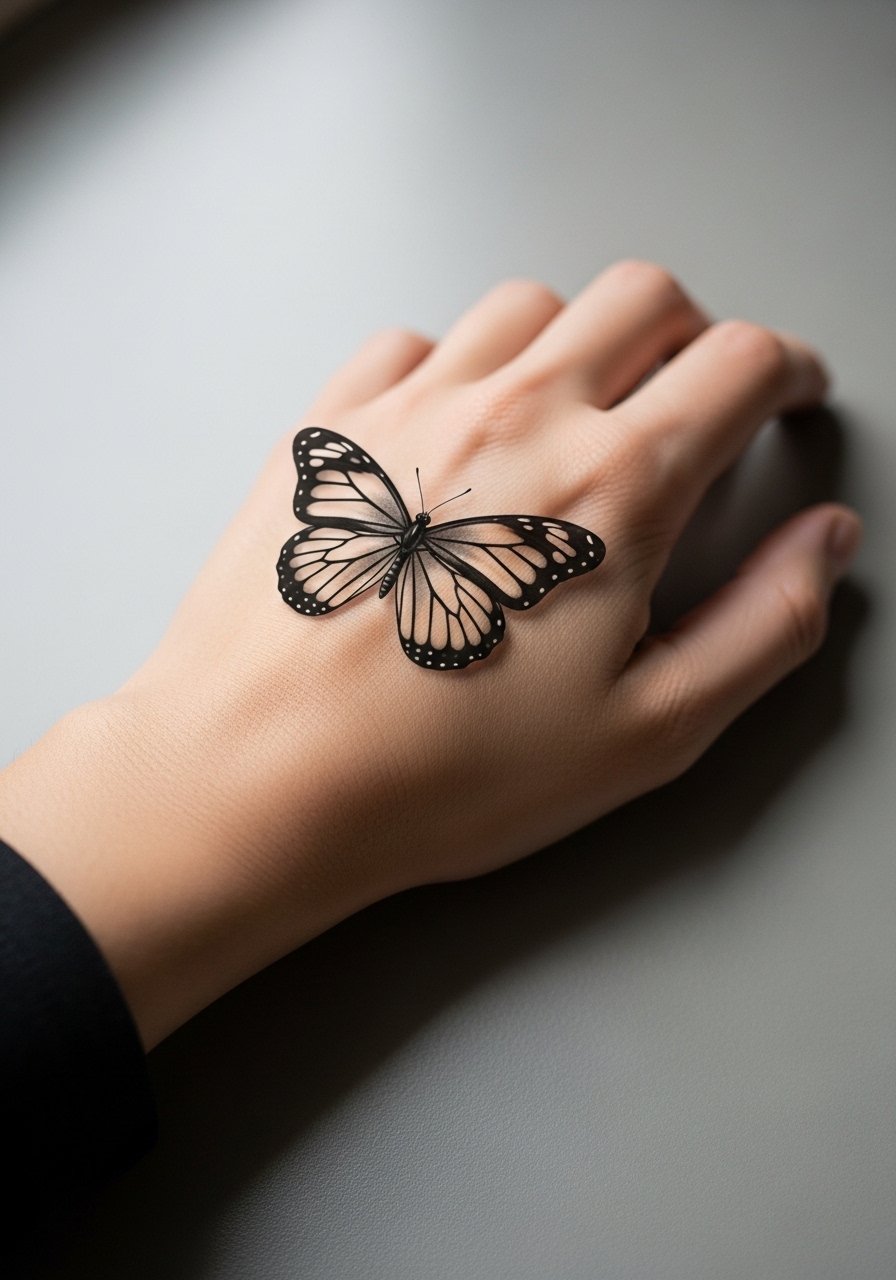
Hand tattoos are controversial in some circles because of visibility and faster fading. One camp argues hands are fair game for expressive work if you accept maintenance. The other camp warns hands see too much washing and sun to keep detail long-term. If you choose this, favor bold anchors and simplified patterns. Sessions are short but expect multiple touch-ups. For the session, remove rings and wear a loose sleeve so the artist has unobstructed access. Think about career visibility and check local norms before committing.
19. Tiny Realistic Butterfly at the Base of the Neck
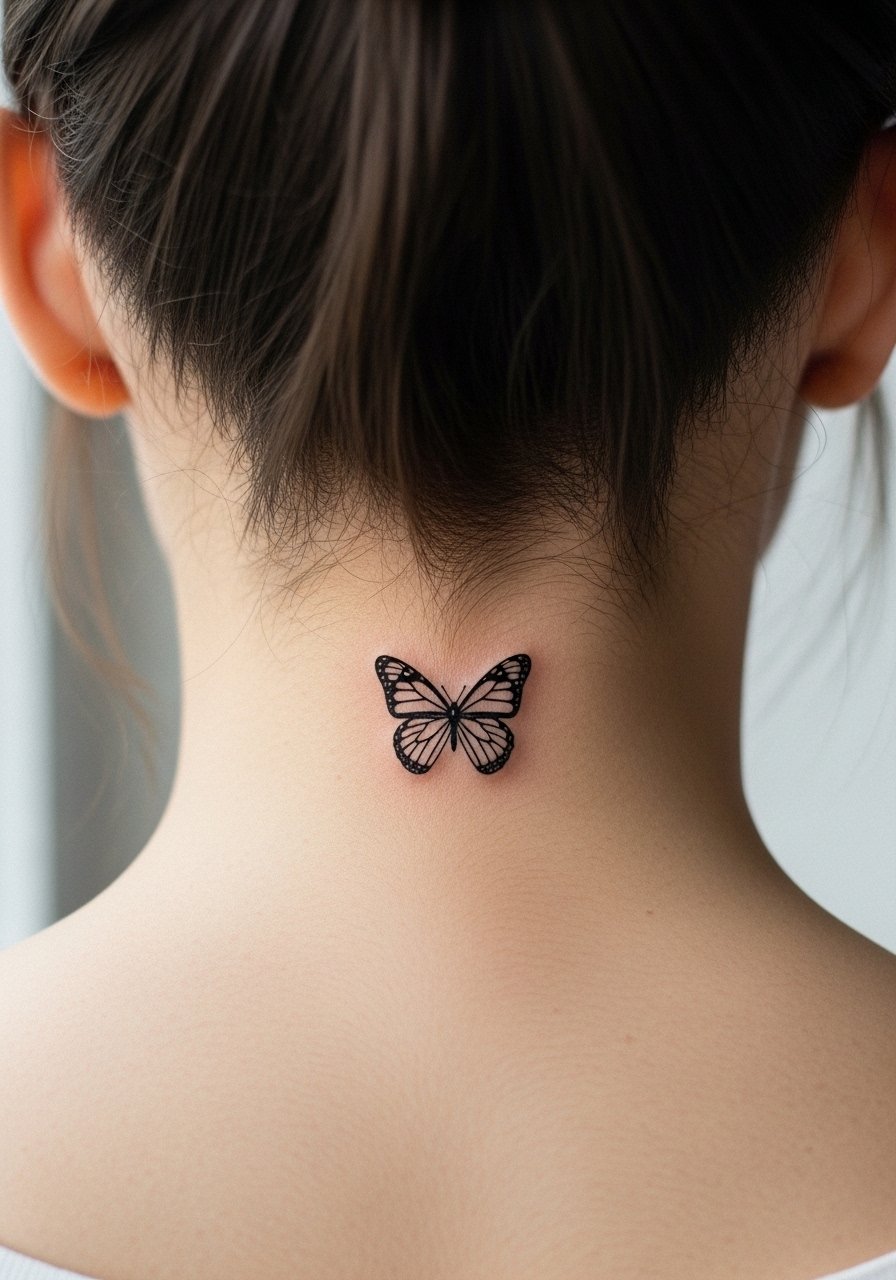
Base of the neck gives a discreet spot that can peek out with an updo. Ask for compact veins and a clear wing outline so movement and hair contact do not erase detail. Sessions run 20 to 40 minutes. A common mistake is placing the design too high where collars rub. For showing it off, tie your hair up and use a light hair claw clip to let the tattoo breathe and avoid friction. Touch-ups are typical by year three.
20. Micro-Realism Butterfly Over the Clavicle Sternum Junction
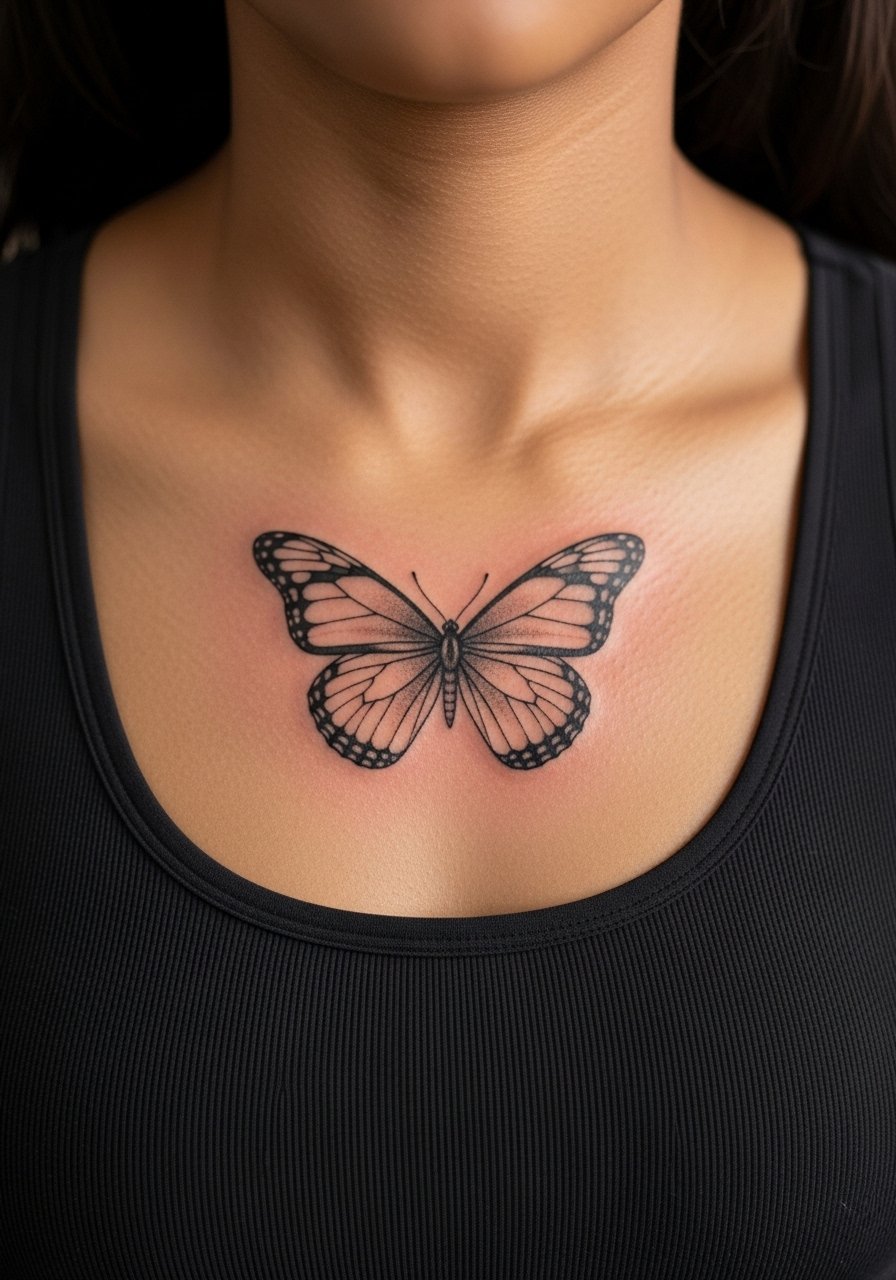
This transitional zone moves with breathing and clothing. Request a local consultation and ask to see healed pieces the artist has done on the clavicle. Sessions can feel sharp but are manageable for small pieces. A mistake is expecting ultra-fine detail near this junction without planning for a touch-up. For the session pick a fitted sports bra for easy access and modesty. Expect a touch-up around year two if you frequently expose the chest to sun.
21. Realistic Butterfly Cluster Along the Spine
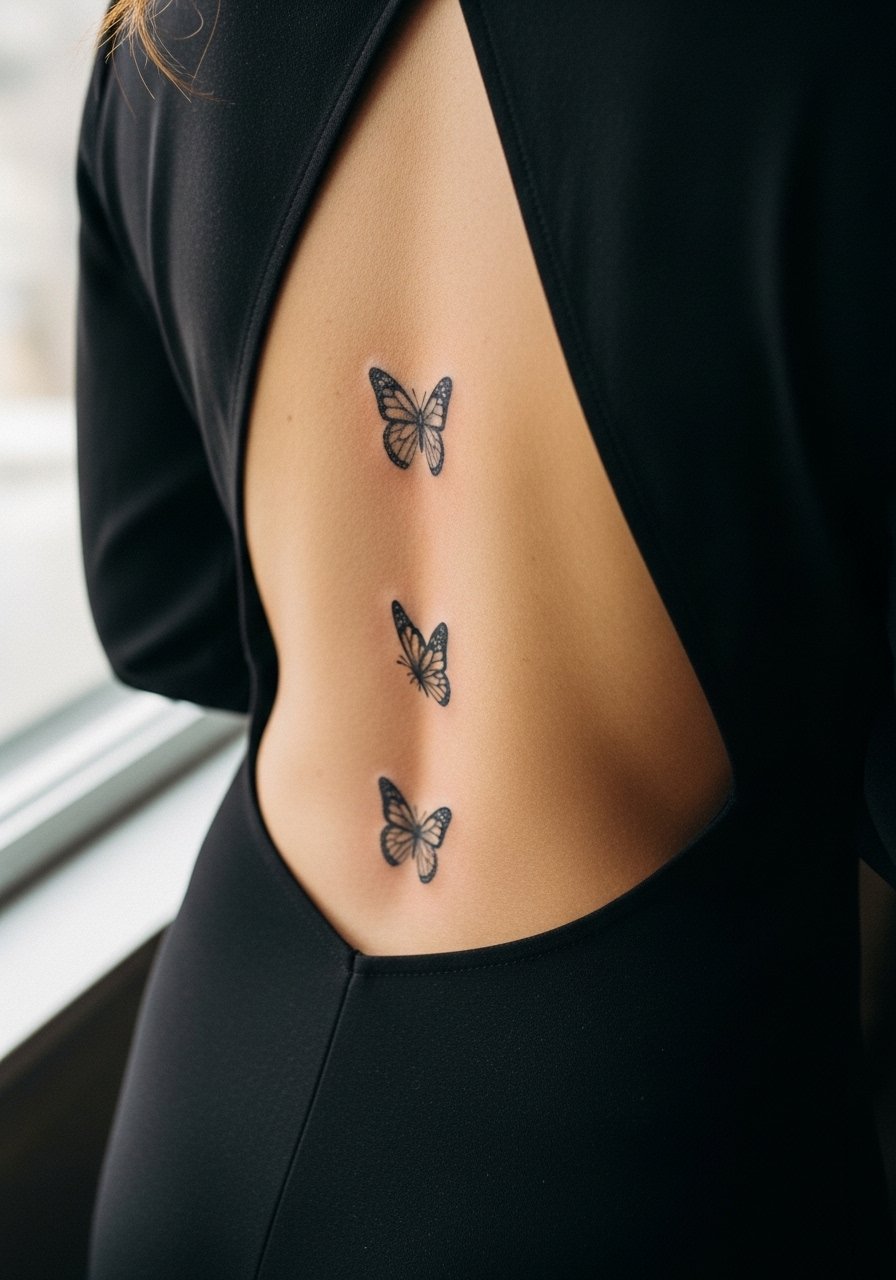
Spine placement is dramatic and well suited to clusters that move with posture. Ask for spacing between each butterfly to prevent merging as the back flexes. Sessions may be longer and sometimes split if the cluster is large. One mistake is stacking too many elements into a single vertical strip that will blur. For showing it off choose an open-back dress that frames the column without placing straps over fresh ink. Touch-ups at year three are common for fine line work on the back.
Frequently Asked Questions
Q: Will fine line realistic butterflies fade faster than bold blackwork?
A: From what I've seen, fine line tends to soften sooner because it relies on thin contrast. Bold black anchors age into a readable shape for longer. If longevity is a priority, ask for slightly stronger primary lines in consultation and plan for a touch-up at year two to three.
Q: Are certain placements better for realistic detail than others?
A: Yes. Flat, low-friction areas like the shoulder blade, thigh, and upper back hold detail longer. Hands, fingers, elbows, and ribs demand simplified designs or expectations of more frequent touch-ups. Show your artist examples of healed work on those exact placements before booking.
Q: How should I dress for a sternum or ribcage session?
A: Wear a fitted sports bra, bandeau, or a zip-up hoodie you can pull aside. That keeps the area accessible and your skin covered for warmth if needed during pauses. A zip-up hoodie is an easy session-day pick for comfort.
Q: I want watercolor accents. Do they need different aftercare?
A: Watercolor-style pigment fades differently because it uses lighter saturation. Aftercare is the same in principle but expect color to need refreshes sooner than black linework. Plan sun protection for the area and a potential color touch-up within a few years.
Q: How do I find an artist who keeps realistic small butterflies readable long-term?
A: Look for healed portfolio photos of small realistic pieces on the exact placement you want. Search shop portfolios, local convention rosters, and community forums. Ask for healed images at six months and one year to judge their results.