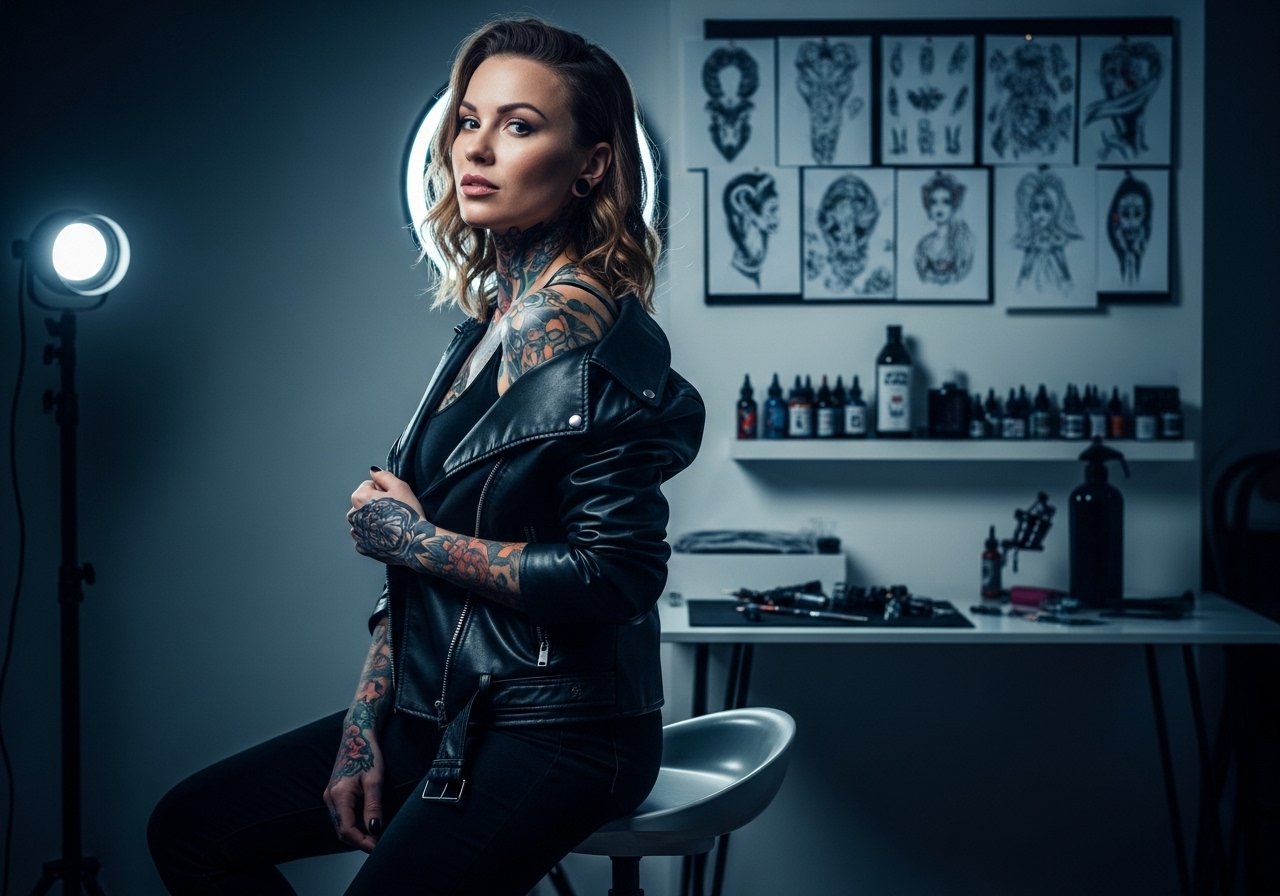
Fine line trends dominate feeds, but Chicano hand work keeps proving a different rule. In my experience the hand pieces that age with dignity are the ones that respect spacing, skin movement, and bold black wash where it matters. These ideas focus on what holds up, what to ask your artist for in the chair, and how to wear the finished piece so the details read for years.
1. Classic Sugar Skull on the Back of the Hand

I've seen this motif on hands for years and it still reads well when done with bold outlines and mid-tone wash instead of hairline detail. Tell your artist you want the eye sockets and teeth to keep negative space, and ask for denser shading in the cheeks rather than tiny dot work that will blur from hand use. Expect a moderate pain level and a short session under ninety minutes. The common mistake is forcing micro-detail into a tiny hand canvas, which looks crisp fresh and blurs fast. For showing it off, a thin chain bracelet keeps attention on the back of the hand without crowding the skull.
2. Script Name Along the Side of a Finger

Finger script is small and honest work. Fair warning, it needs thicker letterforms than you might like so the counters do not close up over two to three years. Ask for a single-needle outline with a slightly heavier weight and plan on a touch-up at year one. The common mistake is requesting ultra-delicate cursive for a knuckle area that sees constant handwashing. The session is short but stingy. For the appointment, wear a cotton short-sleeve shirt so the artist can position your hand comfortably without fabric bunching.
3. Lowrider Car Miniature on the Thumb Side
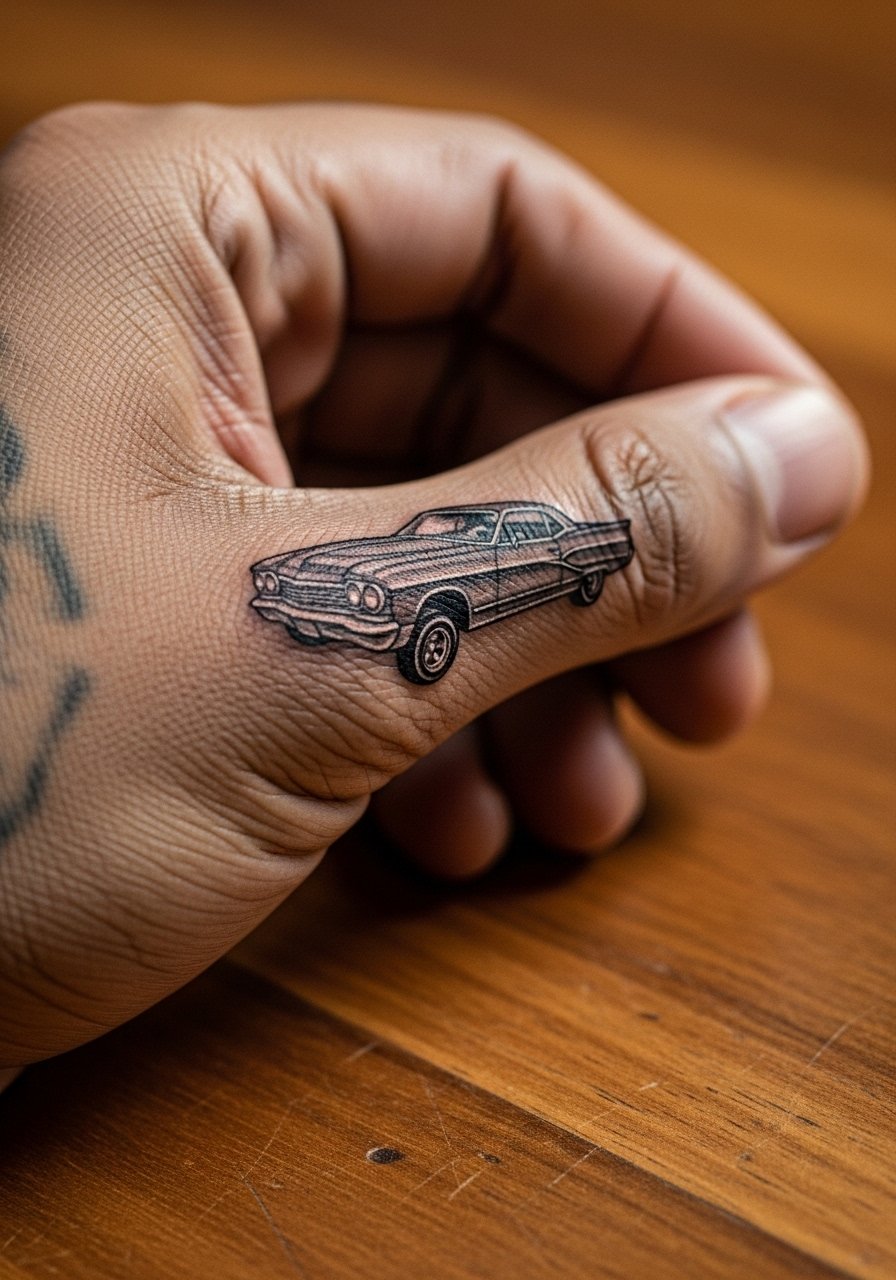
This is a Chicano hallmark rendered small and readable. I recommend a compact silhouette with bold roofline and wheel arches rather than interior chrome details that vanish. During consult say you want the silhouette to read from five feet, not just from the chair. The big mistake is cramming dashboard ornamentation into the space. Expect high visibility and moderate touch-up likelihood because the thumb base sees friction. Pair with a minimal leather cuff bracelet for a show-off look that keeps the car silhouette readable.
4. Rosary Beads Draped Across the Knuckles

Rosary beads work with bold links and selective highlight. I advise asking the artist to treat the beads as small beads rather than tiny dots, and to leave a thin highlight band on each bead for depth. Knuckle placement hurts more than the back of the hand, so expect a sharper, short session. The most common error is tiny beads that blur into a gray line; spacing and bead size prevent that. This design ages depending on hand use and sun exposure, so plan for a touch-up at two to three years. For showing it off, stacked rings can frame the beads, and a thin sterling ring set keeps the focus without overwhelming the knuckles.
5. La Virgen Mini Portrait on the Side of the Hand

Religious portraiture demands clear contour work and strong mid-tone shading to hold over time. Ask to preserve larger planes of shadow and to avoid super fine facial textures that will soften. This placement is visible and meaningful, and I have noticed that pieces with more blocky shading age better than photo-real micro-etching. If cultural origin matters to you, be explicit about whether this is homage or reinterpretation so the final design honors context. Wear a loose short-sleeve tee to the session so your hand is free and comfortable.
6. Scripted Barrio Tag Along the Wrist Edge

Wrist-edge script reads well if the lettering is slightly condensed with heavier strokes. In consultations, show the exact font size and ask the artist to stencil it on and wear it for a few minutes to confirm flow. The mistake is choosing a font with narrow counters that disappear under daily motion. A wrist script can soften at three to five years and usually needs a touch-up sooner than larger pieces. For the session, a button-down shirt you can pull aside helps the artist access the wrist without tugging fabric.
Studio Day Picks
The back-of-hand, thumb base, and knuckle pieces above all have different prep needs, and a few compact items make the session and first week smoother.
-
Stencil transfer paper kit. Lets you test the exact placement on your hand before the needle touches skin, which matters for knuckle and thumb-base pieces.
-
Disposable numbing wipes. Useful for sensitive knuckle or thumb-side sessions when you need a short window of relief without heavy creams.
-
Thin protective film roll. Helps protect hand tattoos from friction and water during the first few days of healing.
-
Fragrance-free gentle body wash. Cleans the area without stripping ink that fine line and mid-tone wash depend on.
-
Aquaphor healing ointment. A thin layer in the first 48 hours locks in moisture for detailed hand pieces while allowing the skin to breathe.
7. Chicano-Style Spider Web on the Palm Edge

Palm-edge pieces require conversation about longevity because palm skin regenerates differently. I advise a slightly larger web pattern with thicker bridges so the geometry does not collapse into a gray smudge. The main mistake is asking for filigree-level detail in an area that takes heavy abrasion. Palm sessions can feel raw and heal with heavier scabbing, so expect a shorter but intense appointment and a higher chance of partial fading. For post-session wear and to show the piece later, a soft cotton glove can protect the area during chores.
8. Black Lettering Across the Knuckle Tops

Knuckle letters are classic but demand bold counters and steady spacing. Tell the artist you want block letters with at least two millimeters of open counter in each glyph. The common mistake is picking a script or narrow font which collapses after a year. Knuckle skin sees lots of movement and washing, so touch-ups are common. The session is brief but sharp. For styling, wear a minimal chain bracelet or nothing at all to let the lettering speak plainly.
9. Floral Calavera on the Thumb Knuckle
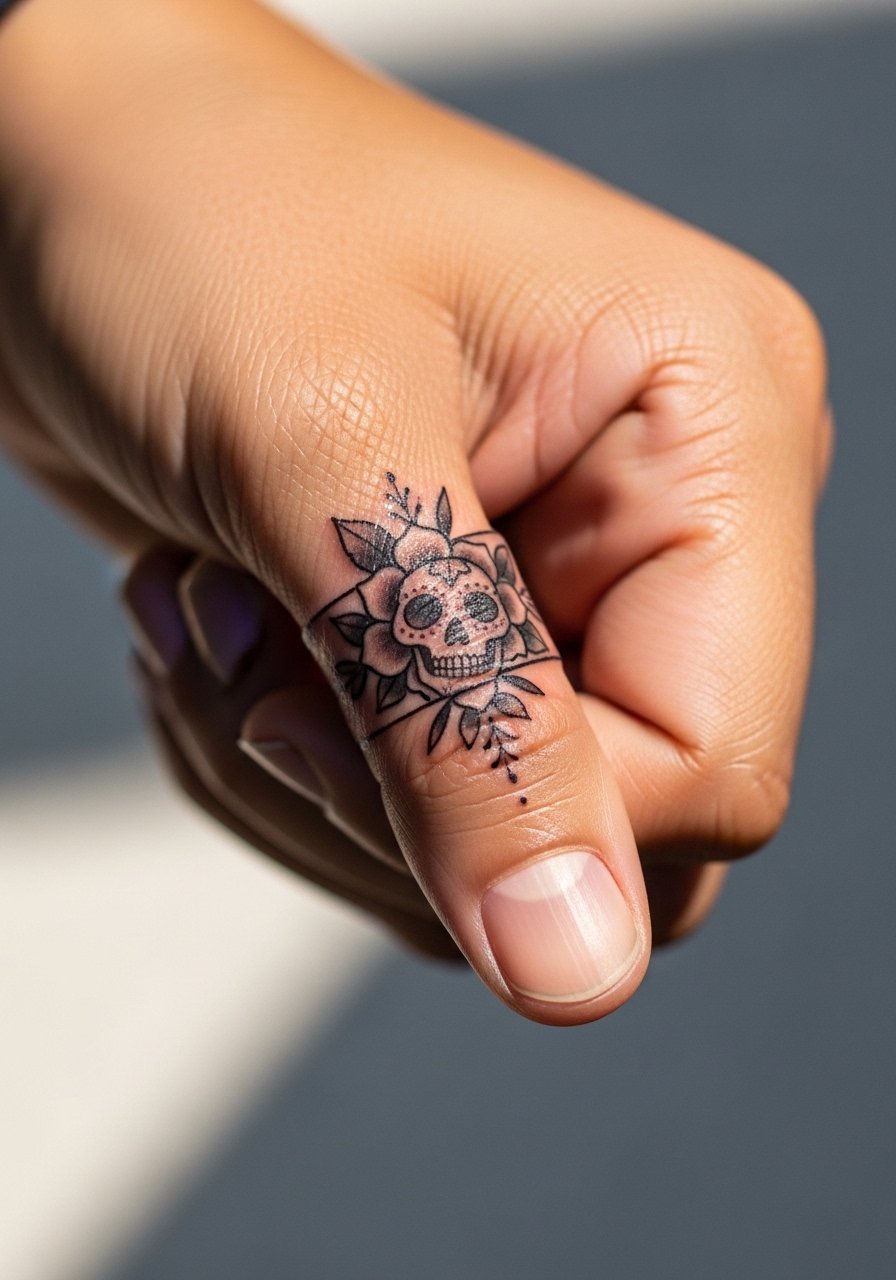
This is a compact mix of ornament and iconography. Ask for larger petal shapes and solid black fills in the deepest shadows. The mistake is packing too many petals into a finger-sized area. Expect the session to be quick and the first week to require careful washing because hand motion pulls at scabs. If cultural considerations are part of your decision, mention you want a respectful nod rather than a caricature. Pair with a thin signet ring that sits away from the knuckle so the artwork stays visible.
10. Portrait Silhouette with Rosary Loop

Combining silhouette portraiture with rosary elements reads clearly when the portrait is reduced to strong shapes. During consult, request the face as a single dark plane and the rosary as a thicker chain with three or four visible beads. The frequent error is insisting on micro-portrait detail that vanishes. This placement often needs a touch-up at two to three years if the rosary beads are very small. For the session wear, a short-sleeve button shirt that keeps your arm free makes positioning easier.
11. Teardrop with Script Under the Pinky

This tiny emotional marker calls for proportion adjustments so the script is legible. Ask the artist to stencil the word larger than you think and to leave breathing room around the teardrop. The pitfall is tiny script that becomes illegible after a year. Pinky placement stings more than the flat of the hand and can require a touch-up sooner. For showing this subtle mark, a delicate stacking ring draws the eye to the area without covering the ink.
12. Cross with Sunburst on the Middle Finger
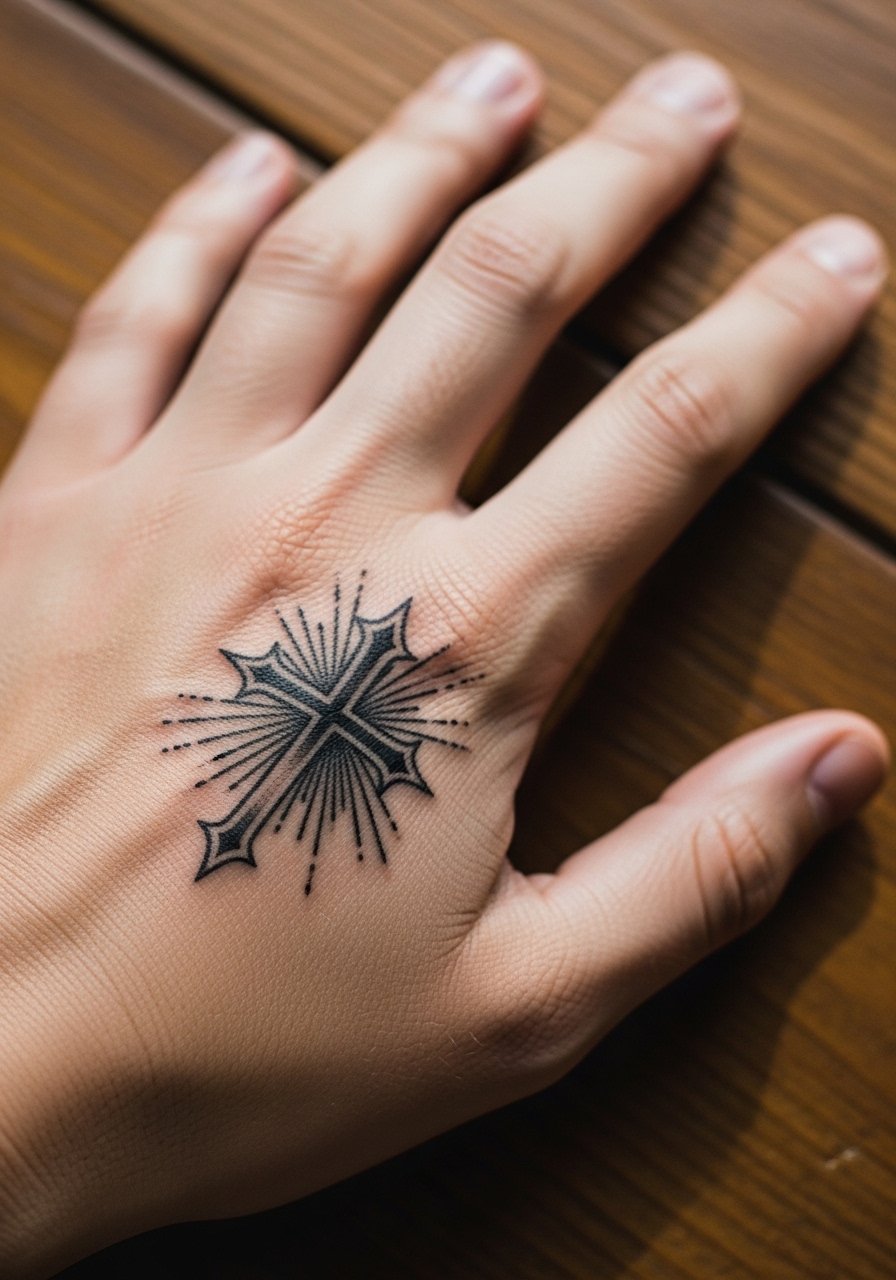
Rays need negative space to read as separate elements, so ask for wider gaps between the beams. The common mistake is tight rays that blur into a halo. Middle finger work is highly visible and prone to wear from washing and phone use. Expect a brisk session and a realistic touch-up plan at year two. For display, a matte band ring frames the finger while letting the cross remain the focal point.
13. Chicano Script Band Around the Base of the Hand

A script band benefits from consistent letter height and deliberate spacing so the band reads as a continuous piece when the hand moves. During consultation, provide full-word references and ask for a test stencil that wraps the hand so you can see the flow. The mistake is ignoring how the hand flexes, which can kink letters. This placement ages moderately and often looks better with a one-year touch-up. Pair with a woven leather bracelet to complement the band without hiding it.
14. Mini Lowrider Wheel on the Thumb Nail Bed Edge
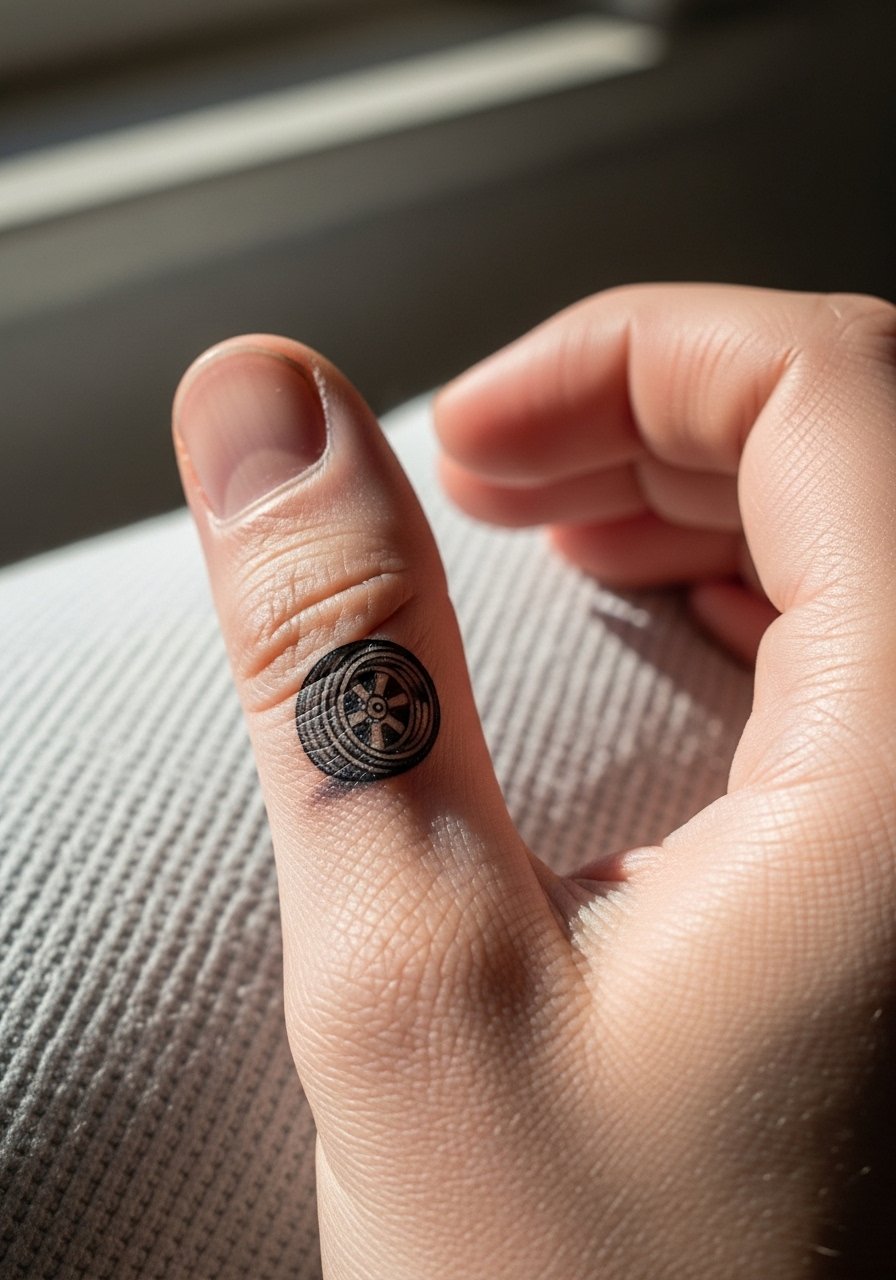
Edge-of-nail placements are delicate. Ask the artist for a bold rim and removed inner detail so the wheel retains clarity. The main mistake is insisting on spoked micro-detail that fades quickly. This spot hurts and encounters friction from objects, so plan on partial loss and a possible touch-up. For the session, trim your nails and wear a short-sleeve top so positioning is easy.
15. Chicano Lettering with Filigree Filler on the Side of the Palm
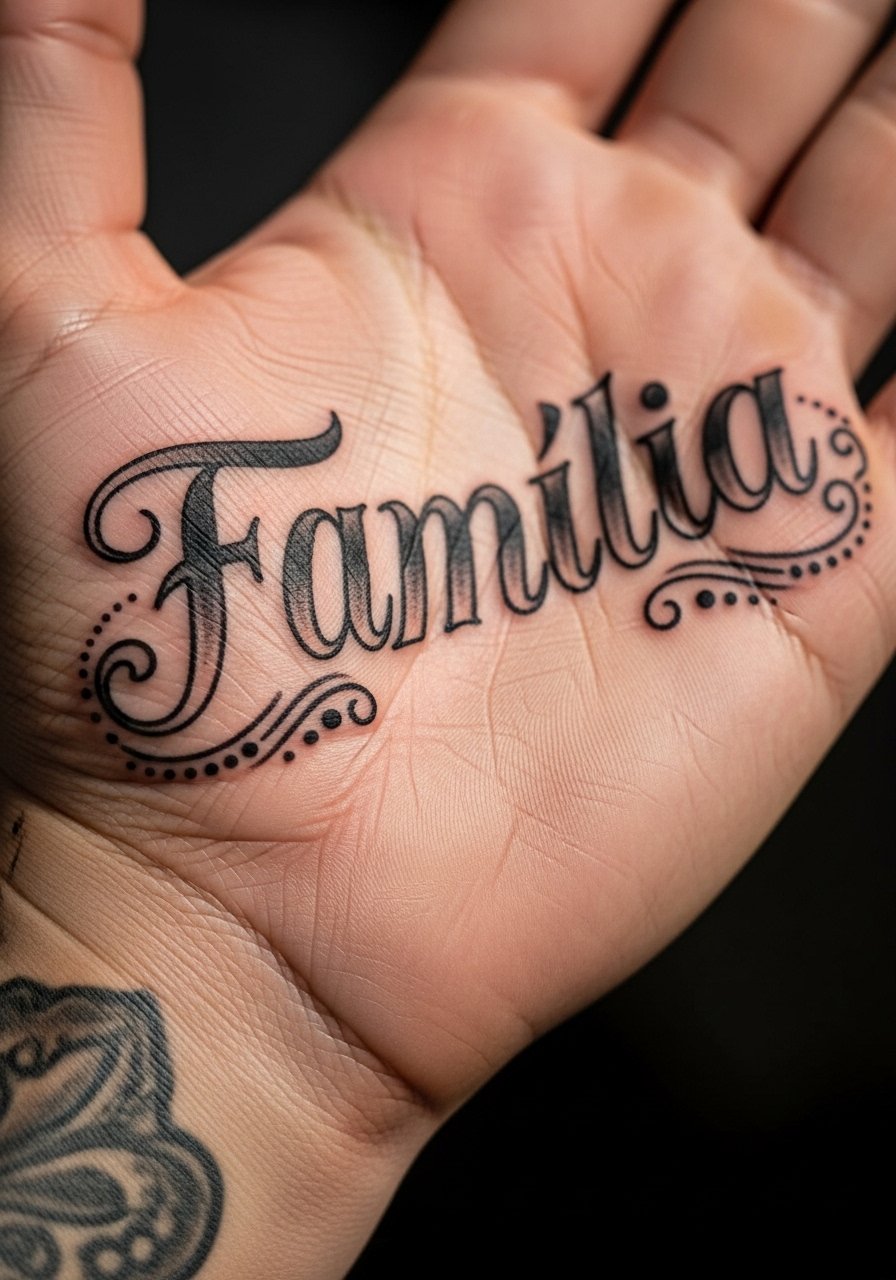
Side-palm pieces need a mix of bold letterforms and restrained filler. Ask for the filigree to be airy and not dense so it does not fill into a gray block. The frequent error is heavy filler that ages into muddy texture. Side-palm contact with surfaces increases fade, so expect touch-ups. This placement can feel sharp during tattooing because of the thinner skin. A soft wristband worn later can frame the area when you want to cover it.
16. Masked Luchador Mini on the Back of the Hand
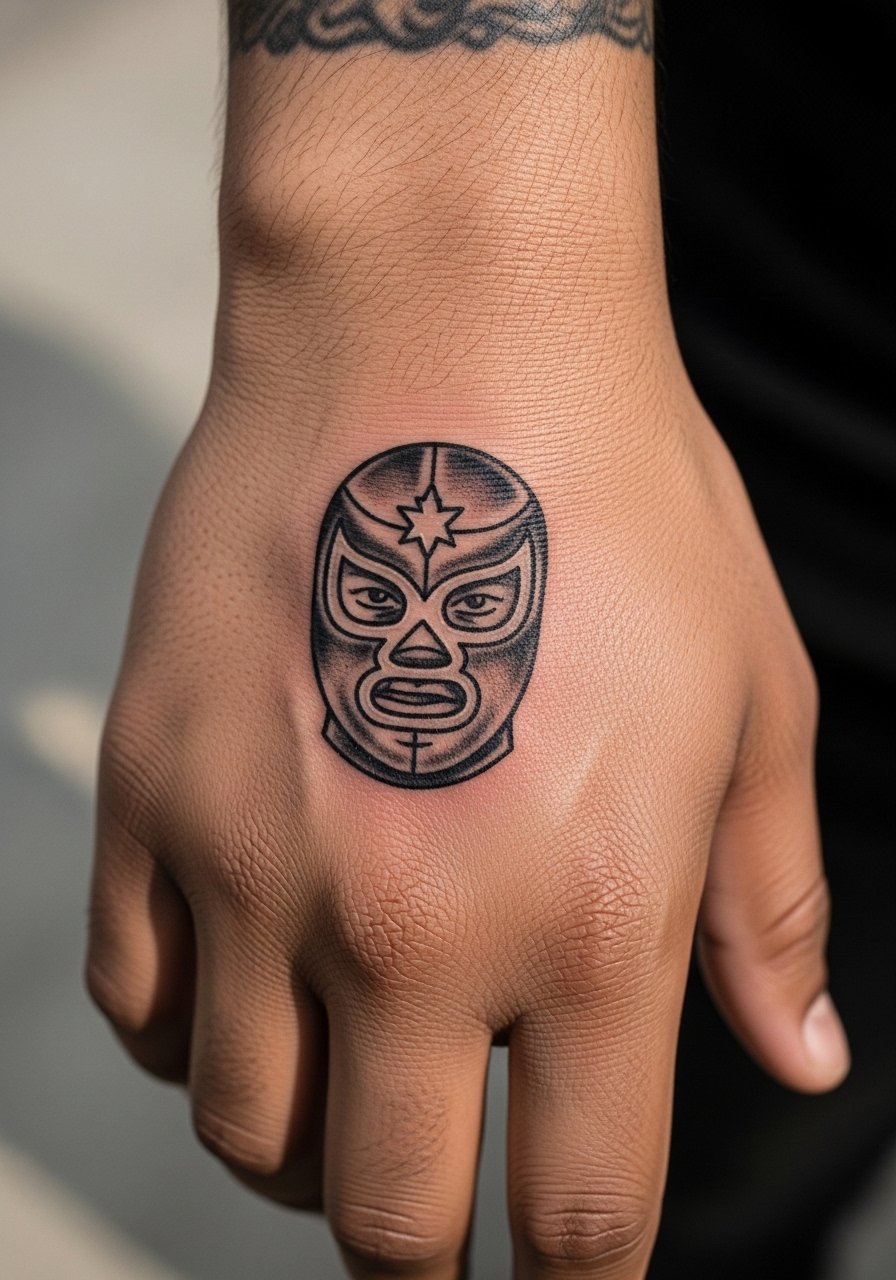
Iconic masks read well when simplified into strong black planes and a few highlight lines. Tell the artist to prioritize silhouette and facial cut lines over micro-patterns in the mask fabric. The mistake is trying to capture fabric texture at tiny scale. This design looks bold across a few years because of its contrast. Expect a moderate session and occasional touch-ups if you often rest your hand on surfaces. For showing it off, a simple gold chain bracelet keeps attention near the back of the hand.
17. Sacred Heart Micro on the Thumb Side Near the Wrist

Sacred heart iconography translates to small hand placements when you scale down to bold core shapes. Request a clear heart outline, a solid center, and simplified flame lines to avoid detail loss. The issue people face is insisting on ornate filigree that the area cannot carry. This spot is visible and ages based on wrist movement, so plan on a touch-up at two to three years. For the session, wear a short-sleeve tee you can adjust so the artist has free access.
18. Small Aztec Pattern Panel on the Back of the Hand
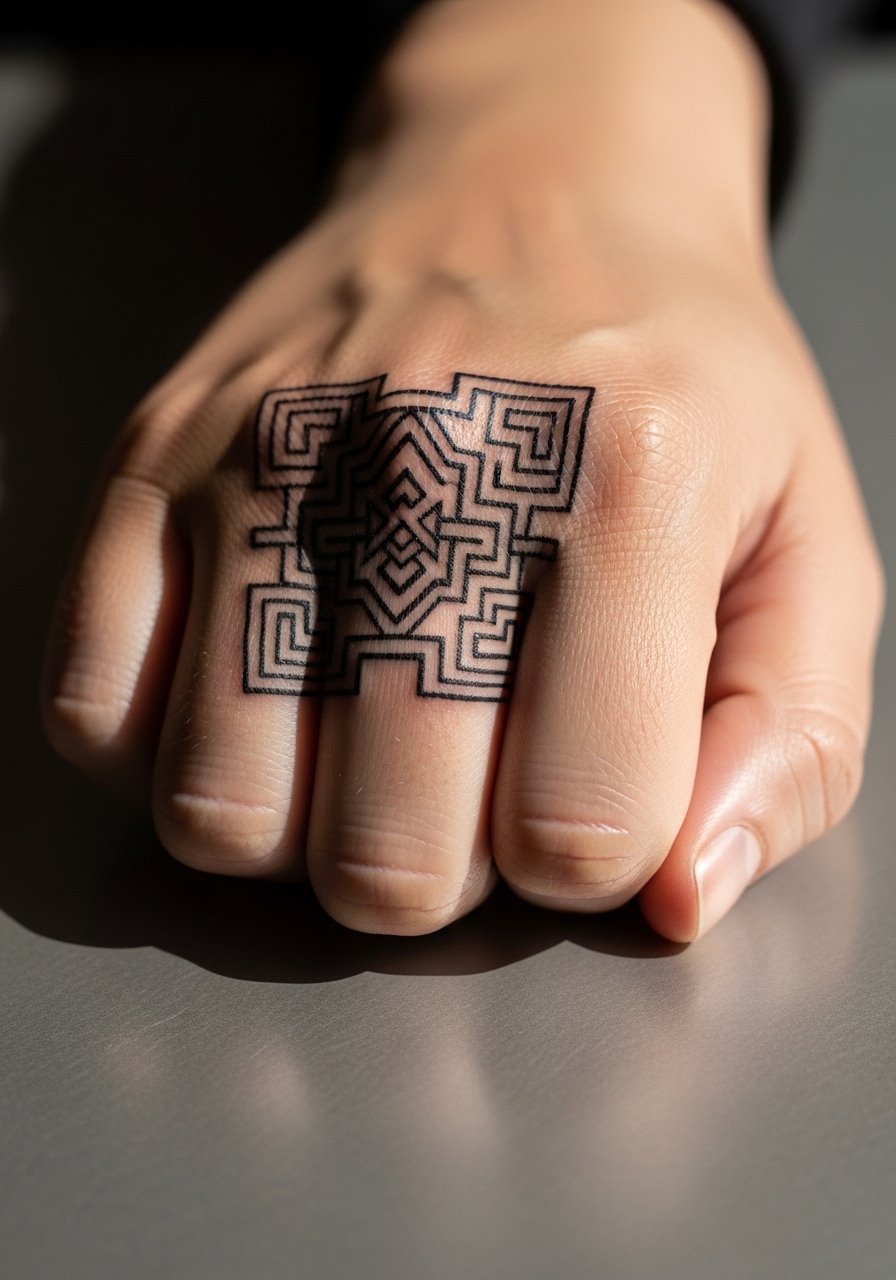
Geometric panels require negative space planning to avoid visual collapse. Ask your artist to space the motifs and to use heavier black fills for primary shapes while keeping secondary elements sparse. The mistake is turning a panel into a texture piece at too small a scale. This placement handles heavier black better than dotted shading, so it tends to age more predictably. A woven cuff bracelet plays well with geometric edges when you want to accessorize.
19. Tiny Portrait with Name Script Along the Wrist Crease

Pairing a portrait with a name on the wrist crease needs scale management. Ask the artist to keep the portrait as a bold silhouette so facial details do not smear into the script. Common mistakes are tiny faces and narrow script that both become unreadable. The wrist crease moves and can blur thin strokes, so expect touch-ups. For wearing to the session, a loose button-down shirt keeps the wrist accessible and comfortable.
20. Chain Link Bracelet Tattoo Around the Wrist

A chain tattoo needs distinct link separation so it looks like a bracelet at a glance. Request each link to have a small gap and a subtle highlight band to suggest form. The error is connecting links too tightly which turns the band into a solid black ring over time. Session-wise it is quick but precise. For showing the effect as jewelry, wear a minimal leather strap watch on the opposite wrist to balance your look.
21. Small Coronation Crown Above the Thumb Knuckle

Crowns read best with solid base shapes and fewer ornate spikes. I suggest a low crown with three prominent points rather than many tiny spires. The typical error is over-detailing the crown top, which blurs with knocks and washing. This area is susceptible to abrasion so plan for a touch-up at two years. For the session, keep your hand flexible and wear a short-sleeve shirt so the artist can position it without strain.
Frequently Asked Questions
Q: How long will a Chicano-style hand tattoo keep crisp linework on knuckles and fingers?
A: It depends on placement and contrast. Bold black outlines and reserved small detail age better than micro-etching, and areas that hit surfaces or wash a lot like knuckles and finger sides will generally need touch-ups around year two to three. I recommend planning for at least one touch-up in the first three years.
Q: Is cultural appropriation a concern with Chicano imagery on hands?
A: Artists and wearers split into two camps. One group says non-community members should avoid direct cultural symbols without context. The other group believes respectful homage with informed design can be appropriate. If you are unsure, discuss intent with your artist, reference authentic patterns, and consider a design adaptation rather than a direct copy.
Q: What should I wear to my hand tattoo session to make it easier for the artist?
A: Wear short sleeves or a shirt you can easily roll up so the artist can position your arm naturally. For thumb-side work bring a shirt with a loose sleeve, and for wrist-edge pieces a button-down you can pull aside helps. A comfortable top that does not bunch is best.
Q: Will fine line Chicano script hold up on the wrist crease?
A: Fine line can hold if the letters are slightly bolder than you expect and given spacing. The wrist crease moves and can close thin counters, so ask the artist for a slightly heavier stroke and expect a touch-up at one to three years depending on your activity level.
Q: How do I find an artist who understands Chicano aesthetics without naming specific people?
A: Use discovery routes like local convention listings, niche tattoo directories, community hashtag searches, and regional forums to find portfolios that show consistent black and grey work and historical sensitivity. Look for portfolios with healed photos on hands, and ask for healed images during consultations.