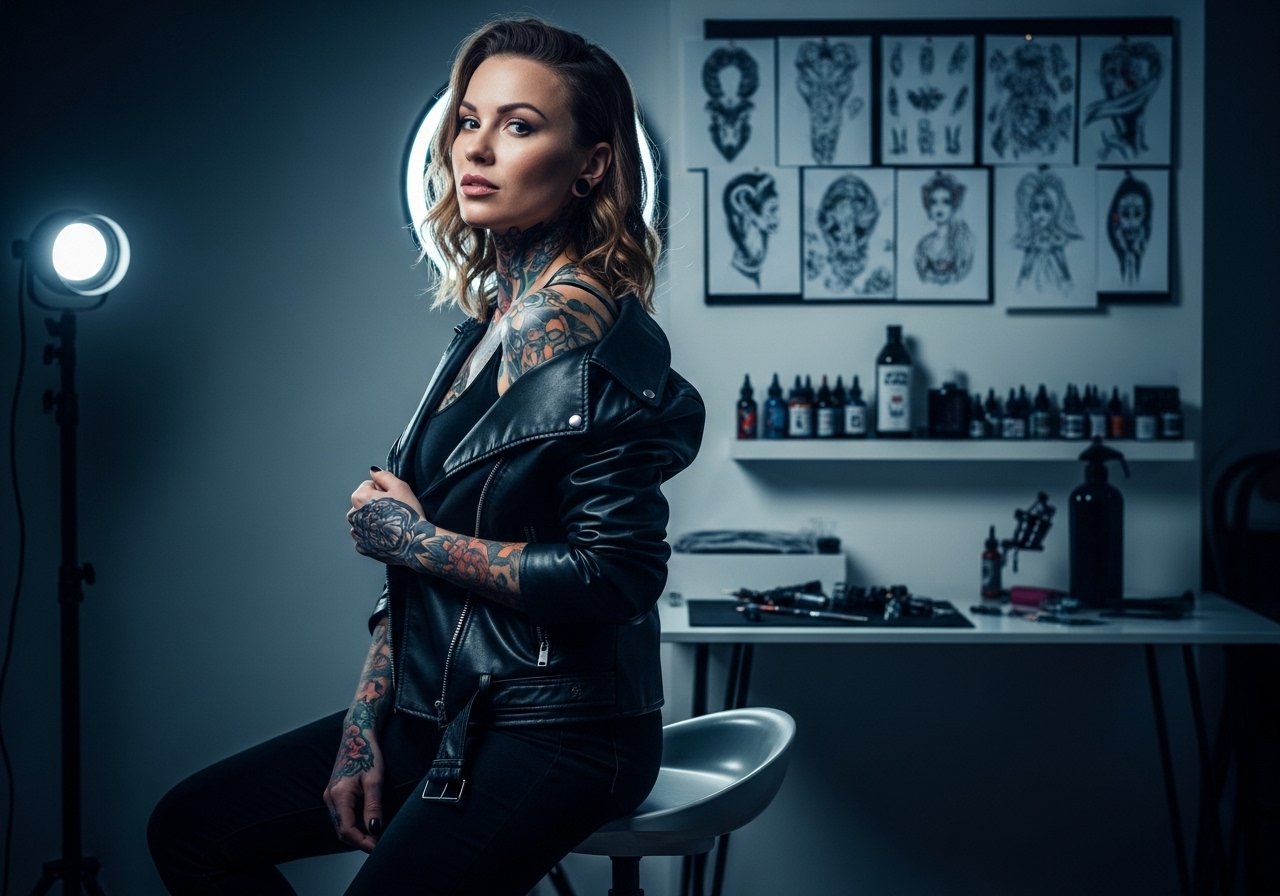
Neck tattoos read as a small commitment with big presence. The back of the neck gives you a narrow canvas that still makes a statement when you want it to and hides easily when you do not. For realistic pieces, spacing and needle depth matter more than trend cycles, so think about how the ink will sit when healed and how you want it to peek from collars. The first idea shows how a simple script can read refined without crowding the nape.
1. Micro Script Name Along the Nape
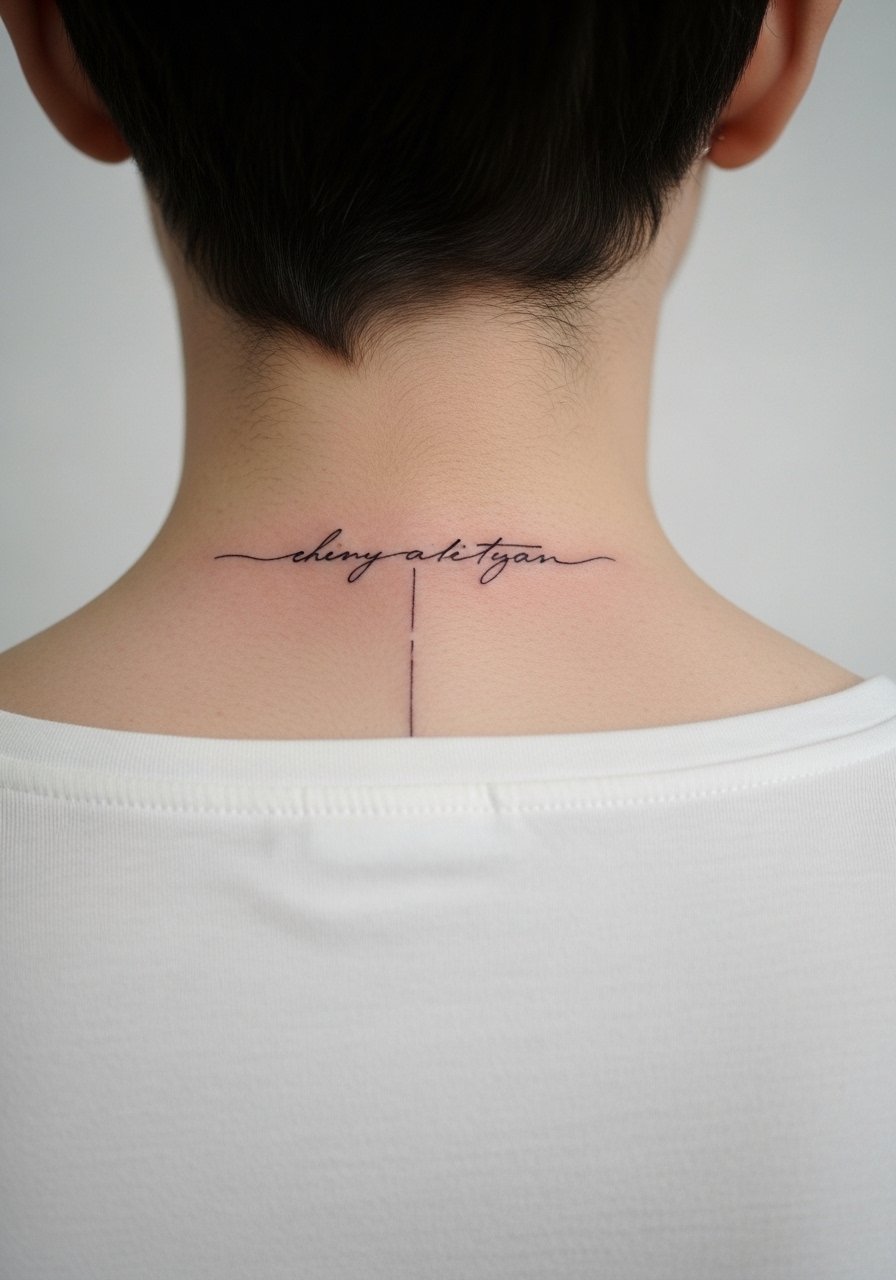
A short name or single word in careful script settles elegantly on the nape. Pain is mild to moderate because the area sits over soft tissue, and a single 20 to 40 minute pass usually does the trick. Tell your artist you want slightly open counters in the lettering and a bit of breathing room between letters so the script does not merge after a year or two. The common mistake is asking for ultra-tiny cursive. Tiny scripts on the nape blur faster. For showing it off, a wide-neck tee or a short hair style frames the piece without crowding it. This placement can affect conservative workplaces, so weigh visibility before booking.
2. Tiny Micro-Realism Floral Cluster
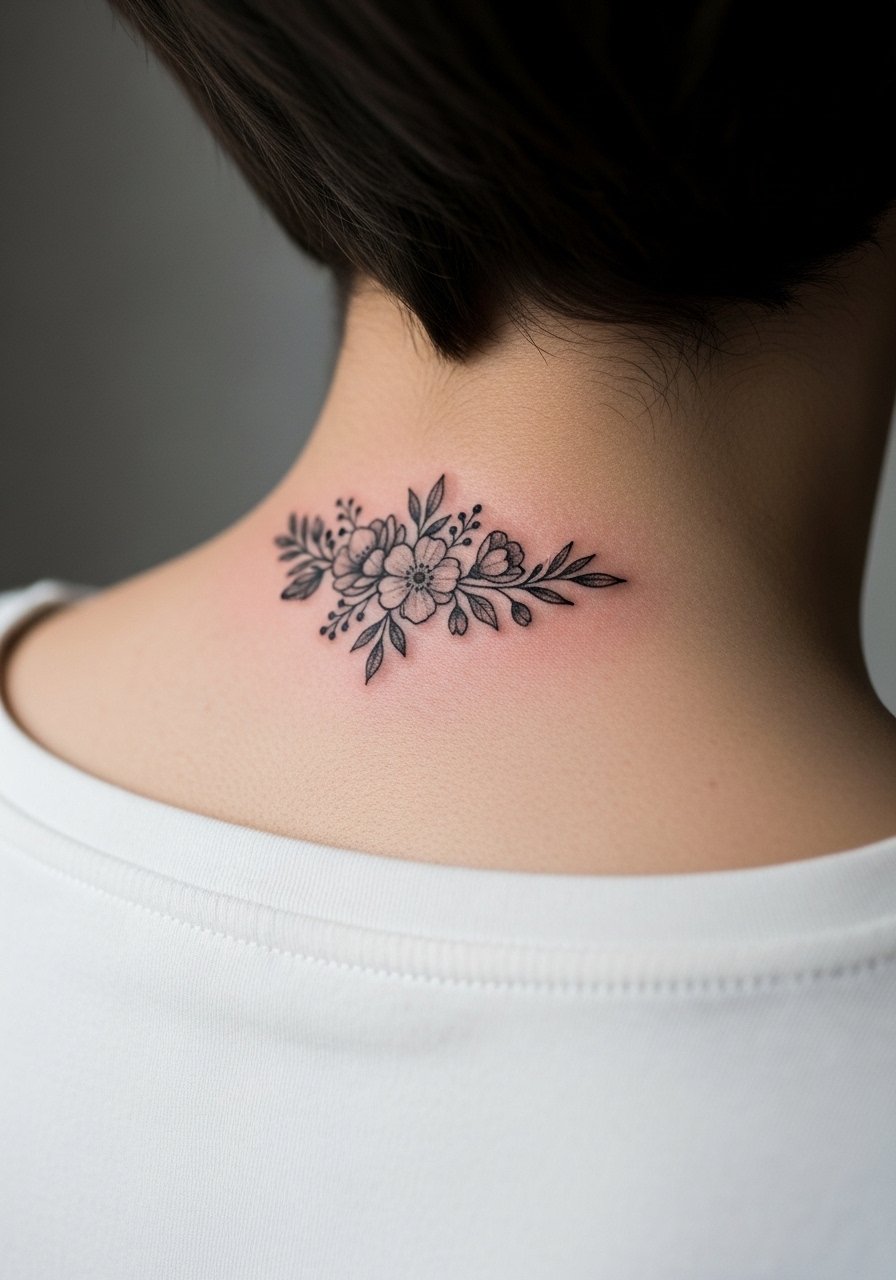
Micro-realism flowers bring texture in a small space. Expect light to moderate pain and a 30 to 60 minute session depending on detail. Ask the artist to prioritize contrast between petal highlights and shadow so the tiny details hold when healed. A common aging issue is dense shading packed into a small zone, which clogs over time. Request stipple shading and small field separation to slow that effect. For the session wear, a button-down shirt you can pull aside keeps the area accessible without tugging. This design reads delicate from across a room and still stands up as it softens.
3. Centered Mini Mandala
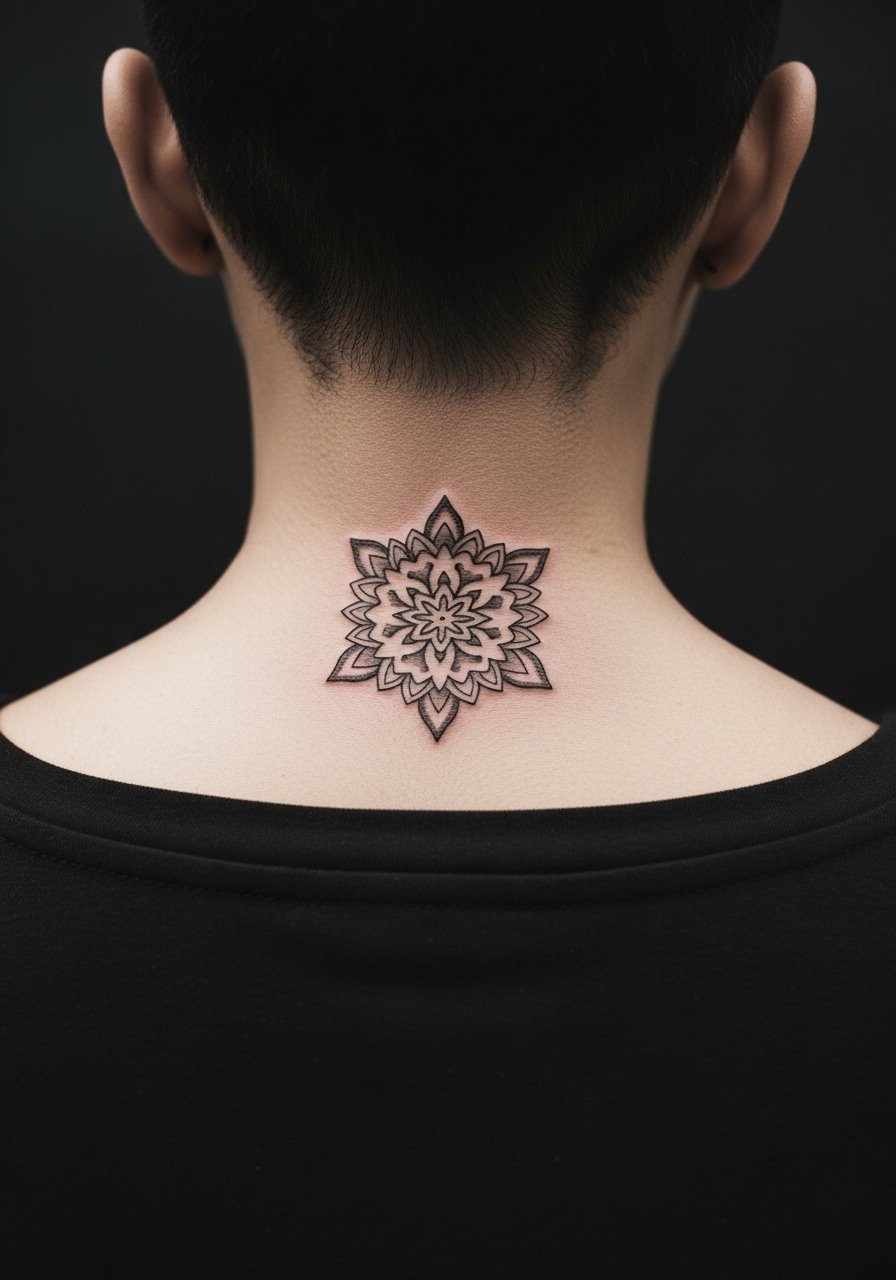
A compact mandala uses symmetry to make a strong focal point. Pain sits in the mild to moderate range. A single well-planned 45 to 90 minute sitting covers most sizes. Tell your artist you want clear radial spacing and avoid too many concentric rings. Artists split on fine mandala work on the neck. One camp warns that tight radial lines can blur within two to three years if too close together. The other camp says with proper depth and slight spacing the geometry settles well. Ask how they space elements and show examples of healed pieces. Pair it with a low-back dress or racerback top when you want it visible.
4. Tiny Portrait or Pet Micro-Portrait
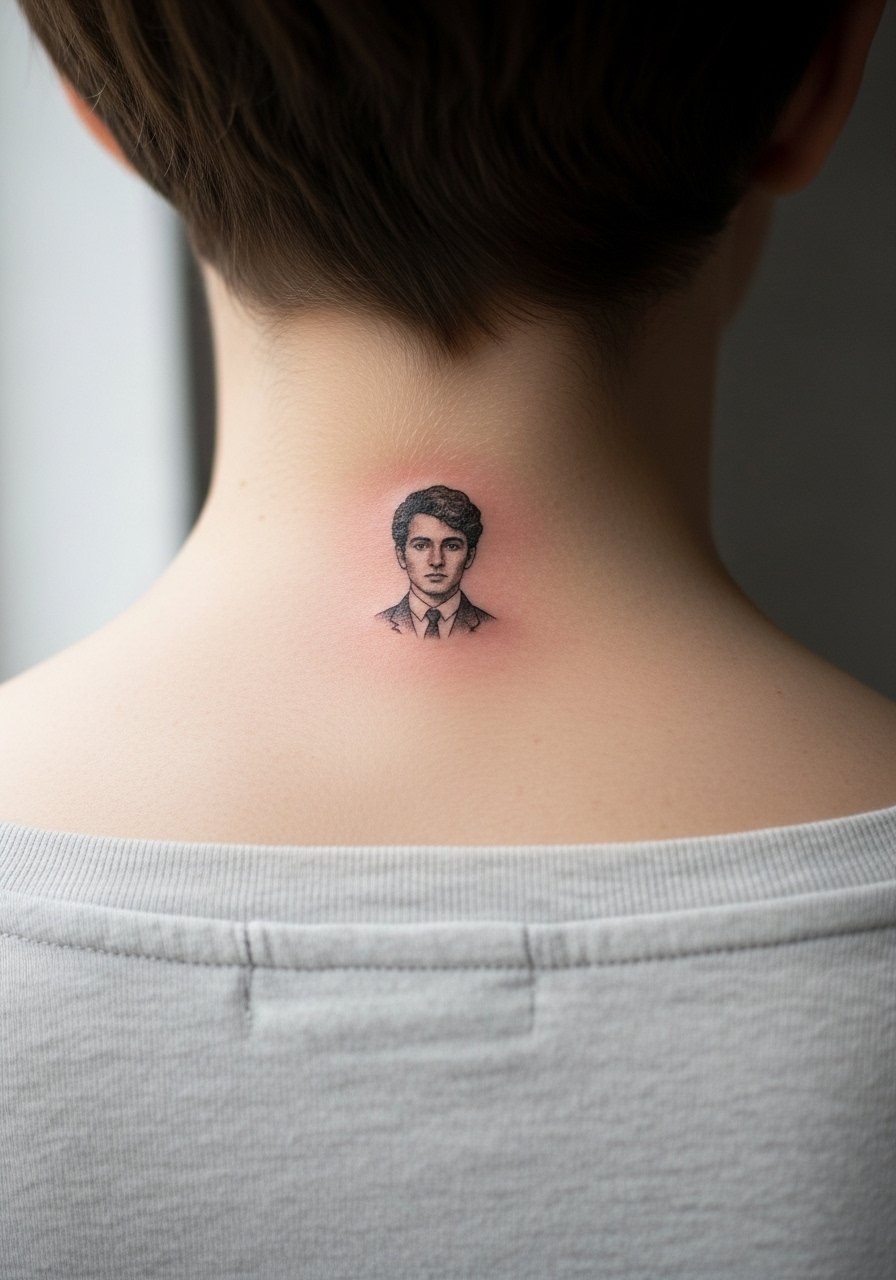
Micro portraits on the nape read intimate and personal. They require an experienced artist and a longer single session, often an hour or more for good likeness. The frequent mistake is pushing for too much facial detail at a tiny scale. Ask for simplified contrast maps and slightly larger scale for features you want preserved. Expect touch-up at year two for crisp facial edges. For the appointment, wear a soft cotton tank so the artist can access the nape without shifting clothing. Because portraits sit close to hairlines, show healed references to confirm how detail translates when hair grows back.
5. Small Geometric Anchor Point
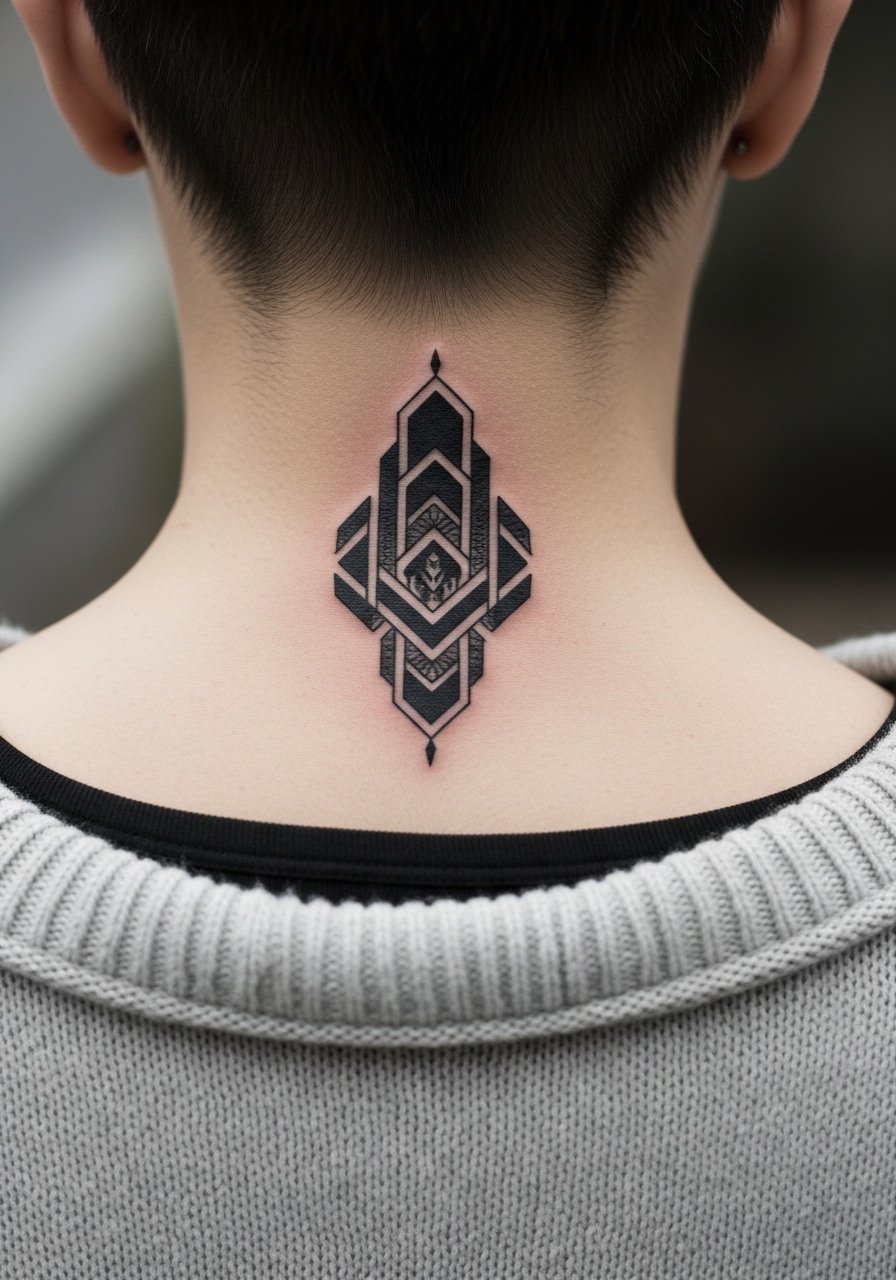
A crisp geometric anchor uses negative space to read bold even at a small size. Expect moderate pain and a single 30 to 60 minute session. The key instruction is consistent lineweight and deliberate spacing between nodes so the pattern does not merge. A common mistake is packing too many angles into a tight square. For longevity, stick to slightly thicker primary lines with thin internal detail. Pair this with a crew or wide-neck sweater to let the geometry peek without full exposure. This style is low maintenance and ages into a clean silhouette.
6. Tiny Blackwork Sunburst
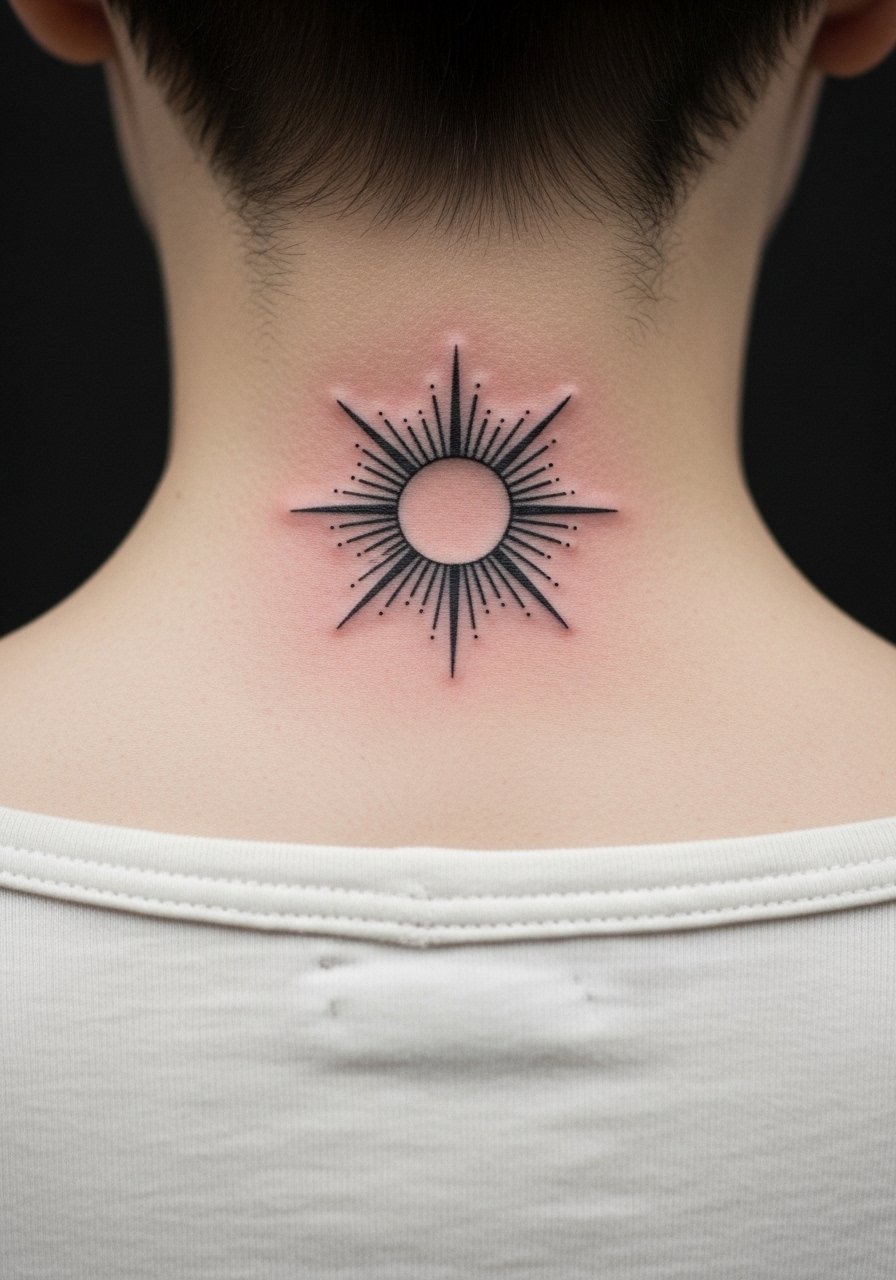
Bold blackwork reads longer than tight fine line on the neck because saturation holds. Pain ranges moderate and session time is usually 30 to 60 minutes depending on fill. Tell your artist you want strong outer rays with slightly softer inner stippling to avoid a heavy solid in the center that can look flat later. The common misstep is overfilling the center too densely, which looks muddy as it ages. For showing it off, an open-back top or a short haircut frames the burst. Artists often recommend a touch-up near year two for saturation that sits in shadowed skin.
Chair Day Prep
These small nape and shoulder pieces above heal differently from larger torso work, so a few session-day items smooth out the appointment and the first week.
-
Stencil transfer paper kit. Lets you see how the placement sits on the nape before the needle touches skin, handy for script and small portrait placement.
-
Topical numbing cream. Applied about 45 minutes before can ease sensitivity on the nape without altering linework.
-
Thin protective film roll. Keeps freshly inked nape tattoos clean from friction against collars and hair.
-
Fragrance-free gentle body wash. Cleanses the area during the first week without irritating delicate lines.
-
Aquaphor healing ointment. A thin layer in the first days helps keep fine line and micro-realism pieces from drying out while they form protective crusts.
7. Tiny Constellation Path
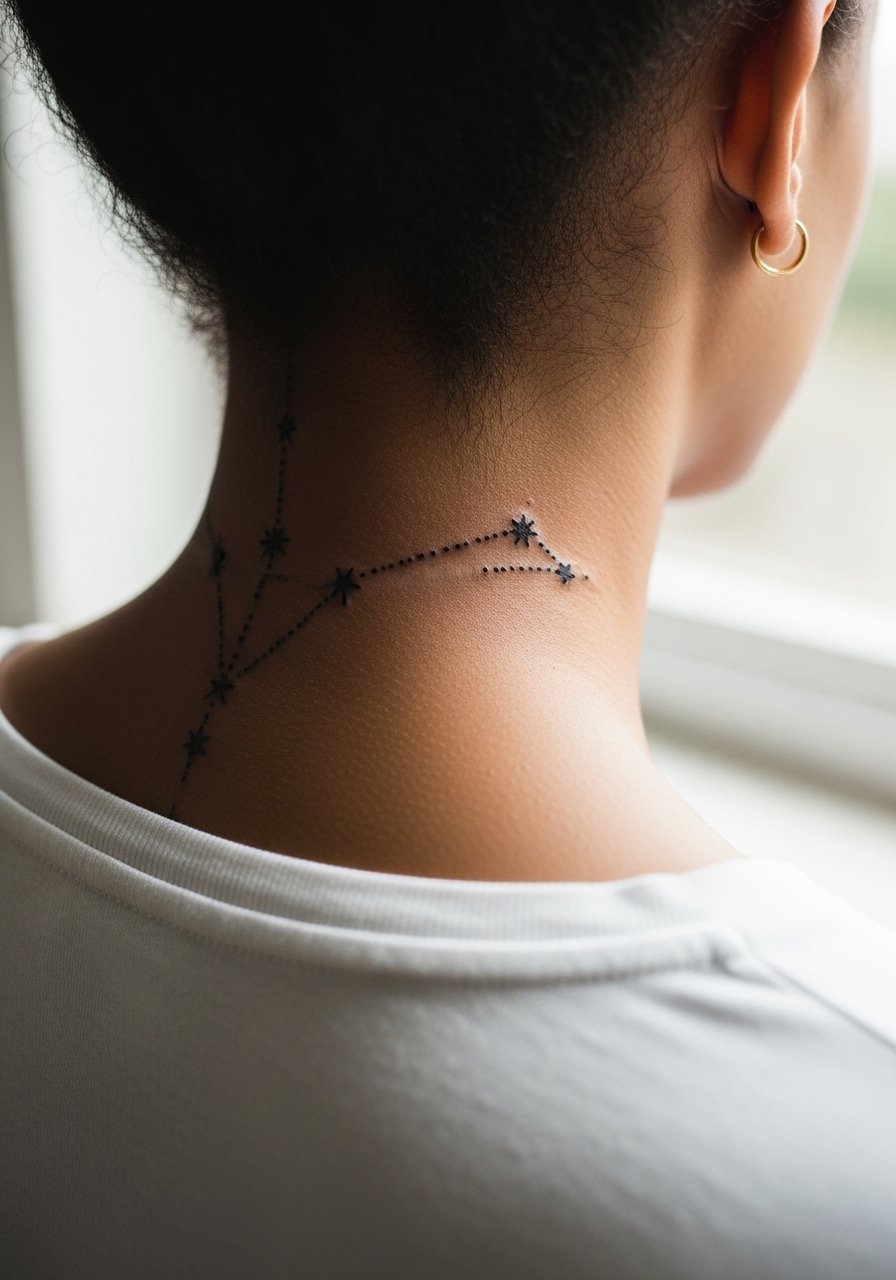
Constellations work well as horizontal trajectories that follow the hairline. Pain is mild and sessions run under an hour. Ask for spaced dots and small negative gaps between stars so the dots stay distinct as the skin shifts. The common error is clustering tiny dots too tightly, which merges into a smudge over time. For wearing during the session, a loose round-neck top is easiest to shift without tugging hair. This design is subtle when covered and playful when visible, and it often needs only rare touch-ups.
8. Minimalist Arrow Pointing Down
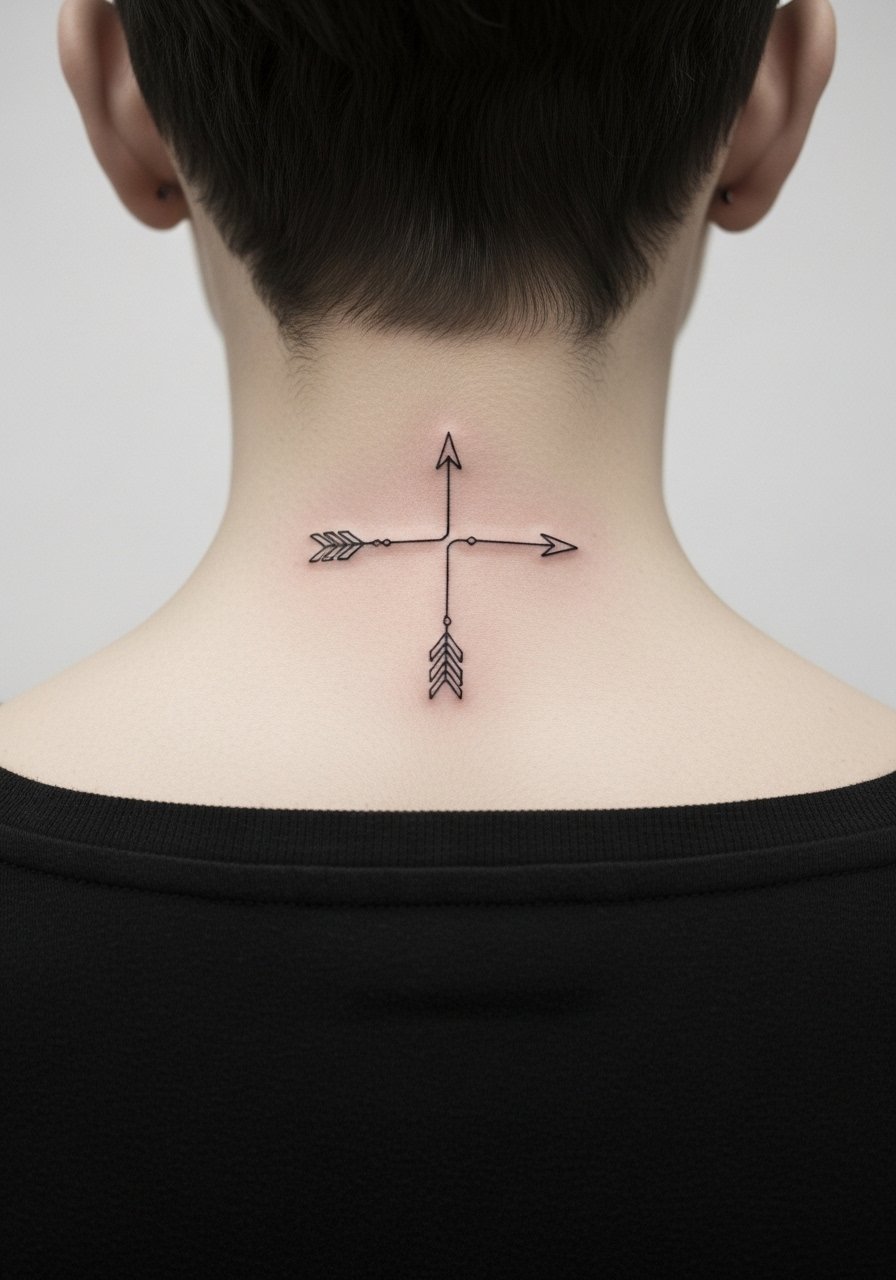
A clean arrow reads modern and directional. Expect mild pain and a quick 15 to 30 minute session. During consultation ask for a slightly heavier shaft and open arrowhead counters so the silhouette reads even as minor spread occurs. A mistake I see is insisting on hairline-thin shafts that vanish after a year. For showing this piece, try a delicate chain necklace that sits above the design but does not compete. Arrows age predictably, and touch-ups are typically cosmetic rather than structural.
9. Tiny Animal Silhouette
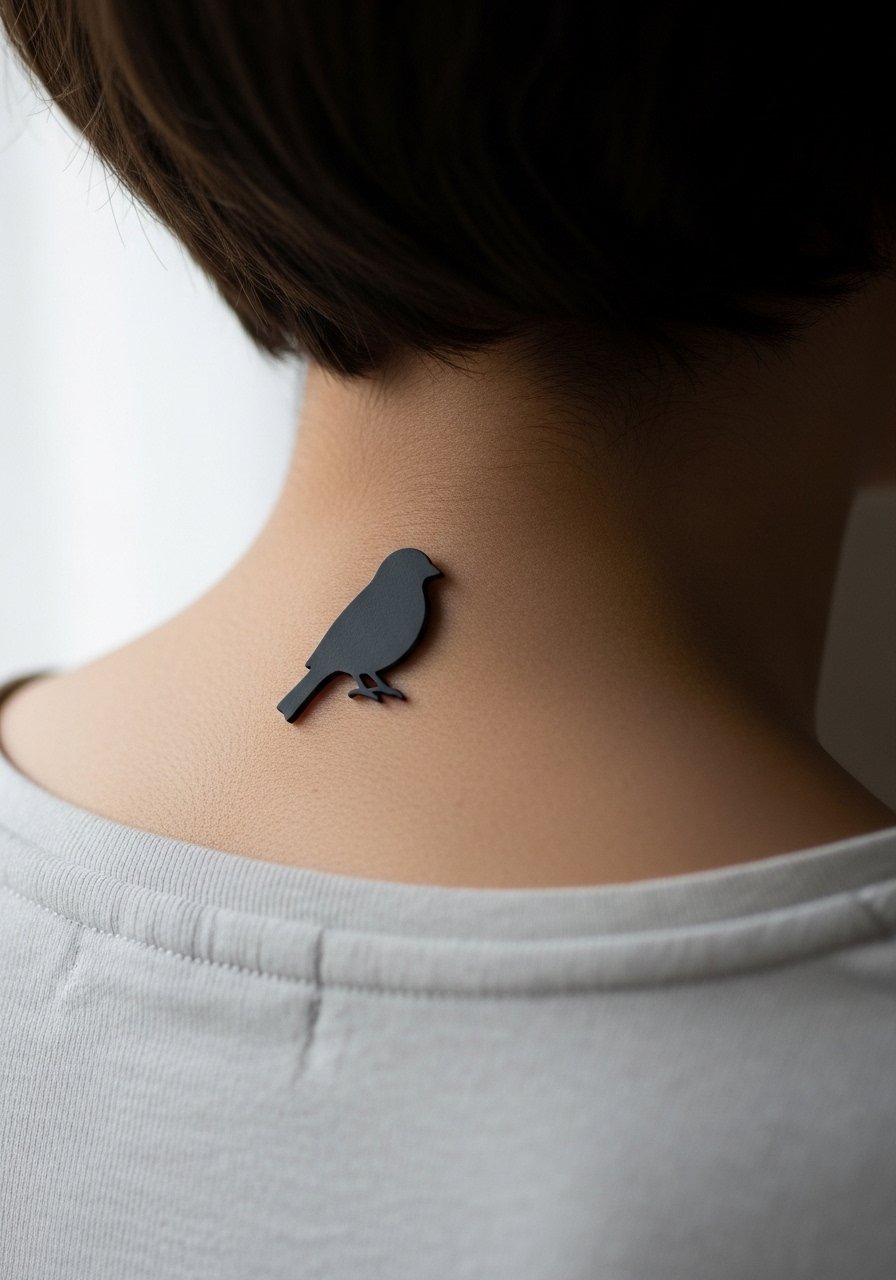
Silhouettes translate well at the nape because they rely on shape rather than micro detail. Pain and session time are low. In consultation, choose a pose with clear negative space for eye and wing separation so the silhouette does not read as a blob later. People often request extremely intricate feather lines at tiny scale and then need early touch-ups. For the appointment, a cotton tank top keeps hair off the area and the artist comfortable. Silhouettes tolerate skin movement and scale reduction better than detailed faces.
10. Small Scripted Quote Bar
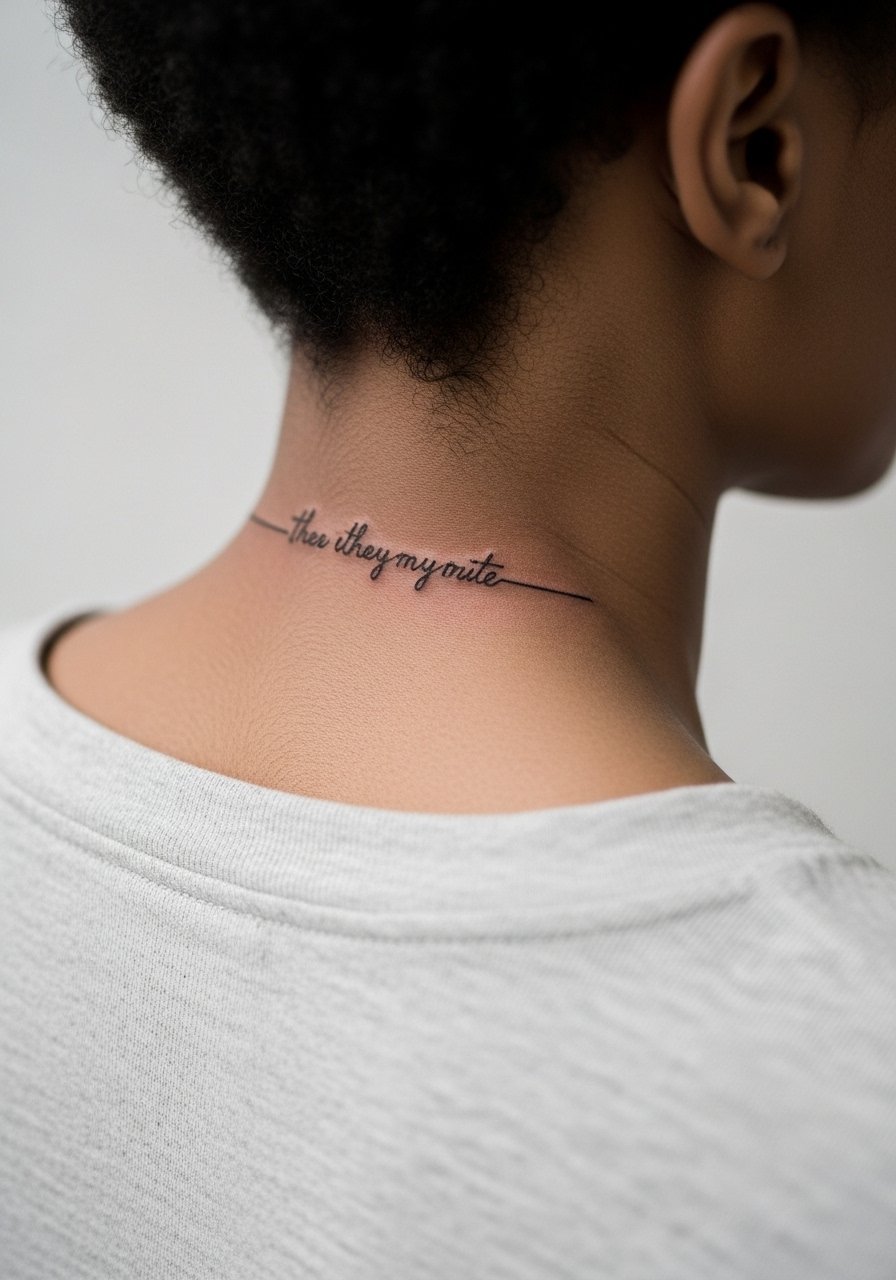
A short phrase or mantra across the nape makes a discreet reading line. Pain is low to moderate and sessions often last 30 to 60 minutes. Ask for slightly wider letter spacing and a clean serif or simple script to avoid merging letters. A common mistake is cramming long text into such a narrow strip. For showing it off, a low-collar blouse or a pulled-aside button-down shows the line elegantly. Script bars often benefit from a one-year check-in and minor touch-up.
11. Micro-Realism Bee or Insect
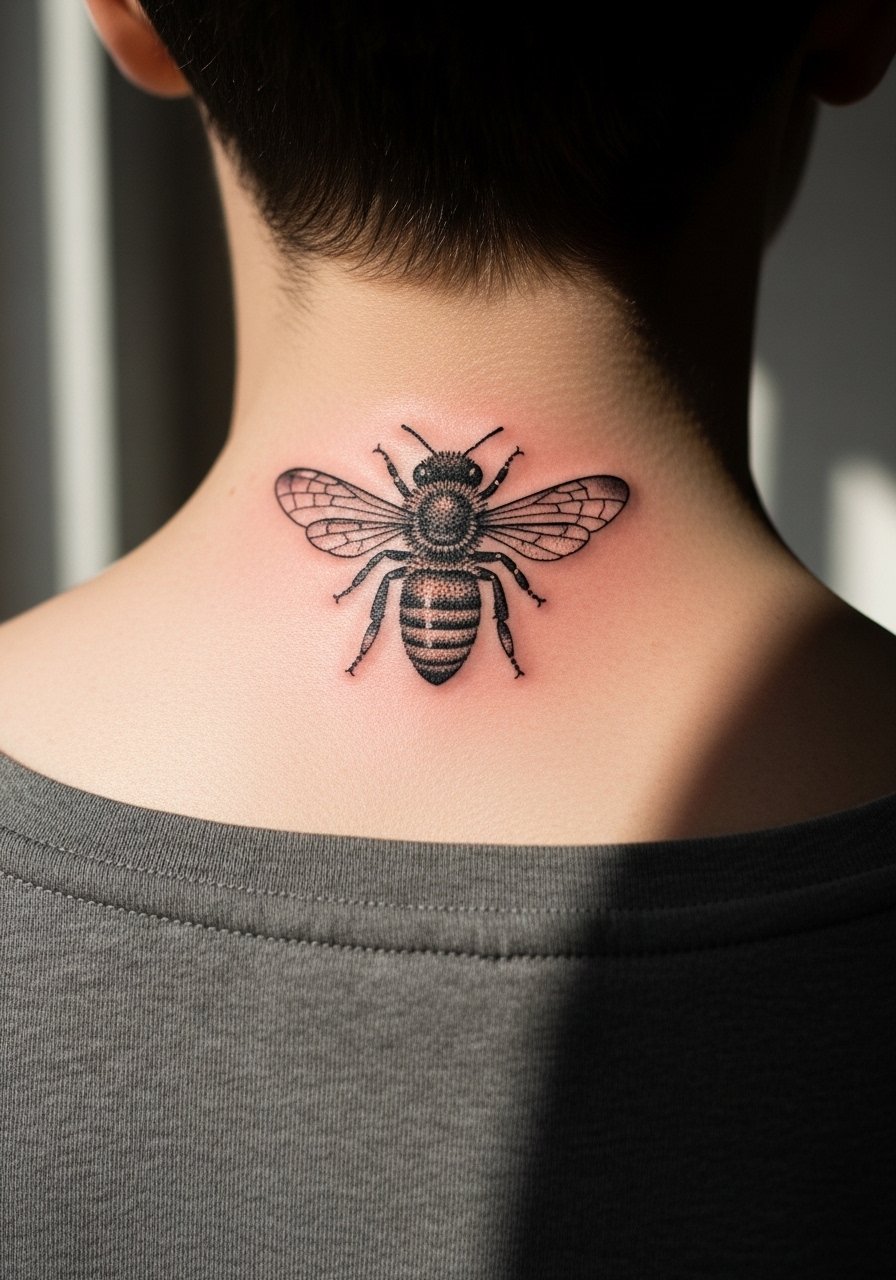
Small insects can look surprisingly dimensional on the nape. Expect moderate tenderness and a focused 45 to 75 minute session. Tell your artist to emphasize contrast between wings and body and avoid dense cross-hatching at tiny scale. The usual problem is too much interior shading, which softens into an indistinct mass. For the session, wear a button-up shirt you can move aside without snagging. Micro insects age into soft silhouettes and often need a touch-up to keep wing edges crisp.
12. Small Neo-Traditional Rose
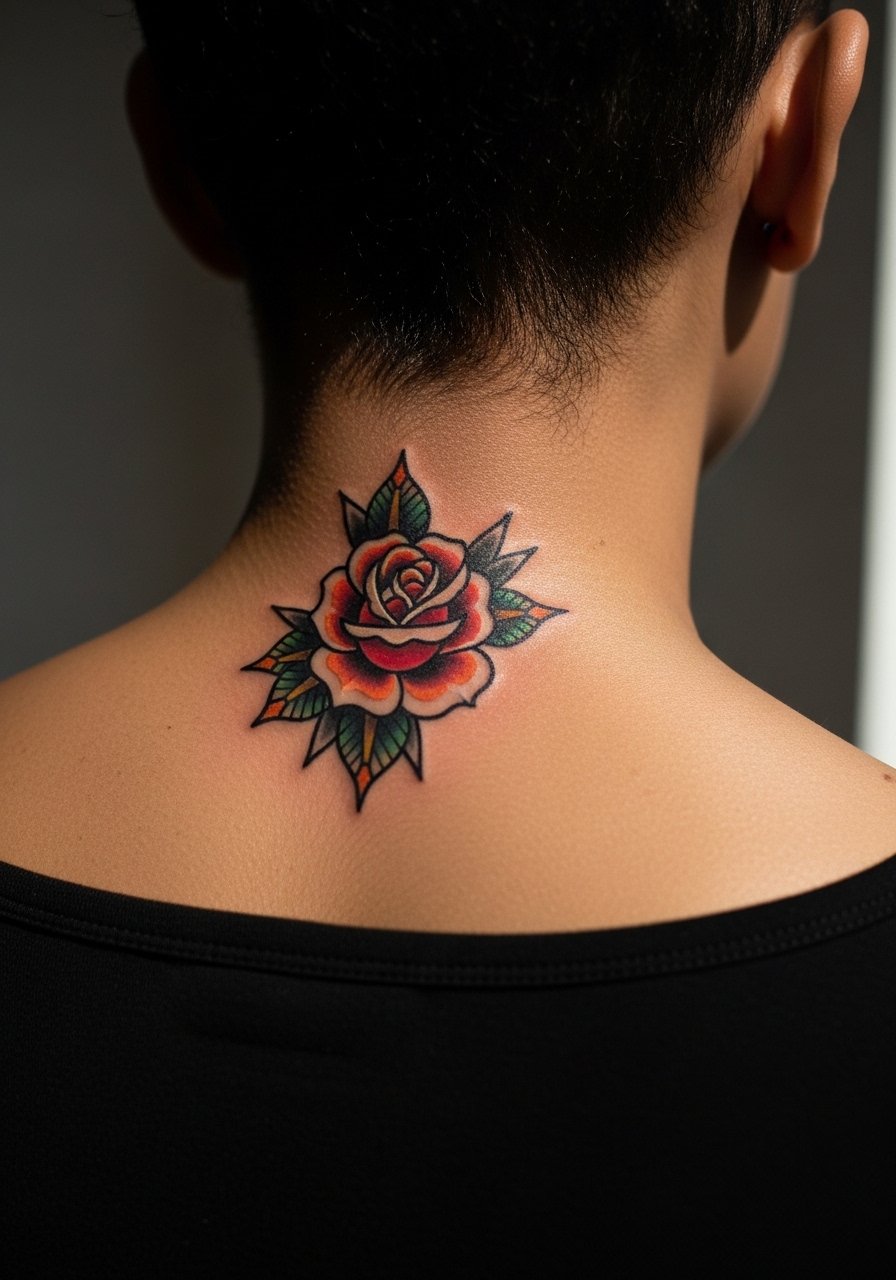
A mini neo-traditional rose relies on saturated color and bold outlines to read clearly. Pain is moderate and a single session of 45 to 90 minutes handles color packing. Ask for slightly larger petal boundaries and strong outer lines so the color does not seep beyond defined edges. The common mistake is asking for small saturated fills without a bold outline, which softens into indistinct color patches. For showing the color, try an open-back dress that exposes the nape during evenings. Color may need a follow-up session in a few years to refresh saturation.
13. Micro Script with Tiny Star Accent
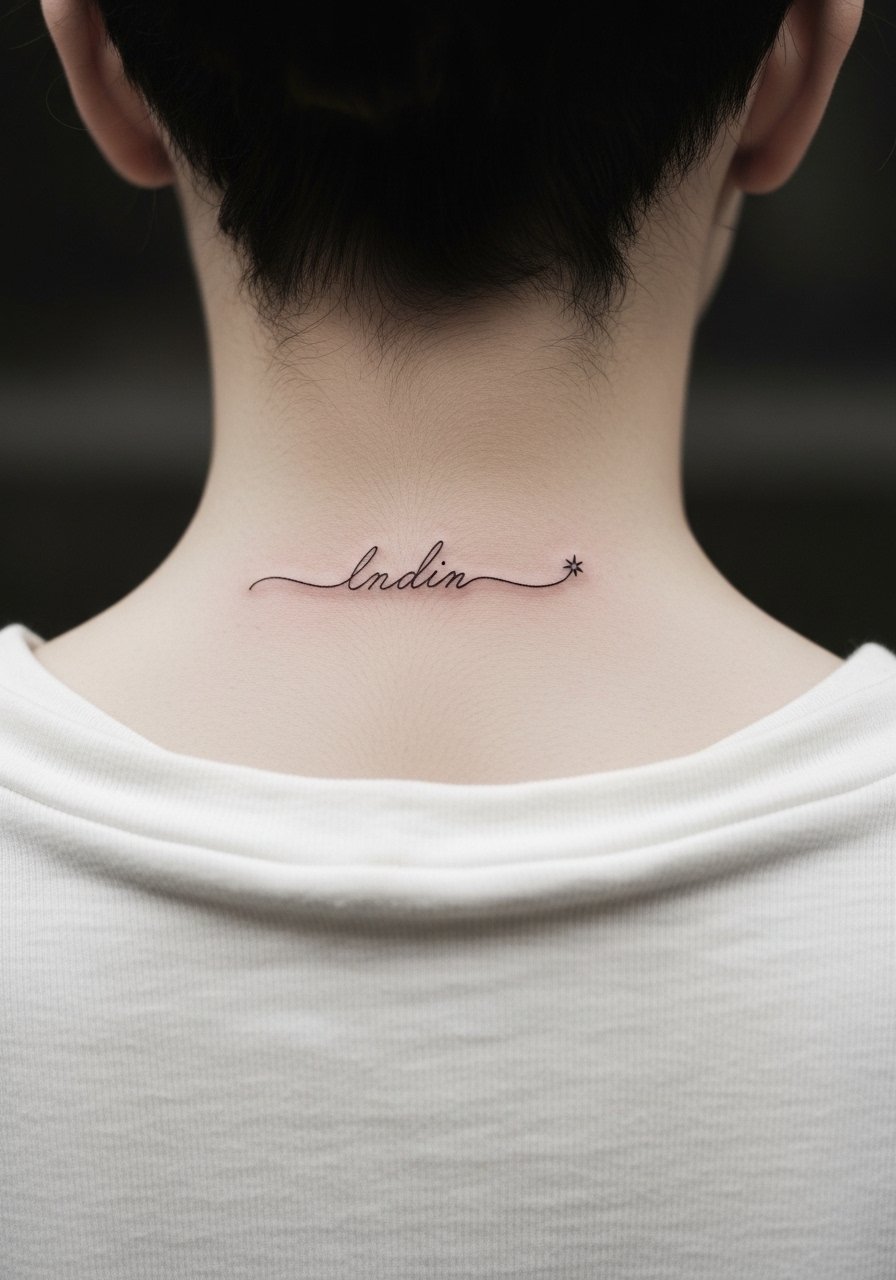
One-word scripts get personality from little accents like a star or dot. Pain is low and sessions are brief. Tell your artist to set the accent slightly offset so the eye reads the word first and the star second. The typical mistake is placing the accent too close to the letters, which causes crowding after healing. For a subtle frame, wear a thin chain pendant that sits above the script but leaves the nape visible. Expect occasional touch-up for the fine star if lines soften.
14. Coordinated Roman Numerals
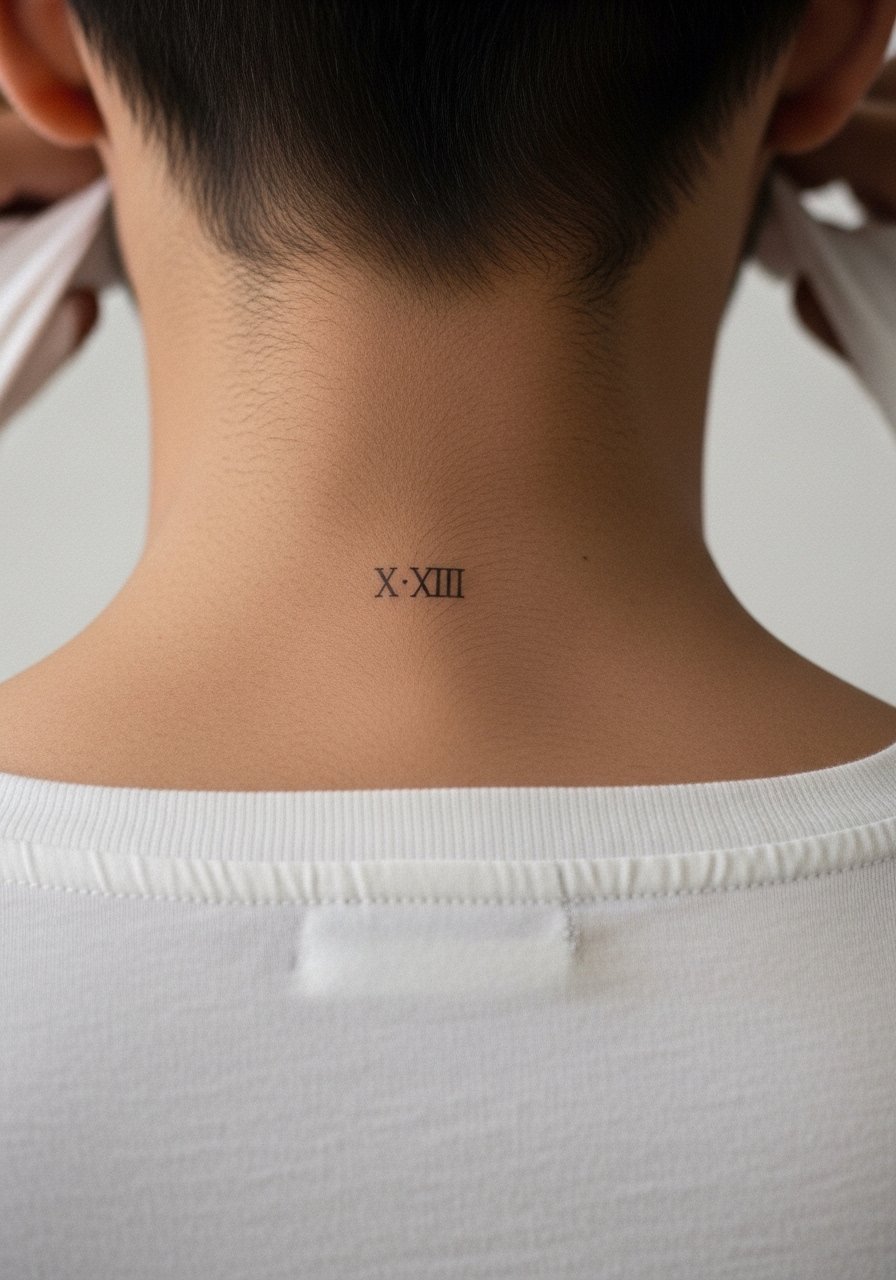
Roman numerals read crisp and coded on the nape. Minor to moderate pain and a quick 20 to 40 minute session are typical. Always ask the artist to space numerals with slight gaps and to avoid hairline thin strokes for numerals like I or V. The usual mistake is tiny numerals with no breathing space, which blur together. For wearing, a v-neck top or slightly lowered collar lines the piece without crowding. Double-check the exact numeral sequence with the artist before inking.
15. Tiny Filigree Ornamental Mark
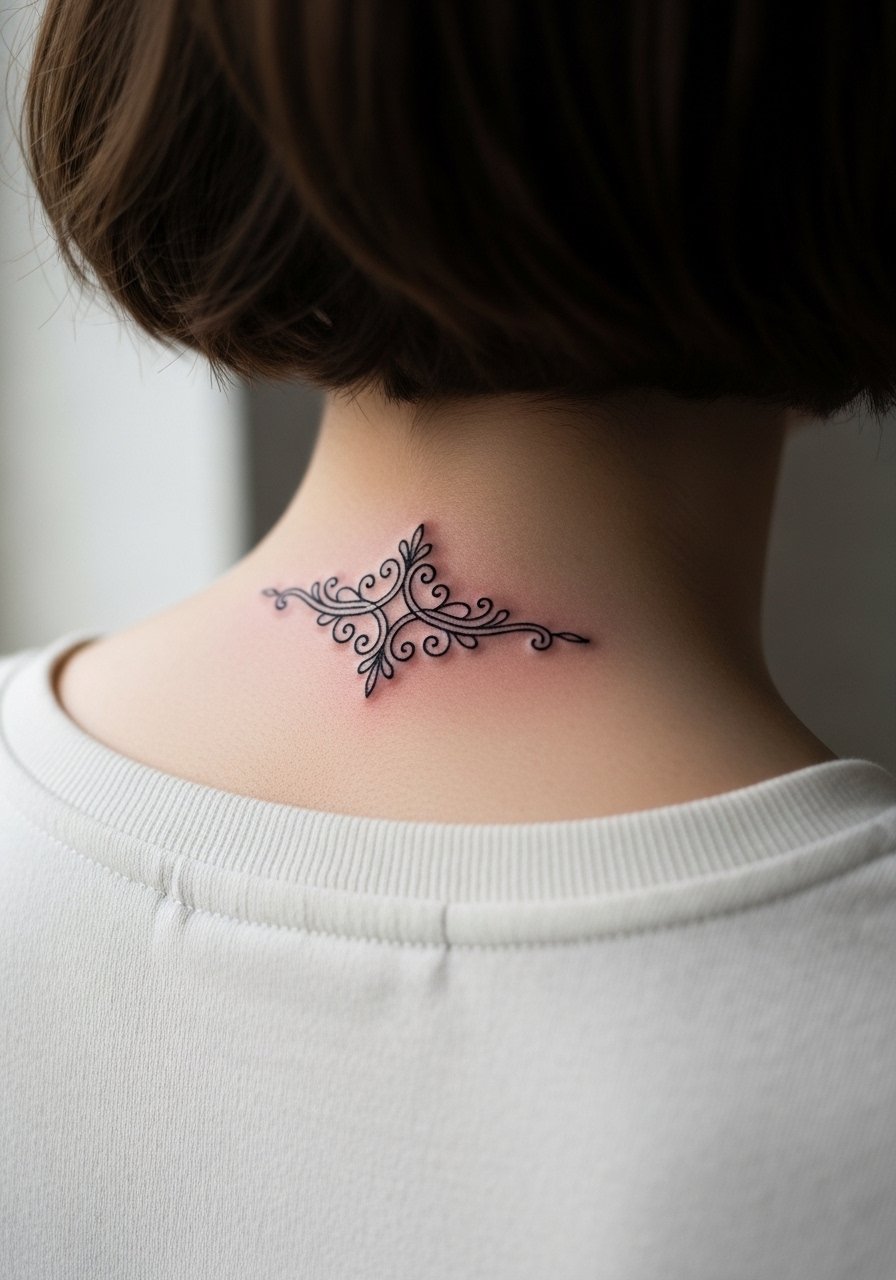
Ornamental filigree reads like jewelry and sits well on the nape. Expect mild pain and a single 30 to 60 minute appointment. Instruct your artist to use open loops and avoid extremely cramped curls so the negative space remains as the piece heals. The common error is overcrowding small curves that then lose definition. For styling, try a halter top that leaves the nape exposed for evening looks. Filigree ages gracefully when given room to breathe.
16. Micro Bar Code or Scan Line
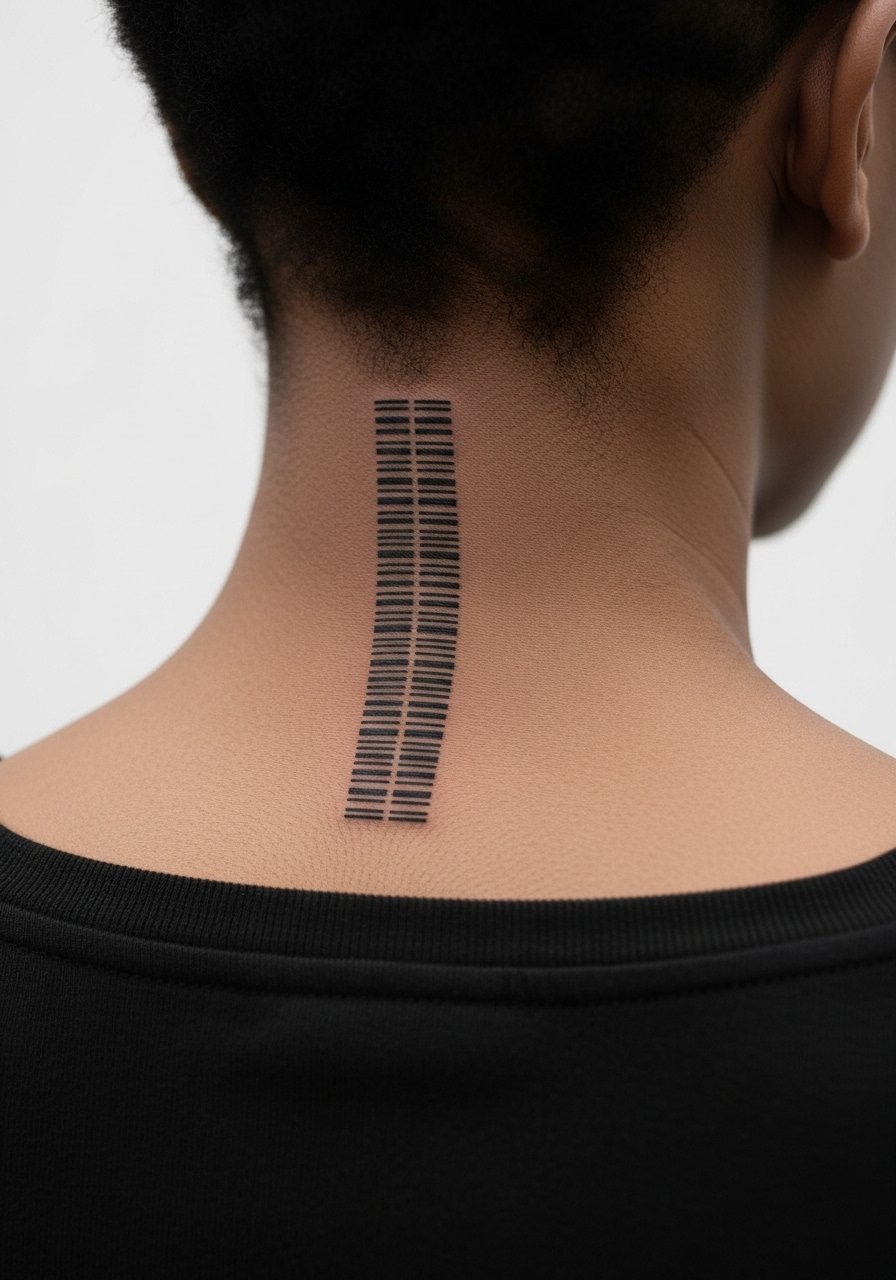
A barcode motif reads graphic and modern at the nape. Pain is moderate and session time is 20 to 45 minutes depending on length. Ask for consistent spacing and slightly thicker primary bars so the pattern remains legible as lines widen a bit over time. The big mistake is ultra-thin stripes that vanish as the skin shifts. For the session, a crew neck tee you can pull aside keeps the area accessible. Barcodes age into simple dark bands and typically have low maintenance.
17. Tiny Crescent Moon and Dot Stack
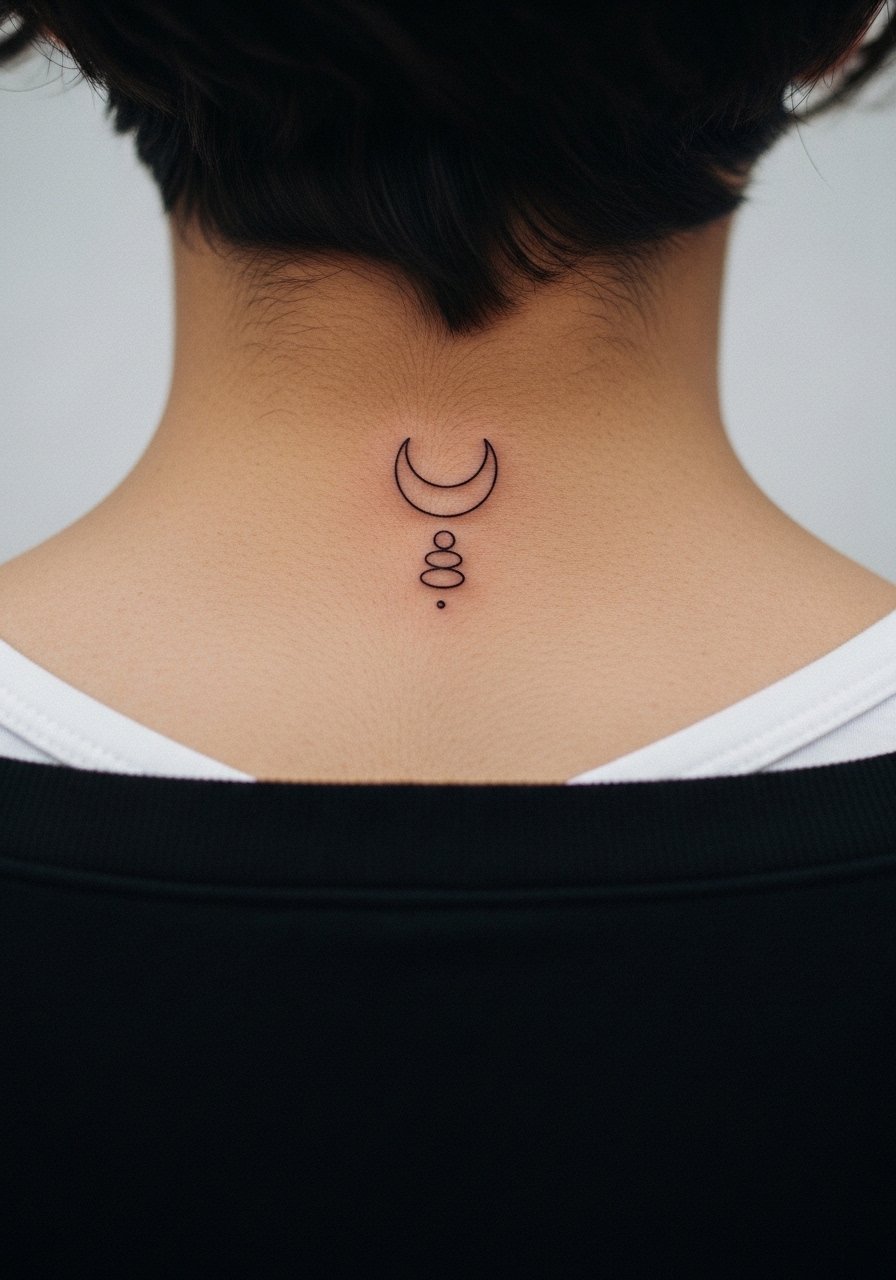
Celestial motifs are minimalist and symbolic. Expect low pain and a short session under 30 minutes. For durability, ask for a slight outline thickness on the moon and spaced dots so they do not merge with one another over several years. A common misstep is requesting ultra-fine dots close together, which blur into one spot. For showing it off, a scoop-neck sweater shows the curve without exposing the entire back. This design keeps its delicate look while aging gently.
18. Tiny Geometric Triangle Stack

Stacked triangles offer a compact, symbolic silhouette. Pain is mild to moderate and session time often sits around 20 to 45 minutes. Tell the artist you want each triangle separated with a small gap to keep edges readable over time. The typical mistake is placing shapes too near each other, which causes soft merging. For styling, try a cropped jacket or rolled collar so the stack can peek above layers. Touch-ups are usually minor and done only if edges lose crispness.
19. Tiny Winged Creature
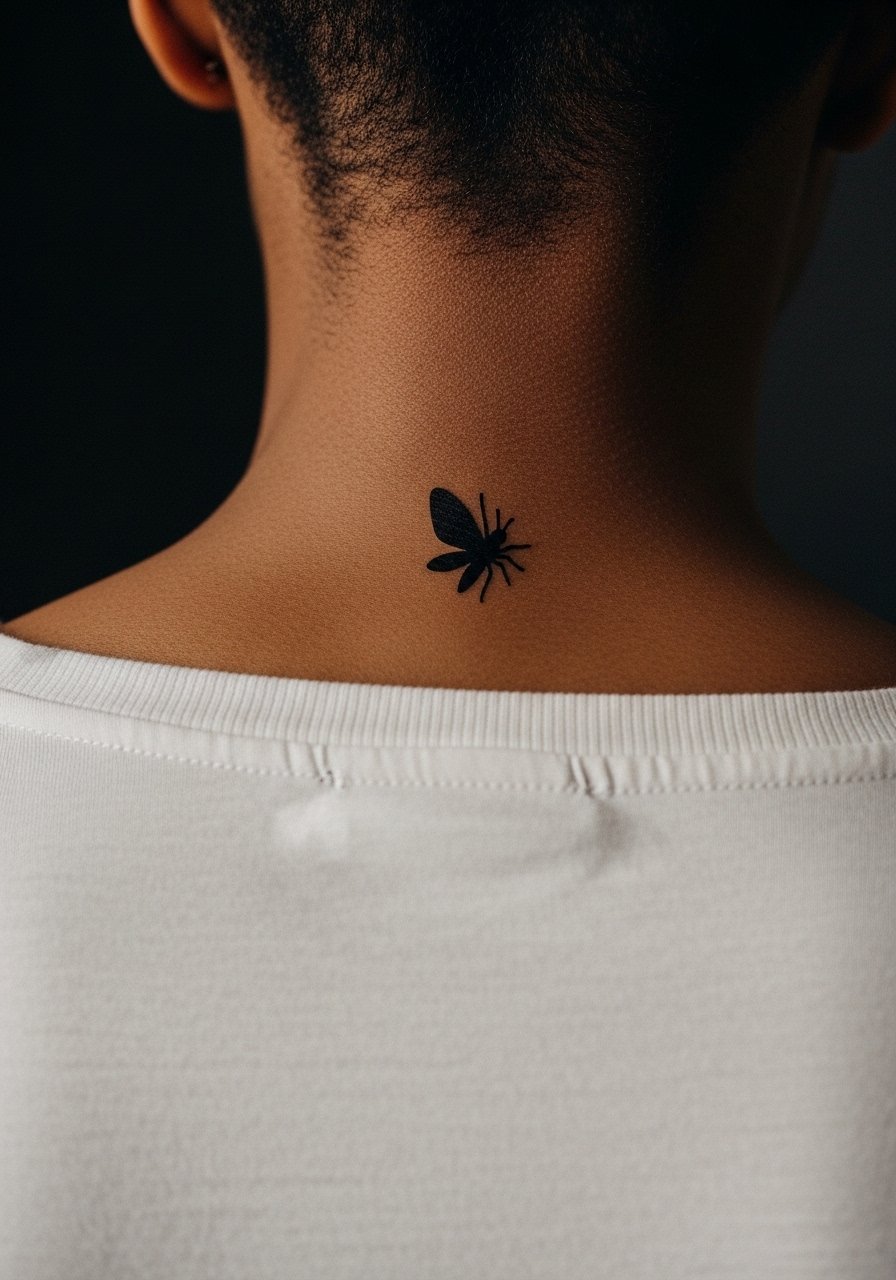
Winged motifs give motion in a small spot. Expect mild discomfort and a session under an hour. Ask for a clear primary outline and minimal interior detail so the wings remain distinct as the piece softens. The error I see often is asking for tiny feathers and then needing touch-ups when they blur. For the session, a loose v-neck keeps the artist's access clear. This kind of silhouette keeps its visual intent as the years pass.
20. Small Compass Point
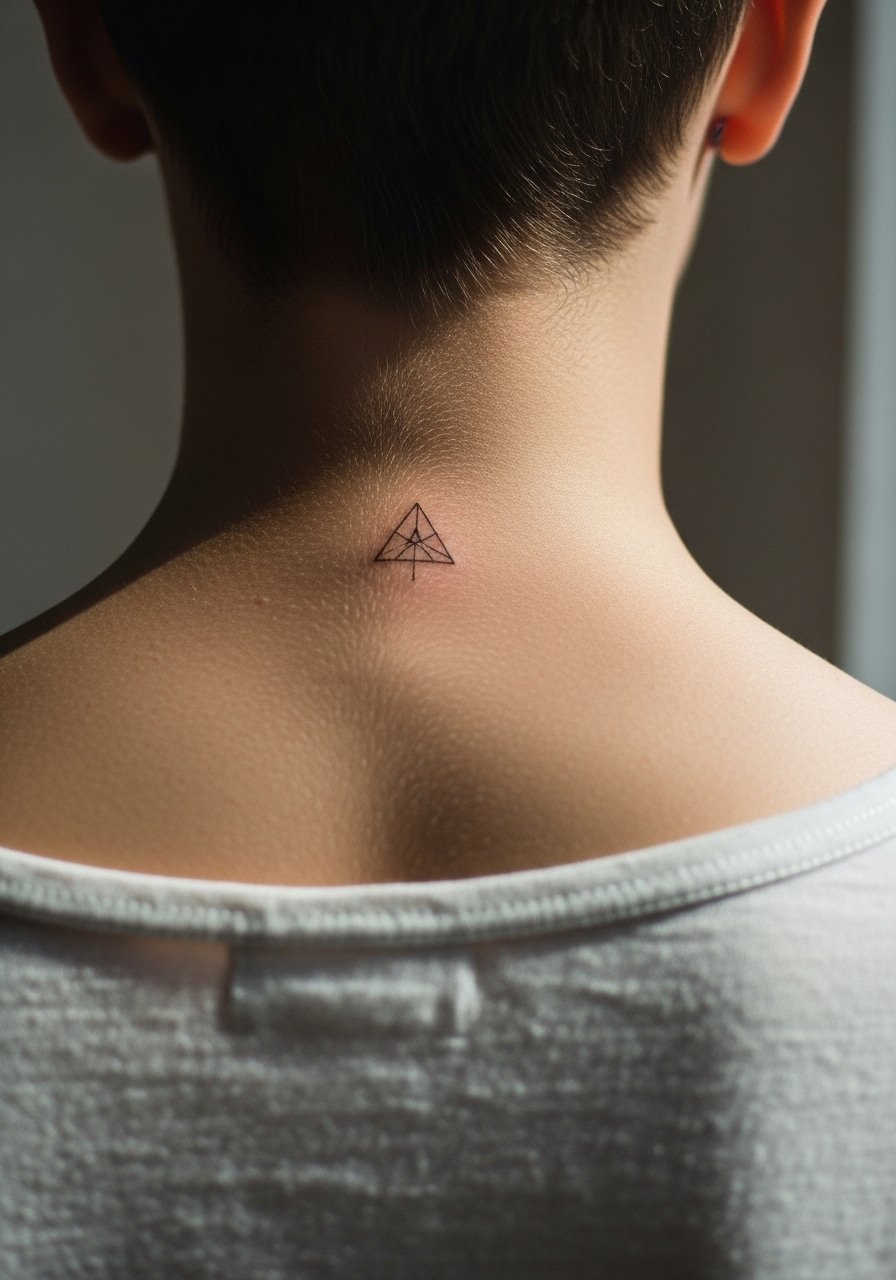
A single compass point suggests direction in a very small frame. Pain and session time are low. Specify open negative space inside the compass and slightly thicker cardinal marks to prevent them from merging. People sometimes want intricate detailing in a tiny compass and then lose readability. For showing or hiding, a button-down shirt pulled aside gives control over visibility. Expect a touch-up if the thin cardinal marks soften.
21. Tiny Scripted Initials with Dot Ends
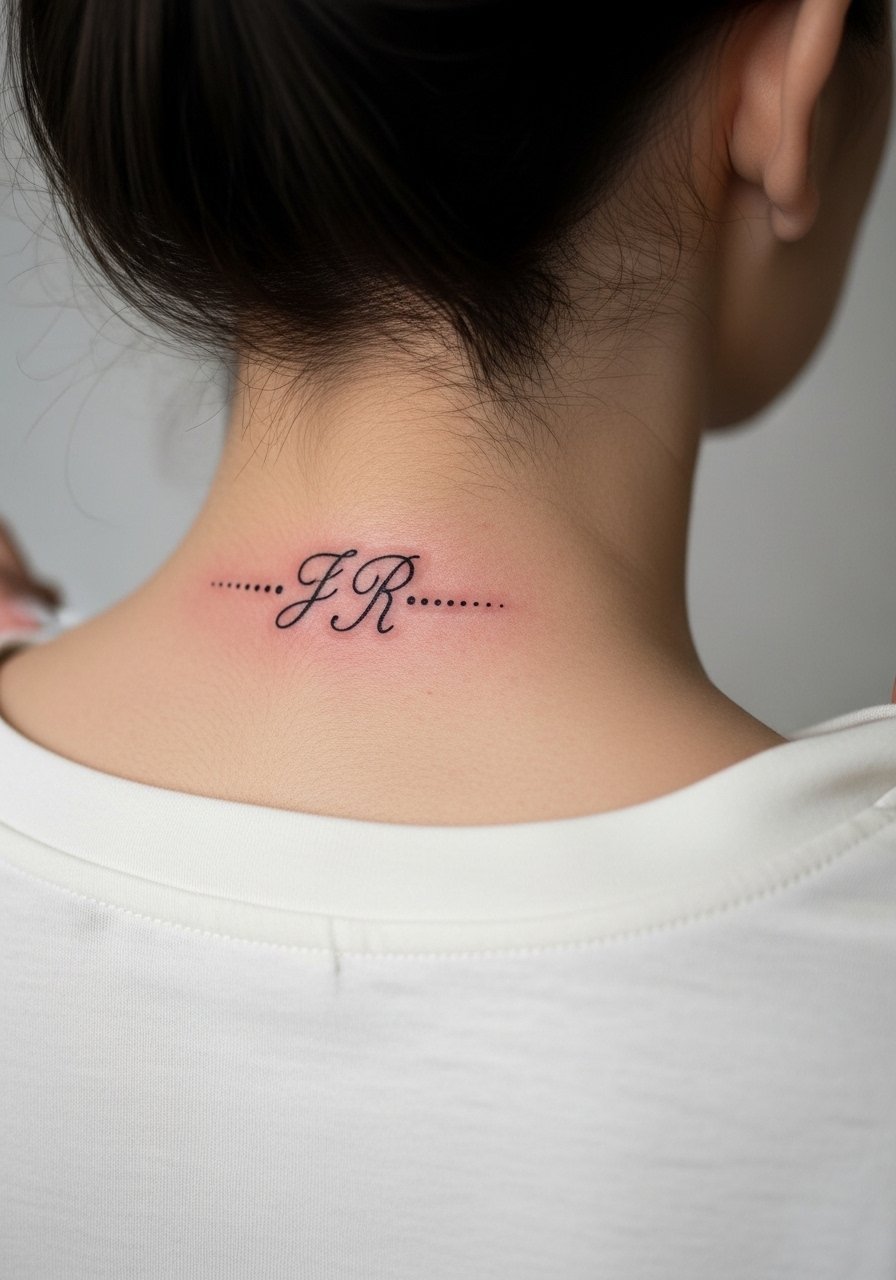
Initials are a classic small nape option. Mild pain and a short appointment are typical. Ask the artist for open counters and for the dots to sit slightly away from letters so they stay distinct. The common mistake is compressing initials too tightly. For show-off style, a thin chain choker draws the eye up without covering the initials. Initials often need only a cosmetic refresh after several years.
22. Tiny Floral Vine Along the Hairline
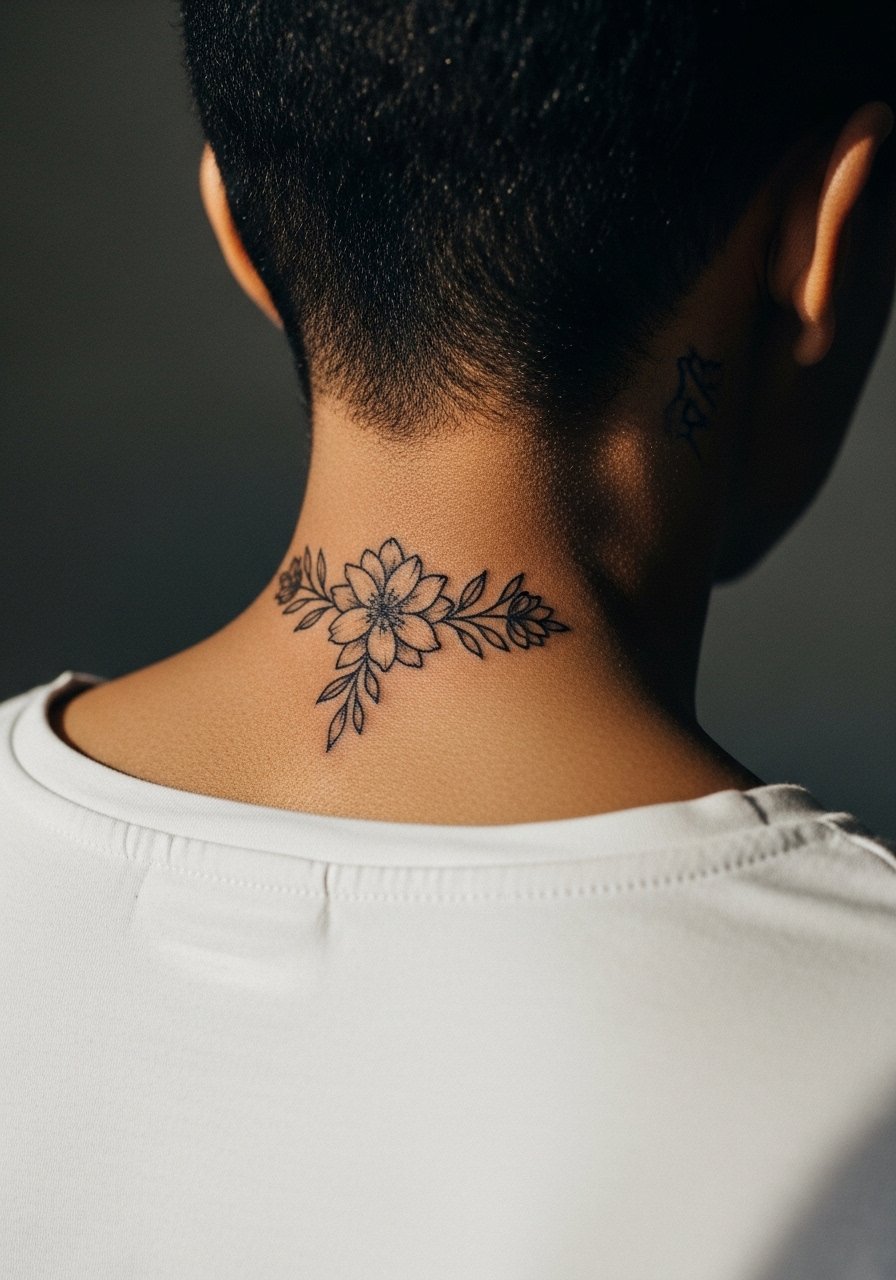
A vine that traces the hairline works with natural curves. Expect moderate sensitivity and a 30 to 60 minute session. Tell your artist to use open spacing and tiny leaf gaps so the vine reads as foliage rather than a blurred band later. The usual error is over-detailing each leaf. For showing, a low-ponytail or short bob frames the vine. Because the vine sits at the hairline, check how it looks with hair grown out and with a fresh cut.
23. Tiny Anchor or Nautical Icon
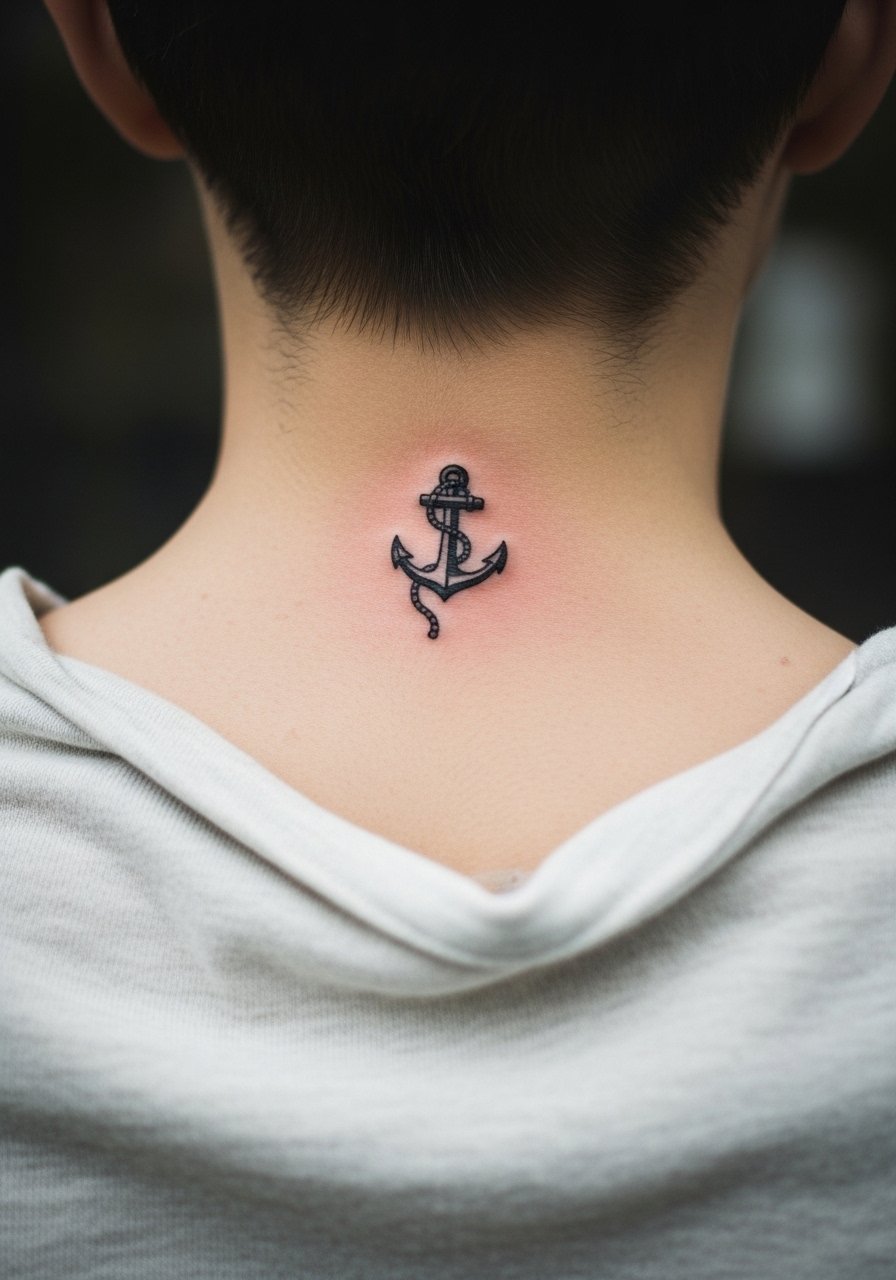
Nautical icons translate well to the nape thanks to simple silhouettes. Pain is low and session time is short. Instruct the artist to use a bold outer line and minimal inner shading to keep the anchor legible after a few years. People often request tiny rope detail that softens quickly. For pairing, a striped tee or sailor-style collar highlights the theme without covering the piece. Anchors are durable small tattoos that tend to age predictably.
24. Small Barcode of Symbols
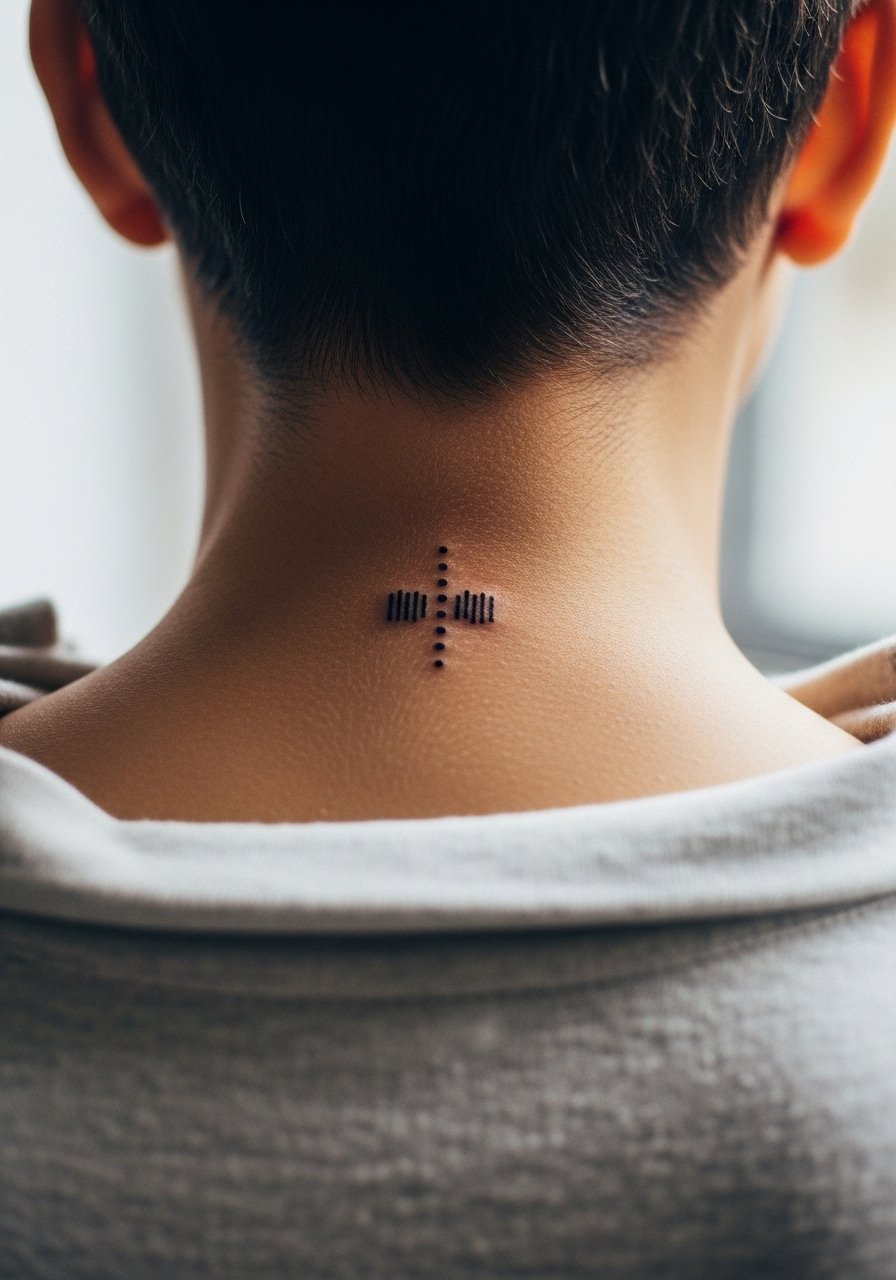
A symbolic barcode mixes lines and dots for rhythm. Expect mild to moderate pain and a 20 to 45 minute session. Ask for deliberate spacing between elements and slightly thicker primary bars so the rhythm remains readable as lines widen with time. The mistake is squeezing too many elements into the strip. For styling, a simple backless top works for evenings when you want the pattern visible. This approach balances graphic intent and longevity.
25. Tiny Sun and Wave Pair
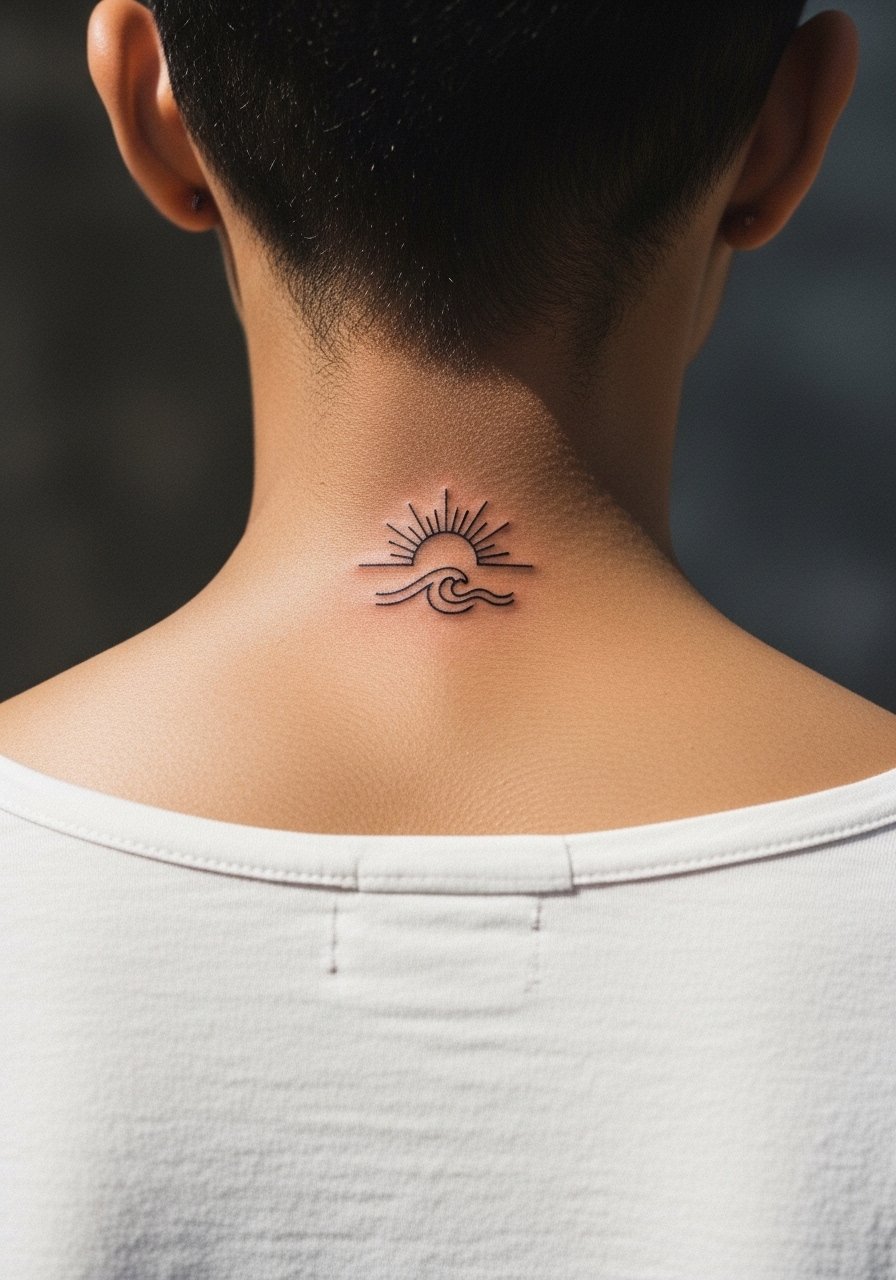
A sun paired with a wave offers contrast between round and flowing shapes. Pain is low and sessions are brief. Tell your artist to separate the two motifs slightly so each has breathing room and to avoid dense fill in the wave. A common error is asking for micro shading in both shapes that then softens. For showing it off, a tank dress or halter frames the nape for beachy looks. Expect minimal touch-ups for line crispness.
26. Tiny Crown or Regal Motif
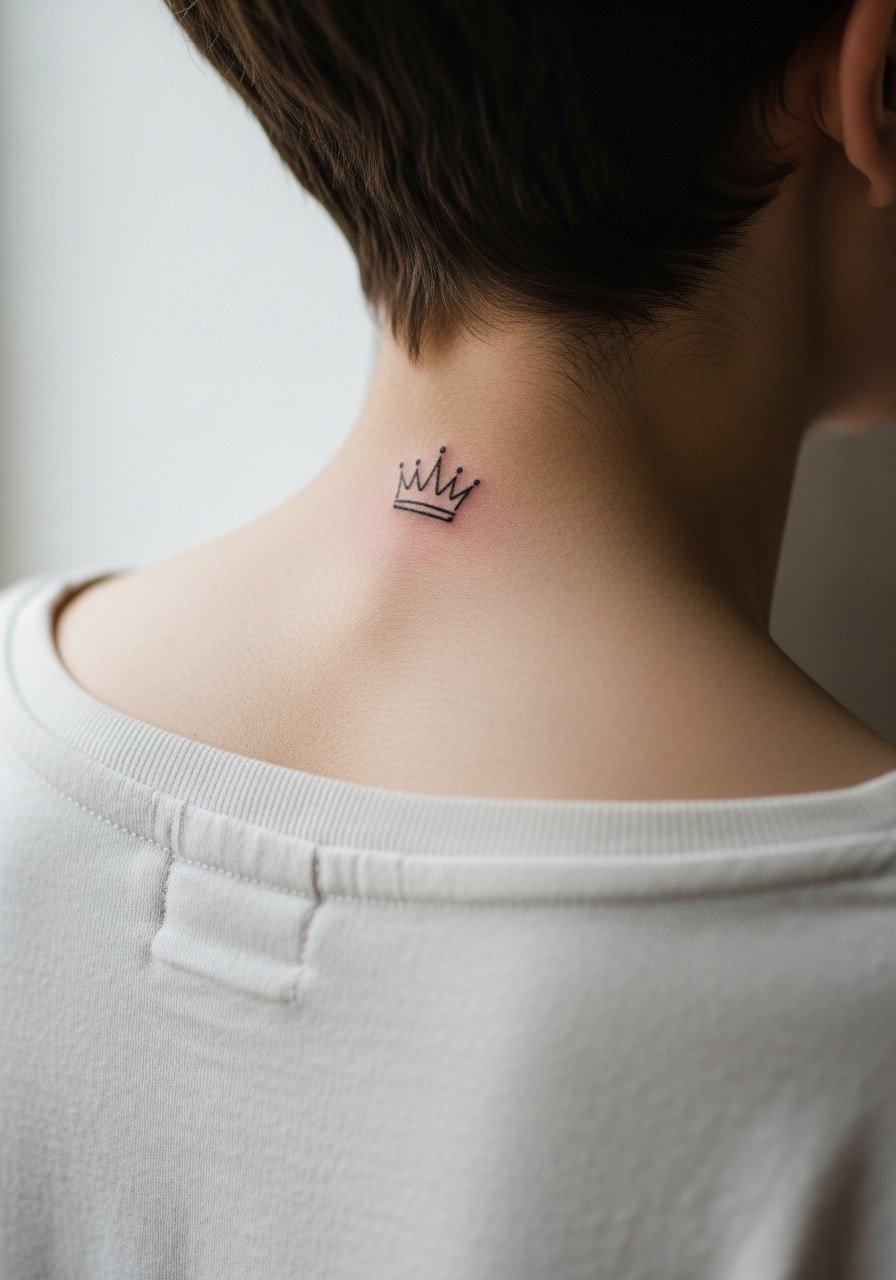
A tiny crown reads symbolic and centered at the nape. Pain is mild and session time short. Ask for open negative space in the crown's interior and slightly thicker outer points so the silhouette remains strong as it ages. People sometimes insist on ornate interior jewels that blur. For styling, a slip dress with a low back lets the crown become the focal point in evening looks. Crowns need only occasional touch-ups if linework softens.
27. Tiny Chain-Link Around the Nape
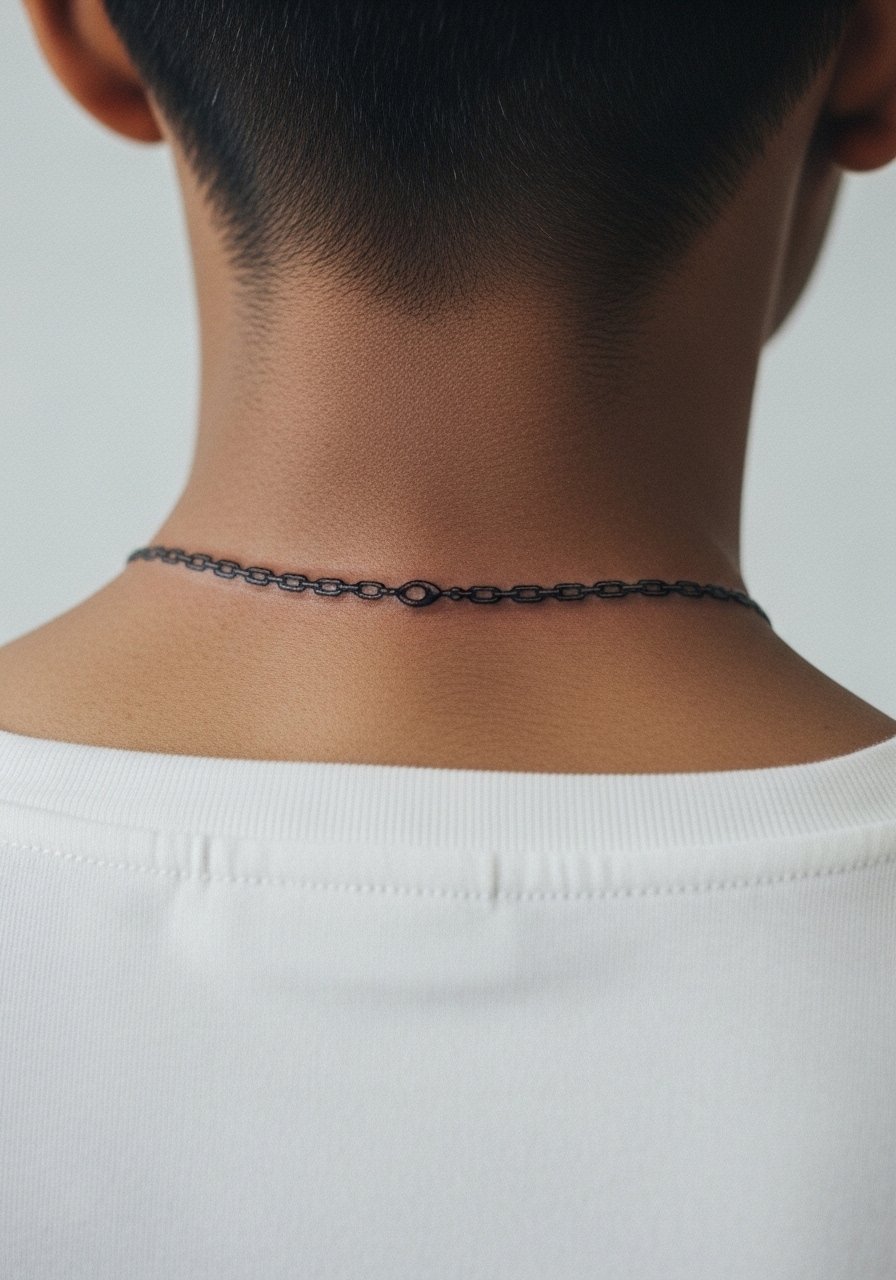
A chain-link band reads like a piece of jewelry and can be sized to sit just below the hairline. Expect mild to moderate discomfort and a session of 30 to 60 minutes. Ask your artist to set each link with small negative gaps so they do not fuse into a continuous band later. The most common mistake is tiny links too close together. For showing, try a backless top or low ponytail so the ink feels like worn jewelry. Because it wraps, plan the exact circumference in the consultation.
Frequently Asked Questions
Q: How much does a realistic back of neck tattoo usually hurt compared to a forearm piece?
A: The back of the neck tends to land in the mild to moderate range on most pain scales. The skin is thinner near the hairline and the area sits over soft tissue plus small nerves. Compared to a forearm it usually feels sharper for short bursts but the session is often shorter. Numbing cream and a relaxed posture help.
Q: Will fine line work on the nape blur faster than bold blackwork?
A: Fine line typically softens sooner than saturated blackwork because the tiny needle channels are closer together. Bold outlines and solid fills usually hold their silhouette longer. If you want detail that lasts, ask for slightly stronger primary lines and for spacing that anticipates minor spread.
Q: Can I hide a back of neck tattoo for job interviews or conservative settings?
A: Yes, many people hide nape pieces with collars, scarves, or hair styles. One camp argues visible neck tattoos harm hiring chances. The other camp points out coverage and modern norms reduce that risk. If you worry, pick a placement slightly lower, or plan clothing and hair strategies to conceal it during formal situations.
Q: How long before a tiny micro-realism piece on the neck needs a touch-up?
A: Expect a touch-up at around one to three years for micro-realism, depending on exposure and skin type. Small portrait edges and fine dots often need refreshing sooner than bold motifs. Sun protection and minimal friction reduce the need for early correction.
Q: What should I wear to the appointment for a back of neck tattoo?
A: Wear a wide-neck shirt, a button-down you can pull aside, or a tank so the artist can access the nape without tugging or shifting hair too much. Comfortable clothing that you can move without rubbing the freshly inked spot is best.
Q: Are there placement-specific risks like blowout on the back of the neck?
A: Blowout risk is moderate. The nape moves and flexes with neck motion and has thinner dermis in spots. Ask the artist about needle depth and spacing to reduce blowout risk. A conservative approach to lineweight and spacing helps preserve crispness as the piece heals.