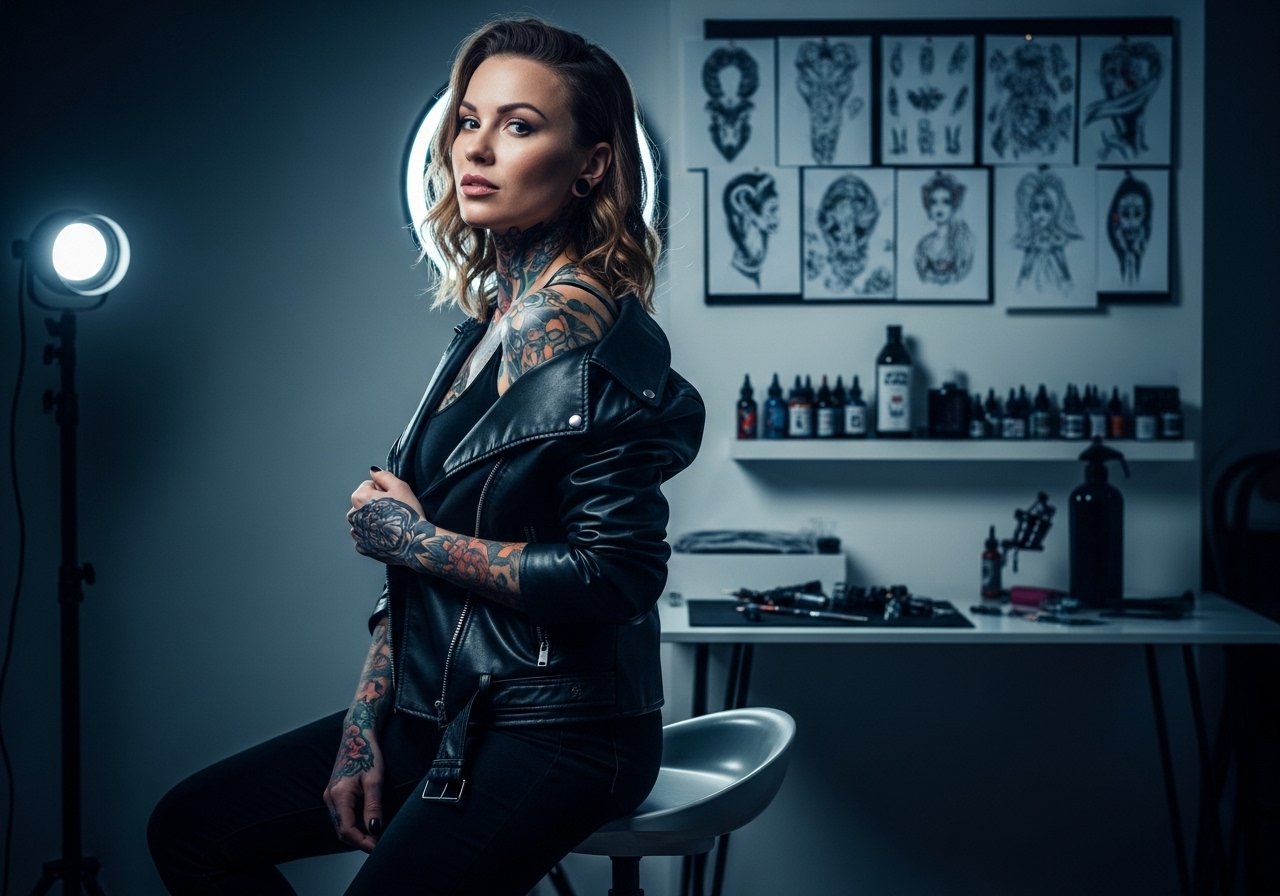
Watercolor sun tattoos keep popping up in saved boards, but the ones that still look like watercolor after two years usually started with a smarter build than a pure wash. I've seen color-only suns fade into smudges, and I have also seen pieces that hold because the artist layered fine line or used strategic saturation under the wash. Read the first idea to see how a shoulder sun with floral accents can look fresh now and still read crisp at year three.
1. Watercolor Sunburst with Floral Accents on the Shoulder

I recommend this when you want color that reads from a distance but still heals with detail. Ask your artist to anchor the wash with a thin fine-line center and subtle stipple shading behind each petal. The common mistake is asking for only washes with no linework, which often blurs into a single color field after a year. Expect a one to two session appointment and mild to moderate pain for shoulder work. For session day wear, bring a loose tank top so the artist has clear access without straps digging in. Plan on a touch-up around twelve to eighteen months for saturation.
2. Abstract Watercolor Sun Rays on the Inner Forearm
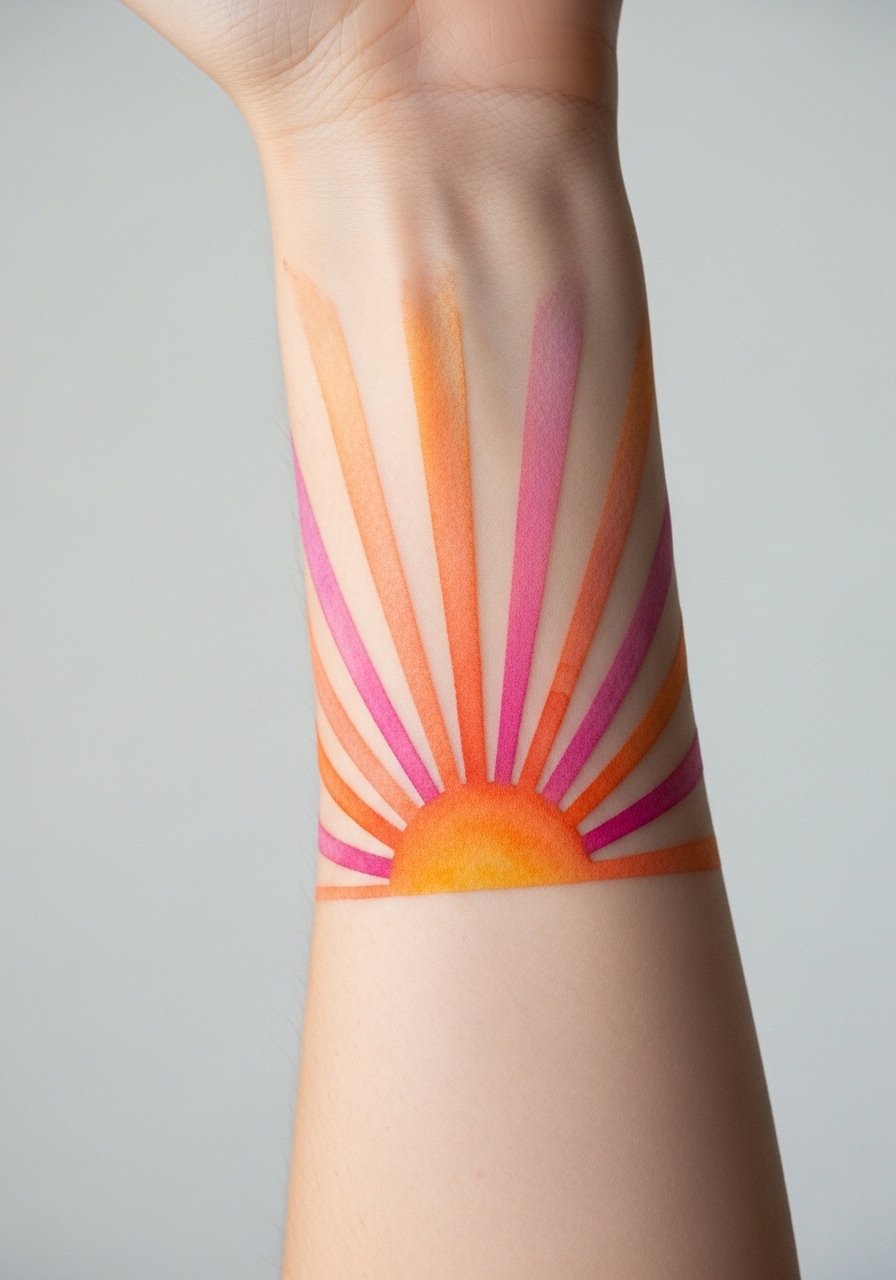
Fair warning, the inner forearm is forgiving for washes but shows fading faster than the bony outer forearm. When consulting, say you want blended gradients with a thin fine-line base so the rays keep structure as they soften. A mistake I see is compressing too many rays into a small area. That creates crowding and early merging. Expect a single session and a touch-up at year one to keep the edges readable. For showing it off, rolled cuffs frame this placement nicely and a linen roll cuff shirt helps keep attention on the arm without competing.
3. Watercolor Sun with Vine Integration on the Collarbone
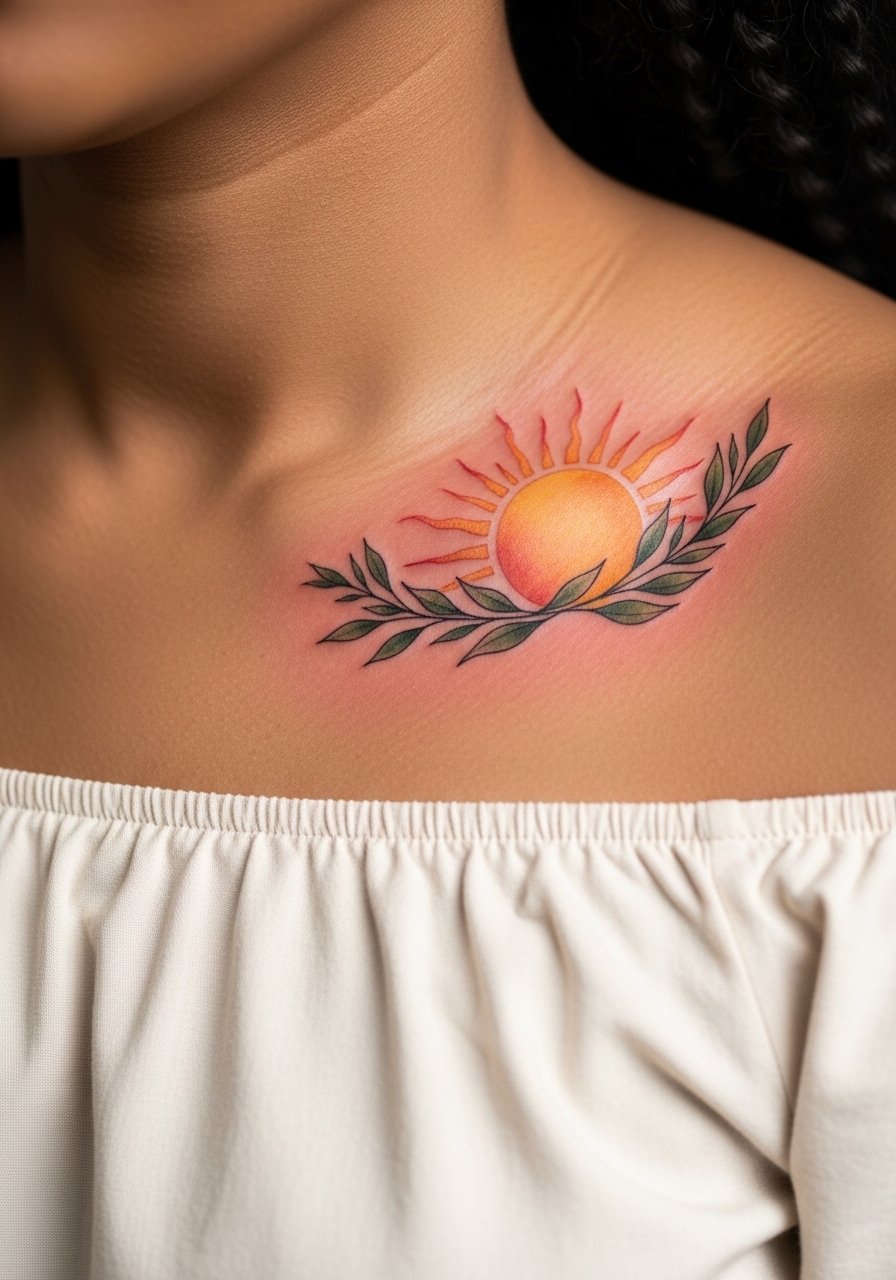
This design works well when you want nature motifs that wrap toward the neck. Tell your artist to anchor the color wash with thin vine linework and to place negative space between the rays and the vines. A common error is dense vine detail too close to the wash, which can read muddy once healed. Collarbone sessions can be sharp on pain, but they reward with visibility. For session comfort and styling, an off shoulder blouse makes access easy and frames the healed piece for jewelry. Expect a two-session plan if the vine demands more layering.
4. Playful Watercolor Sun Splash on the Wrist
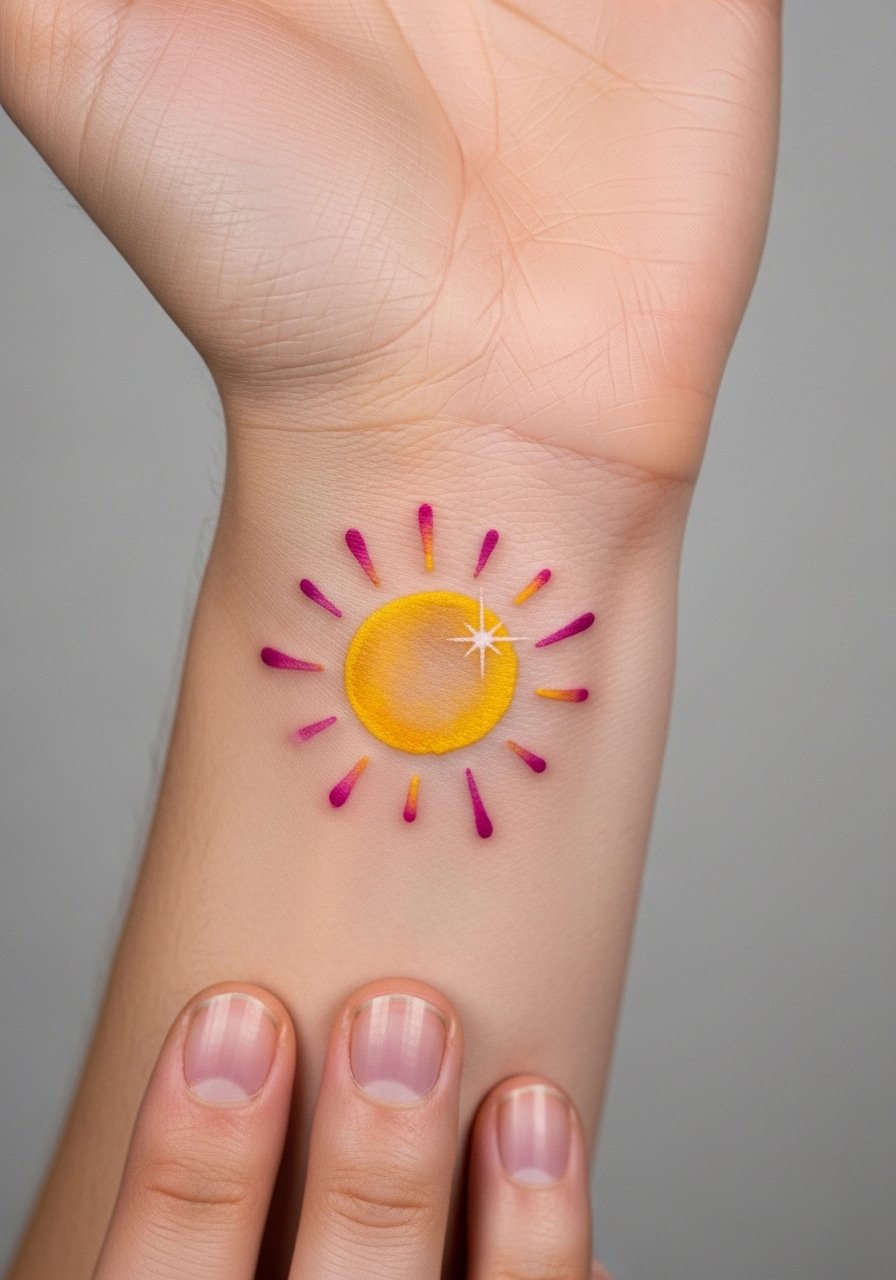
Wrist work looks delicate but friction and washing make tiny watercolor pieces age faster. When you book this, ask for slightly bolder inner saturation and a thin outline option so the wash has something to cling to. The frequent mistake is insisting on ultra-faint washes that disappear within months. Expect a short session and a bit of sharpness during shading. For showing it off, stack with a thin gold bangle set on the opposite wrist so attention shifts without covering the color. Plan on a touch-up within the first year if your hands see heavy wear.
5. Geometric Watercolor Sun Hybrid on the Upper Arm
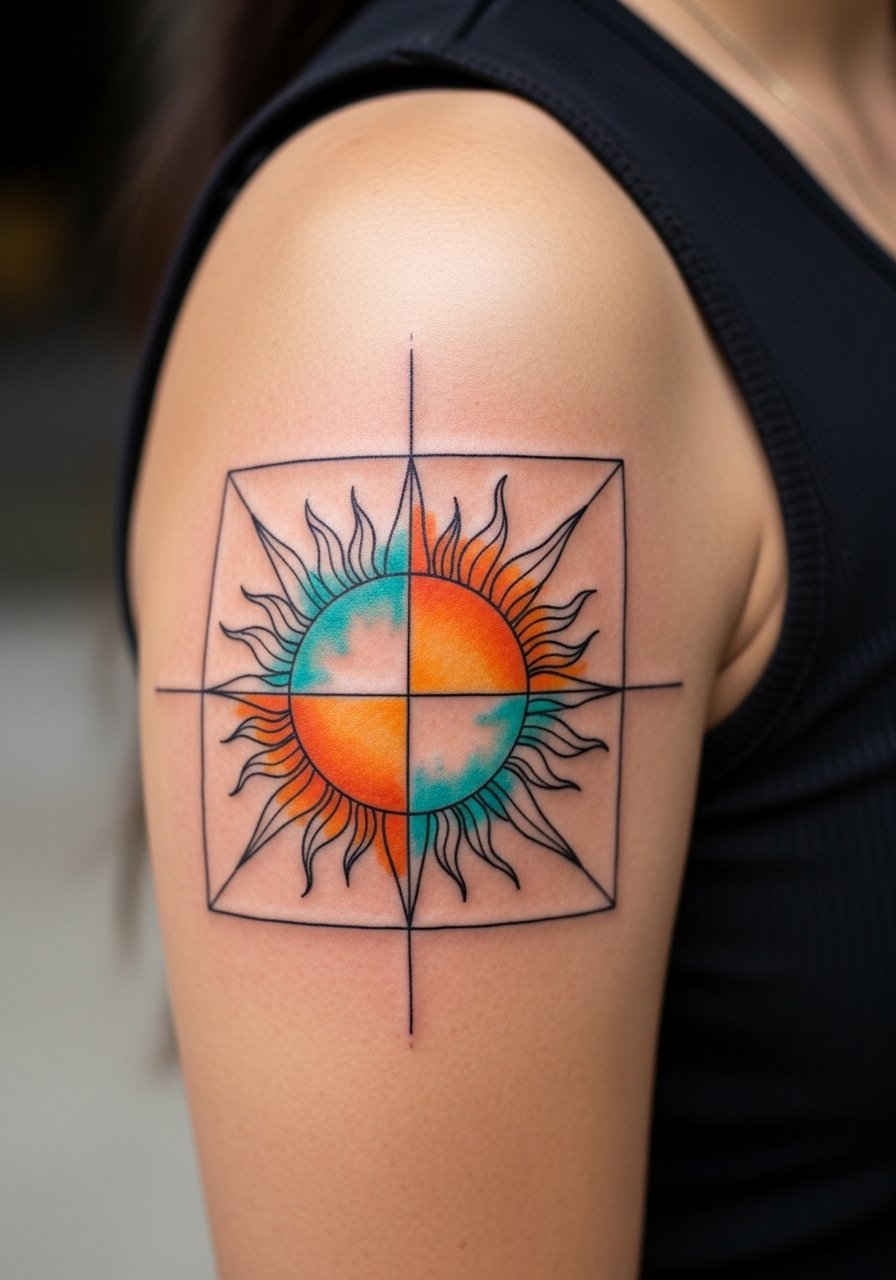
I've seen the hybrid approach rescue color longevity because the fine geometric linework holds as washes fade. In consultation, request clear spacing between geometry and washes and ask the artist to use controlled saturation under the color. The key mistake is making the geometry too tight for the scale. That invites early merging. Upper arm sessions are medium pain and often need two shorter sittings for clean layering. Pair the healed design with sleeveless midi dresses in soft pastels to let the arm show without crowding the pattern.
6. Minimal Watercolor Sun Outline at the Ankle

Most people pick ankle pieces for low-commitment visibility, but the ankle faces constant rubbing from socks and shoes. Tell your artist you want a faint wash with slightly stronger central saturation and ask for a placement that avoids high-friction spots. A frequent error is placing the design too close to shoe seams. Expect a short session and tender healing if your footwear rubs. For showing it off, cuffed ankle pants work best, and a pair of cuffed ankle pants keeps the tattoo visible without constant exposure. Touch-ups at year one are common.
Studio Day Picks
The shoulder, forearm, collarbone, wrist, upper arm, and ankle pieces above each ask for slightly different prep and first-week care, so a small kit tailored to those needs helps the session and the first week.
-
Indie thin balm for watercolor. A lighter balm helps prevent color muddiness on the shoulder and collarbone washes while keeping the skin supple during the first three days.
-
Breathable tattoo wrap alternative. Ideal for humid climates and wrist or ankle pieces where standard film can trap moisture and peel unevenly.
-
UK-style tattoo oil. A thinner oil can support color saturation on medium to dark skin tones without leaving a heavy residue during healing.
-
Thin protective film roll. Keeps small wrist and ankle designs clean during the first few days of washing and activity.
-
Aquaphor healing ointment. A thin layer in the very first 48 hours helps prevent cracking on fine-line centers beneath watercolor work.
7. Radiating Watercolor Sun with Petals on the Ribcage
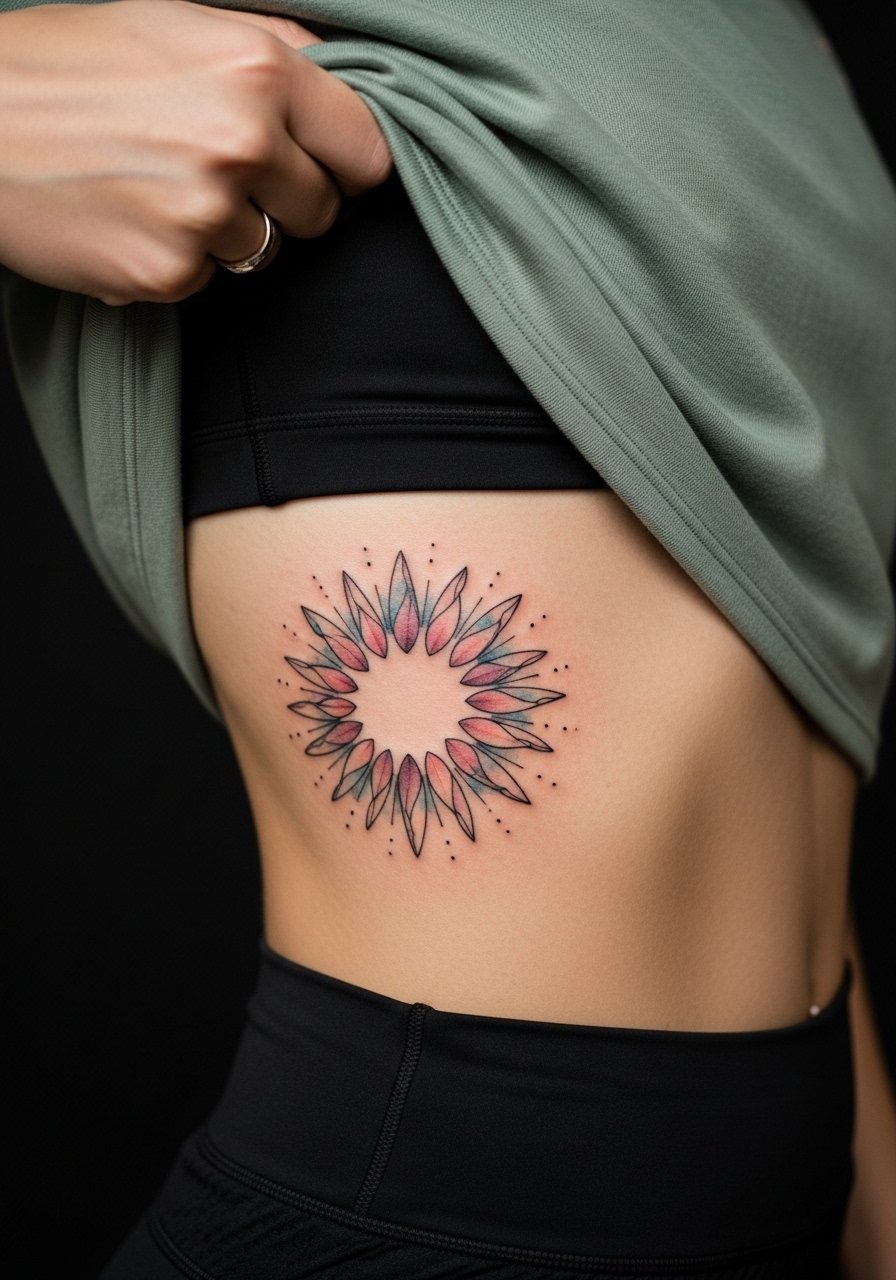
Fair warning, ribcage sessions test calmness. Pain runs higher here, but the canvas lets you scale the petals for longevity. Ask your artist for more spacing between petals and for light stipple shading to keep the edges readable as washes soften. The mistake is compressing too much detail into a narrow rib section. Expect two sessions and plan your clothing for access, like a strapless or cropped sports top. Many people choose ribs for the dramatic look despite the pain. Touch-ups are common at year one if you want the orange and pink gradients to stay bright.
8. Turquoise-Infused Watercolor Sun on the Inner Bicep
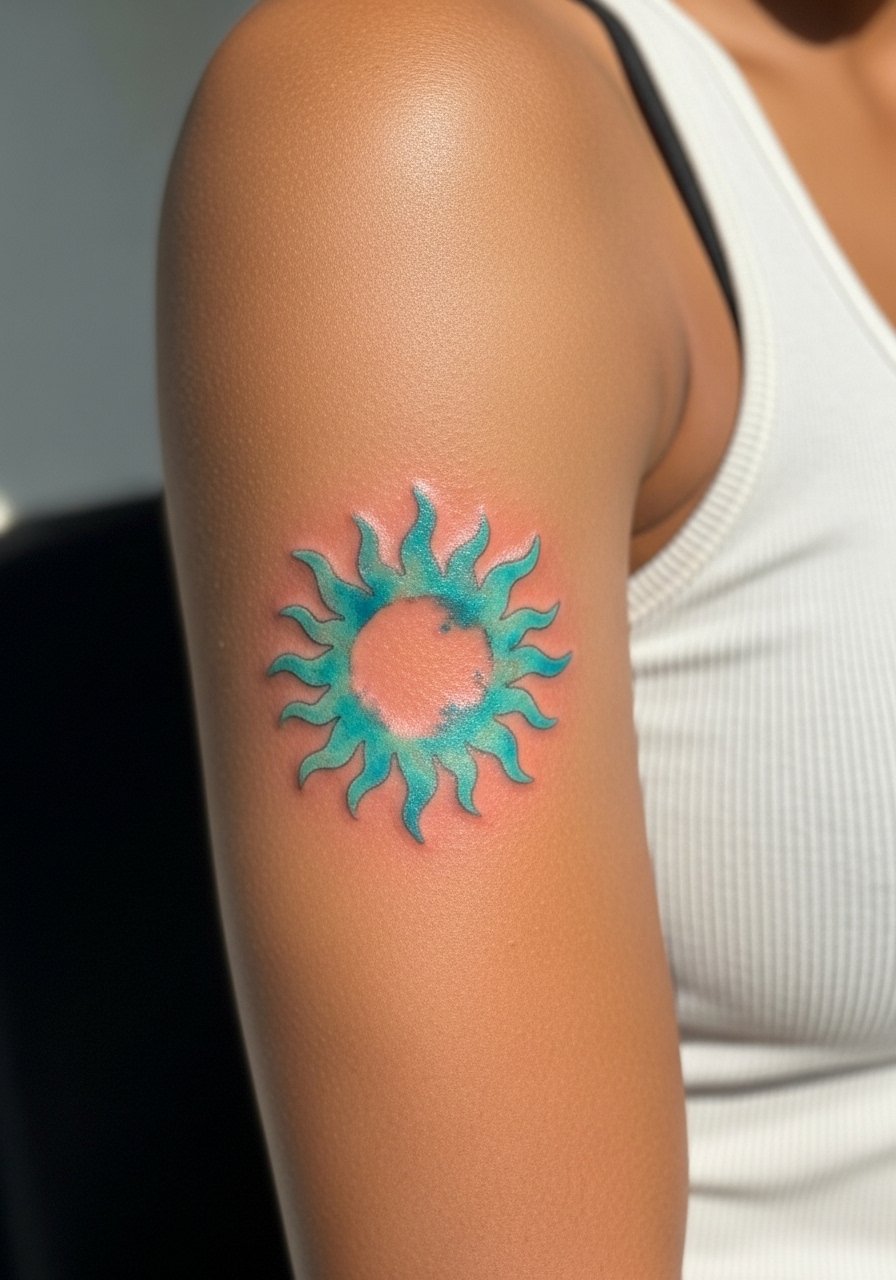
Turquoise suns give a cool alternative to classic yellow, and they work well against medium to dark skin when the artist understands color mixing. When you book, say you want magenta accents under the turquoise to keep contrast as it heals. Common mistakes include using only pale turquoise that vanishes on melanin-rich skin. Inner bicep is a tender area, but the wear is low so color can last. For the session, a tank top that can be lifted easily is the practical choice. Expect one to two sessions depending on saturation.
9. Layered Watercolor Sun Mandala on the Upper Back

There's a reason people pick the upper back for mandala layering. The skin holds spacing well and the area allows generous scaling. Ask for alternating bands of linework and wash so the mandala keeps geometry as colors fade. The error I see is crowding rings without negative space. Back pieces require two to three sessions and careful aftercare because sleeping on the area can irritate fresh washes. For showing it off, open-back evening wear highlights the central mandala without exposing too much. Expect touch-ups around year two if you want the color rings to stay distinct.
10. Soft-Blended Watercolor Dawn Sun on the Thigh
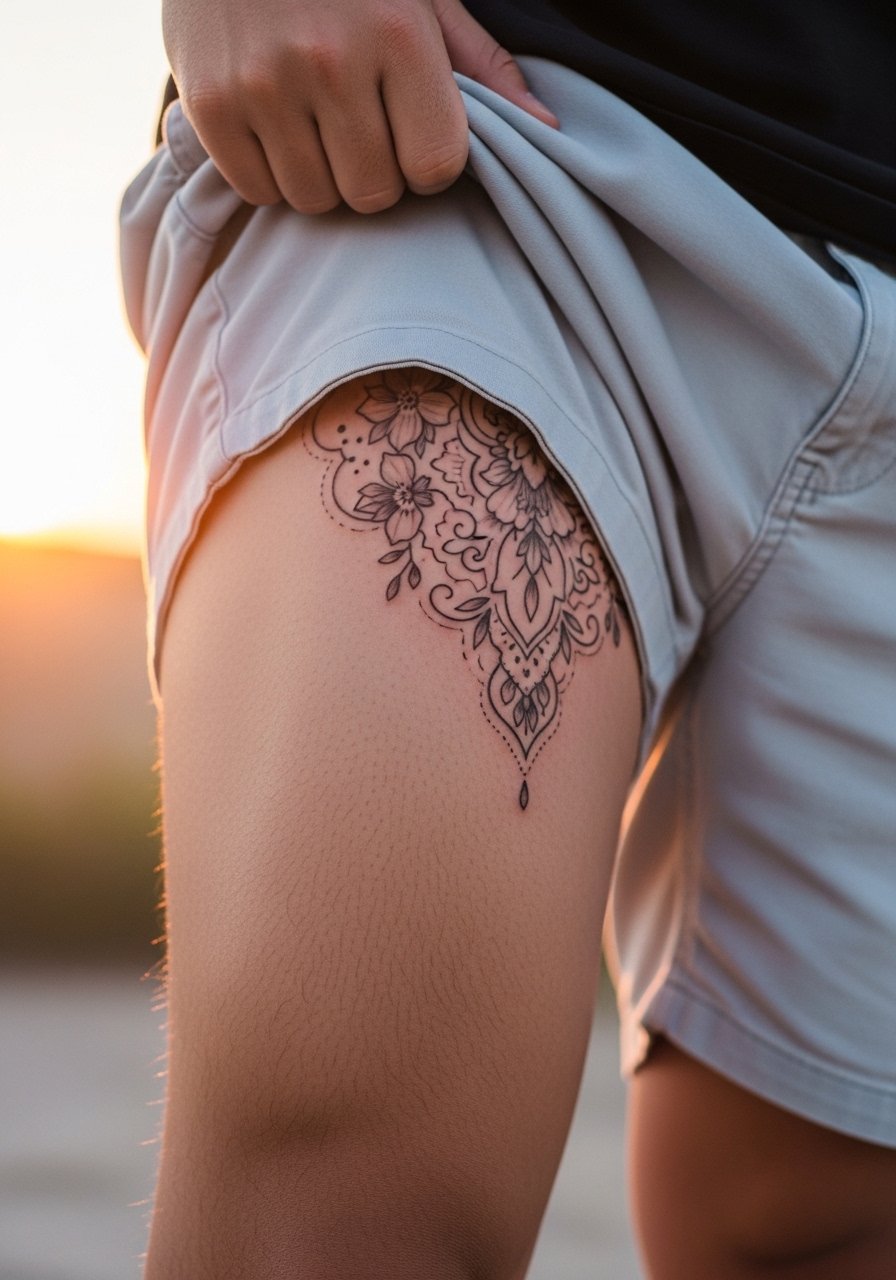
Thigh pieces let you use larger washes with less risk of blowout, since the skin is thicker. Tell your artist you want pastel blends with a slightly deeper core so the piece reads through clothes when needed. A frequent mistake is using too light a palette that disappears under jeans. Session comfort is good because you can lie or sit to reduce strain. Wear loose shorts or high-waist bottoms to the session, and consider high waist denim shorts for easy access. Plan for two sessions if you want soft layering across pale pinks and yellows.
11. Watercolor Sun with Abstract Swirls on the Calf
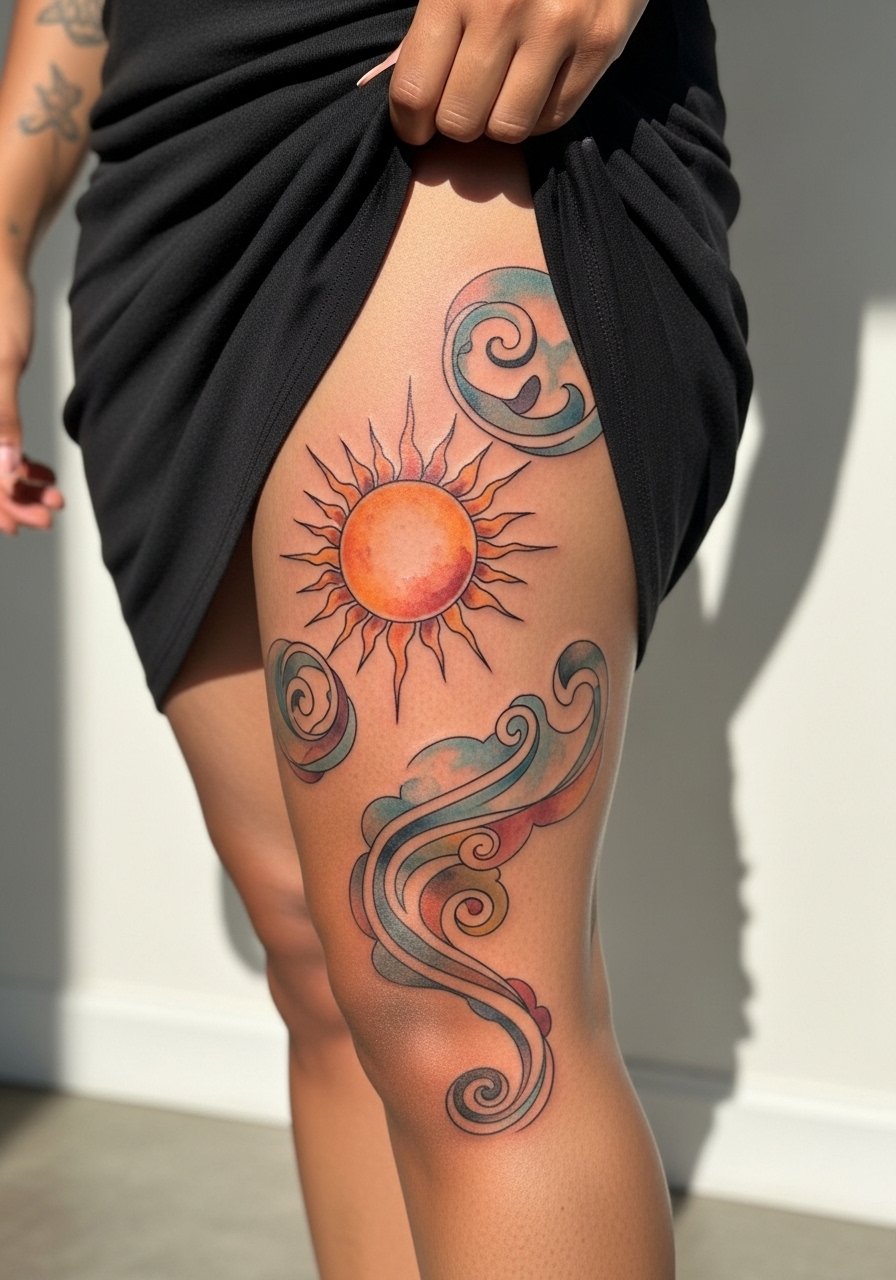
Calf placements handle larger, dynamic swirls because the skin is stable. When describing this to your artist, mention you want the swirls to follow muscle contours so they read as movement. The common mistake is forcing radial symmetry on a curved calf, which looks flat on a moving limb. Calf sessions are moderate pain and often require two sittings for saturation and edge control. For show-off styling, skirts and sandals work well, and a strappy flat sandal keeps the piece visible during warm months. Expect a touch-up after a year if you wear a lot of sun.
12. Petite Watercolor Sunbeam Cluster on the Neck
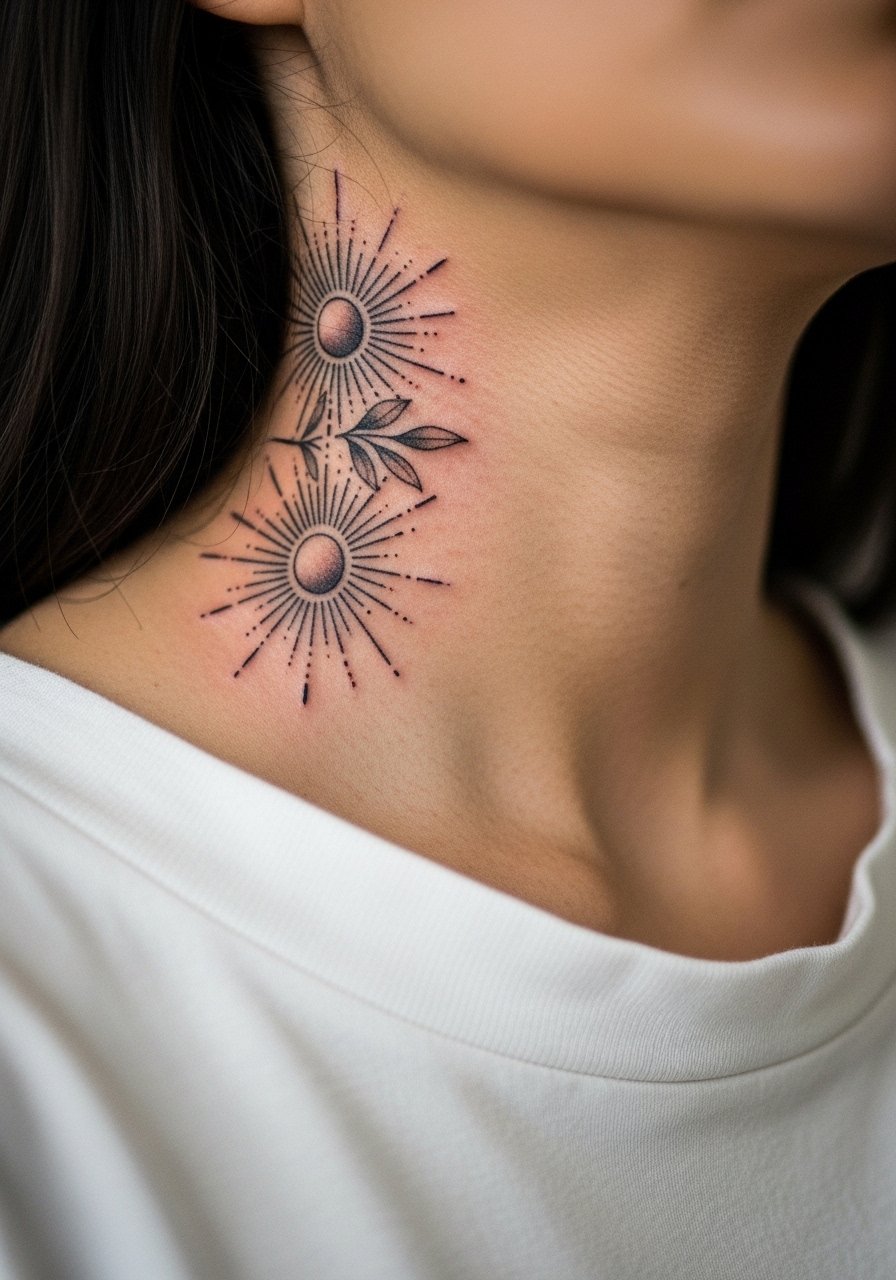
Neck placements are small statements and they face visibility consequences. Ask for a micro cluster spaced well apart so each beam keeps definition. A common error is trying to cram a large composition into a one-inch neck space. Pain is higher and healing needs care because of movement and neck friction. Keep session wear simple with a wide-neck shirt you can adjust easily. Think about career visibility before booking and use discovery pathways like niche hashtags and local studio portfolios to find artists comfortable with neck work.
13. Vibrant Watercolor Eclipse Sun on the Shoulder Blade
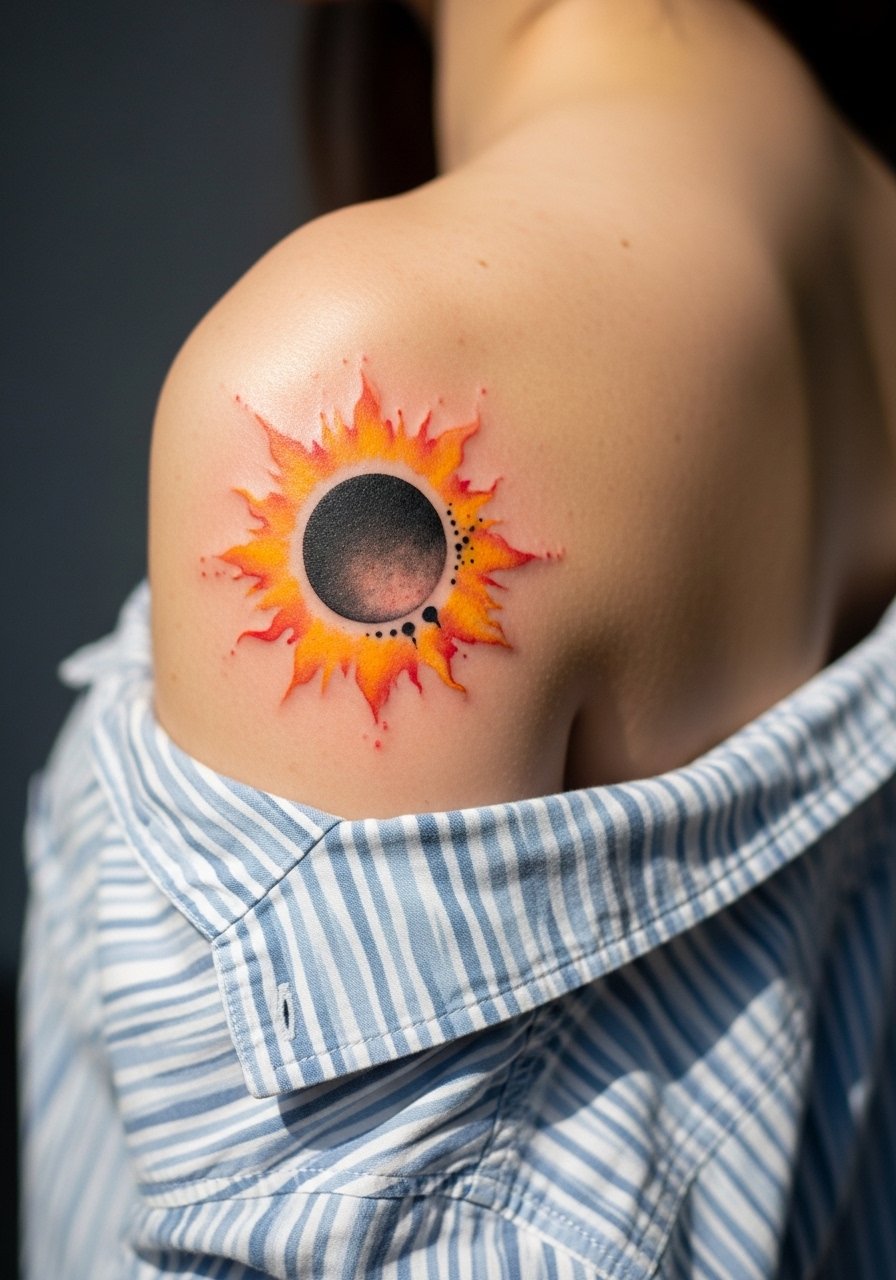
Shoulder blade pieces have great scale for contrast experiments like eclipse suns. Discuss a darker core that transitions into color washes, and ask for slightly increased spacing to avoid early amalgamation of dark and color. Mistakes include letting the dark core bleed into surrounding washes during healing. Shoulder blade sessions are medium pain and usually need two sittings for crisp cores. For session day, a loose button-down shirt you can pull aside makes access simple. Expect the dark core to remain strong while outer washes may require a touch-up at year two.
14. Minimal Watercolor Sun Outline on the Ankle Side
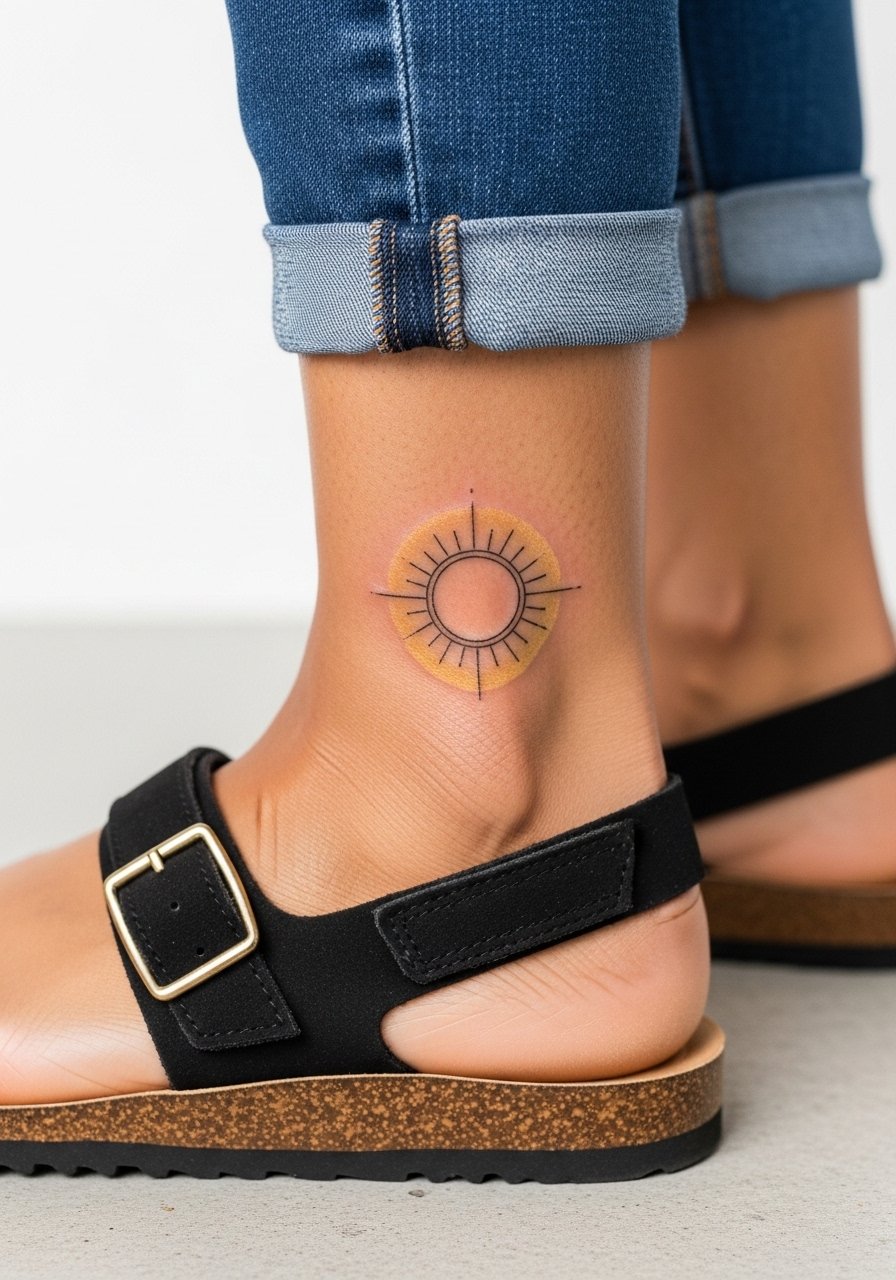
Artists are split on tiny watercolor work in high-friction zones. One camp argues that ankle and foot washes blur fast because of constant rubbing. The other camp says careful placement and slightly denser cores can hold up. I suggest a slightly bolder center and avoiding the exact seam line of shoes. The common mistake is insisting on ultra-faint color right where socks and straps rub. Pain is low to moderate and aftercare must prevent constant abrasion. For daily wear, choose sandals or cuffed pants, and expect to schedule a touch-up within a year if you wear tight shoes often.
15. Layered Neo-Watercolor Sun Mandala on the Upper Arm
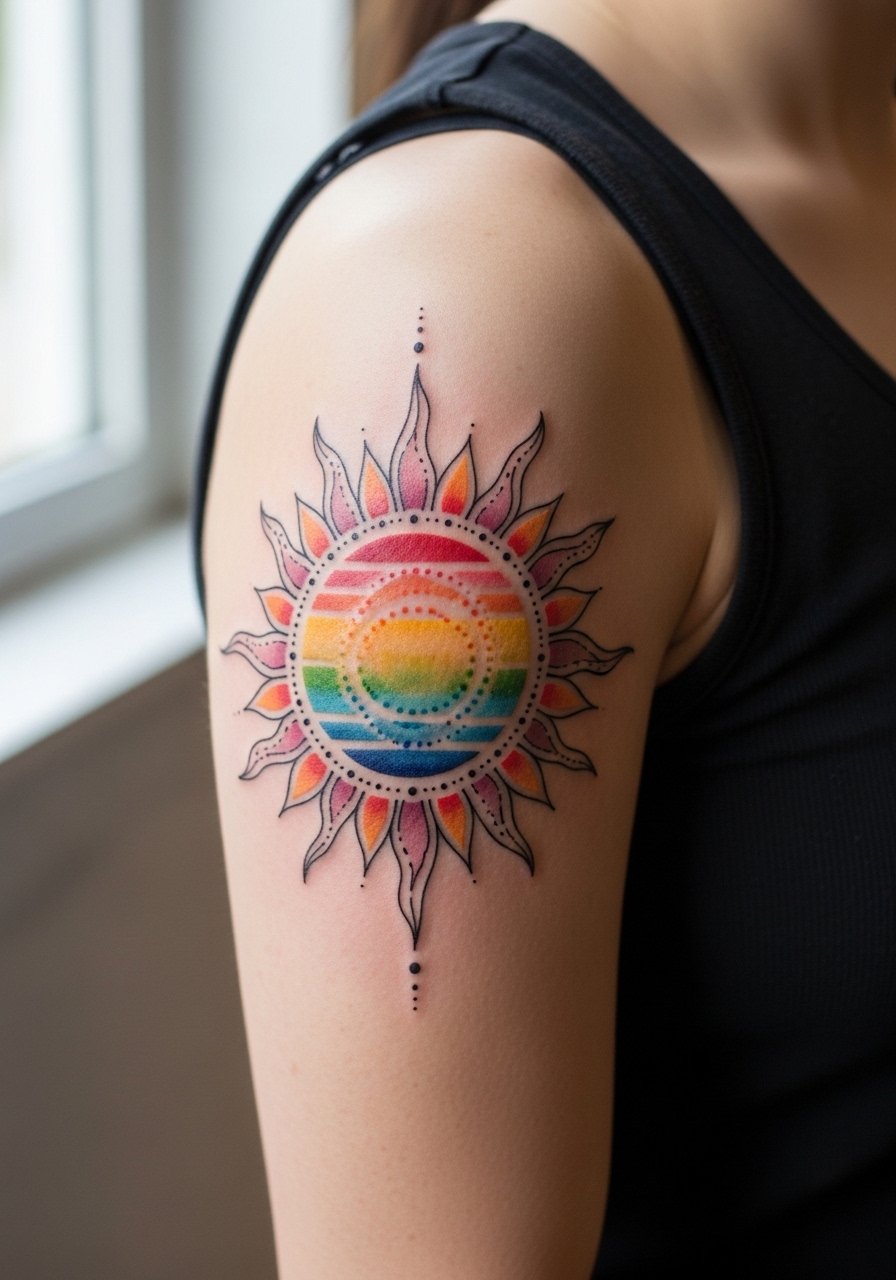
The upper arm likes density and ornamentation, which helps watercolor hold longer because of less stretch than inner arms. Tell your artist you want alternating bands of dot work and soft wash so the mandala ages with texture. A typical error is packing too many thin rings into a small radius. Sessions can be split into two to keep saturation clean. For styling, sleeveless dresses in pastels play well and an arm cuff accessory can frame the healed piece without overwhelming it. Touch-ups are less frequent here, often around two years.
16. Petite Micro Watercolor Sunbeam Cluster on the Neckline

Micro clusters near the neckline are subtle and flattering when scaled correctly. In the consult, specify exact spacing and a slightly deeper core so the beams retain contrast after six months. The common mistake is over-detailing in a tiny zone. Pain is moderate and hygiene matters because clothing can rub the area. For showing off, pair with a thin chain pendant necklace that sits above the ink so the colors are visible. Expect touch-ups at year one if you expose the area frequently to sun.
17. Vibrant Watercolor Eclipse Sun on the Shoulder Blade Edge

The shoulder blade edge is a sweet spot for dramatic color contrast with less daily abrasion than lower back or ribs. When planning, ask for a crisp dark core with faded outer washes and for the artist to leave breathing room between the core and the edge. The mistake to avoid is placing the dark core too close to the spine of the shoulder blade where movement can smear fine blends. Sessions are medium in pain and usually require two sittings for full saturation. For session-day ease, wear a flowy crop tank you can adjust and plan on a touch-up after the first swim season.
Frequently Asked Questions
Q: How much does a watercolor sun tattoo cost across common placements?
A: Expect a broad range depending on size and complexity. Small micro pieces typically fall in the one hundred to three hundred range, medium shoulder or thigh pieces commonly sit in the two hundred to eight hundred range, and large layered mandalas or back work can run five hundred to twelve hundred. Ask your studio for a written quote that lists sessions and expected touch-ups.
Q: Do watercolor-style tattoos need different aftercare than traditional ones?
A: Yes. Watercolor relies on softer saturation so keeping the piece lightly moisturized and out of heavy abrasion helps color settle. Some artists prefer breathable film for the first night while others recommend a thin balm. The Saniderm versus dry healing debate is active. One camp favors protective film for color retention and another argues dry healing reduces ink loss. Ask your artist which method they have seen work best for watercolor.
Q: Will a turquoise-infused sun show on medium to dark skin?
A: It can, but the approach matters. From what I've seen, pairing turquoise with magenta or deeper undertones keeps contrast visible on melanin-rich skin. Ask your artist about test patches or to show healed examples on similar skin tones via studio portfolios or social searches like niche hashtags.
Q: How often will watercolor sun tattoos need touch-ups?
A: Plan on touch-ups roughly every twelve to twenty-four months for most watercolor work. Micro pieces and wrist or ankle placements need attention sooner because of friction. Large back or upper arm pieces often hold longer before you opt for refresh sessions.
Q: Is it safe to get a watercolor sun on the ribs given the pain and aging concerns?
A: Ribs are higher in pain but offer a great canvas for scale. Artists disagree on fine line longevity on ribs. One side says the skin stretch blurs lines in two years. The other side says careful depth and spacing keeps lines readable longer. If you choose ribs, request spacing, plan for two sessions, and accept that a touch-up might be needed at year one.
Q: How do I find artists who handle watercolor suns without the colors turning muddy?
A: Use the discovery pathways like targeted Instagram hashtags, Tattoodo filters, and forum threads to find portfolios. Look for artists who show healed photos, especially on a range of skin tones. Spend time reviewing healed shots and ask studios about their approach to saturation and layering before booking.