Bold blackwork ages differently than trends make you expect. Fine line pieces flood feeds but often need touch-ups sooner, and small blackwork can cost more than first-timers expect because most shops have minimum session fees. If you want spider lily designs that still read clean in five years, this selection favors bold anchors, smart placement, and practical wardrobe notes to help you wear the work and survive the first week.
1. Blackwork Spider Lily with Geometric Mandala Backdrop

I've seen this composition hold best when artists scale the mandala so the petals have plenty of breathing room. Tell your artist you want the mandala at a 4 to 6 inch diameter and bold linework, not micro-detail packed into small areas. The back is forgiving for saturation so expect two sessions for crisp saturation and touch-up. Common mistake is cramming the mandala too tight which leads to merging lines as it ages. Pain is moderate. For the studio day, wear a loose button-down shirt so you can pull one side aside without being exposed.
2. Minimalist Blackwork Spider Lily Stem Outline on Inner Forearm
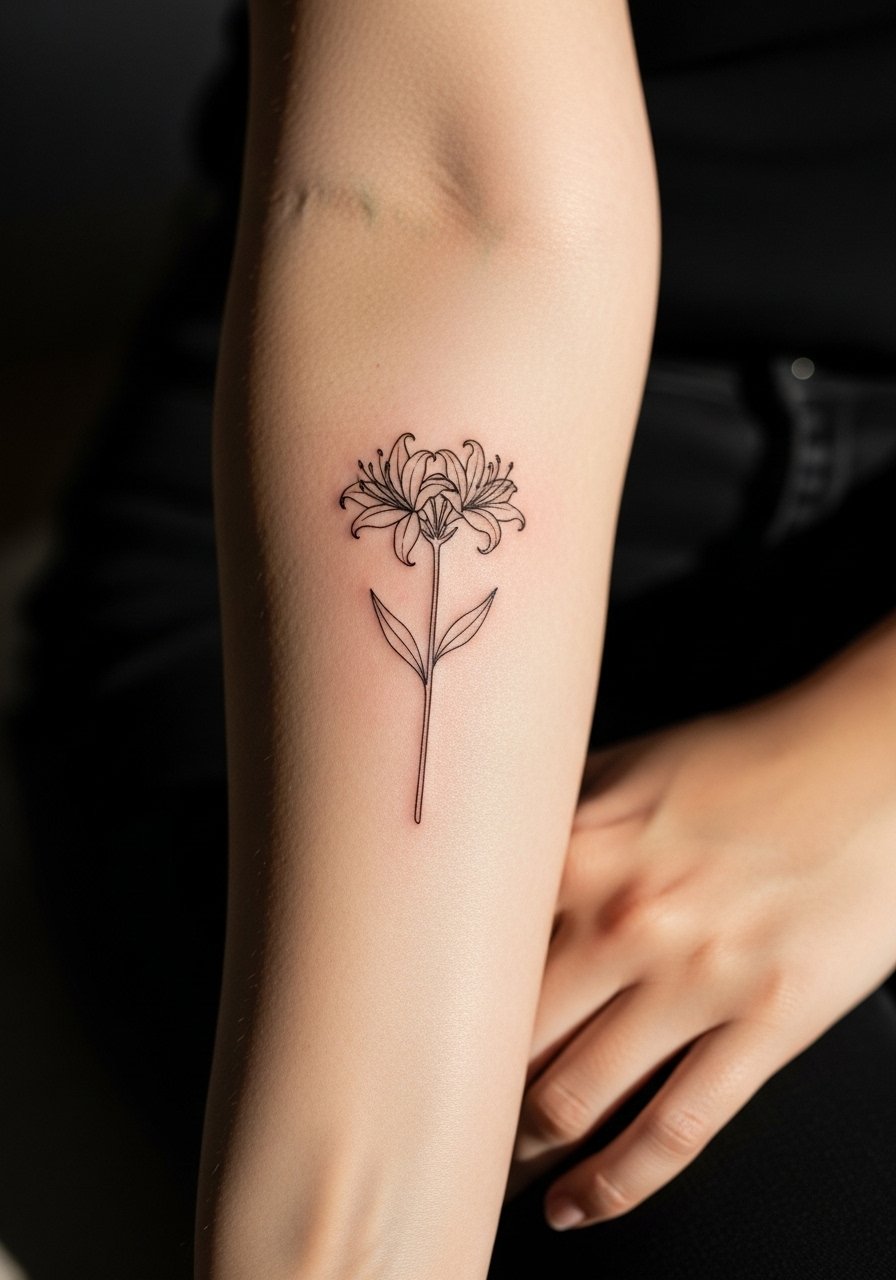
Fair warning: the forearm shows detail immediately and also reveals small fade areas over time. This one suits first-timers who want the lily language without a heavy session. Ask for single-line work at slightly heavier line weight than pure needle-thin fine line to avoid early blurring. The session is short, often under an hour, and pain is low to moderate. A common error is insisting on ultra-fine lines for this placement, then needing a touch-up at year two. For showing it off, rolled sleeves work best paired with a loose black tank top and a leather cuff on the opposite wrist for balance.
3. Blackwork Spider Lily Cluster with Negative Space Petals on Outer Thigh
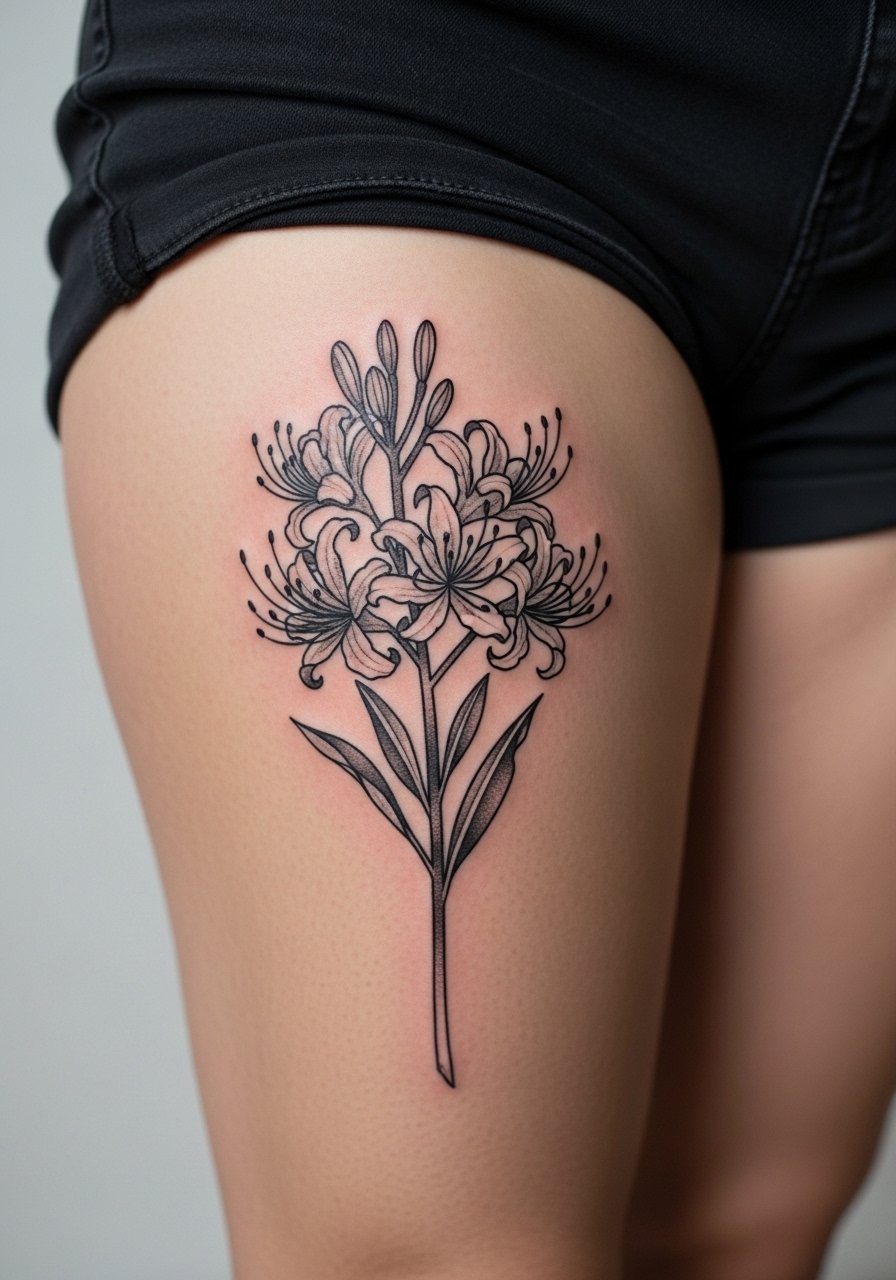
Outer thigh gives you five-inch canvases that age well because the skin moves less than the knee area. This cluster uses negative space to keep contrast strong on darker skin tones, so tell the artist to block in solid fields and carve the petals out with skin breaks. Expect two to three sessions for layered shading. A common mistake is over-detailing small petals which flatten with time. For session comfort, wear loose drawstring shorts so the artist can access the thigh without tight fabric rubbing the fresh ink. Touch-up timelines are usually two to three years for high-contrast retention.
4. Ornamental Blackwork Spider Lily Sleeve Starter on Outer Forearm
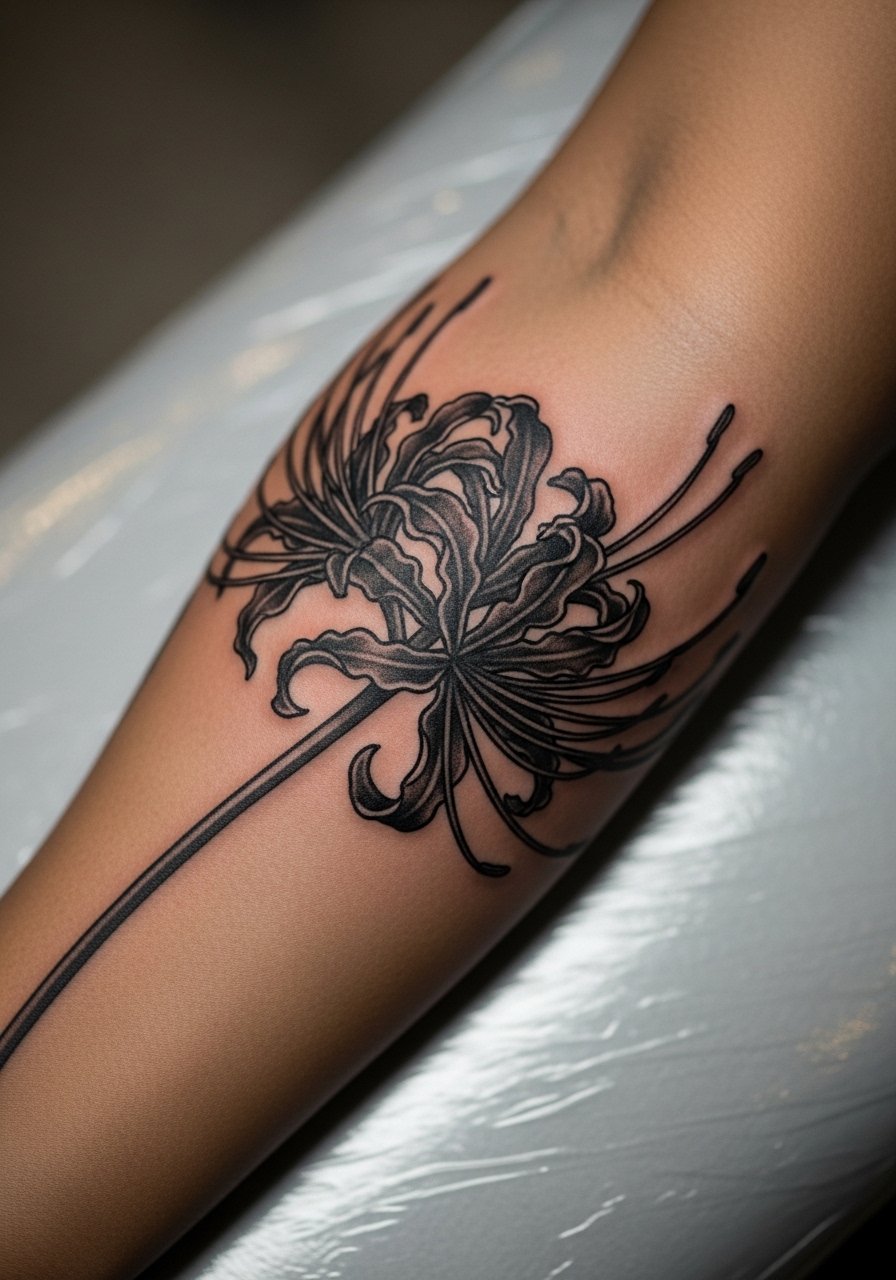
This is a starter piece for patchwork sleeves that want expandability over time. When consulting, bring images that show flow toward the elbow and tell the artist you want negative space panels to make future elements slot in. The session feels longer because of dense black saturation. Expect moderate pain and a three-session plan for saturation and crisp edges. Mistakes happen when clients ask for full black fill in one go, which can lead to overworking the skin. For after-session wear, roll up a sleeveless muscle tee so the area stays uncovered without sleeve drag. Plan touch-ups at year two to three if you live in hot, sunny climates.
5. Fine Line Blackwork Hybrid on Top of Hand or Finger
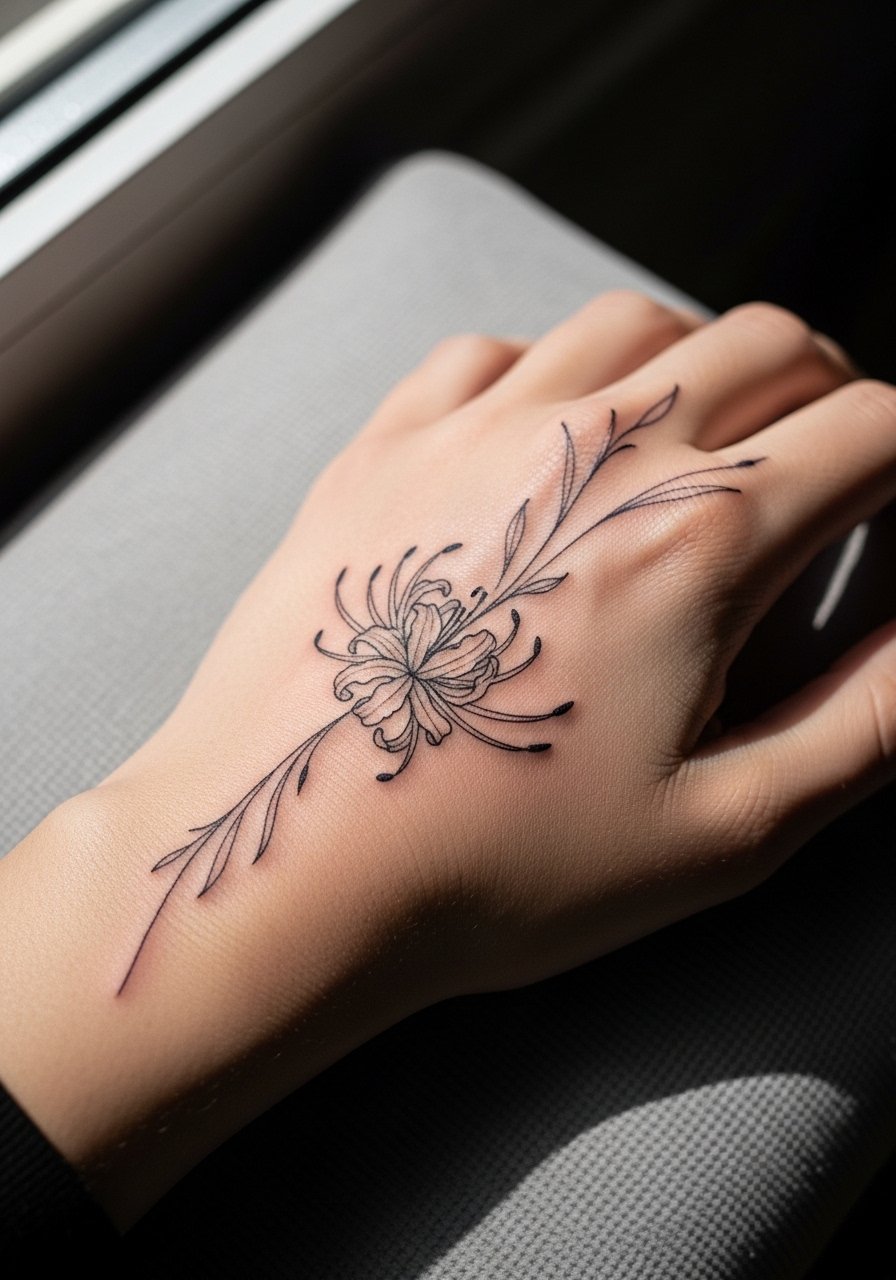
Hand and finger placements read bold but they age faster. The debate splits artists into two camps on whether fine line belongs on hands. One group warns that constant washing and friction will blur lines within two years. The other group says careful depth and spacing can keep fine line readable longer. Ask your artist where they stand and expect a higher touch-up frequency. Sessions are short but painful because of thin tissue. A real mistake is treating a finger sketch like a wrist piece in terms of line weight. Plan for yearly touch-ups if you want the same crisp look.
6. Blackwork Spider Lily with Japanese Wave Patterns on the Ribcage
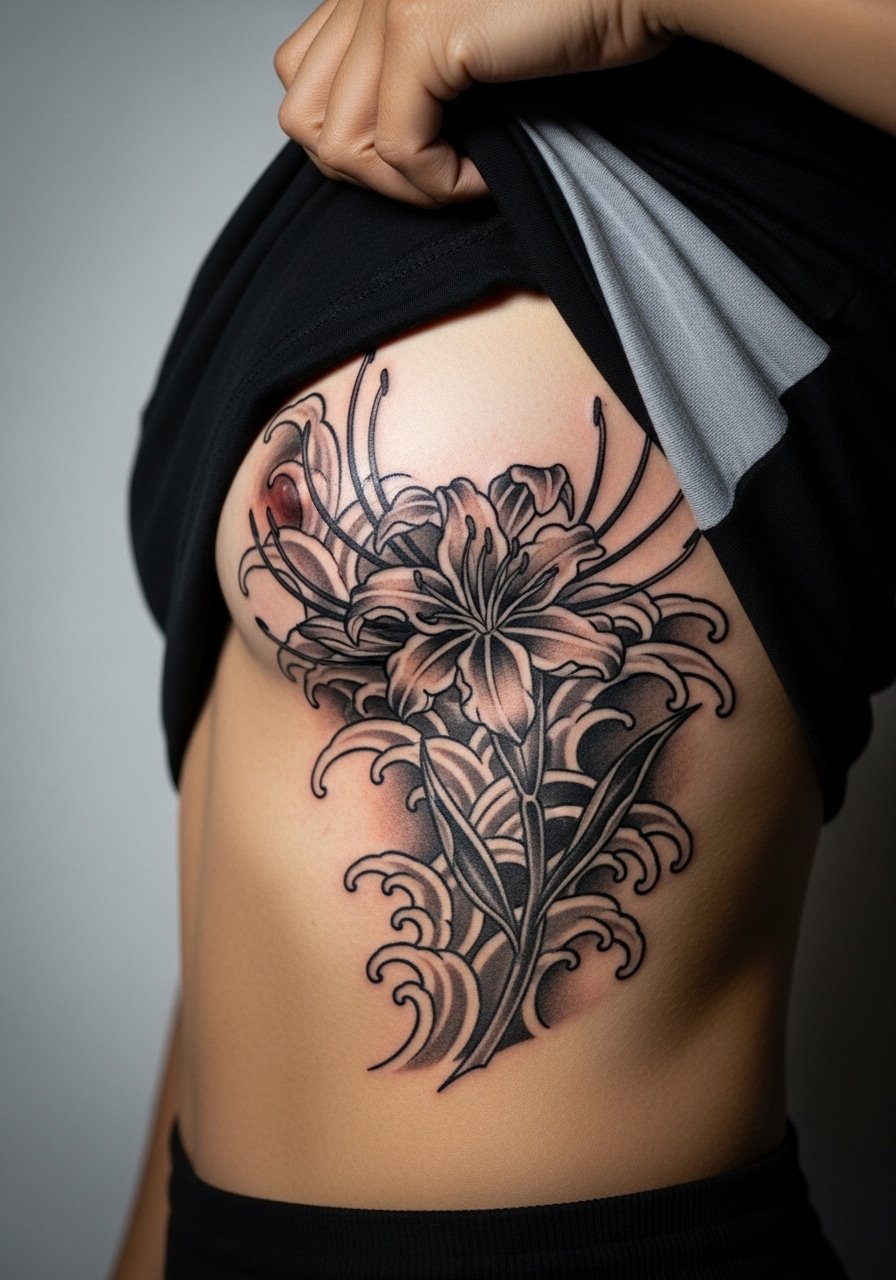
Fair warning: the ribcage is up there on pain charts and sessions can be long. This pairing reads like a memorial piece when waves wrap around the lily. Tell your artist you want deep saturation in the waves and deliberate spacing around the lily bloom so the petals do not vanish into shading later. A common aging problem is overworked clouds of shading that merge into the petals. The session rhythm is stop and start, so bring comfortable headphones and light layers for temperature swings. Expect the first touch-up within two years if you live in a high-sun region.
Studio Day Picks
The rib and hand pieces above require different prep from the smaller forearm and thigh work, so a few smart items make the chair day and first week easier.
-
Stencil transfer paper kit. Lets you preview the exact line placement on skin before the needle starts, which is useful for mandala and geometric alignments from the first six ideas.
-
Topical numbing cream. Applied as directed about 45 minutes before long rib or hand sessions reduces needle anxiety without changing line uptake when used properly.
-
Thin protective film roll. Useful for finger and ankle pieces that rub against socks and shoes during the first few days.
-
Fragrance-free gentle body wash. Cleanses healing zones like the forearm and thigh without stripping moisture from bold black fill.
-
Hustle Butter Deluxe. A mainstream healing balm option that many artists recommend for locking in moisture during the initial healing window.
7. Micro Blackwork Spider Lily Bud Behind the Ear
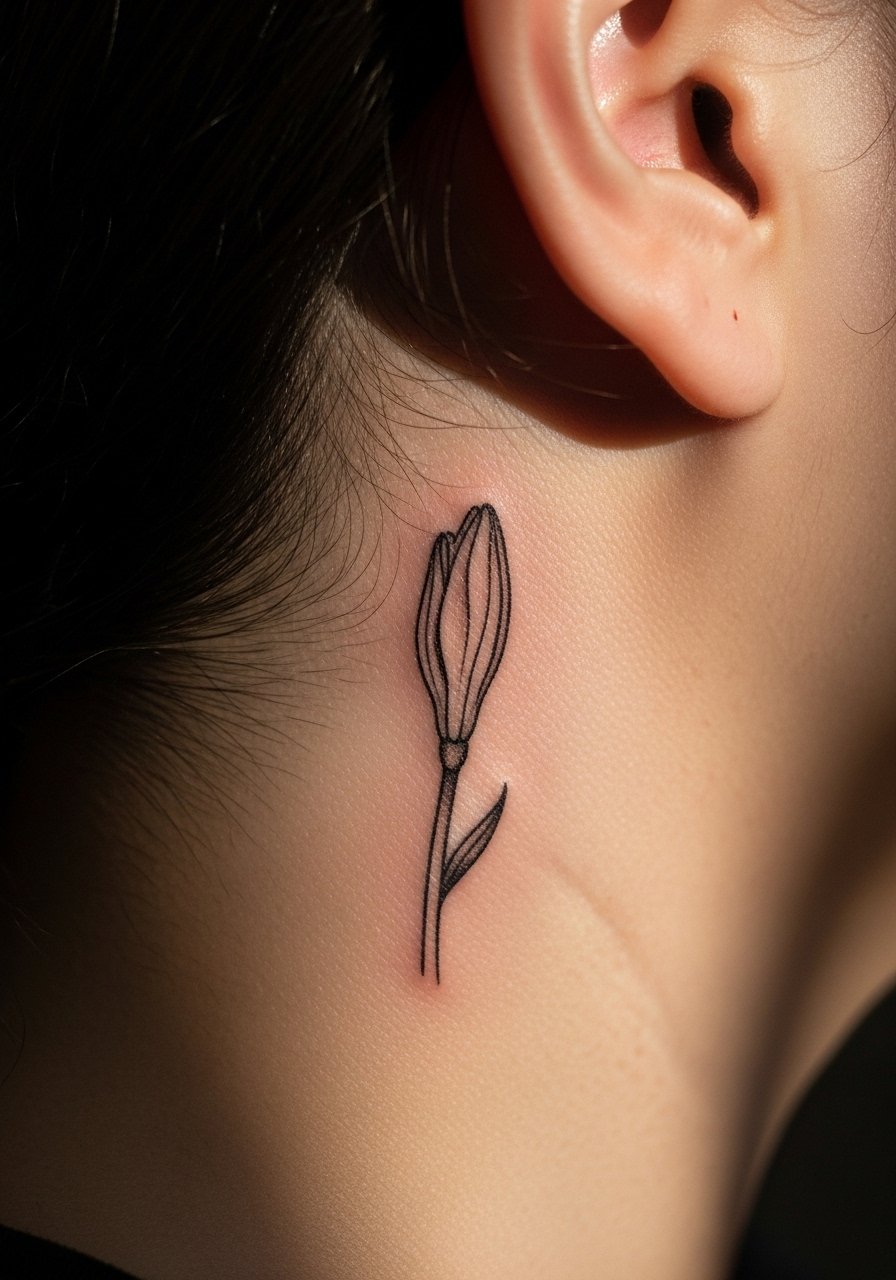
Hidden placements like behind the ear are perfect for discreet memorial nods. The area calls for micro-dot shading and tight dots rather than long strokes. Tell your artist you want the bud kept under one inch and to avoid heavy saturation that can blur in the shallow tissue. Sessions are quick and pain is low to moderate. The common mistake is pushing fine shading too deep, which creates loss of definition. For professional environments, this spot stays subtle and most people skip visible jewelry to keep attention off the hairline during healing.
8. Bold Blackwork Full Bloom on the Collarbone
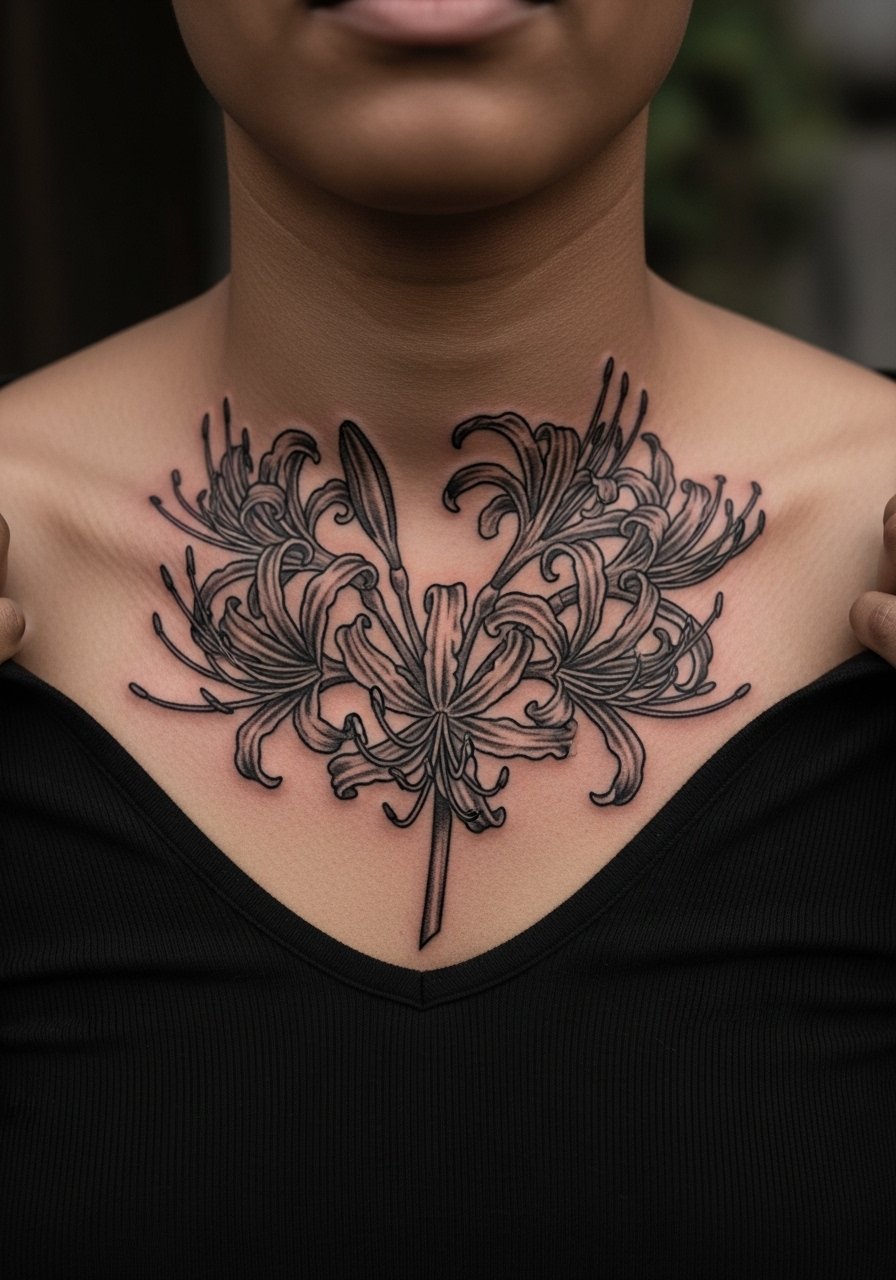
Collarbone pieces read boldly in everyday outfits. The trick is to ask for solid outline anchors and medium negative space within petals so the bloom keeps its shape on motion. Pain varies because of bone proximity, expect 2 sessions for larger pieces and a moderate to high pain level. A common error is scaling the bloom too small which causes the petals to lose separation as it heals. Showing it off pairs easily with an off-shoulder crop top or a thin chain necklace that sits above the work. Touch-ups at two to four years keep the outline crisp.
9. Blackwork Spider Lily Thorned Stem Vine for Spine Wrap
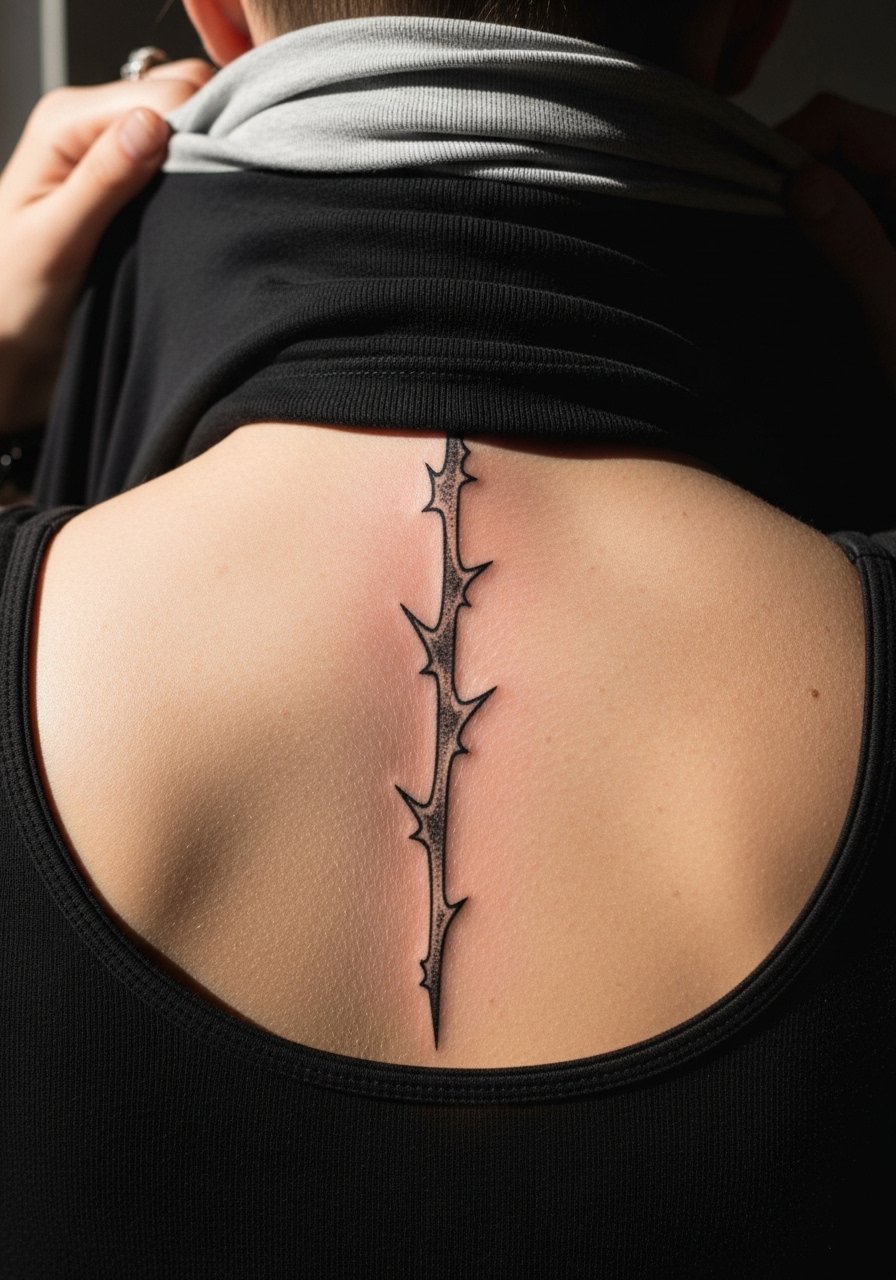
Vertical spine work resists distortion from moderate weight changes better than horizontal wraps. This thorned vine solves awkward wrapping by pacing thorns and leaf gaps so the design reads while the body moves. Tell your artist to plan for about 6 inch linear length and to mark how the vine flows with the natural curvature of the spine. The pain is high for many people. A common mistake is trying to force a horizontal cluster onto this vertical plane which leads to awkward gaps. Expect two sessions for shading and touch-ups in three years if you sit a lot or wear tight clothing across the area.
10. Ignorant Style Blackwork Spider Lily Sketch on the Shoulder
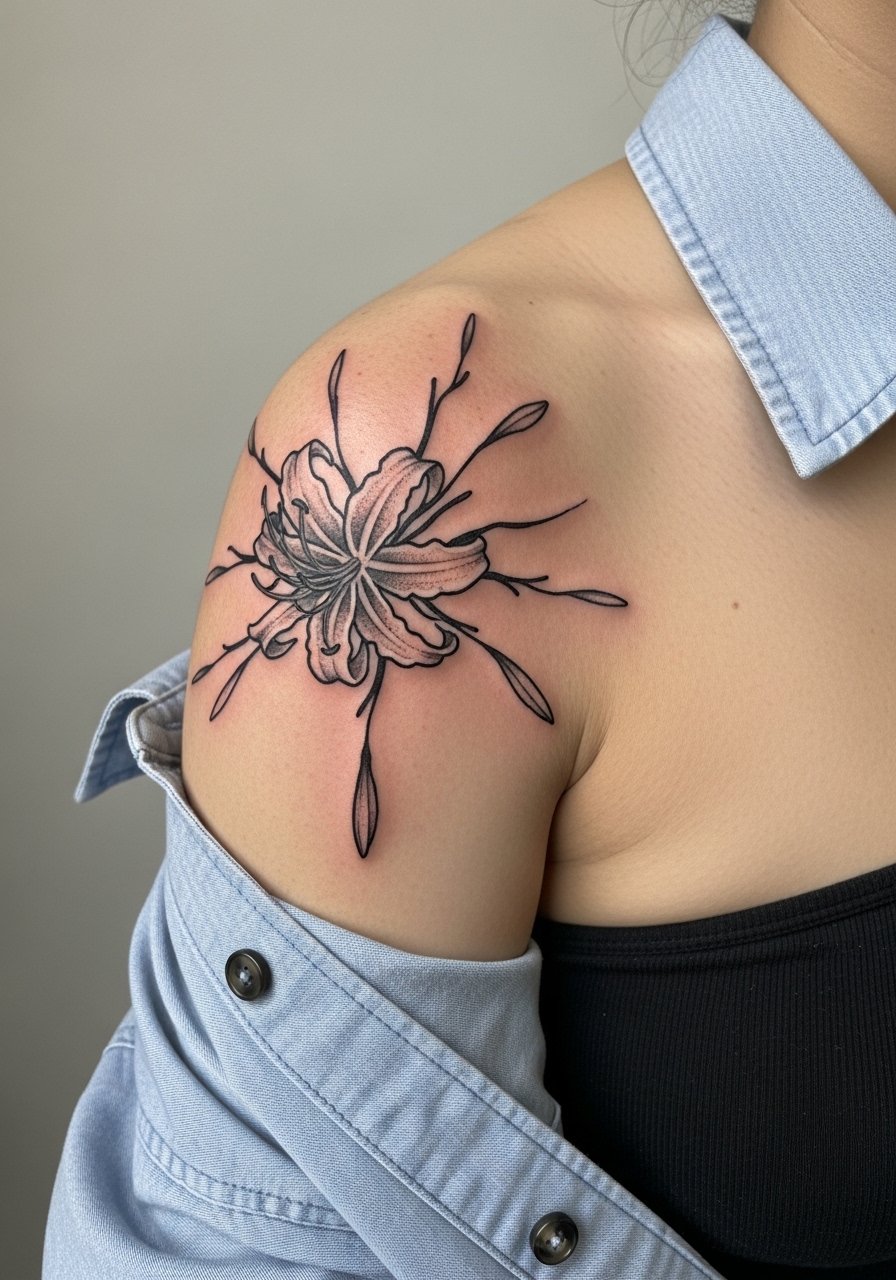
Ignorant style leans into raw linework and confident imperfections. The session is quick because the approach avoids heavy saturation. When booking, say you want loose, sketchy linework and minimal shading rather than a polished finish. The drawback is that the intent can be misunderstood and artists sometimes overwork the "sketch" into something too neat. The shoulder is forgiving for touch-ups and pain is low to moderate. Pair this with a sleeveless muscle tee for showing it off and keep an eye on edge blur after heavy sun exposure.
11. Blackwork Spider Lily with Hachure Shading on the Outer Ankle
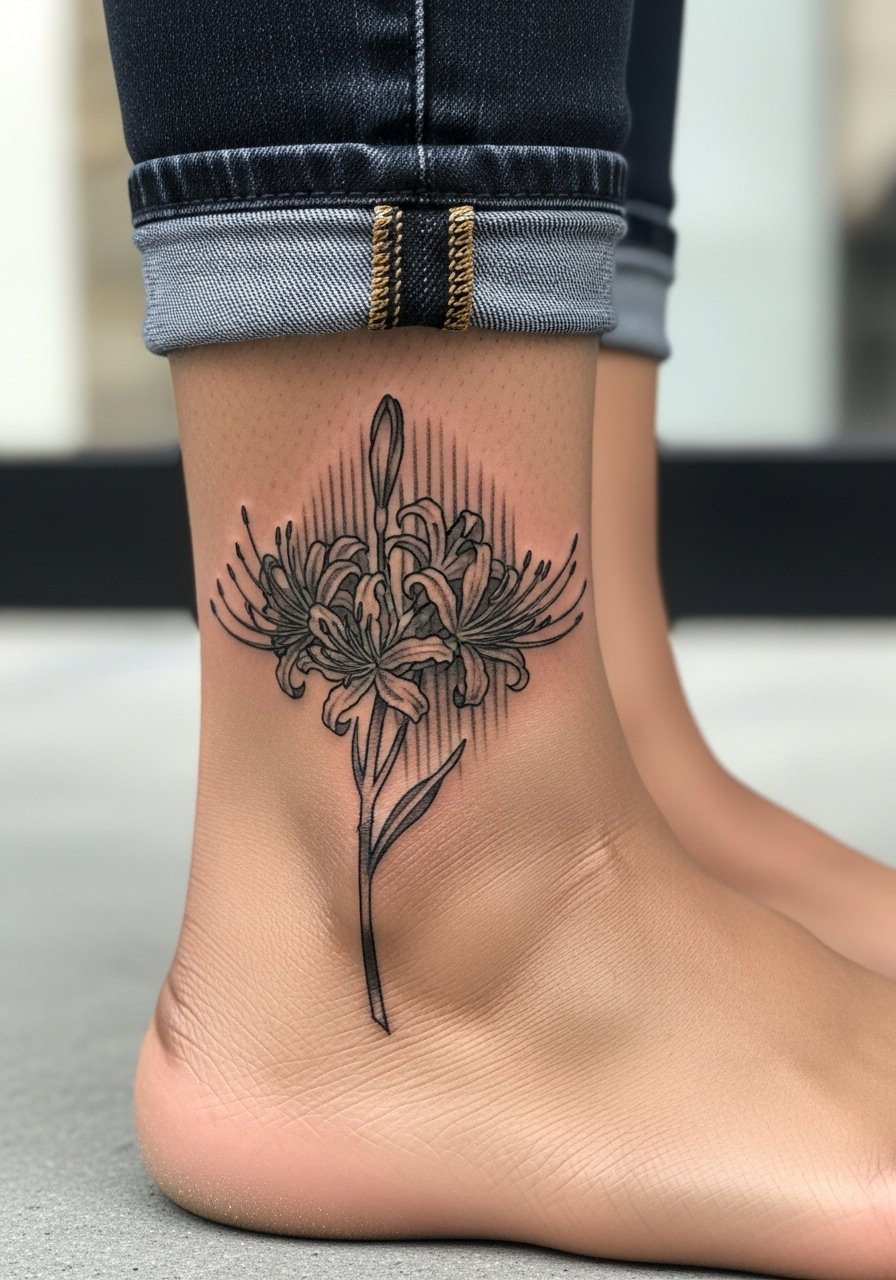
Hachure shading mimics woodblock textures and keeps depth without heavy gradient fades. The ankle is a tricky friction zone during the first week. Request parallel line shading rather than soft gray washes so the woodblock feel survives a year of wear. Sessions are short, but the area may bubble if you wear tight shoes while healing. A common mistake is asking for too many tiny parallel lines in a small space which can merge; spacing is everything. For summer, cuffed pants and black boat shoes reduce contact with the fresh ink.
12. Patchwork Blackwork Spider Lily Corner Piece for Chest or Thigh
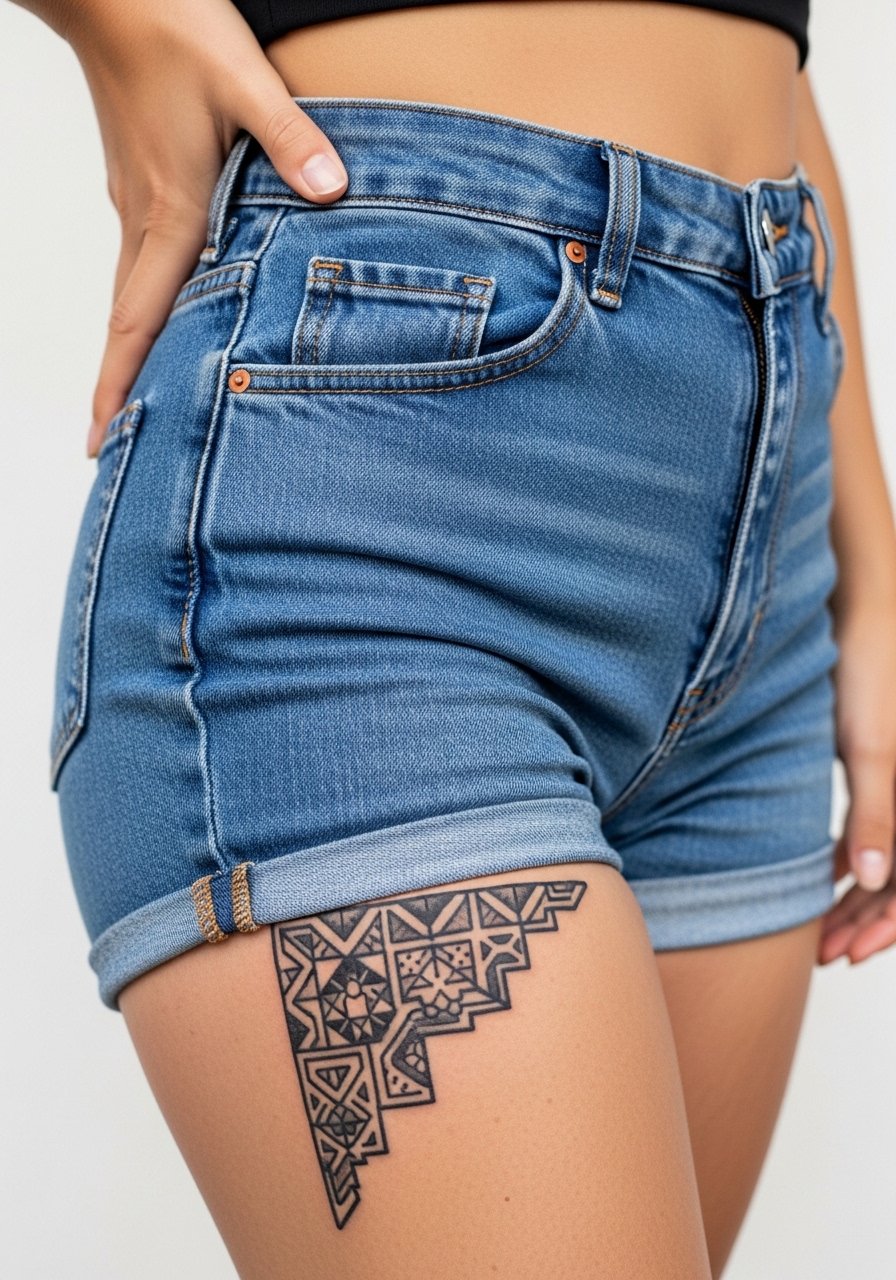
Collectors favor corner pieces that can plug into sleeves or larger chest layouts later. The advice is to keep hard edges and deliberate negative-space tabs that future elements can lock into. If you plan a sleeve, mention expansion panels during the consultation. Pain and session time vary with location. A common mistake is approving a corner piece that sits too close to existing tattoos, which makes future integration messy. For session wear on the thigh, bring high-waisted shorts or similar easy-access bottoms. Expect touch-ups as you add other modules.
13. Bold Blackwork Spider Lily Full Bloom on the Neck

Neck work reads loud and is visible every day. The piece needs strong outline anchors and open petal spacing so it does not blur into a dark patch over time. Artists warn that neck skin can be unpredictable, so ask to see healed neck work in the artist's portfolio before booking. Sessions are quick but painful due to thin skin. A mistake is asking for micro detail close to the jawline which disappears faster than on the forearm. Think about career visibility before committing and plan for touch-ups at year two to maintain edge clarity.
14. Micro Blackwork Spider Lily on the Ankle
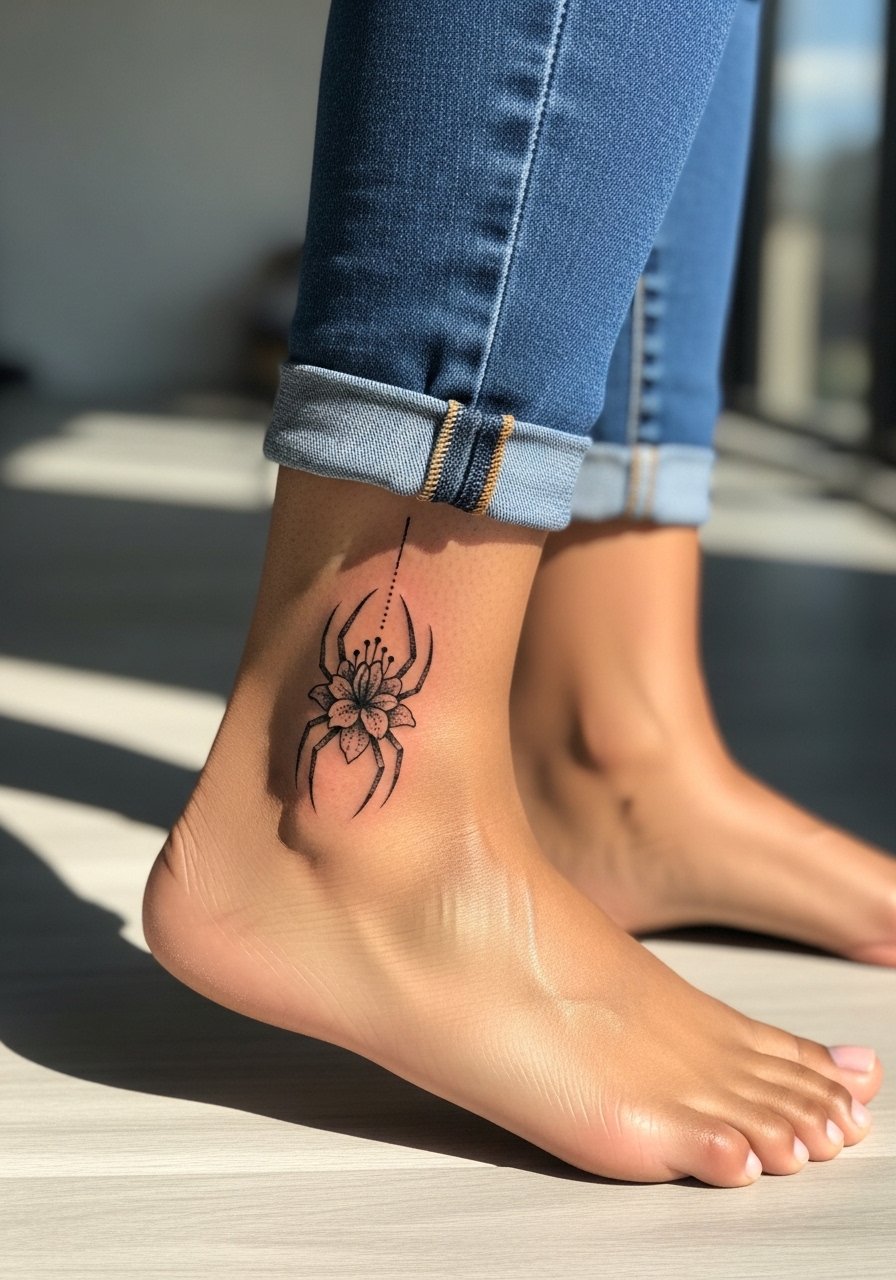
Micro pieces on the ankle are trendy for subtle summer visibility, and they suit layered jewelry and cuffed pants. The inner ankle has less friction than the lateral side, which helps retention. Tell the artist you want dot work and single-needle detail kept slightly bolder than standard micro to prevent early loss. Sessions are very short and pain is moderate. A common error is placing a micro design where shoe straps will rub it constantly. For show-off pairing, cuffed jeans or sandals highlight the area without stressing fresh ink.
15. Blackwork Spider Lily Thorned Vine for Inner Bicep
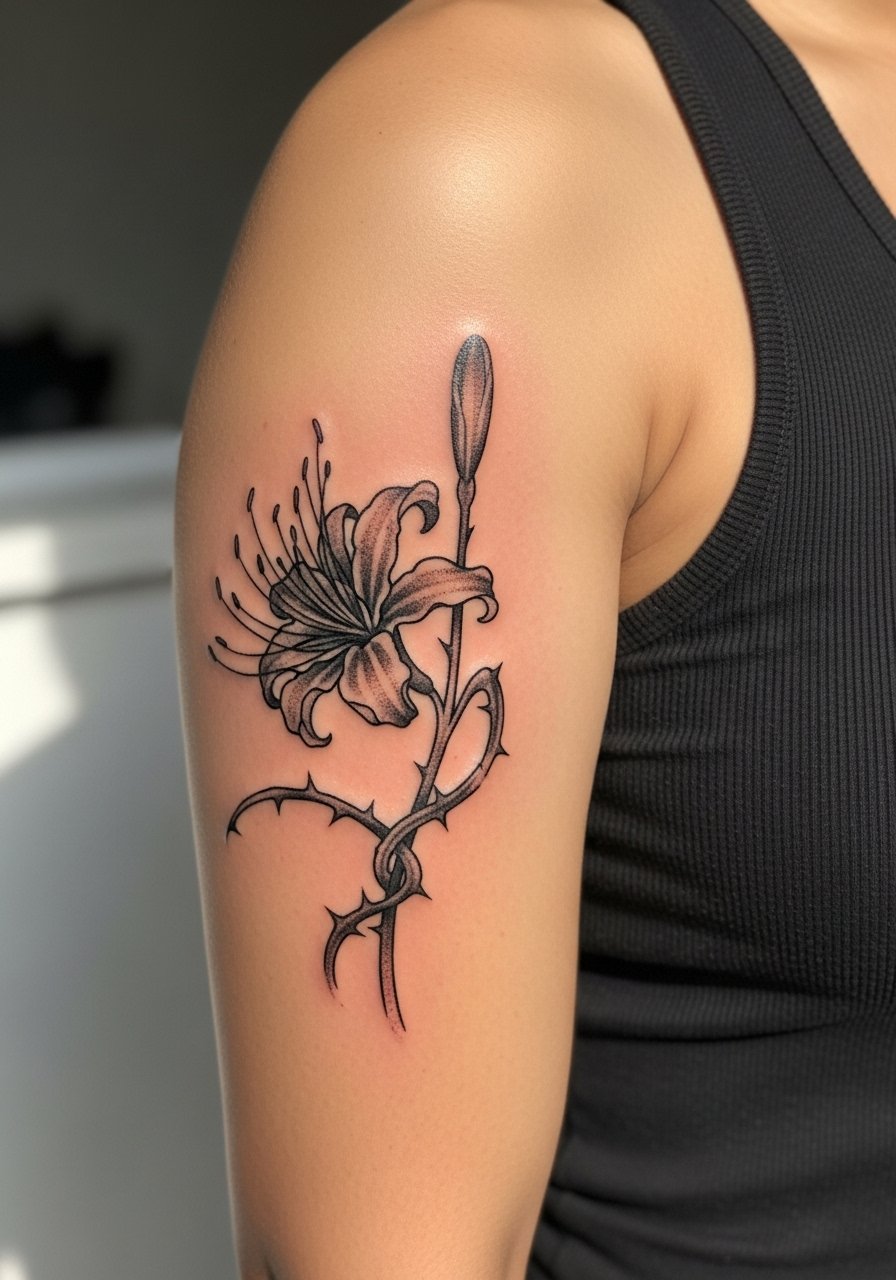
Inner bicep placements show detail during flexes, but the skin is softer and can blur faster if shading is too dense. I recommend stipple or textured hatching rather than solid block fill to keep the vine readable. Tell your artist you want measured spacing between thorns and leaf breaks so the design reads when the arm relaxes. Pain is moderate to high. A common mistake is over-saturating this tender area in a single session which can lengthen healing and increase scabbing. Wear a loose tank top for the session to give the artist full access without pressure on the area.
16. Blackwork Spider Lily Stipple Script Accent on the Collarbone Edge

Adding a small script or date next to the bloom needs precise placement so the lettering does not drift into petal shading. When requesting script, specify exact text and font size so the image prompt and stencil match your intent. The collarbone angle can make lettering look stretched if the placement is off. Pain is moderate. The mistake to avoid is making the script too small or too close to heavy black shading. For simple outfits, a V-neck black tee frames the work without overcrowding the neckline.
17. Blackwork Spider Lily Cluster with Wave Patch for Calf
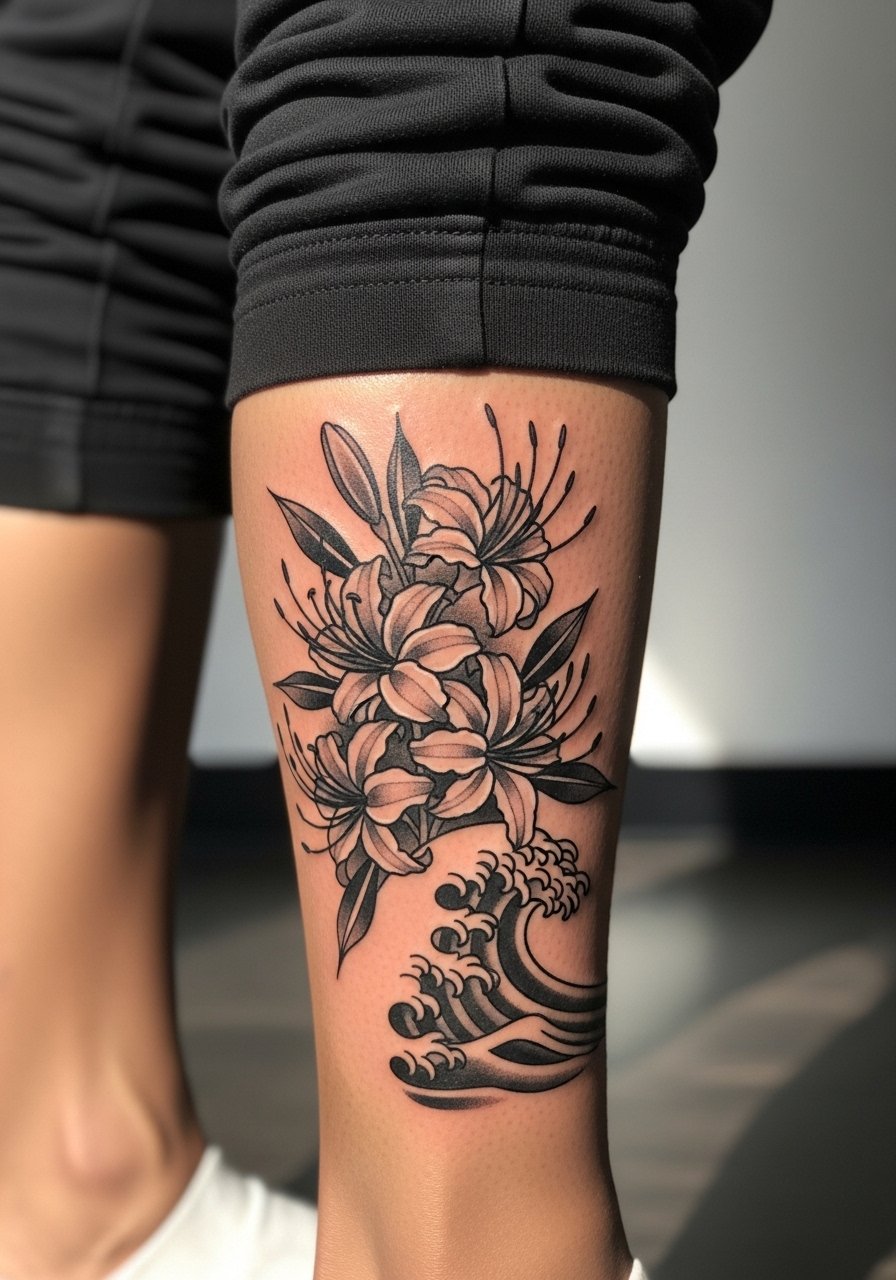
Calf work gives you room for dynamic pairings and stands up well to seasonal exposure. Pairing waves with lilies creates a narrative around journeys and farewells without adding color. Ask your artist to keep negative space between the waves and petals so both elements keep definition as they age. Sessions are moderate in length and pain is low to moderate. A common error is compressing both motifs into a small patch which loses separation. For showing it off, rolled joggers or slim cargos balance the visual weight and avoid constant sock friction.
Frequently Asked Questions
Q: How much does blackwork spider lily tattooing usually cost for small vs medium pieces?
A: Expect small blackwork pieces under 3 inches to fall in the lower tier and medium 3 to 6 inch work to sit in a higher tier because of session minimums and setup time. Prices vary by studio and region, so plan for at least a single session minimum and budget for a second session for shading when the design calls for saturation.
Q: Will fine line blackwork fade faster than bold blackwork on wrists and hands?
A: From what I've seen, fine line on high-friction spots like wrists and hands tends to blur sooner than bold linework. Two camps disagree about whether technique alone can beat friction. Ask your artist directly which approach they use and expect to schedule touch-ups earlier for fine line pieces.
Q: Are there real risks for ankle and ribcage spider lily tattoos during summer healing?
A: Yes. Ankle tattoos can bubble from tight shoes and long walks, and ribcage work can bubble if sweat collects under clothing. For ankles, roll pants and wear sandals during the first week. For ribs, choose breathable tops and avoid heavy exercise that makes you sweat through the dressing.
Q: How do I find a blackwork artist who does spider lilies if I live outside a major city?
A: Search hashtags like #blackworktattoo and #spiderlilymandala on Instagram and filter by location. Use apps and directories that let you search by style, or post in r/tattoos for local guest spot leads. Be ready to travel for a consultation if you want a specific hand.
Q: Should I use Saniderm or dry healing for bold blackwork?
A: Artists split on this. One camp praises protective films for reduced scabbing and cleaner first-week results. The other camp warns that films left too long can trap moisture and increase infection risk. If you choose a film, follow the artist's timing exactly and monitor the site daily.
Q: What should I wear to a shoulder or forearm session to make the artist's life easier?
A: Wear a loose button-down shirt or a tank top that gives the artist full unobstructed access without pulling fabric across fresh ink. Comfort and easy removal are the two most useful considerations.