
Fine line fingerprints are everywhere on saved boards right now, but the tiny truth is that these pieces behave differently than other small tattoos. Placement, skin type, and daily friction decide whether the ridges stay distinct or soften into a textured blur. Read these quick, realistic takes on 17 small fingerprint ideas, how they age, what to ask your artist, and the wardrobe moves that actually help the design read well over time.
1. Tiny Side-Finger Fingerprint
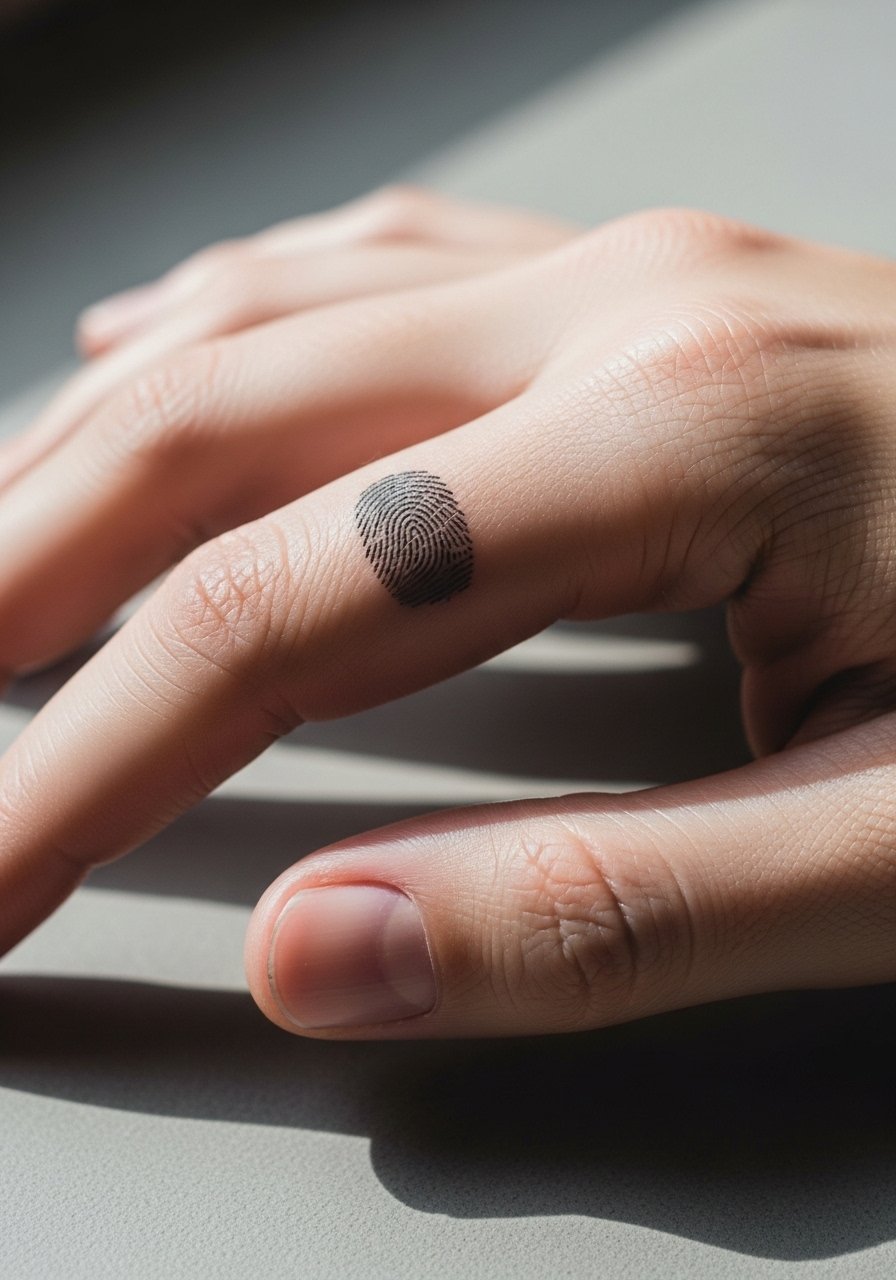
This is the classic. The side of the finger gives a narrow canvas where a miniature fingerprint reads like a private mark. Fair warning about blowout risk here. Fingers endure constant washing and friction, so ask your artist for slightly bolder single-pass linework rather than ultra-fine knots. Expect the first six months to look crisp, a softening at year one, and likely a touch-up by year two if you want the ridges to stay defined. For showing it off, pair the piece with a dainty ring set that leaves one finger bare so the tattoo stands alone visually.
2. Inner Wrist Fingerprint with Initial
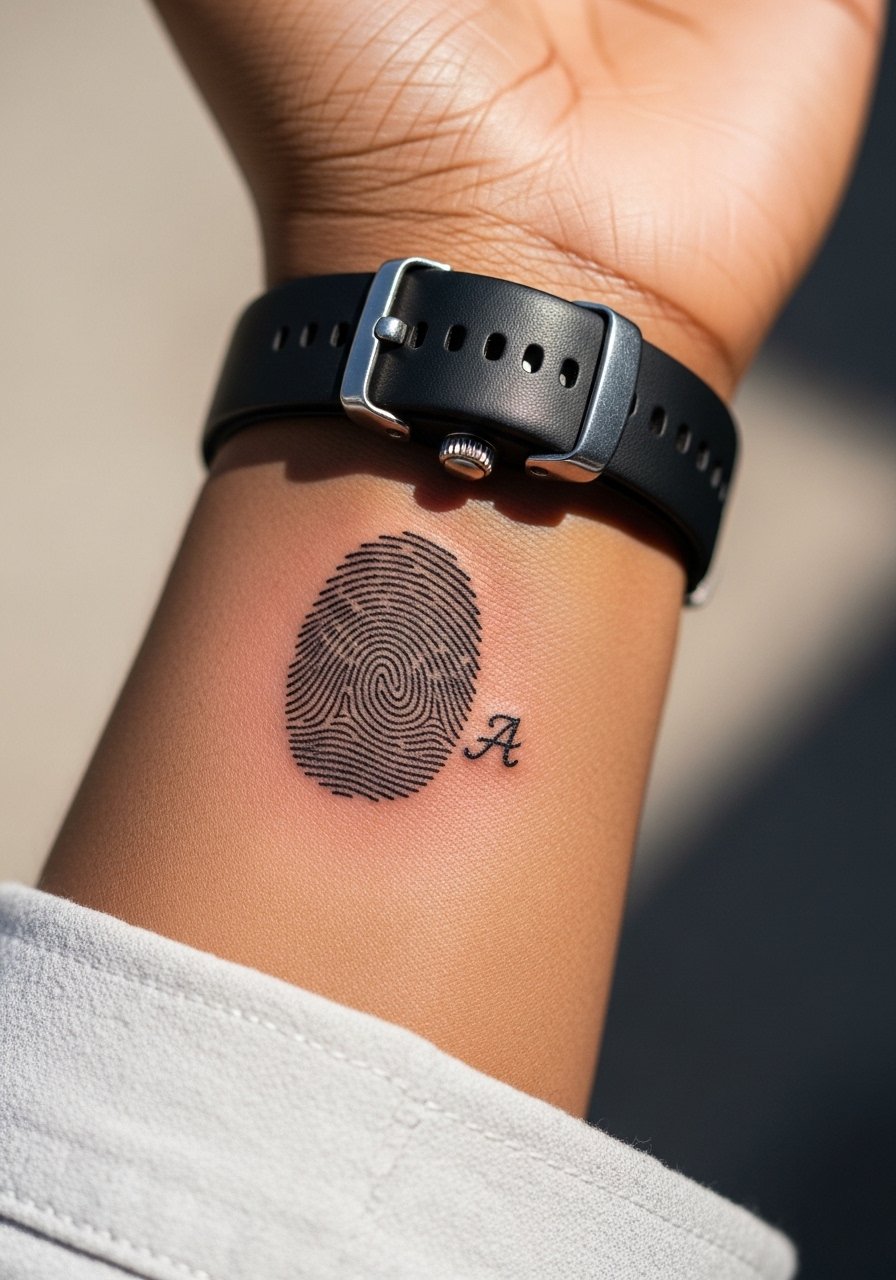
This placement balances visibility and controllable friction. Tell your artist you want the fingerprint scaled to a width no smaller than the top segment of your index finger so the ridges do not merge. Pain is moderate. At six months the wrist usually keeps a lot of its linework, but by year three expect softening where the watch band rubs if you wear it tight. A common mistake is asking for micro-detail without allowance for spacing. For daily wear, a slim minimalist watch band or thin bracelets frame the tattoo without pressing on it.
3. Ring-Finger Heart from Two Prints
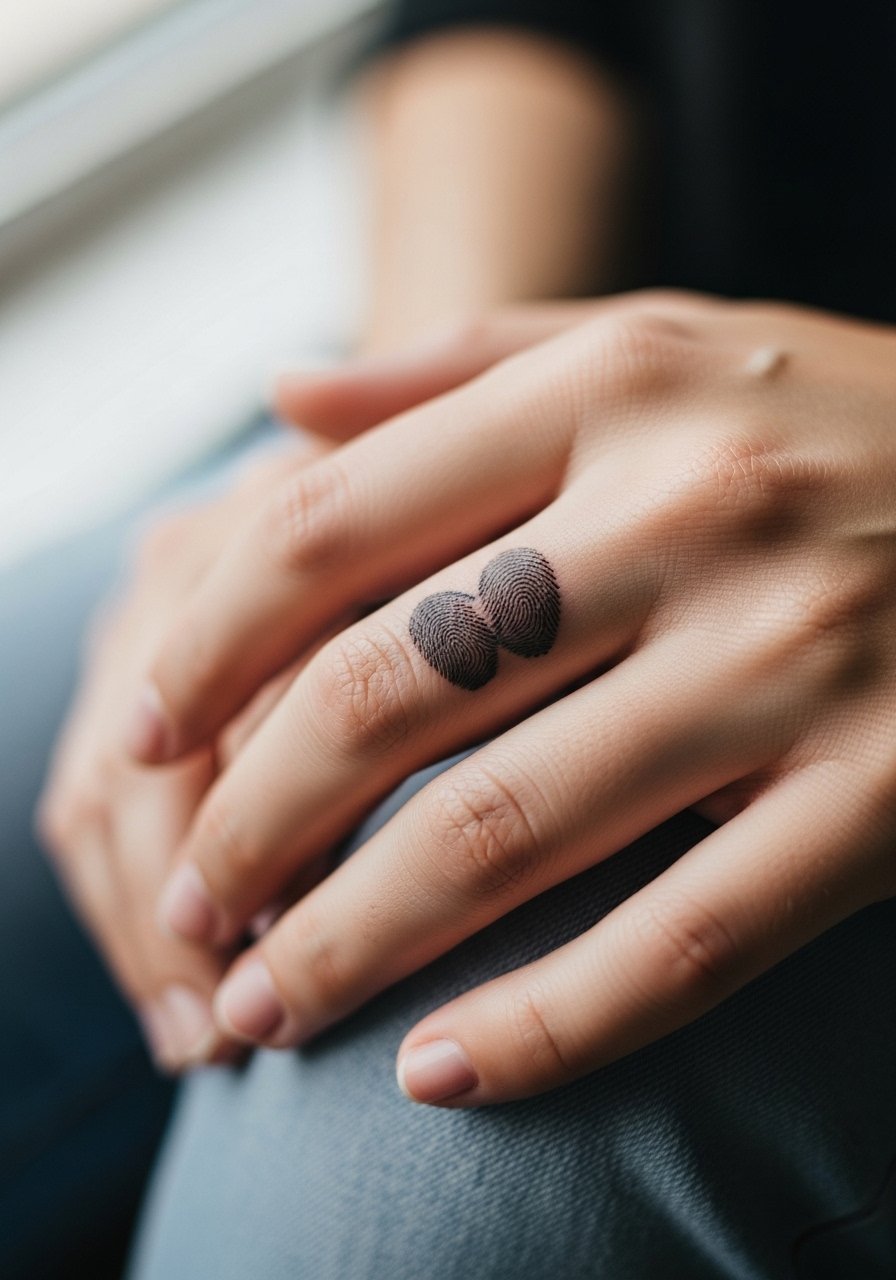
This is sentimental and discreet. The ring finger is one of the harshest places for fine detail because skin shifts and rings create constant pressure. Artists are split into two camps. One camp says this level of fine detail on fingers blurs in under a year. The other camp says with proper needle depth and leaving a bit more negative space the design settles fine with periodic touch-ups. Ask the artist which camp they practice and request a slightly simplified ridge pattern so the heart reads long term. If you plan to wear bands, choose a thin profile so the metal does not rub the ink.
4. Behind-the-Ear Mini Fingerprint
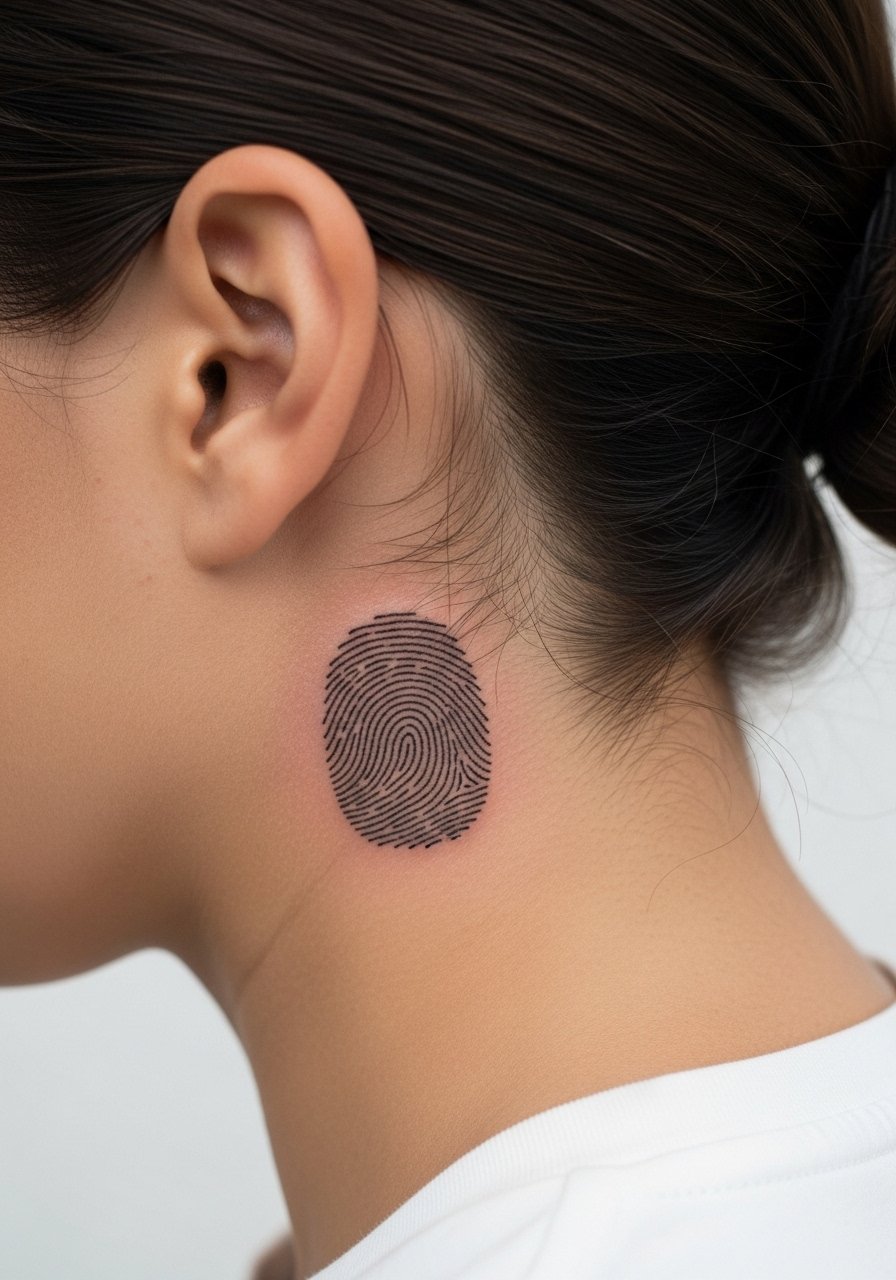
This placement reads like a hidden signature. The session is quick and low on pain for most people. Because it sits at the hairline, tell your artist whether you want the ridges darker so the texture shows with hair framing the spot. The main mistake is asking for impossible micro-detail in a tiny area, which ends up as a shaded blob. Consider how visible you want it when hair is up or down. Also note that behind-ear tattoos can be harder to photograph, so expect most photos to be close cropped.
5. Ankle Curve Fingerprint
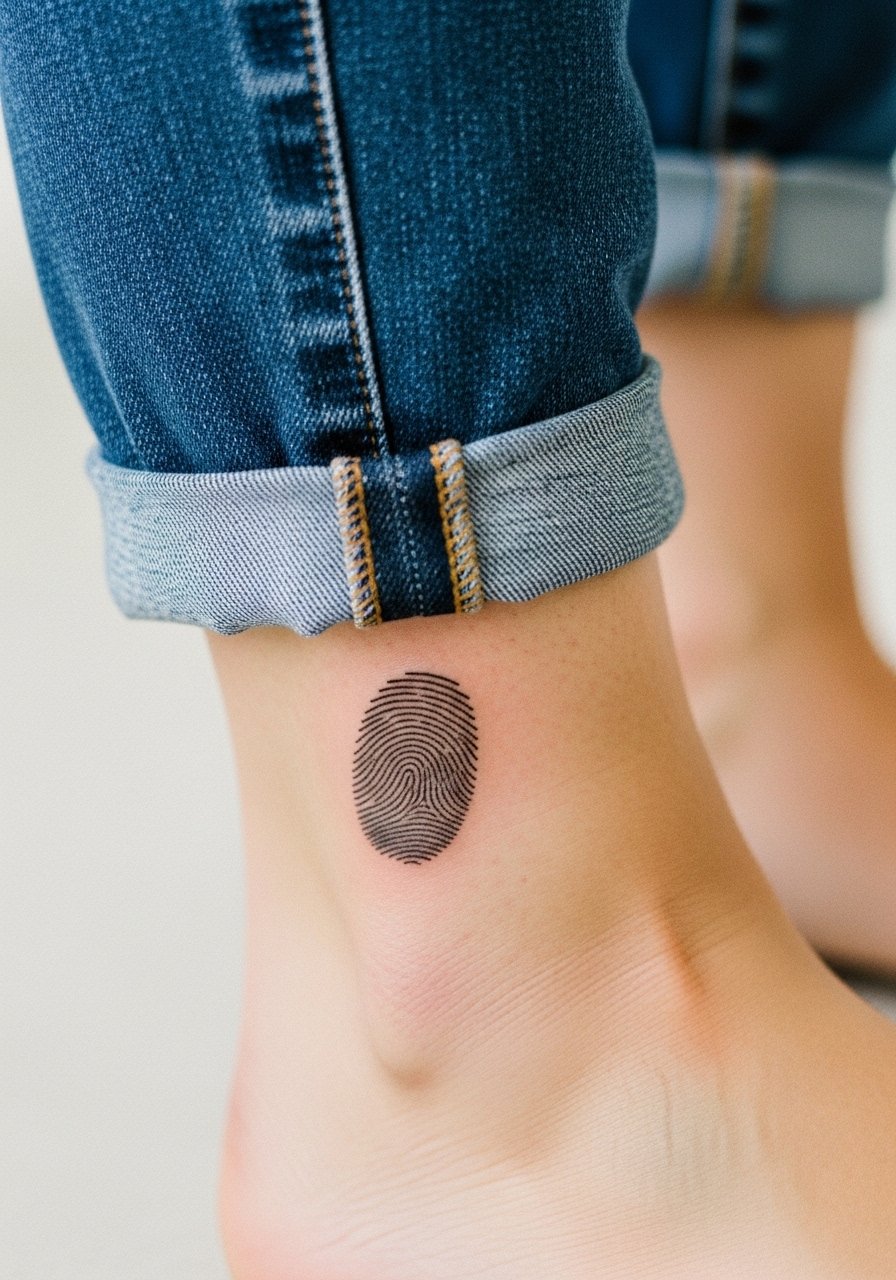
The ankle allows a slightly larger tiny fingerprint with room to follow the bone's curve. Pain is mild to moderate. For longevity, avoid having the design sit directly where shoe straps or socks habitually rub. A common mistake is placing the print too low on the foot where friction is constant. During the session wear loose pants you can roll up easily. For evenings out pair the piece with low-profile sandals or a strappy sandal that keeps attention on the ankle without covering it.
6. Interlocking Fingerprints on Inner Bicep
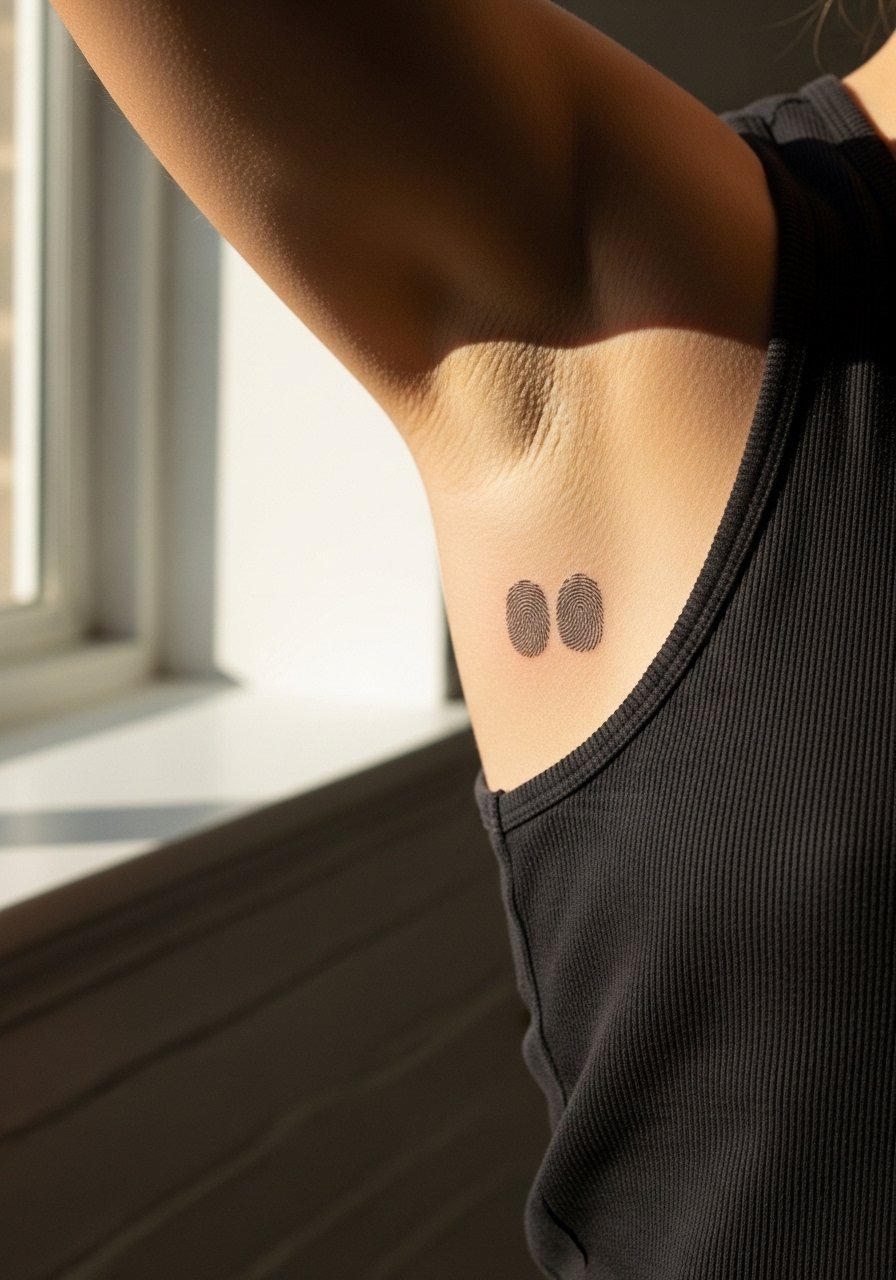
This placement is comfortable during a short session. Inner bicep skin is softer so the artist will need to adjust depth to avoid blowout. Ask for a clean, single-needle outline with light stipple shading inside ridges rather than dense saturation. Expect good visual stability at six months, potential softening by year three if you gain or lose significant weight. For the appointment wear a loose tank top so the artist can access the area without the fabric bunching.
Pre-Session Essentials
The wrist and finger pieces above heal differently from larger work, so a few small things smooth the session and the first week.
- Stencil transfer paper kit. Helps you preview scale and ridge spacing on your own skin before the artist inks, useful for finger and wrist placements.
- Topical numbing cream. Applied 30 to 45 minutes before can reduce the edge on sensitive areas like fingers without altering linework when used correctly.
- Thin protective film roll. Keeps tiny finger and wrist tattoos cleaner during the first days when friction and handwashing are constant.
- Fragrance free gentle body wash. A soft cleanser avoids irritation around delicate fine line work while you shower.
- Aquaphor healing ointment. Thin layers during the first 48 hours help protect tiny linework without suffocating the area.
7. Collarbone Fingerprint with Tiny Date
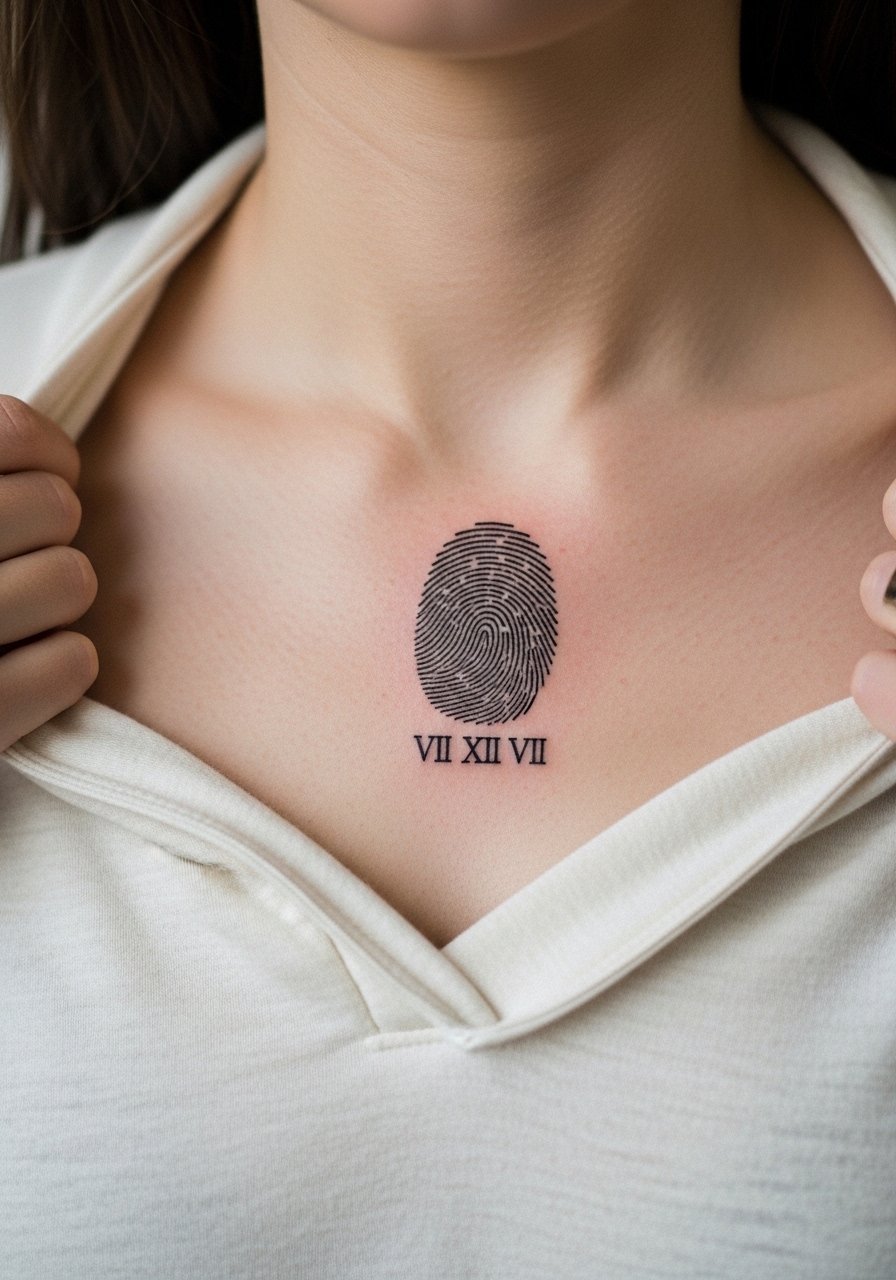
A collarbone placement lets a fingerprint sit in view without the abrasion fingers get. Ask for Roman numerals that are thin but spaced so they do not blur into the fingerprint pattern. Expect excellent longevity if the piece is kept out of heavy sun. The biggest mistake is requesting text and fingerprint too close together. For evenings or layering a thin chain pendant necklace sits above the design without competing for attention.
8. Forearm Silhouette Made from a Print
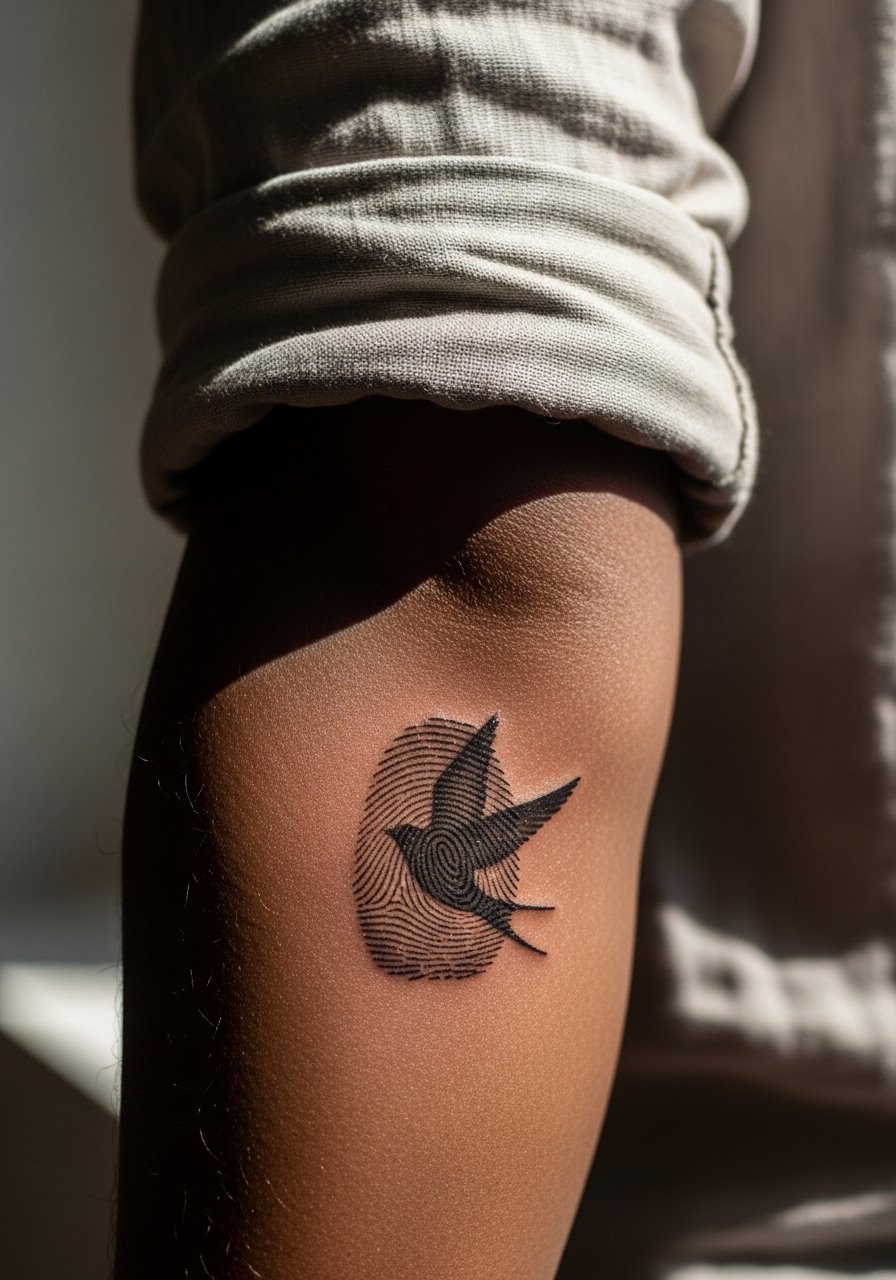
The forearm gives room for small creative adaptations. Tell the artist you want negative space to form the silhouette rather than dense fill so the motif keeps its fingerprint texture as it ages. Visual impact is strong at six months and typically holds well for years with basic sun protection. Avoid asking for overly dense shading inside the ridges because that is the main aging mistake. Pair with rolled sleeves or a lightweight linen button-down to show the piece off.
9. Webbing Fingerprint Between Thumb and Index
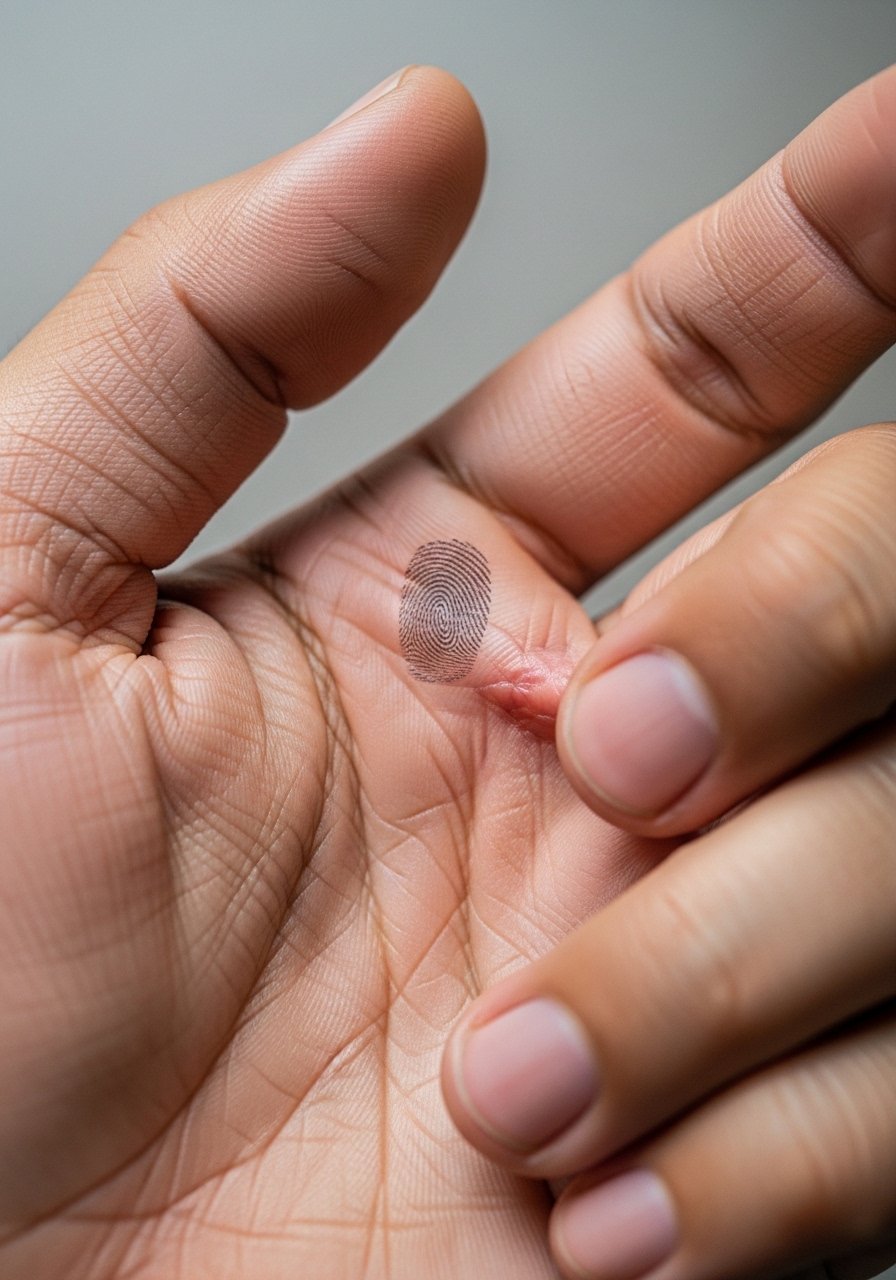
This is a surprisingly intimate spot that reads like a hidden signature every time you reach. Expect high friction from grips and handles during daily life. The common mistake is asking for ultra-precise ridges here. The realistic outcome is a softened texture after about a year with potential need for touch-up if you want crispness. Session time is short. Also consider how gloves or frequent handwork may wear the piece faster. Ask your artist for simplified ridge spacing and compact negative space.
10. Ankle Sunburst Fingerprint
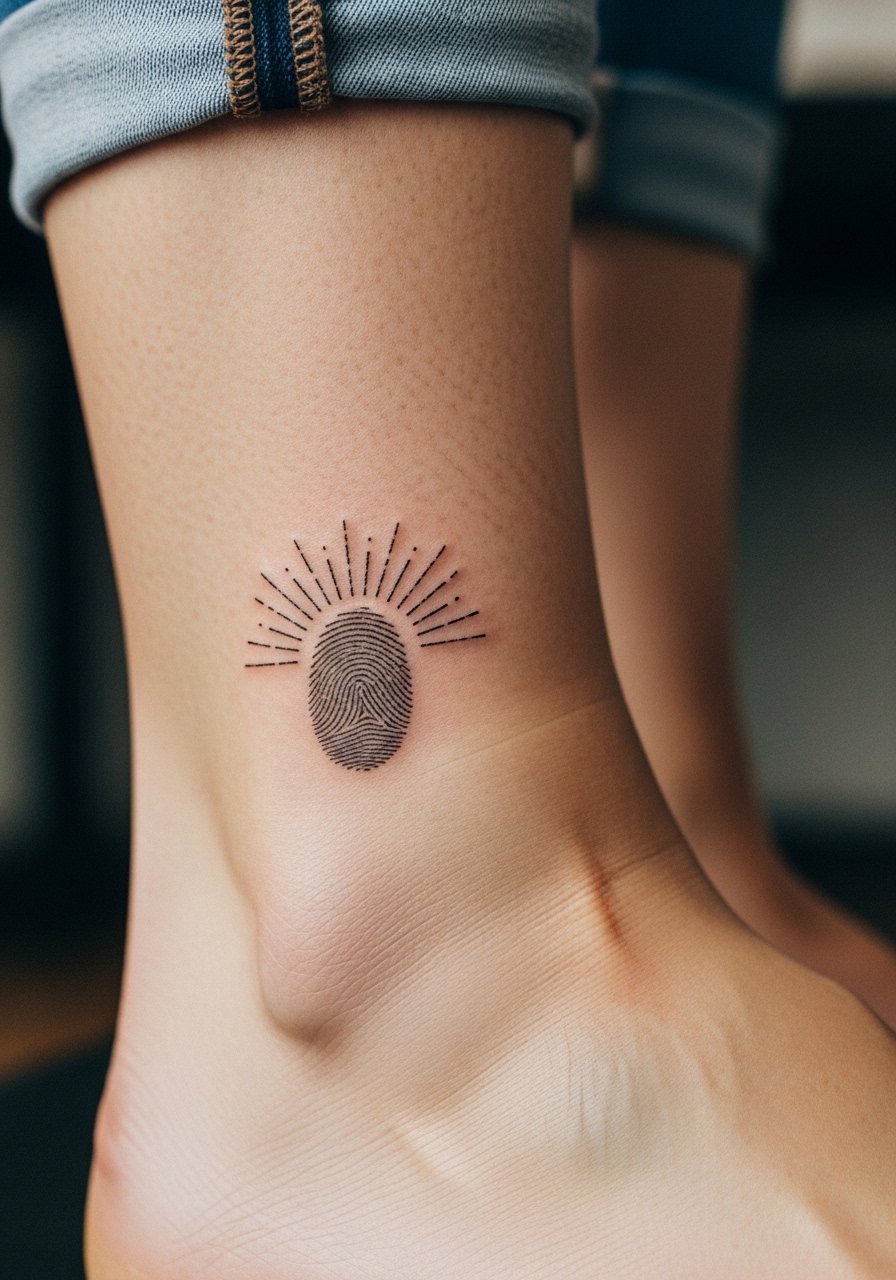
Turning a fingerprint into a sunburst gives a small tattoo extra framing. The ankle tolerates slightly more ornamentation than toes because it moves less during walking. Tell your artist to keep the rays thin but not hairline thin so they age with the core print. Expect the core to remain readable at six months and the rays to feather a bit by year three. For the session wear high-waisted shorts or pants you can roll up easily.
11. Fingerprint and Morse Code Stack on Finger
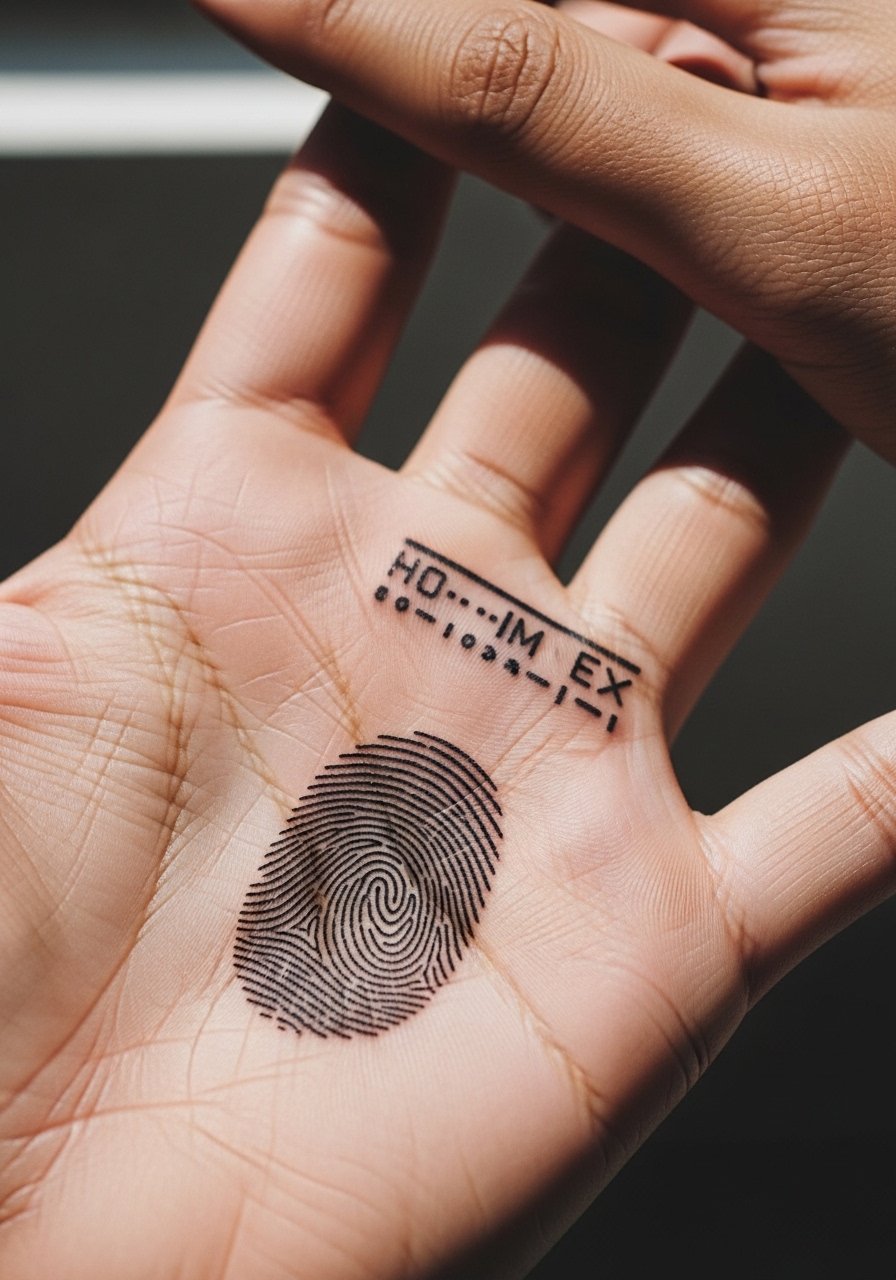
This is a compact way to add a personal line of meaning. Precision for Morse code matters because mis-spaced dashes can change the message. Tell your artist to stencil the exact spacing and to test the scale on your skin before inking. Fingers compress differently when gripping, so expect some early spread. A common mistake is cramming too many symbols into a narrow band. If you wear jewelry choose slim profiles so metal does not press on the band.
12. Wrist Constellation with Miniprint Anchor
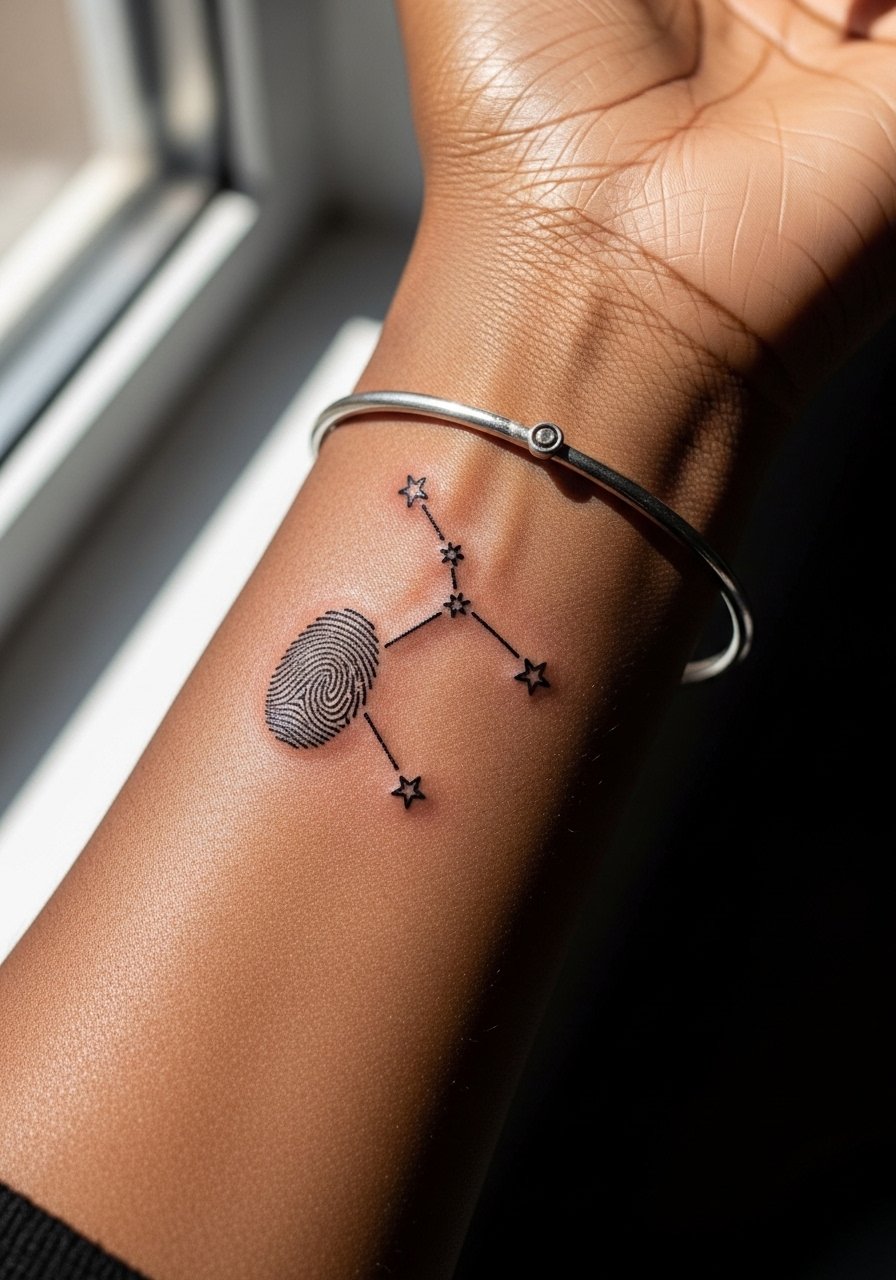
Using the fingerprint as an anchor point in a constellation gives the design narrative without crowding the wrist. Keep the connecting dots spaced so the lines do not merge over time. Expect solid definition at six months and gentle softening at the two to three year mark where skin is thinnest. A helpful show-off move is stacked dainty bracelets. Try a thin chain bracelet that sits above the tattoo without rubbing the area.
13. Sternum Mini Fingerprint
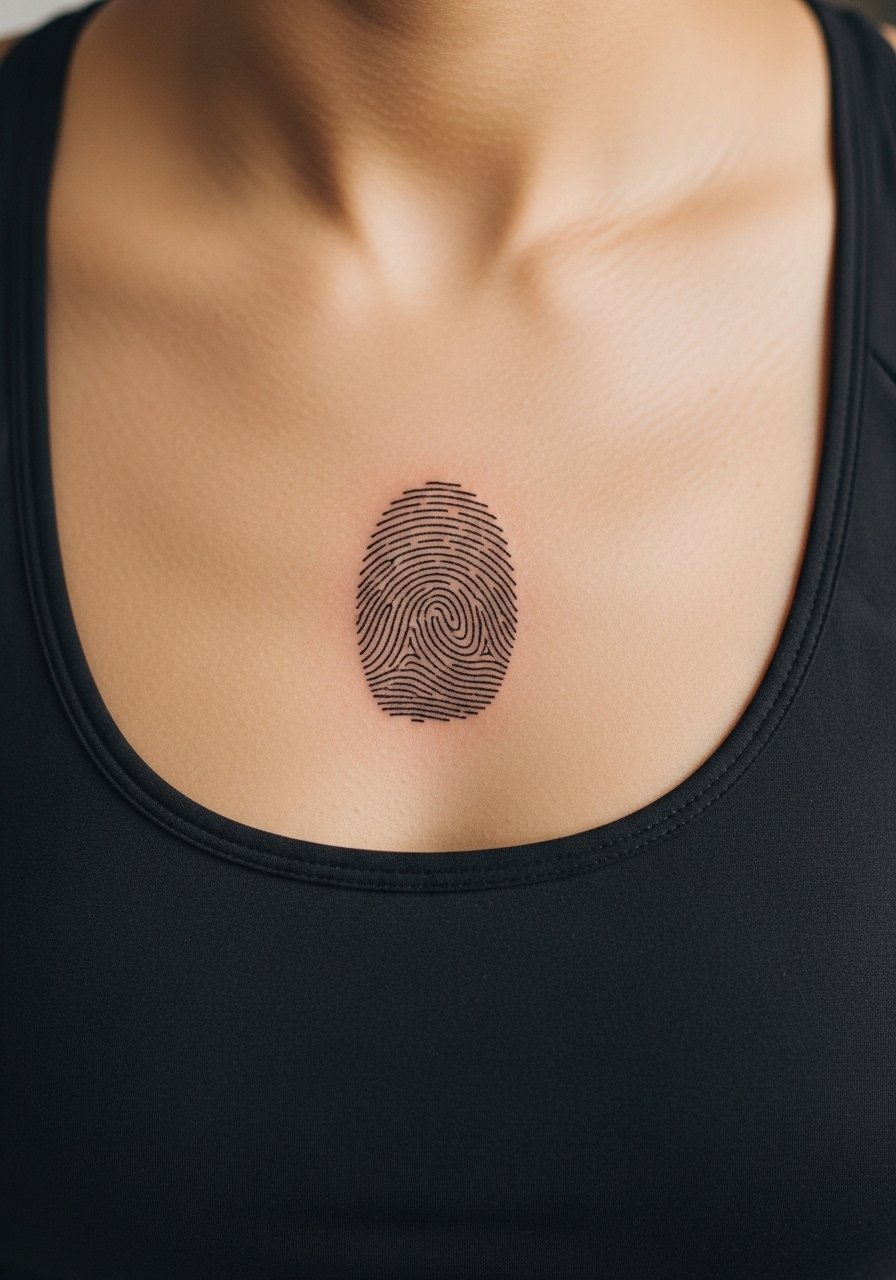
The sternum is a private, tactile spot that holds tiny detail nicely when centered carefully. The session can be uncomfortable for some because of rib proximity, but healing tends to be steady. Tell your artist you want a slightly simplified ridge structure so the ink does not pool in the central valleys. Avoid asking for overly tight stipple inside the ridges, which shows as patchiness later. This placement can be intimate, so consider clothing choices that reveal only when you want.
14. Ribcage Fingerprint Panel
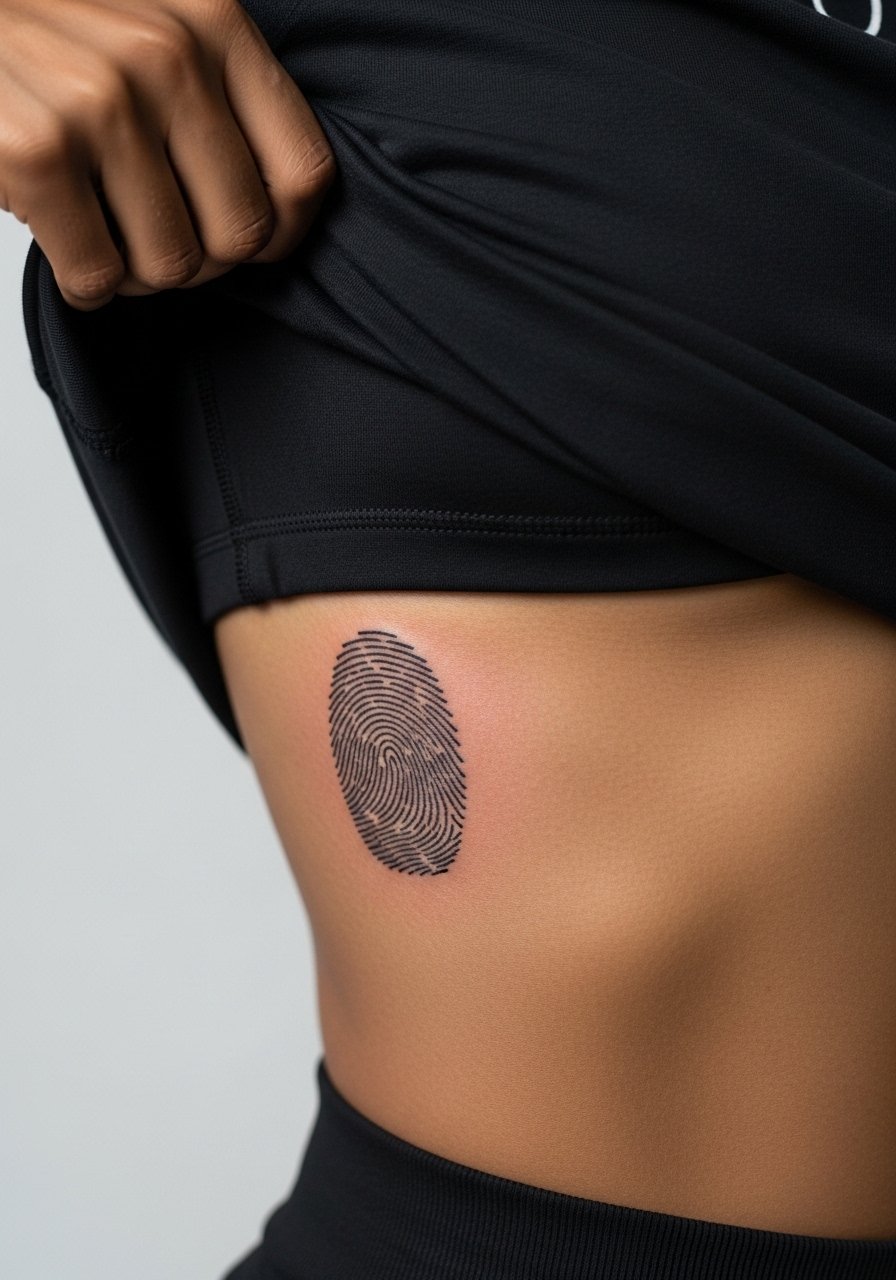
Ribcage anatomy and movement create a real debate in the community. One camp says fine line on ribs blurs quickly because the skin stretches with breathing and body changes. The other camp says with proper spacing and the right needle depth, small detailed work can settle and stay legible for years. Be explicit in consultation about which side the artist stands with and ask them to demonstrate healed rib work in their portfolio. Expect more session discomfort here, but good spacing usually helps longevity.
15. Upper Thigh Leaf-Print Hybrid
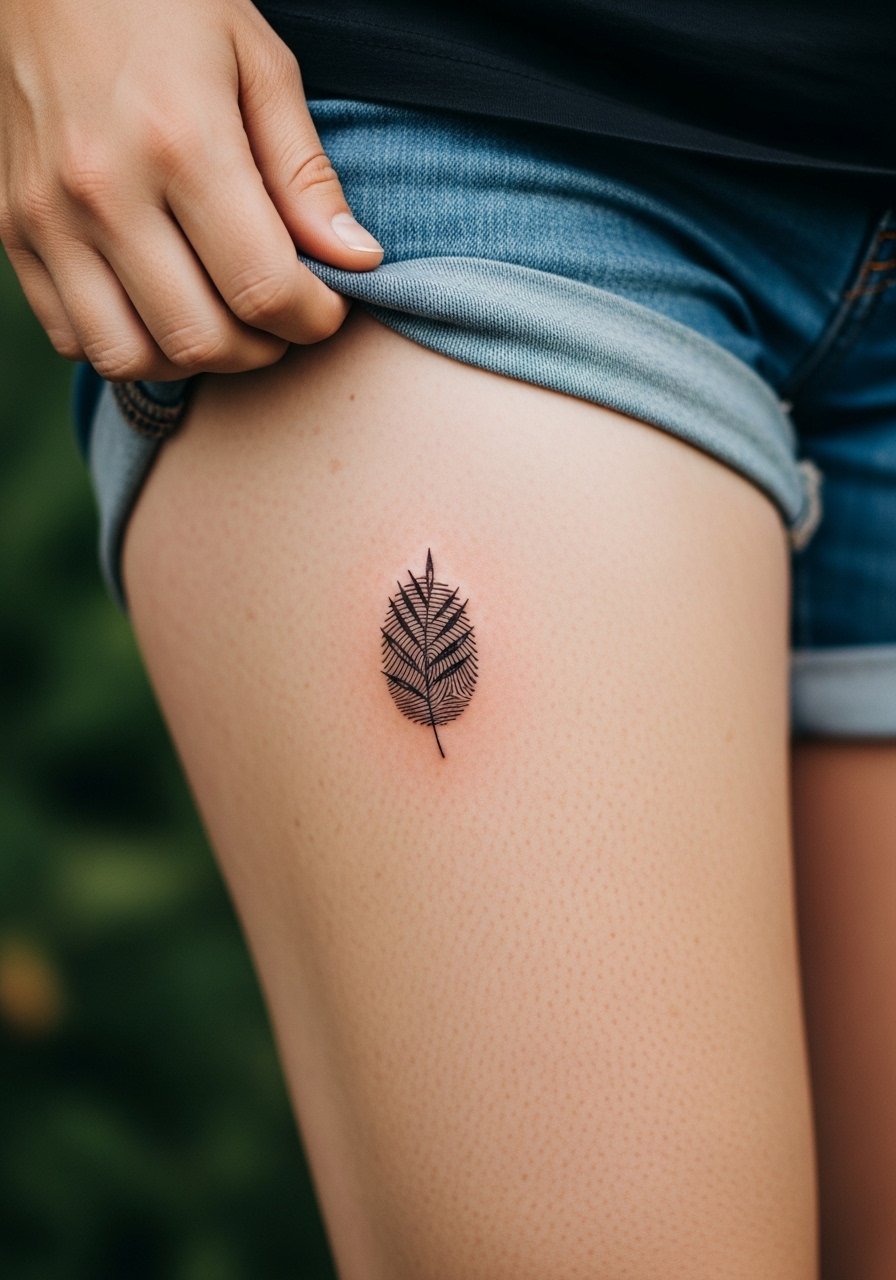
The upper thigh gives a forgiving canvas and low friction most days. This is a great spot if you want a private piece that looks organic when revealed. Ask for the ridge lines to follow the leaf veins so the motif reads as both fingerprint and flora. Expect excellent healing with minimal touch-up needs unless your wardrobe creates repeated rubbing. For the session wear loose shorts you can shift easily so the artist has clean access.
16. Back-of-Hand Minimal Print
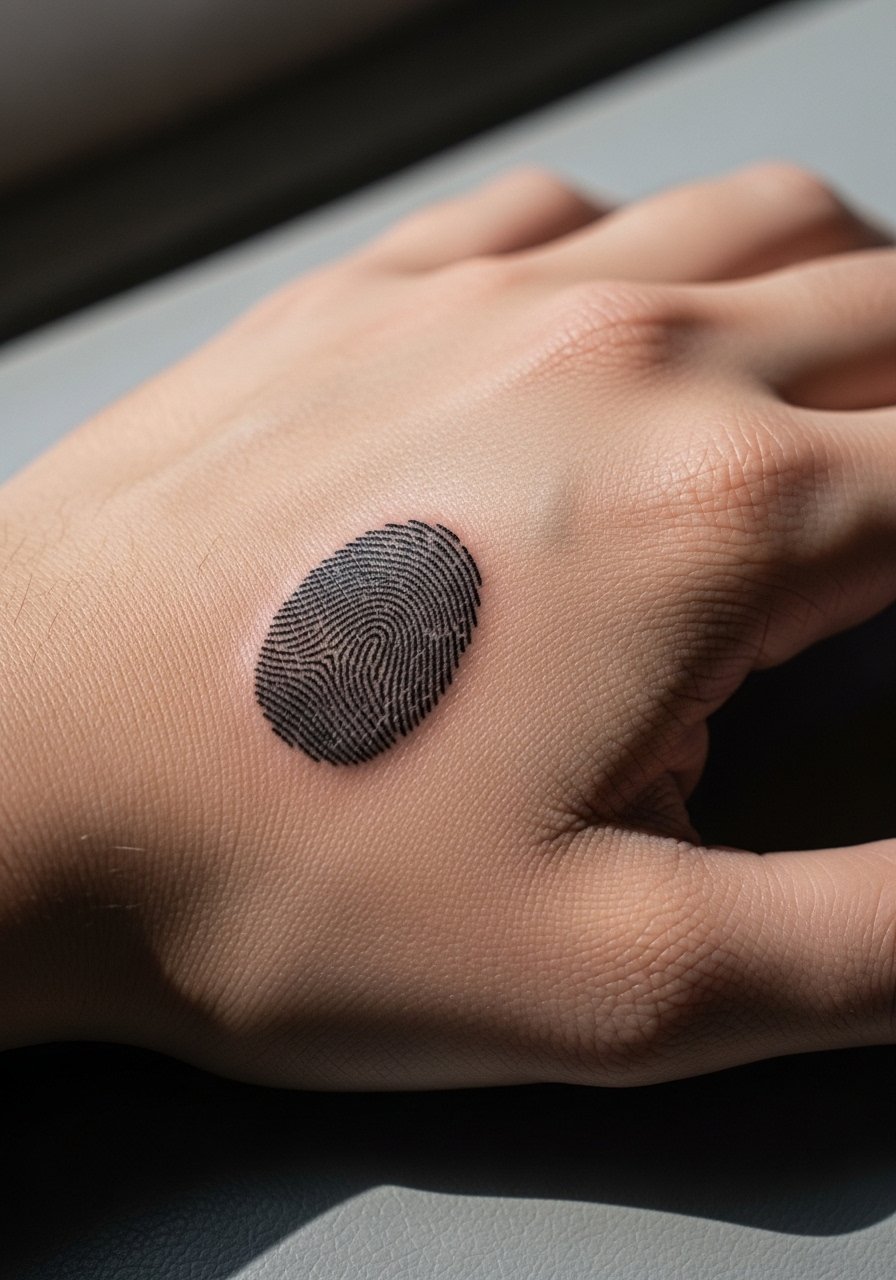
Back-of-hand placements are bold and public but they are also high maintenance. The skin is thin and exposed to sun and abrasion, so details blur faster here than almost anywhere else. There are two practical considerations. First, the workplace and some industries still frown on hand tattoos. Second, expect more frequent touch-ups if you want the ridges to stay distinct. If you go this route, plan stylistically: a simple cuff bracelet or a stack of rings can draw attention without obscuring the print. A well-executed minimal print looks graphic even after some softening.
17. Wraparound Fingerprint Band
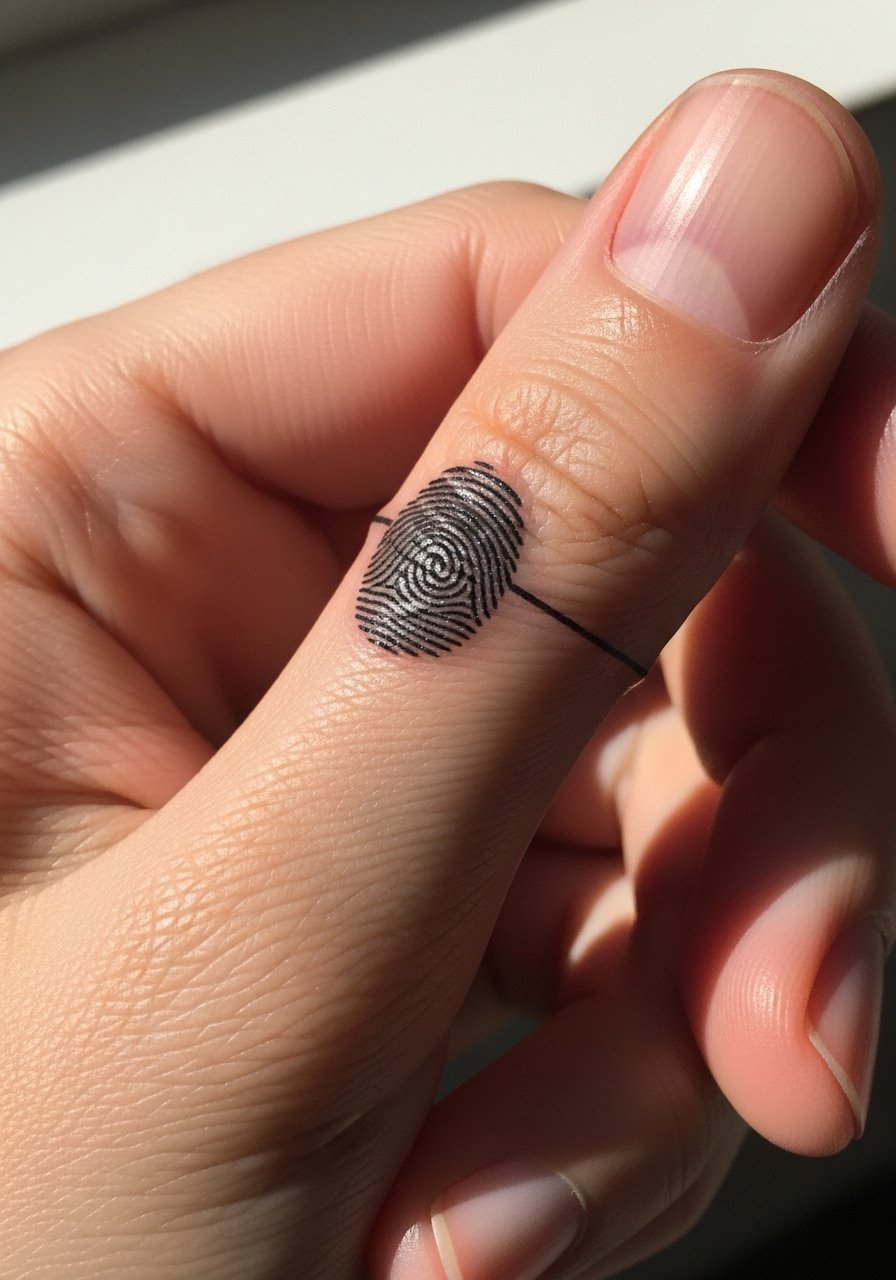
A wraparound band uses fingerprint ridges as a unique take on a ring. Because the design crosses a joint, it moves with knuckle flexion and will soften faster than a band placed on the pad of a finger. Ask your artist for interrupted spacing so the pattern reads at a glance rather than a continuous blur. If this is meant as a wedding-adjacent piece, plan how a metal band will sit with it. A low-profile metal band will avoid excessive rubbing and keeps the tattoo visible.
Frequently Asked Questions
Q: How long do mini fingerprint ridges stay distinct on fingers and hands?
A: It depends on placement and daily wear. Fingers and the back of the hand see the most washing and friction, so expect the ridges to soften within one to three years. Many people plan a touch-up at year two if they want crisp detail long term.
Q: Should I pick a different placement if I want the fingerprint to last without touch-ups?
A: Yes. Areas with thicker skin and less daily abrasion like the inner bicep, collarbone, or upper thigh generally preserve fine detail longer than fingers or the back of the hand. Talk with your artist about scale and spacing for the chosen placement.
Q: Are there specific things I should ask my artist during the consultation for these tiny prints?
A: Ask to see healed photos of the same placement and scale, request slightly increased negative space between ridges, and check whether the artist recommends single-needle linework or a slightly bolder pass. Also discuss realistic touch-up timelines.
Q: Do tiny fingerprint tattoos need different sun protection or aftercare than other small pieces?
A: They follow similar aftercare but require extra attention to friction zones. Keep them out of direct sun and be mindful of bands, straps, or repetitive rubbing during the first weeks. Use the protective approaches in the product block for the first few days, then regular SPF once healed.
Q: Can a fingerprint tattoo be legally used as an identifier in documents or for sentimental replication?
A: A tattooed fingerprint is symbolic rather than a forensic match. If you want a design that reads like a portrait-quality replication for sentimental reasons, tell your artist and plan the scale accordingly. For legal identification purposes a tattoo is not a reliable substitute.