Fine line phoenix trends look gorgeous on a saved board. The hard part is choosing a version that still reads like a phoenix after a few years, not a smudge. Pick a clear silhouette, think about placement that avoids constant sun and friction, and plan a session that respects scale. Below are 17 takes that aim to look raw and intentional, plus what to ask your artist first.
1. Aggressive Blackwork Rising Phoenix Across the Back
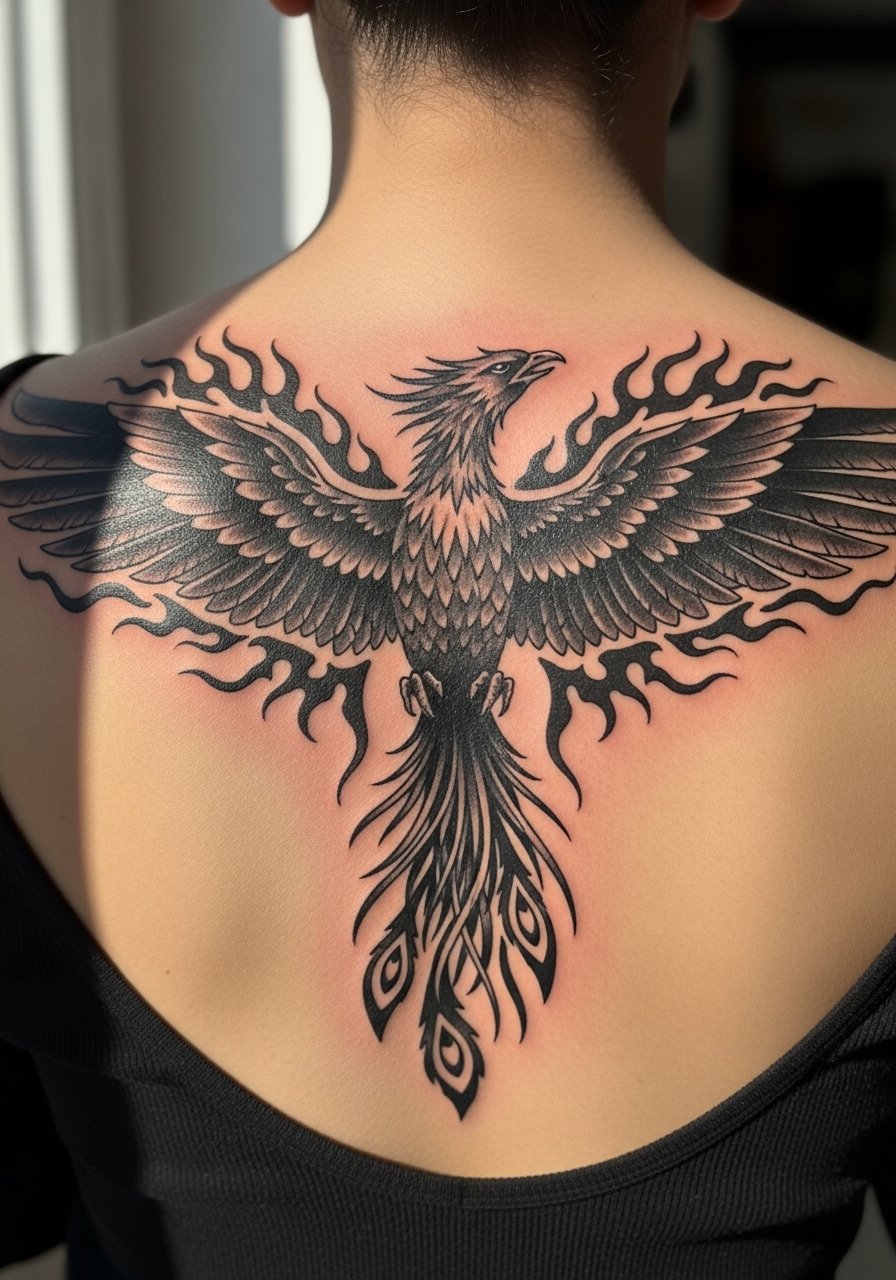
This version is for someone who wants presence from across a room. I recommend a full-back or upper-back placement so the wings can breathe. Tell your artist you want saturated black fills and clear negative-space highlights rather than tiny internal detail. A common mistake is compressing too much detail into the scapula area, which increases blowout risk and softens the silhouette over time. Expect a multi-session build with heavier saturation up front and a possible touch-up at year two if you live in a sunny climate. For the session wear bring a loose button-down shirt so you can pull fabric aside without tugging the freshly tattooed skin.
2. Watercolor Phoenix Shoulder Wrap, Soft Edges
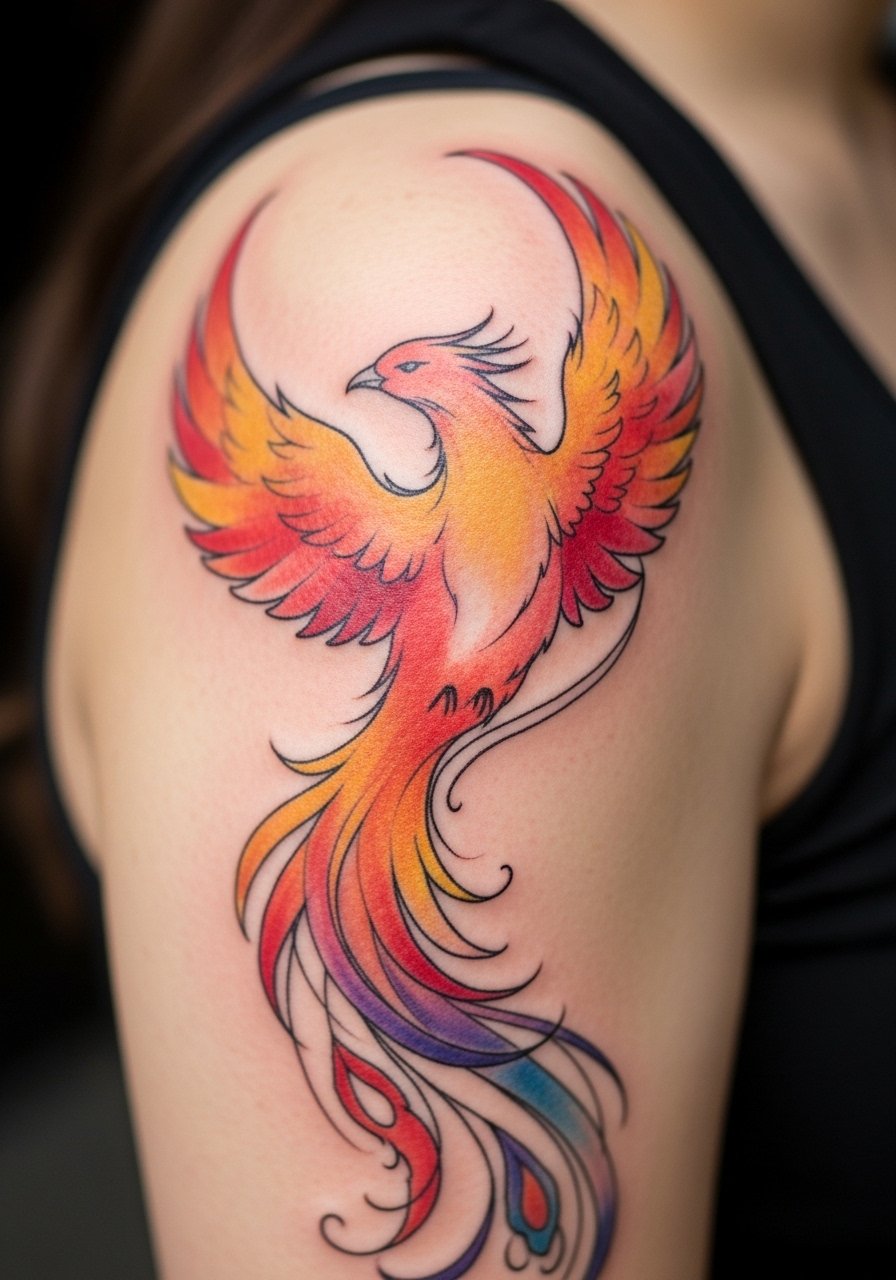
This airy take uses layered washes instead of hard outlines. It ages differently from heavy blackwork because pigments sit more superficially. Ask for slightly heavier black anchors at major lines so the form stays readable as the colors soften. The ribcage and chest camps argue over whether watercolor works near high-motion zones. One camp says motion and thin skin blur color quickly. The other camp says careful saturation and placement solve most issues. If you want to show it off, pair this with an open-back midi dress for evenings, and wear a loose tank during the session so the shoulder is easy to reach.
3. Neo-Traditional Phoenix with Geometric Framework on the Chest
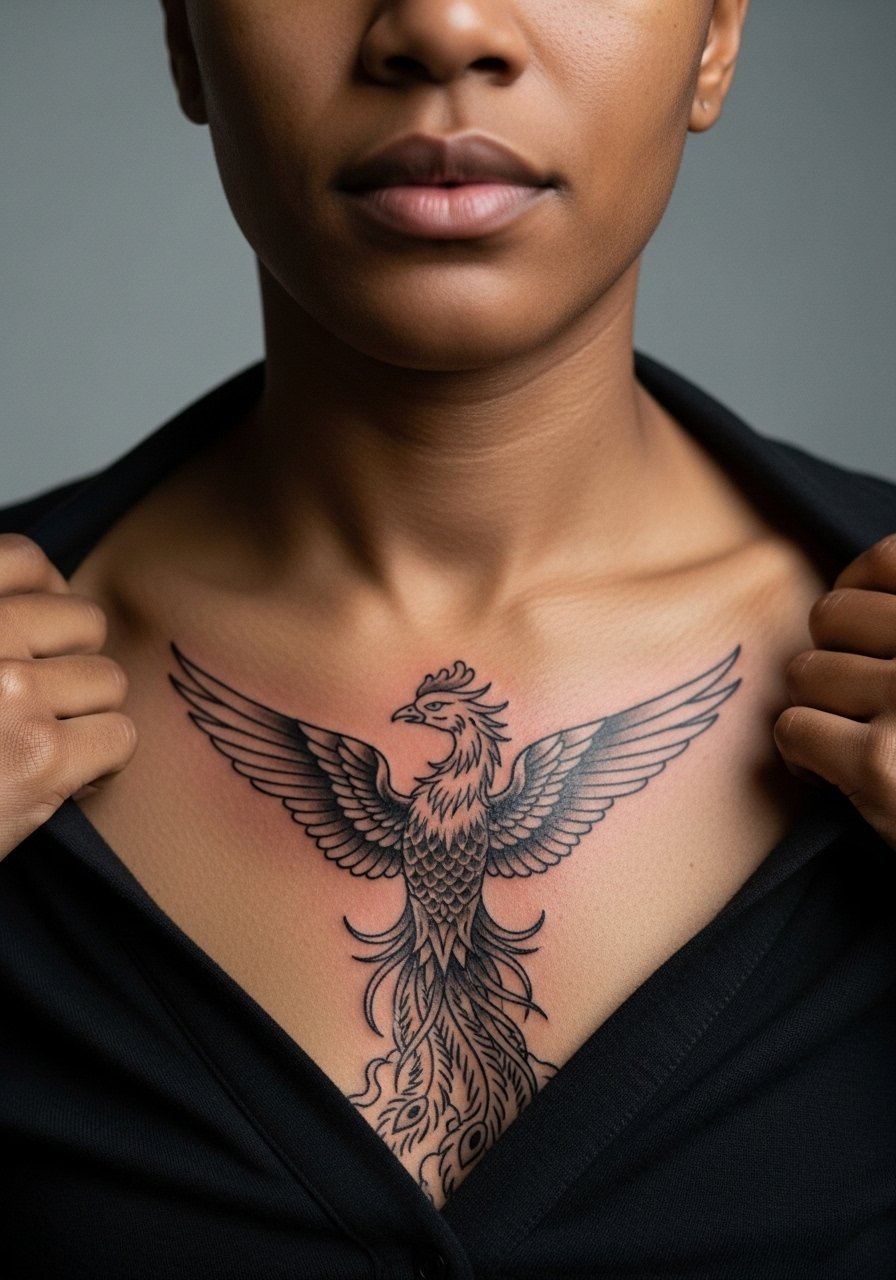
This is a bold frontal statement that relies on symmetry. Have a clear conversation in consultation about how wide across the chest you want the wings to sit. A common mistake is underscaling the wings to avoid cost, which makes the piece feel cramped after healing. The sternum and chest require a steady hand because the skin flexes when you breathe. Pain is higher here, but the visual payoff is strong. For the session wear a wide-neck shirt you can pull aside, and plan for a longer single session or two shorter ones depending on the saturation you want.
4. Micro-Realism Phoenix Head on the Inner Forearm
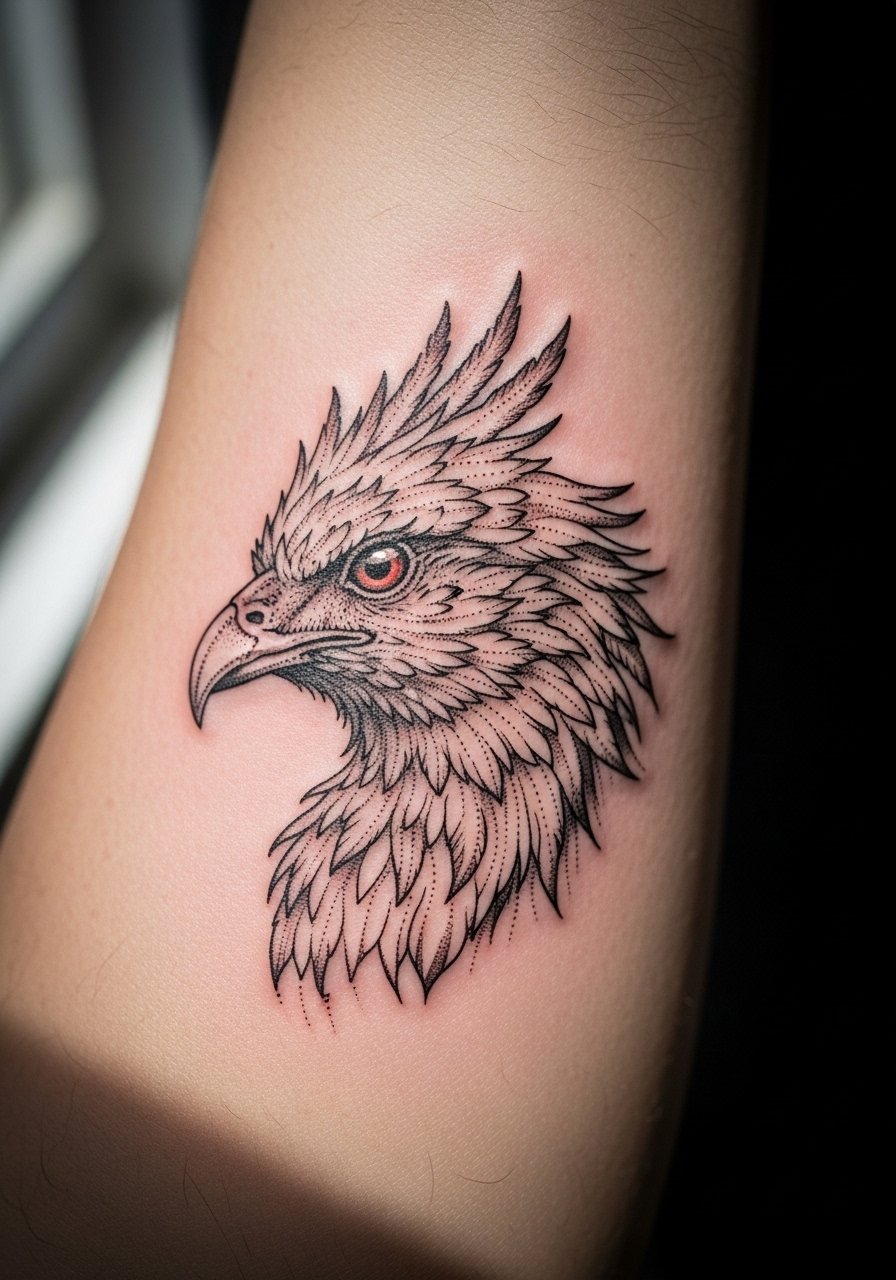
Fine detail on the inner forearm looks delicate and personal while still being visible. Tell your artist you want defined linework with stipple shading under the beak and eye to keep depth without heavy fills. The biggest error is asking for too many tiny lines in a small space. That leads to early blurring and the need for touch-ups. Typically this placement is lower pain and good for frequent viewers. Pair it with a minimalist watch or a few dainty bracelets to frame the forearm without covering the art.
5. Skull-Integrated Phoenix Thigh Piece, Dramatic Contrast

This darker take combines mortality and rebirth imagery for a cinematic effect. Thigh placements let you use larger negative-space maneuvers without worrying about daily friction. In consultation, specify how literal you want the skull to read. The common mistake is a skull that competes with the phoenix, which flattens the composition. Session feel is moderate; thighs tolerate longer sessions than hands or ribs. For showing the piece, try high-waisted skirts. For the appointment, wear high-waisted shorts so the artist can work with minimal fuss.
6. Linework Phoenix Spine Column, Minimalist Silhouette
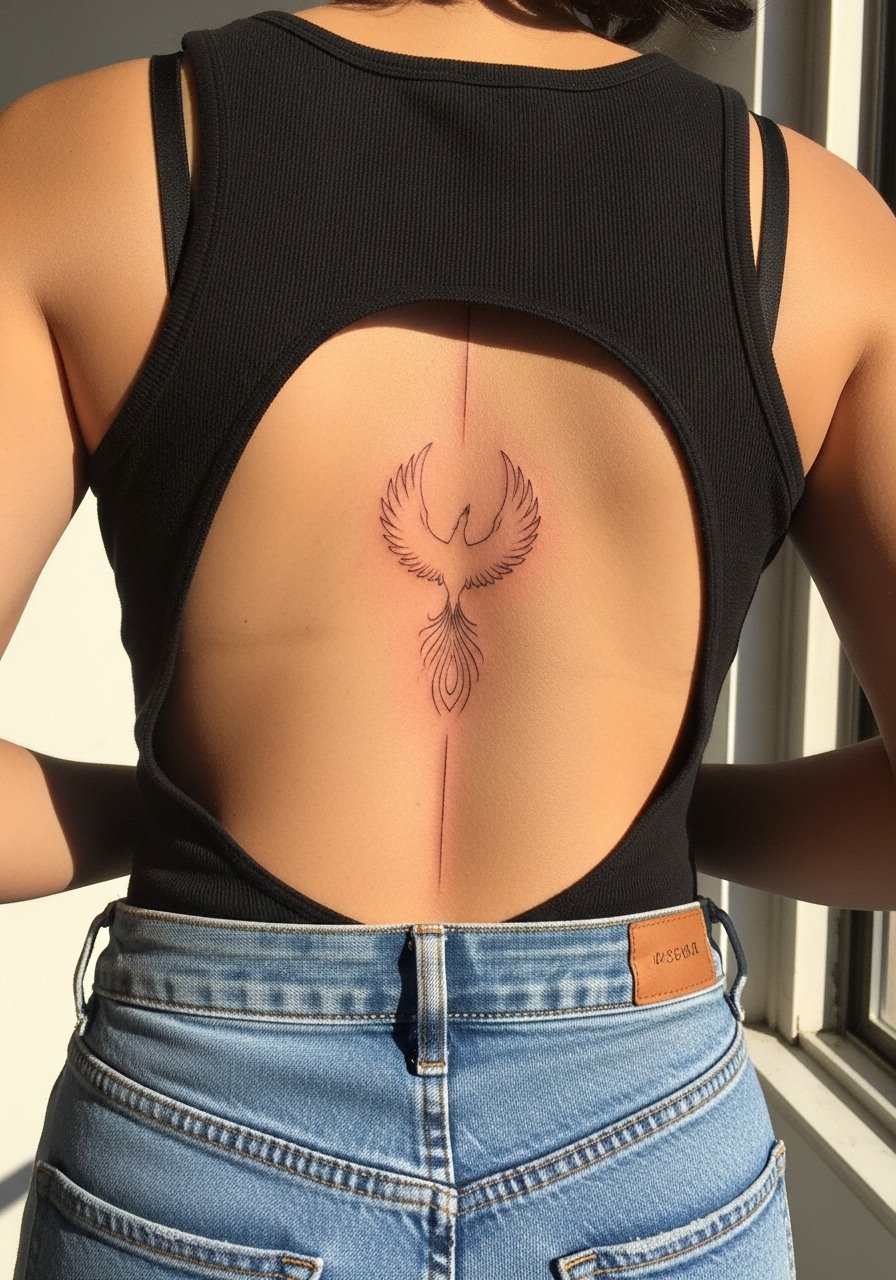
A vertical phoenix along the spine looks elegant and elongating. Ask for slightly bolder spine anchors so the silhouette survives years of movement. The spine is notorious for being painful during tattooing. Expect short breaks and a longer session cadence. One common mistake is making the piece too thin; tiny single-needle lines on the spine can blur quicker because of tissue movement. For showing it off, open-back tops work best. For session prep wear a tank top you can lower at the back without removing.
Studio Day Picks
The back, thigh, and spine pieces above need different prep than wrist or shoulder work, and these items smooth out the session and the first week.
-
Stencil transfer paper kit. Lets you preview placement on skin before the needle goes down, useful for long spine and chest pieces where symmetry matters.
-
Topical numbing cream. Applied as directed before the session eases the edge on high-pain zones like the sternum and ribs.
-
Thin protective film roll. Useful for preventing friction on thigh and back pieces during the first days of healing.
-
Fragrance-free gentle body wash. Cleans the tattoo without irritating delicate linework, which helps fine line and watercolor treatments.
-
Aquaphor healing ointment. A thin early layer can protect freshly inked skin while you sleep, especially for dense blackwork where moisture control matters.
7. Geometric Phoenix Sleeve with Negative Space
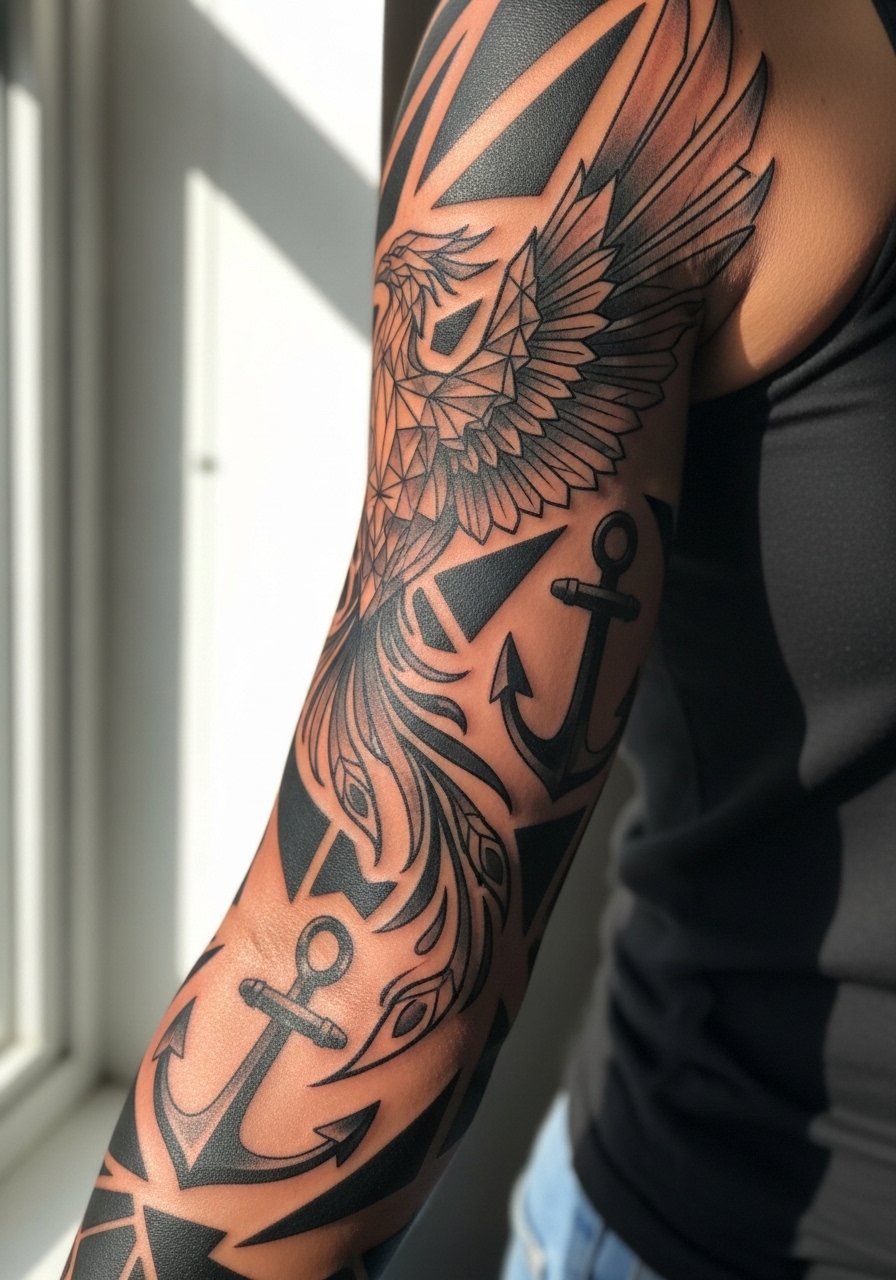
This merges sharp geometry with organic wings. During consultation, ask for scale tests so shapes do not compress near the elbow. The common aging problem is overcomplicated geometry in tight spaces, which blurs into an unreadable mass. For longevity, keep bold anchors and let finer geometry sit farther from high-motion joints. The sleeve session will be multiple visits. For show-off looks, roll up a linen long-sleeve shirt to the elbow for a casual reveal.
8. Fine Line Phoenix on the Wrist, Tiny and Personal
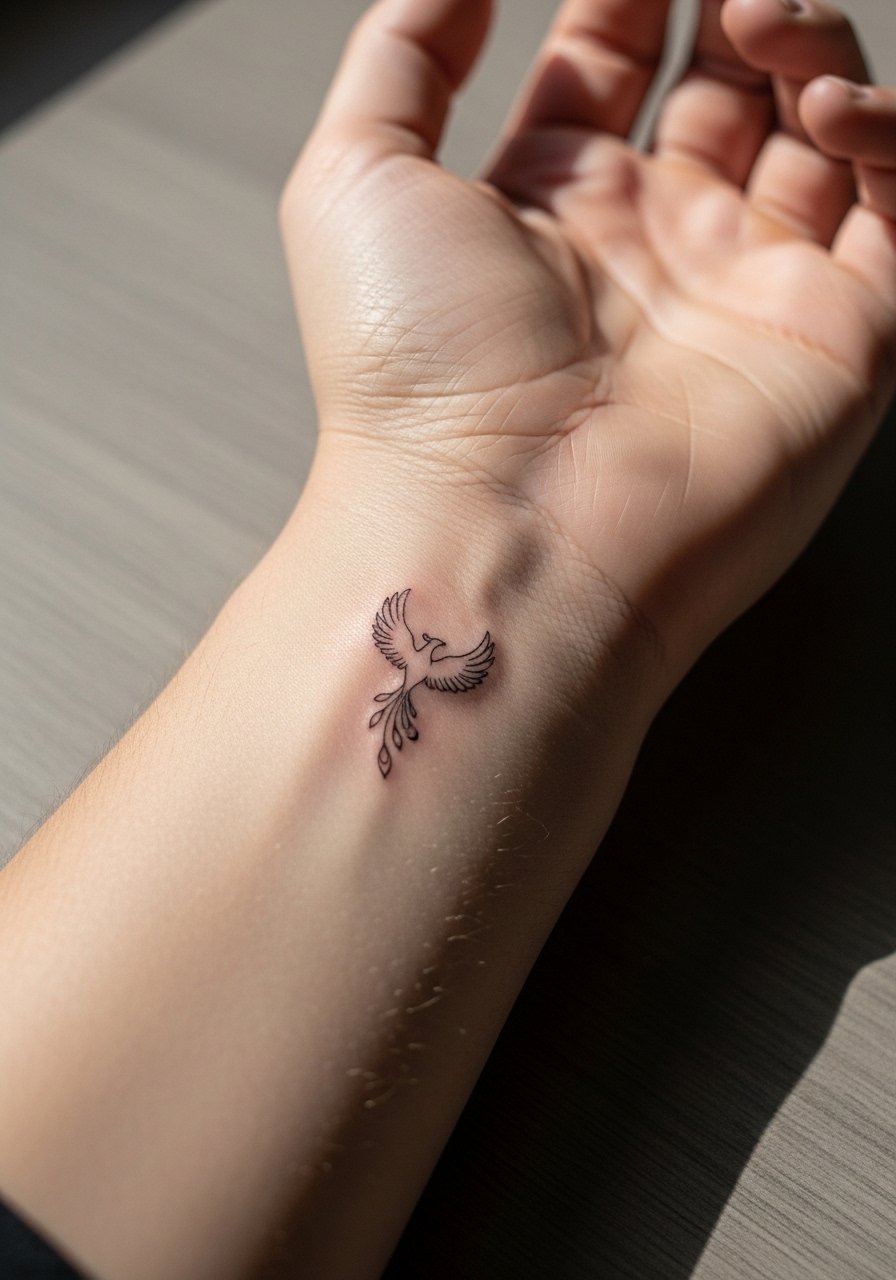
Wrist tattoos look intimate but face heavy wear from washing and bracelets. Ask for slightly thicker main strokes in the stencil stage so the silhouette survives frequent abrasion. The mistake people make is choosing an ultra-tiny version for a complex design. That invites early softening and the need for touch-ups. Expect light to moderate pain and a short session. Pair this with a thin chain bracelet that frames the wrist without rubbing the ink.
9. Tribal-Fusion Phoenix Over the Shoulder Blade
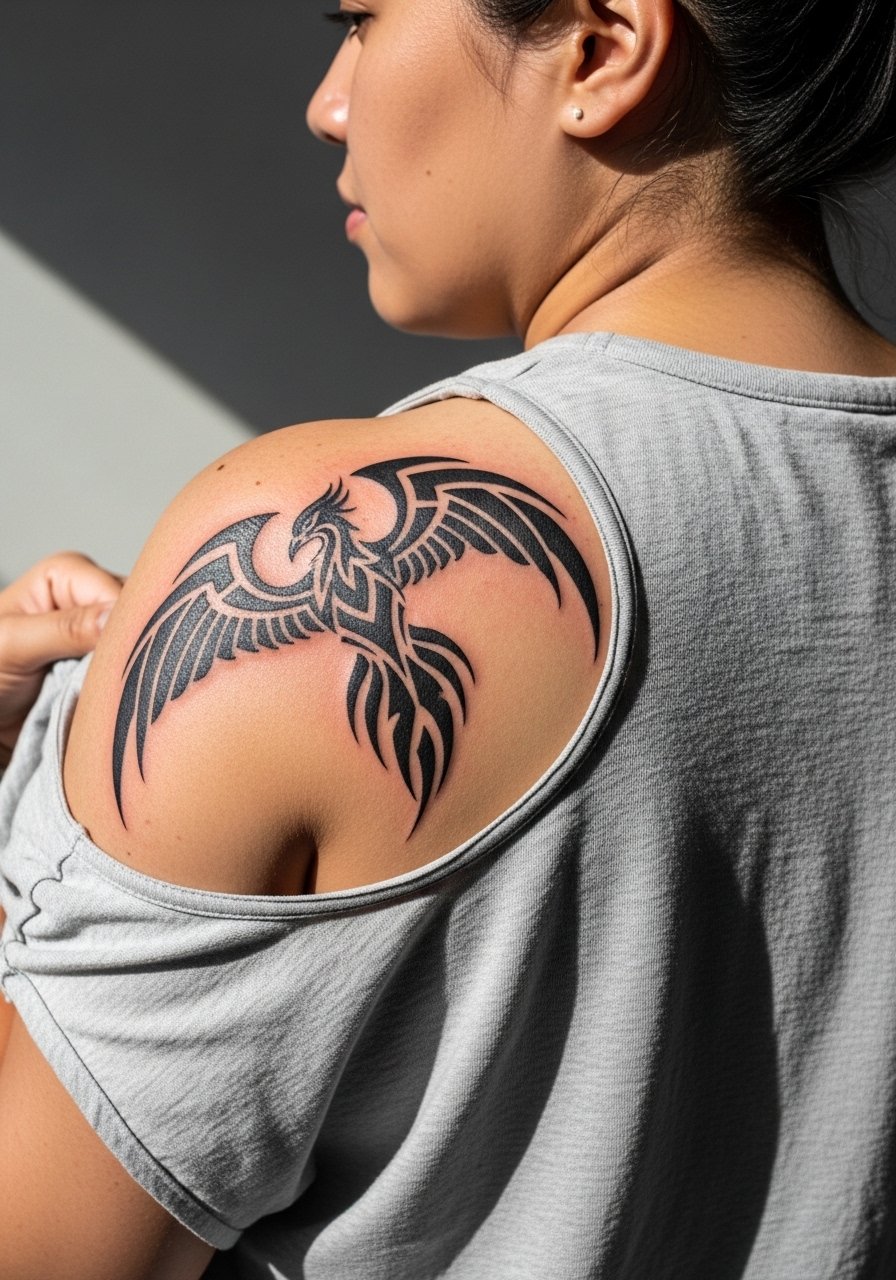
Tribal motifs have cultural roots and spark debate. One camp urges strict preservation of original motifs and cultural consultation. The other camp supports fusion and personal reinterpretation. If you go tribal-fusion, be explicit about which elements you want to reference and whether you prefer an abstract nod rather than a direct replica. Shoulder blades handle bold blackwork well, and the session is usually tolerable. For the session wear a loose tank top so the artist can access the shoulder without friction.
10. Water-Edge Phoenix Ankle Accent, Tiny Trail of Feathers

Ankle work faces friction from socks and shoes. Ask for upward-facing feathers so repeated contact with footwear doesn't blur central detail. A typical mistake is placing a dense block of tiny lines around the ankle where fabric rubs most. Session time is short but healing needs attention to footwear choices for the first week. Wear slip-on shoes the day of the appointment and try a pair of neutral sandals for post-session comfort.
11. Minimalist Phoenix Collarbone Script with Tiny Wing Accent
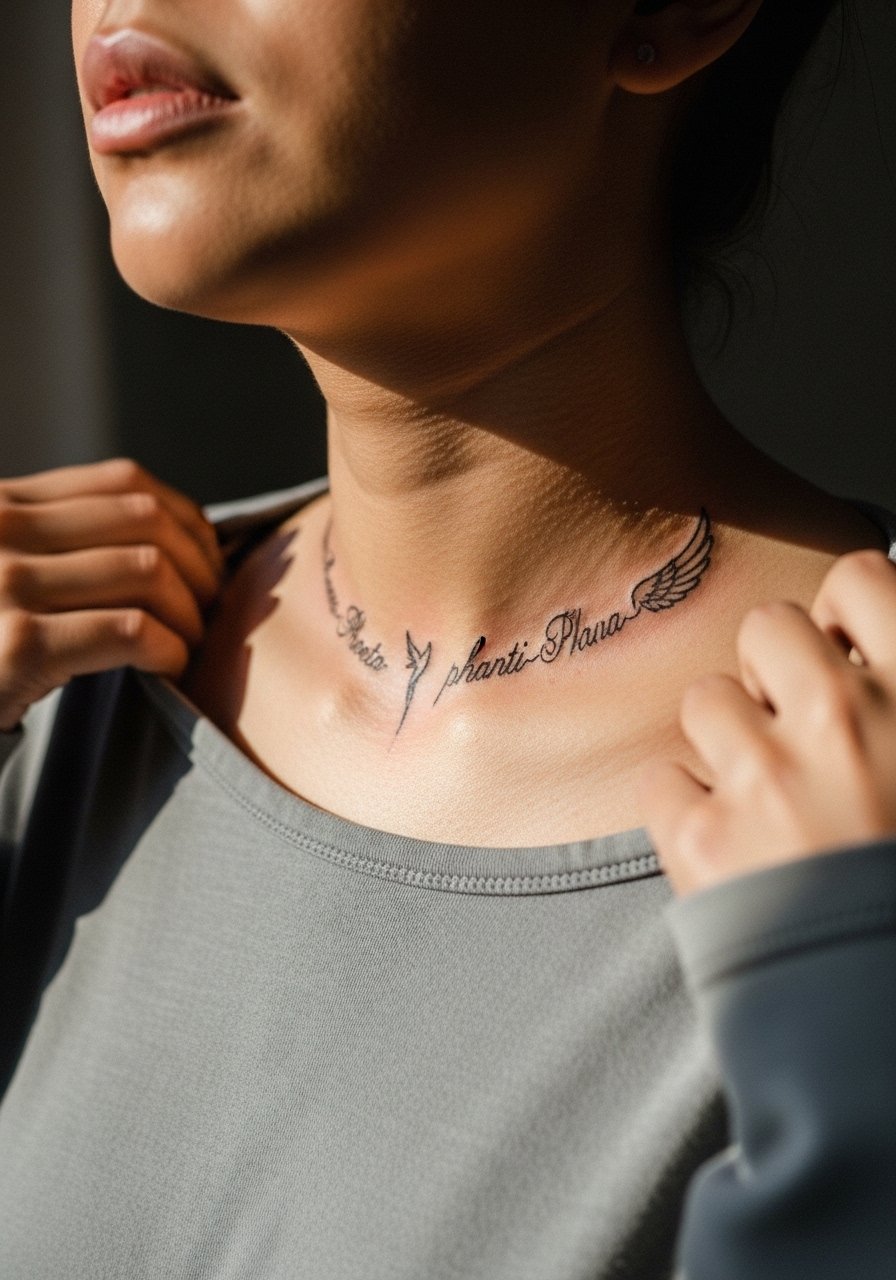
Collarbones are visible and age differently because of sun exposure. For durability, request slightly bolder main strokes in the script and reserve the micro details for sheltered inner elements. The common error is underestimating sun exposure. Plan for a touch-up at year three if you spend a lot of time outdoors. For showing off pair the design with a thin chain pendant necklace that sits above the script without crowding it.
12. Black-and-Gray Photoreal Phoenix Chest Panel

Photoreal work requires experienced hands and precise saturation control. Tell your artist you want contrasts preserved between the feathers and background negative space so the phoenix reads at a glance. A common mistake is overblending background shading which reduces contrast. This placement is sensitive and the session can be long. Make sure you and the artist agree on the tonal range so mid-tones do not wash out during healing.
13. Broken Wing, Battle-Worn Phoenix on the Upper Arm
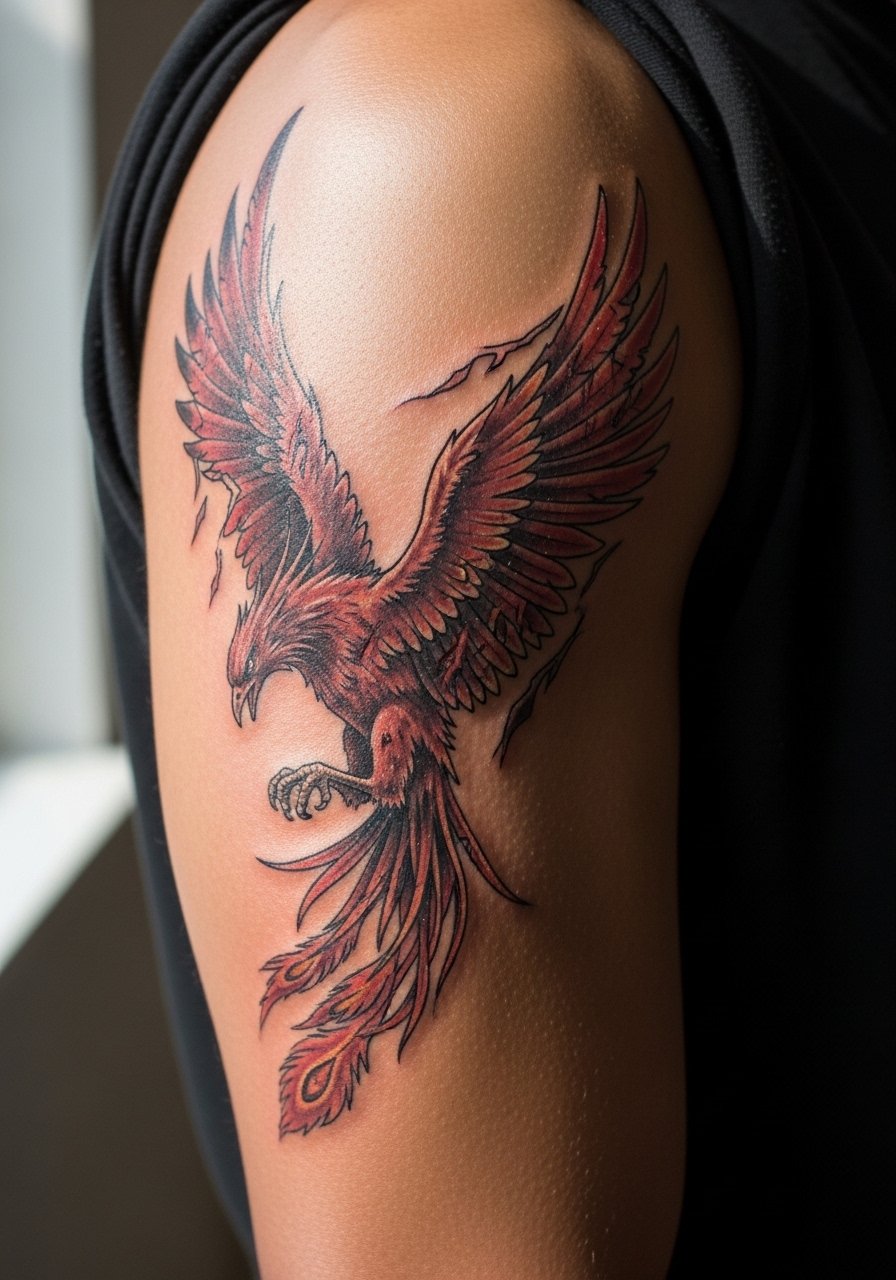
This is an edgier, narrative-forward version that leans into texture and grit. In consultation, describe how much damage you want the artist to depict. The mistake is adding too many scratch marks that compete with feather structure. Upper arms tolerate bold work and multiple sessions comfortably. For casual reveals, short-sleeve tees work well. Consider a rolled-up short sleeve tee to frame the arm when out.
14. Mandala Phoenix Fusion Along the Ribcage
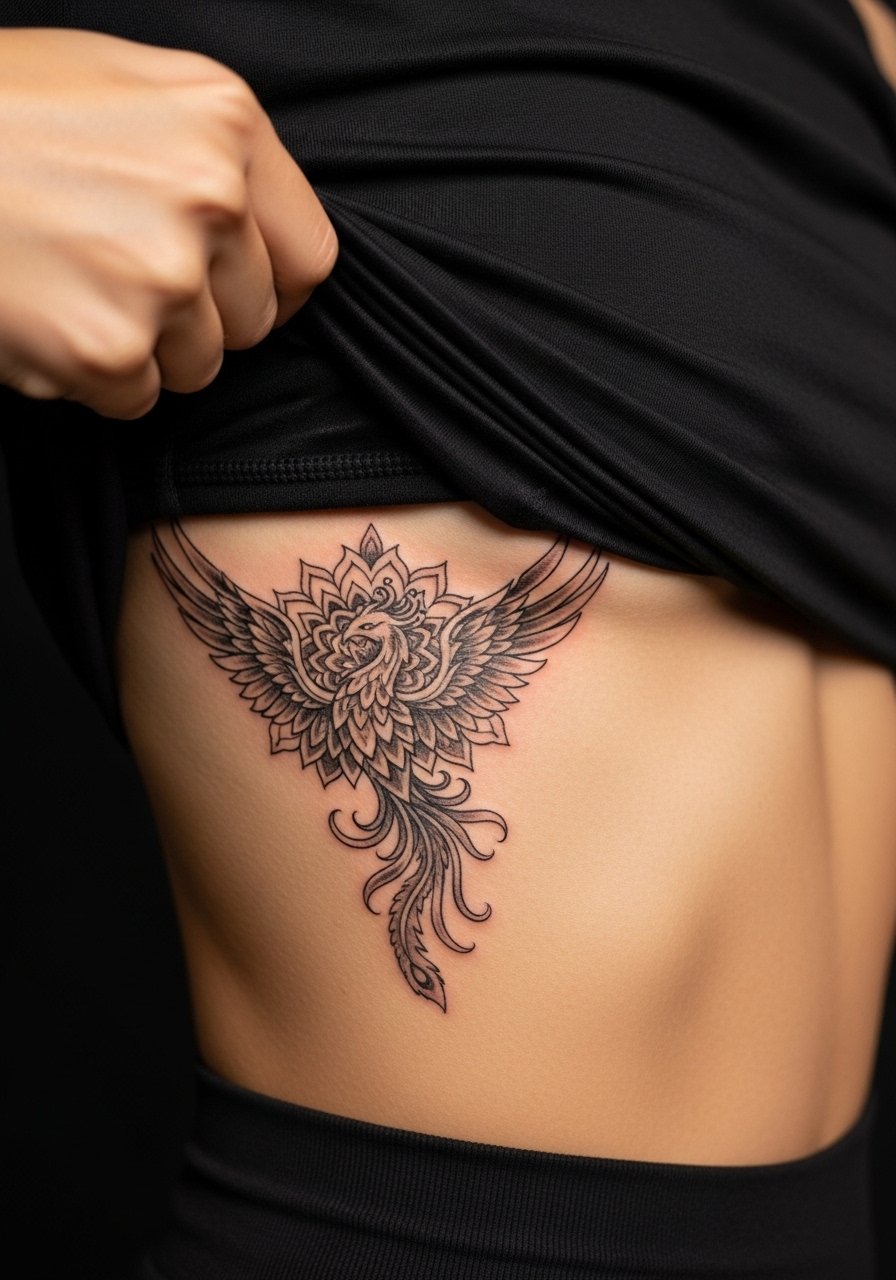
Ribcage placements invite a known controversy about fine line there. One group says ribs stretch and blur fine line work quickly. The other group says careful depth and spacing keep fine lines intact longer. I recommend spacing the mandala elements wider than you think so negative space protects the guides. Pain is higher and sessions are often split. If you want this look, plan for touch-ups and discuss long-term maintenance during consultation.
15. Minimal Script Phoenix Behind the Ear with Tiny Flame
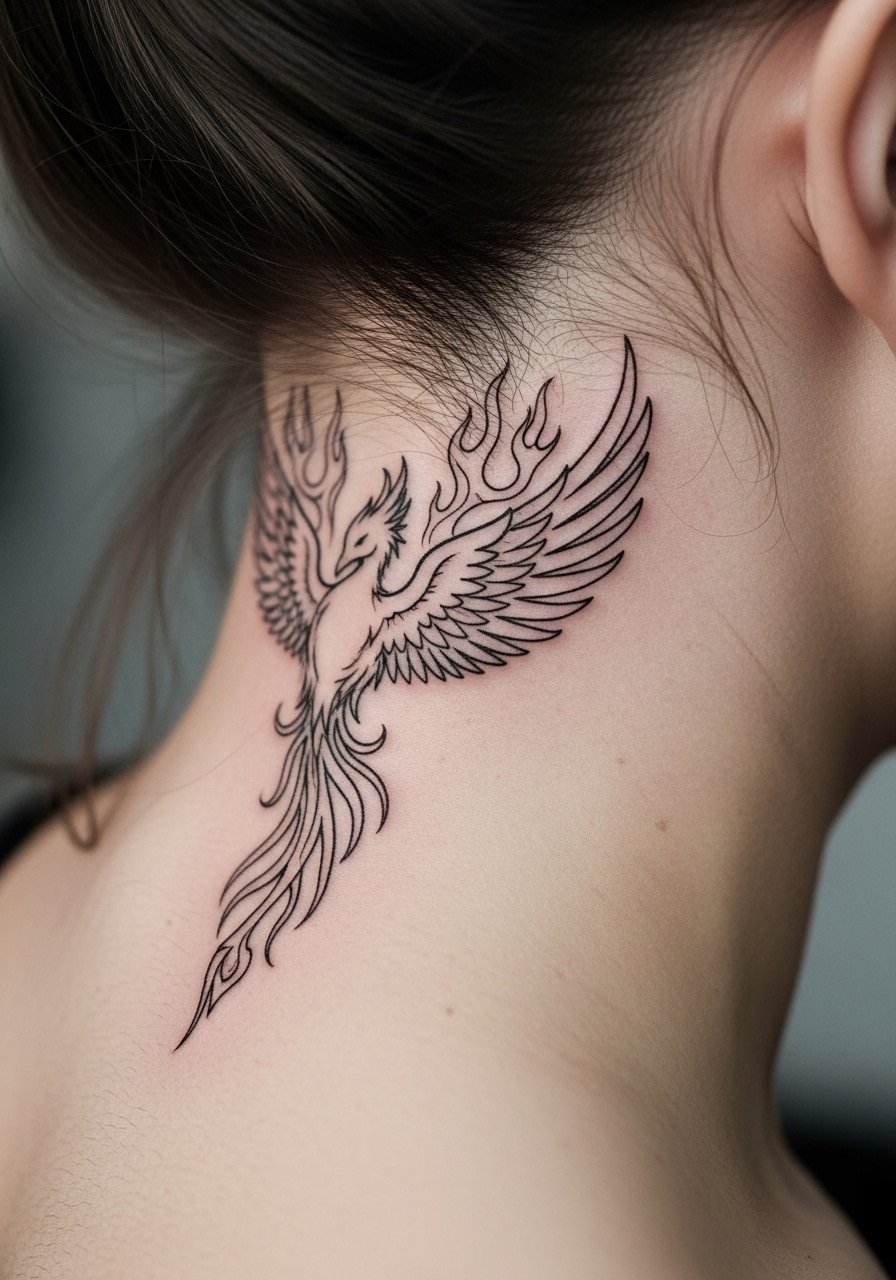
Behind-the-ear pieces are subtle and often hidden by hair. The safety rule here is to describe placement as on the skin behind the ear below the hairline so exposure is limited. Many employers still view visible neck-area tattoos differently, so think about your career. The session is quick but the canvas is small. A common mistake is asking for too much internal detail in such a tiny zone. If you want a lightweight reveal, style hair to tuck behind one ear or wear a wide-neck shirt for a staged show.
16. Sleeve Accent Phoenix with Dot Work Fading to Negative Space
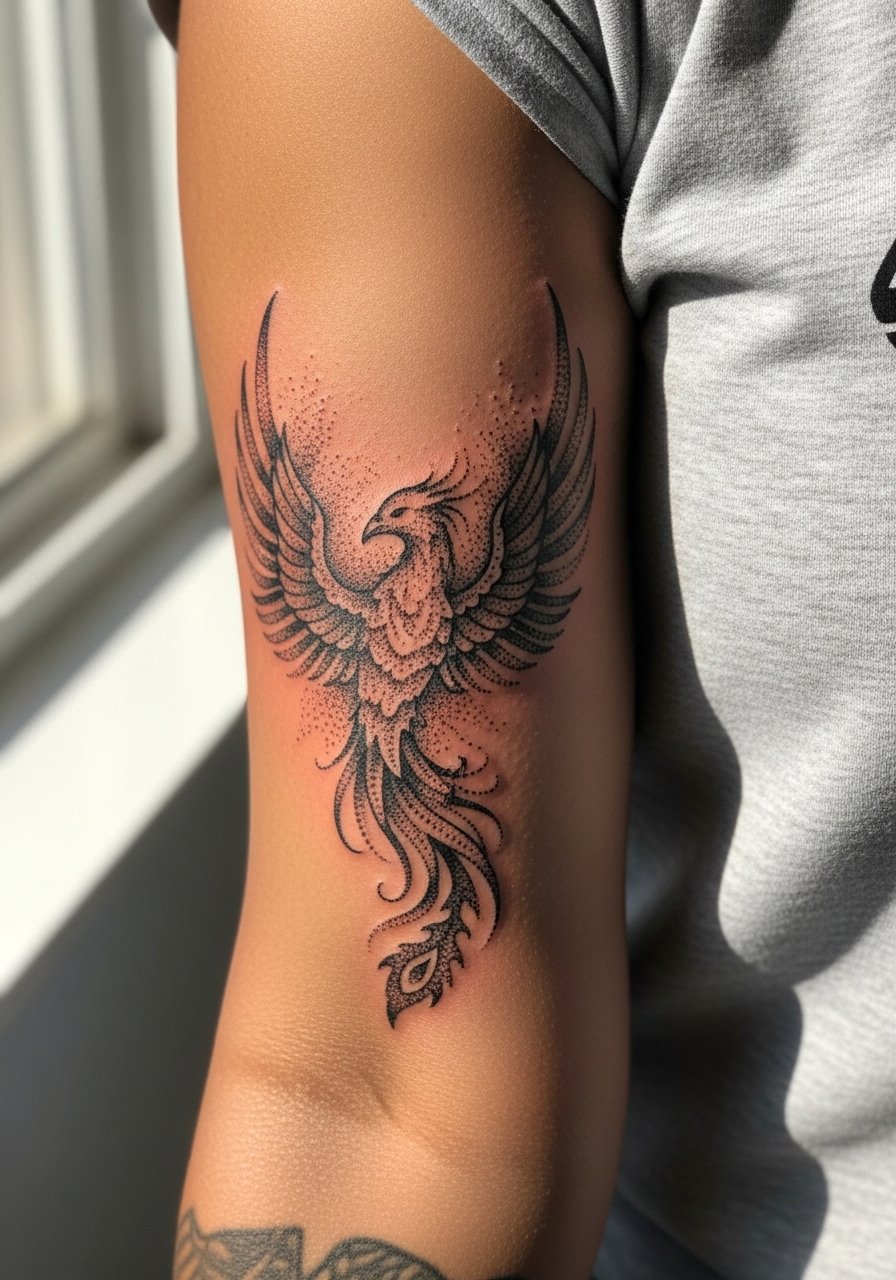
Stipple and dot work hold up well when the artist spaces dots for long-term clarity. Tell your artist you want dot density tests during the stencil phase. A frequent error is clustering dots too tightly, which makes shaded areas merge into a blotch. This approach often pairs well with other sleeve elements because the stipple gives breathing room. For the session, wear a loose button-down shirt you can roll up without tugging at healing skin.
17. Tiny Phoenix Finger Accent, Single-Line Minimal

Finger tattoos are high-friction and often need touch-ups within a couple of years. Keep the design very simple and talk to your artist about touch-up expectations before you book. The mistake is choosing dense detail for a place that faces constant washing and movement. Session time is short but healing requires care around soap and hand-sanitizer. For minimizing rubbing the day of your appointment try a pair of thin gloves for travel home and avoid jewelry that presses on the area while it seals.
Frequently Asked Questions
Q: How long will a fine line phoenix on my ribs stay crisp before needing a touch-up?
A: It depends on your skin type, sun exposure, and the original scale. From what I have seen, fine line rib work often needs a touch-up by year two or three if the lines are very tight. A slightly larger scale with more negative space usually delays that timeline and helps preserve the silhouette.
Q: Are tribal-fusion phoenix designs culturally insensitive to get?
A: There are two camps. One urges strict respect and consultation when borrowing sacred motifs. The other supports creative fusion with acknowledgement. If you lean into tribal elements, ask about the origin of the patterns and consider an abstract nod or a custom reinterpretation so the design feels respectful.
Q: Should I pick watercolor or blackwork if I want longevity with bright color?
A: Blackwork will generally keep a clear silhouette longer. Watercolor reads beautifully fresh but often needs more maintenance because pigments sit more superficially. If you love color, pick a hybrid approach with black anchors and watercolor fills so you get color and readable form over time.
Q: How should I find an artist who specializes in phoenix work without naming specific shops?
A: Use artist discovery pathways. Search hashtags like #phoenixtattoo and #phoenixdesign, check artist portfolios on discovery platforms, browse convention guest lists, and review community threads on tattoo forums and subreddit galleries. Look for healed photos in portfolios rather than just fresh shots.
Q: Will a small phoenix on the wrist affect my chances in conservative workplaces?
A: Wrist tattoos are visible and may raise questions in some fields. If you work in a conservative environment, consider placement that is easier to cover or a placement on the inner forearm that you can hide with sleeves. Think about your career path before committing to a highly visible spot.
Q: How many sessions should I expect for a detailed back phoenix versus a tiny finger accent?
A: Large back pieces are typically multiple sessions that focus on linework first and saturation later. Tiny finger accents usually finish in a single short session. Discuss session splits, expected healing windows, and touch-up plans during your consultation so scheduling matches your tolerance and availability.