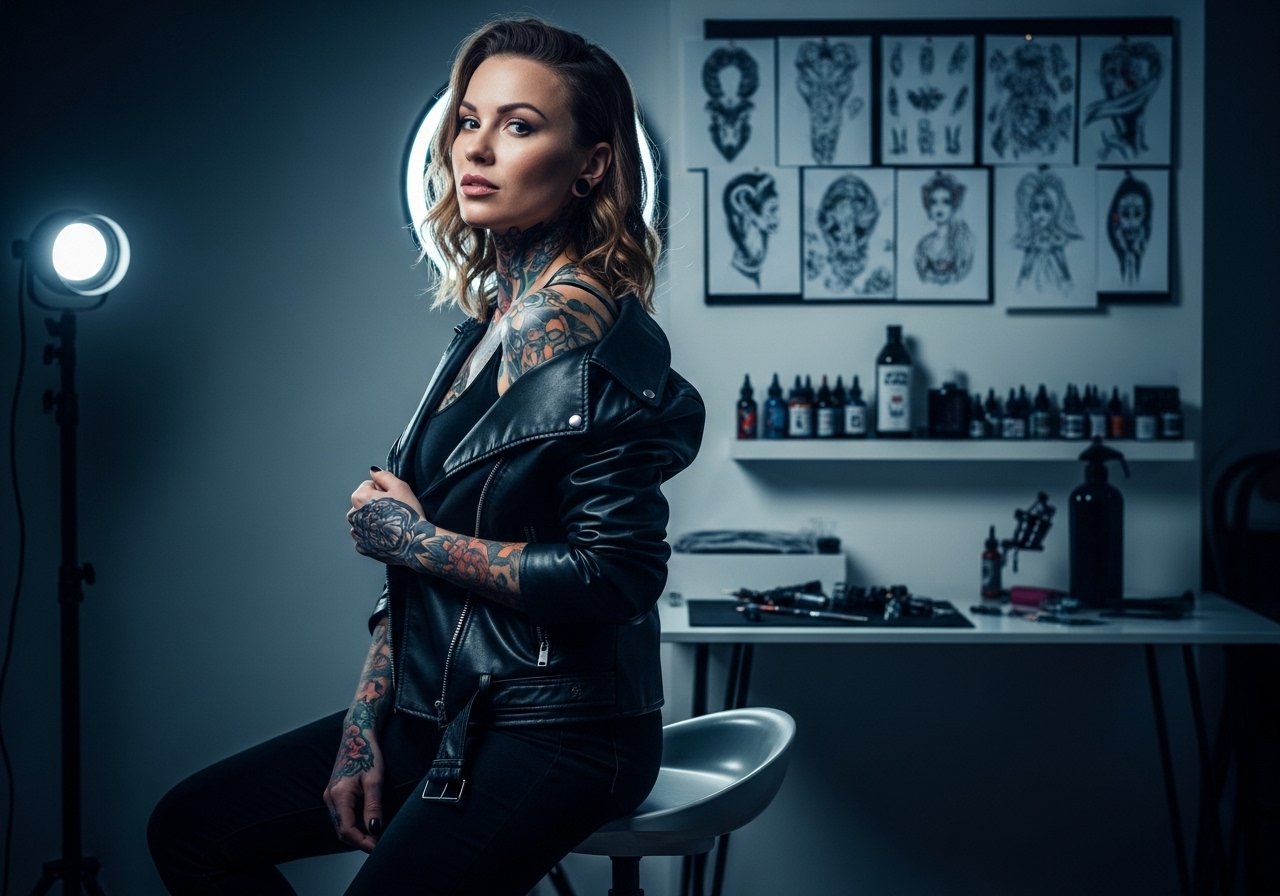
Fine line dragons are everywhere on saved boards right now, but the pieces that still read clean after two years are the ones sketched with placement and skin movement in mind. I keep hearing three complaints at shops: finger dragons fading fast, surprise shop minimums, and wrist pain that catches first-timers off guard. Below are 17 micro dragon options with what to ask at consults, how they age, and the wardrobe tips that make them look intentional.
1. Micro Fine Line Dragon Coiling Around Finger
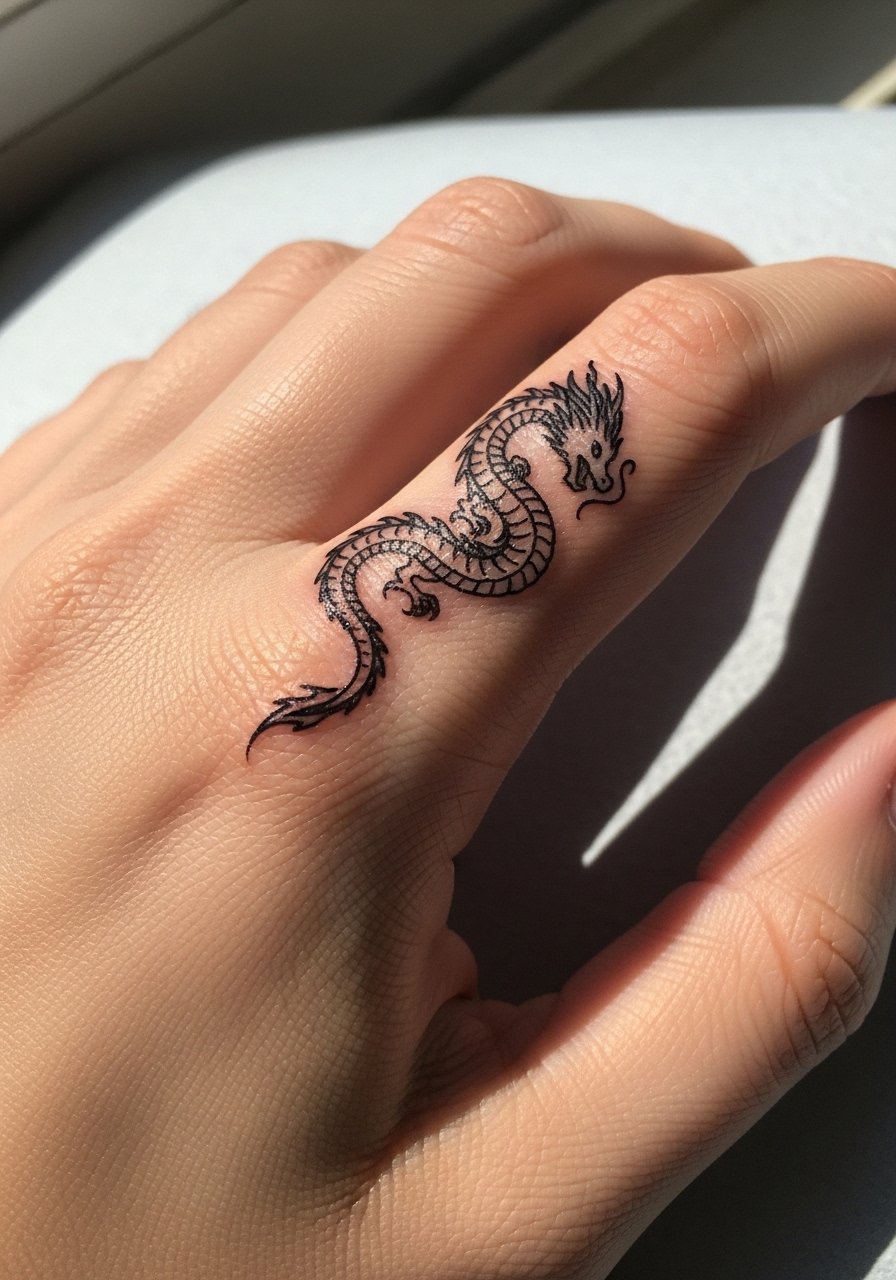
This style reads like a whisper of myth on busy hands. Fair warning about friction here, fingers see constant washing and typing so fine single-needle work can fade faster than the same line weight on an arm. Tell your artist you want slightly thicker primary lines and a light dot-shaded belly so the form still reads after a year. Expect a short single session that stings more than a forearm because bone and tendon are close to the surface. For showing it off, a simple thin silver ring stack on other fingers contrasts the scale, and a neutral nail polish set keeps focus on the linework. Common mistake is asking for ultra-fine script lines without accounting for the wear the area gets.
2. Minimalist Dragon Silhouette on the Inner Wrist
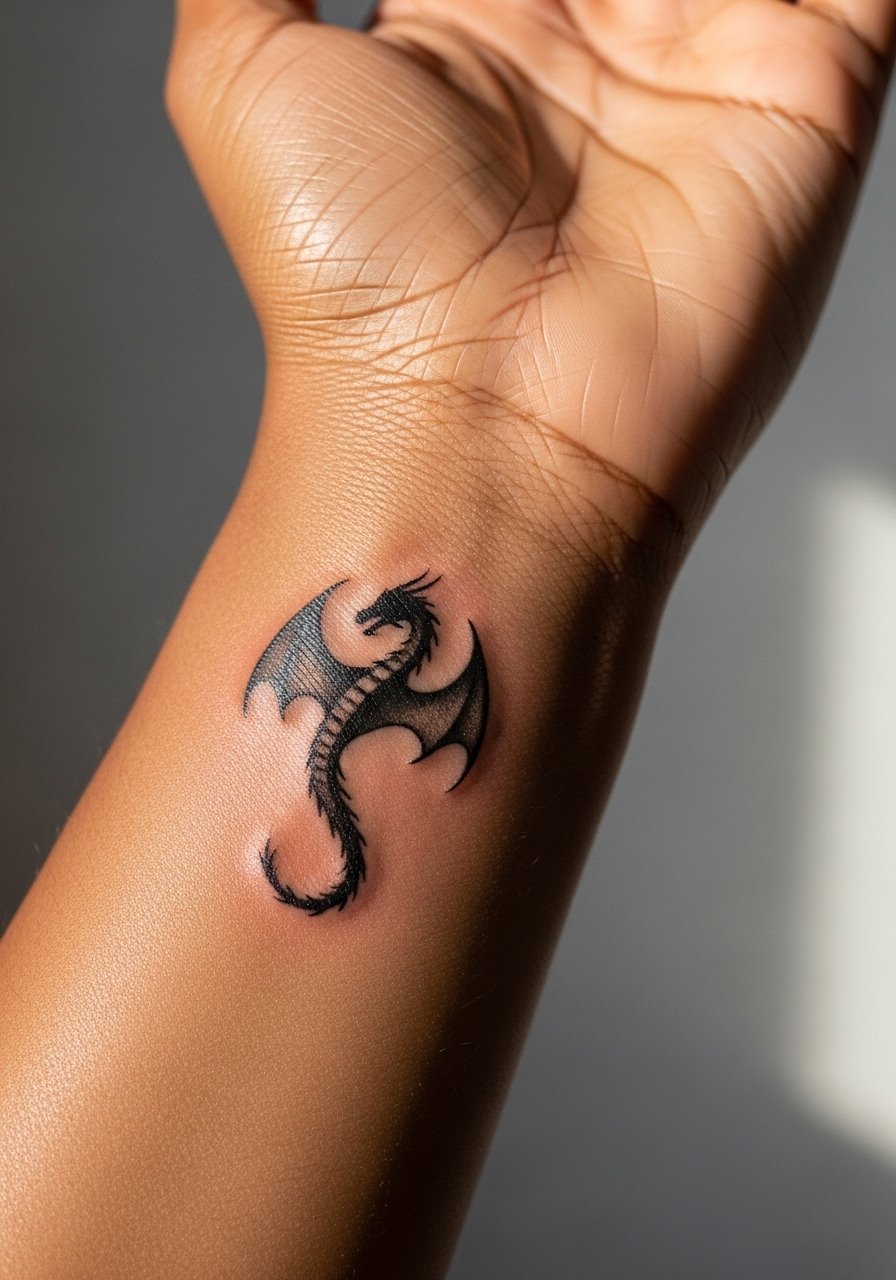
The inner wrist is discreet and modern, and a silhouette simplifies the shape so it holds up. Pain here is moderate, similar to a deep sunburn, and most of this fits in a single short session. Ask for a negative-space eye or a tiny scale pattern rather than extra tiny details that blur. This placement is vulnerable to rubbing from watches or sleeves, so plan touch-ups at the 12 to 18 month mark if you want it crisp. A common mistake is packing too much detail into a 2 centimeter piece. If you need to hide it at work, position the head toward the elbow so it tucks under long sleeves more naturally.
3. Neo-Traditional Baby Dragon with Flames on the Outer Forearm
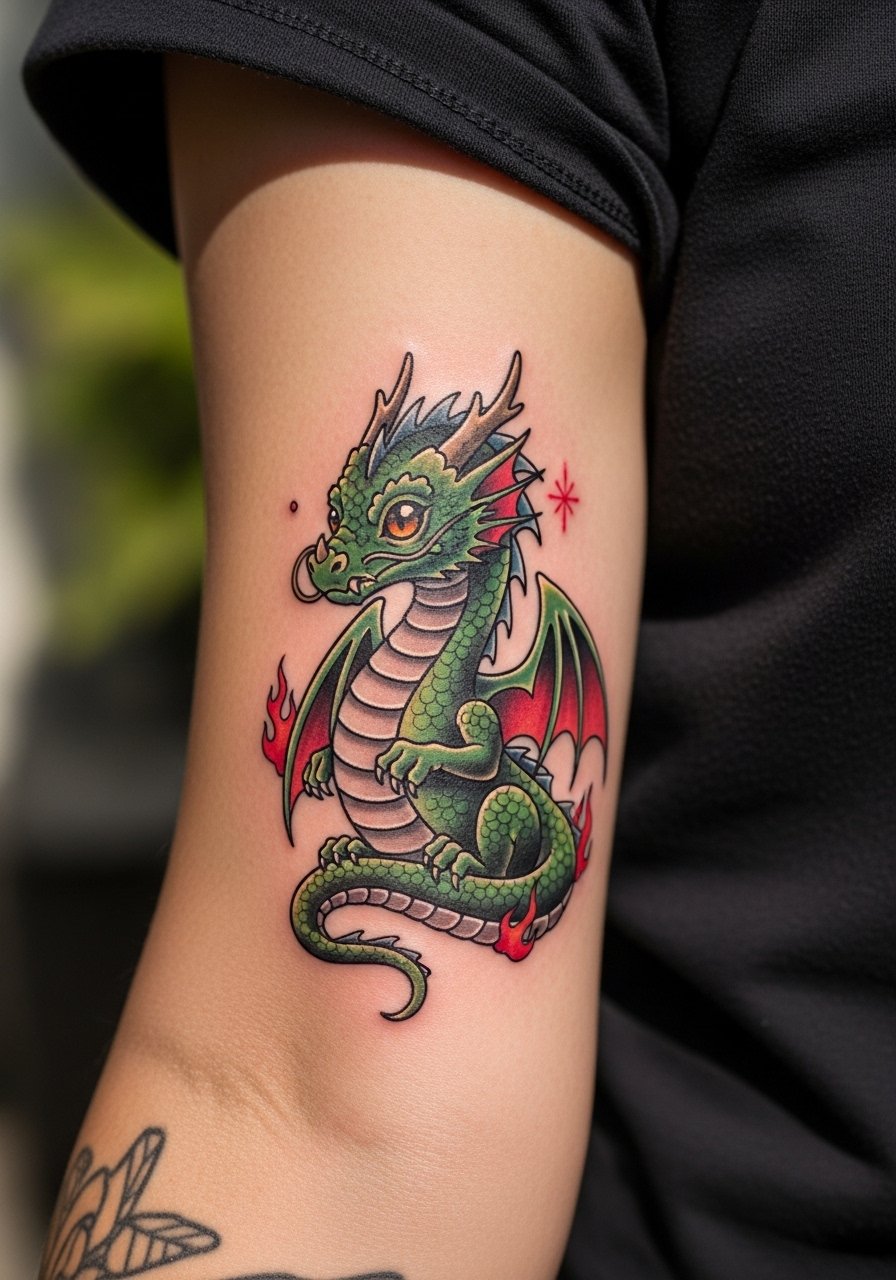
This version gives a playful, collectible feel without needing a sleeve commitment. The forearm is forgiving on size, so keep the dragon around 3 to 4 centimeters so the facial features stay readable. In consultation ask the artist for bold outlines and selective saturation in the flames rather than fully packed gradients, that approach keeps color from muddying at small scale. Session time is usually one to one and a half hours. For a casual look that frames the piece, roll up a fitted short sleeve tee and try a leather cuff bracelet on the opposite arm. Collectors sometimes regret tiny color fills inside scaled detail, so ask for saturated accents not full coverage.
4. Blackwork Geometric Dragon Head on the Shoulder Blade
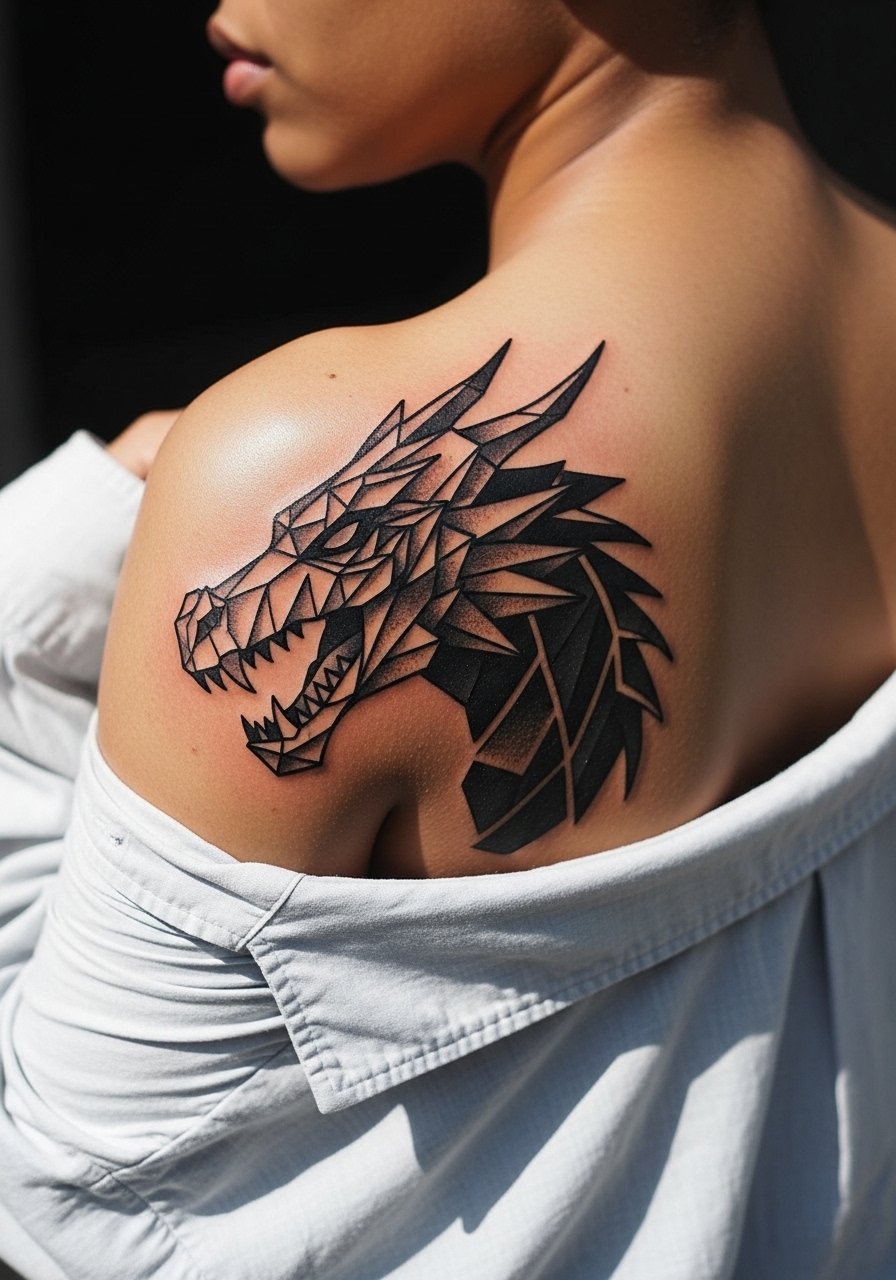
Bold blackwork on the shoulder blade reads from across a room and ages predictably. Artists usually complete this in a single session. If you want optical contrast, ask for alternating filled panels and fine hatch shading instead of tiny dots that can soften. The biggest mistake is shrinking the geometry too much; give pattern elements space to breathe so they do not merge at year two. For access wear a button-down or strapless option to the appointment so the artist can work without fabric interference. This spot is low-friction and one of the safest for micro blackwork longevity.
5. Watercolor Micro Dragon in Flight on the Ankle
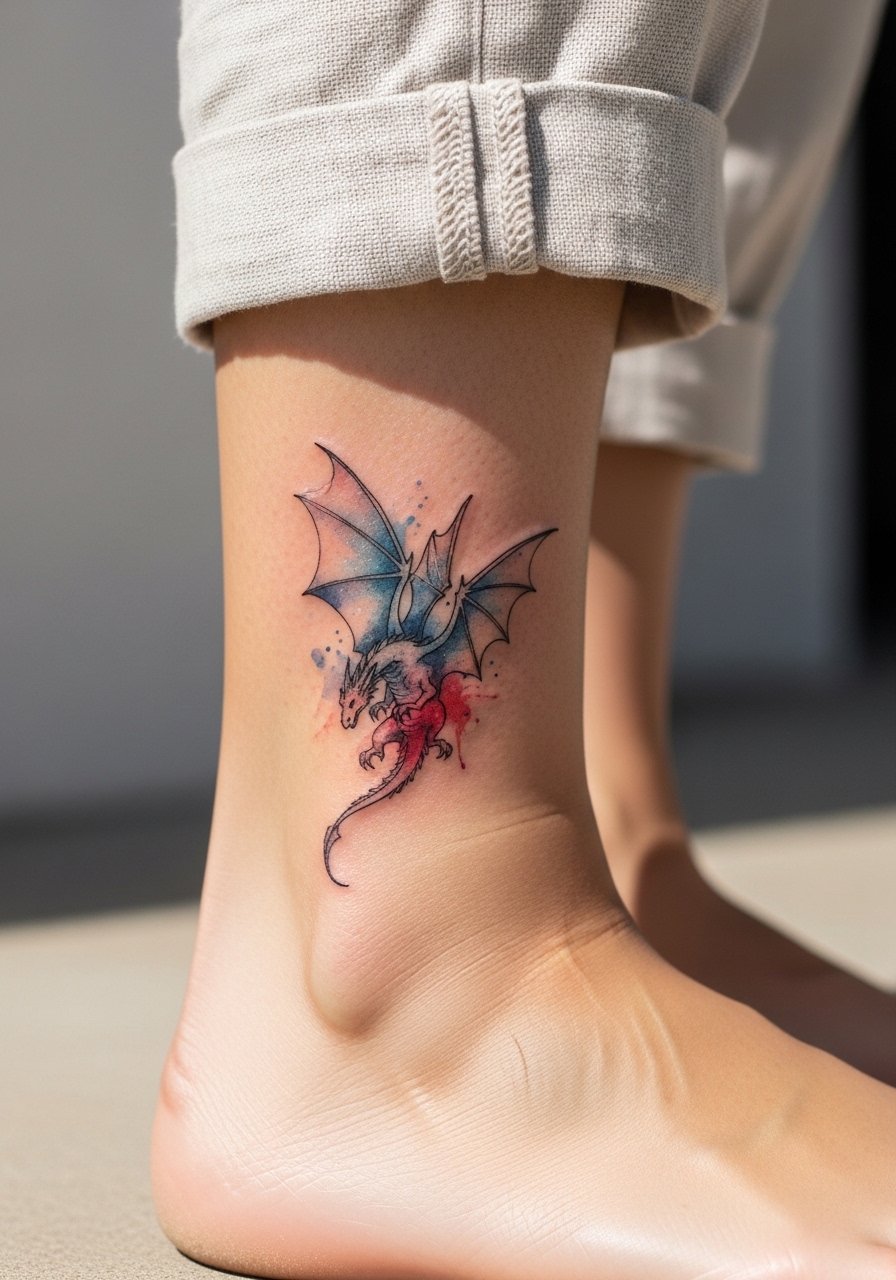
Watercolor effects make small dragons feel airy, but color can migrate or desaturate faster on high-movement spots. If you love watercolor, ask for a black outline anchor around major forms so the design still reads when the pigment softens. Ankle sessions are quick but the area can swell after longer periods standing, so expect tenderness for a few days. For summer visibility pair this design with strappy ankle sandals and cropped pants. A common regret is heavy watercolor wash with no outline, which loses definition once the edges feather.
6. Micro-Realism Dragon Claw Gripping the Wrist Side
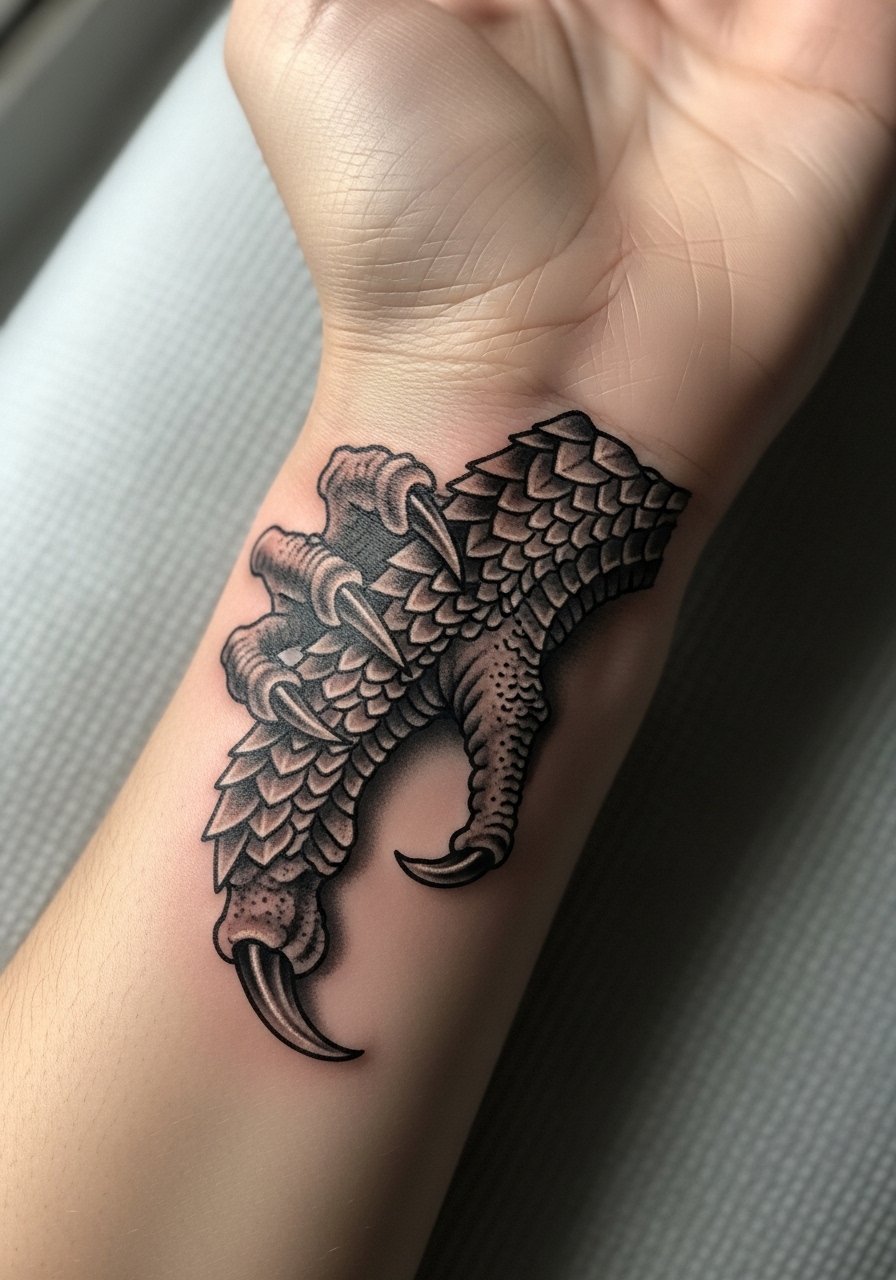
Micro-realism demands needle control and patience, and the wrist side shows off texture well. Expect two short sessions if you want layered shading that reads like scales. Pain is moderate to high because of thin skin, and keep the session length shorter if nerves spike. Tell your artist you want defined scale edges and selective contrast rather than all-over soft shading. The biggest technical trap is overworking the area hoping to squeeze in more texture, that can cause excess trauma. For showing off, a minimalist watch on the opposite wrist keeps attention balanced without crowding the artwork.
Studio Day Picks
The wrist and finger pieces above heal differently from larger forearm work, so a few small things smooth out the session and the first week.
-
Stencil transfer paper kit. Lets you preview line placement on skin so finger coils and wrist silhouettes land where you expect them.
-
Topical numbing cream. Applied 30 to 45 minutes before takes the edge off sensitive wrist and finger spots without altering the stencil.
-
Thin protective film roll. Useful for finger and wrist work that rubs against clothing during the first few days.
-
Fragrance-free gentle body wash. Cleans the area without scented additives that can irritate fresh linework.
-
Aquaphor healing ointment. A thin layer for days one and two helps delicate single-needle lines recover without clogging.
7. Ornamental Dragon Tail Wrapping the Ankle Bone

This ornamental approach reads like ankle jewelry and favors dotwork and patterned scales. The ankle holds detail well if you keep the ornament repeats larger than one millimeter. Tell your artist you want dotwork spacing that reads at arm's length, not tiny stipples that merge. Sessions are usually single and comfortable though the outer ankle can feel bony. For summer wear cropped pants and an ankle chain on the other foot so the piece reads as curated, not random. Avoid wrapping too many repeating motifs into a single centimeter, it compresses over time.
8. Ignorant Style Playful Dragon Face on the Collarbone
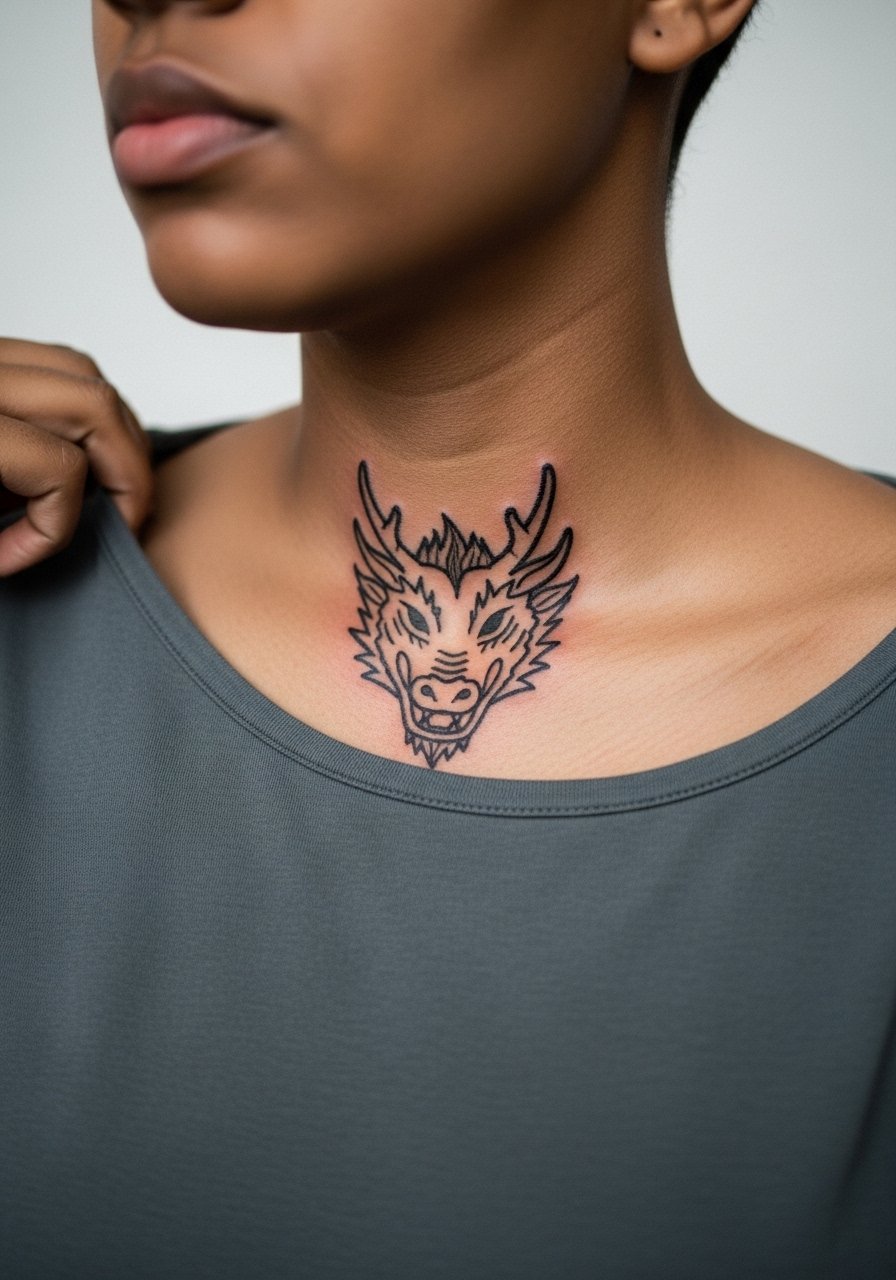
This scribble-forward look is intentionally naive and forgiving at micro scale. The collarbone area can be sharp on sensation so expect a stinging surface feel. Ask for a confident, single-stroke sketch approach so the imperfect lines feel deliberate rather than shaky. For framing, a v neck tank top and layered delicate necklaces keep attention on the placement without overlapping the ink. People often request insane detail on two centimeter collarbone pieces and then regret the busy effect when it heals.
9. Traditional Micro Dragon with Clouds on the Inner Bicep

Inner bicep is a hidden, intimate stage for classic flash motifs. The area is softer and can accept slightly denser composition but watch for elasticity and movement as the arm twists. Ask for bold primary outlines and limited red accents instead of full palettes so the composition ages cleanly. Pain is lower than rib or sternum but higher than forearm. A frequent mistake is cramming cloud detail too close to the dragon; breathing room keeps the iconography distinct after healing.
10. Fine Line Dragon Eye on the Ribcage
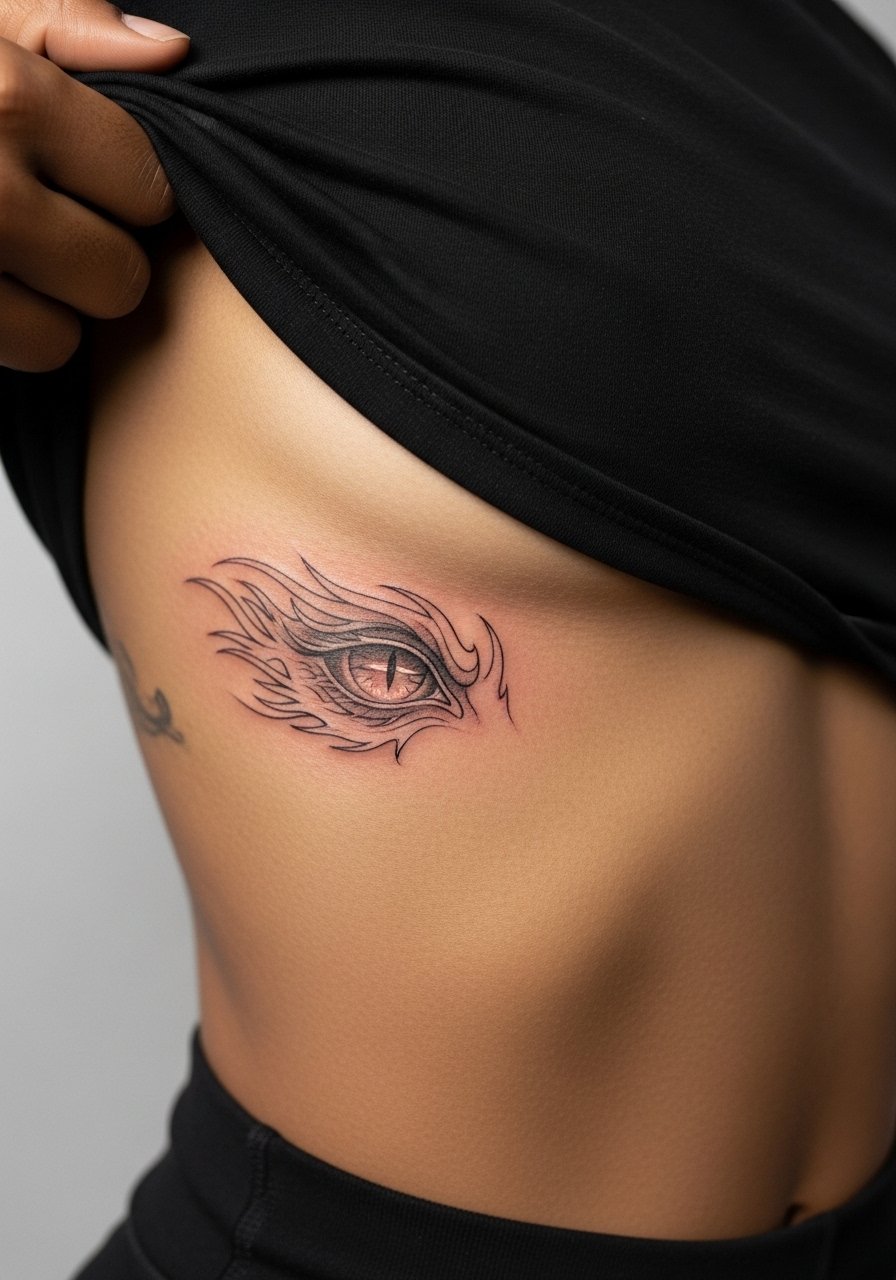
Fine line on ribs raises the debate I hear at conventions. One camp warns the skin stretch and breathing motion cause lines to blur within two years. The other says with correct needle depth and spacing, fine line can settle beautifully on the ribs. My practical take is this depends on your skin and the artist's comfort with ribwork. Expect higher pain and a short, focused session. If you choose fine line, ask for slightly more spacing between dense strokes and budget for a touch-up at year two.
11. Dotwork Micro Dragon Spine Accent
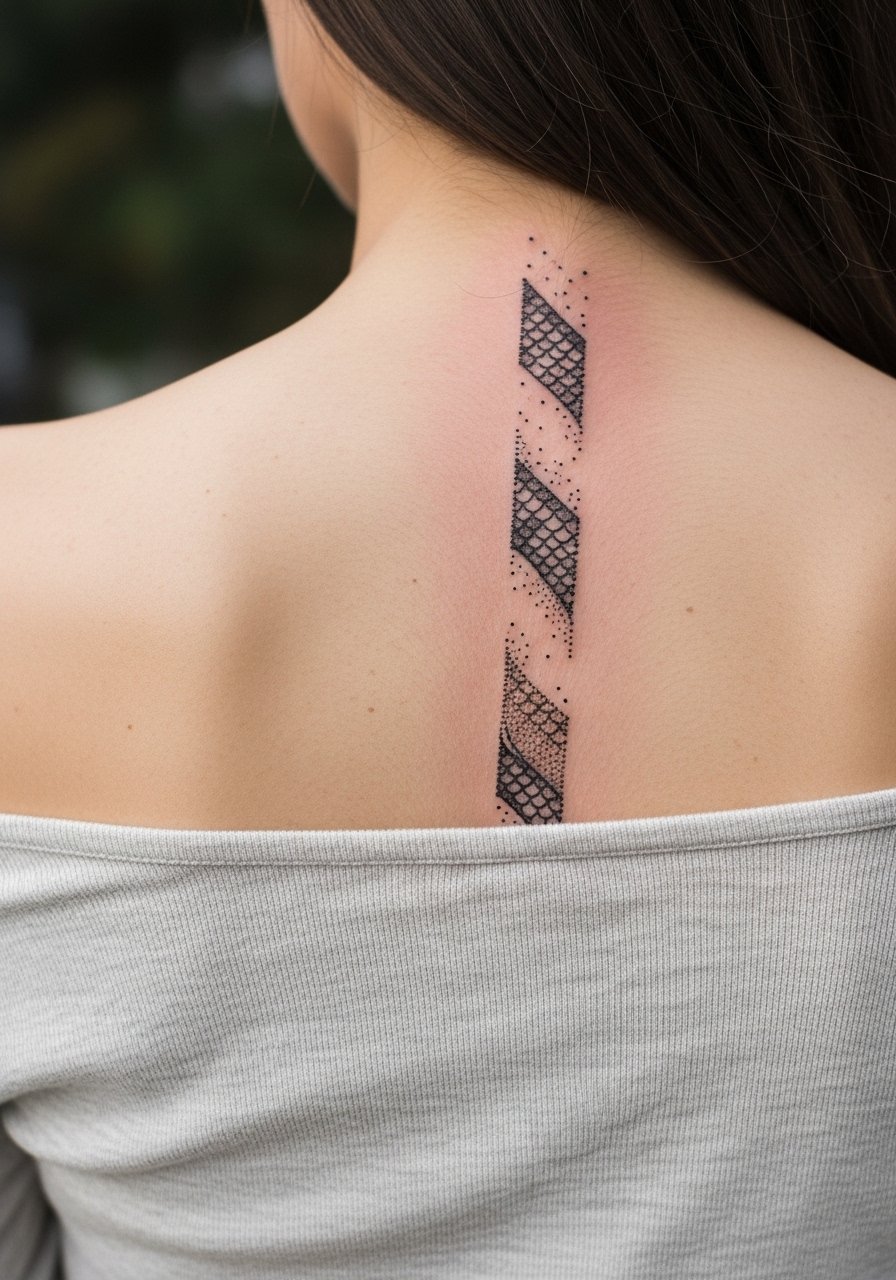
Spine work uses body axis for flow and dotwork reads meditative at small scale. The upper spine tolerates vertical motifs well but needs incremental spacing so dots do not densify into a blur. Sessions typically run longer because of careful dot placement. Pain varies but expect it to be moderate. A common request to compress the design into minimal height ruins the flow; keep the vertical field at least four to five centimeters for dotwork to breathe.
12. Neo-Traditional Dragon Hoarding Coins on the Thigh Outer
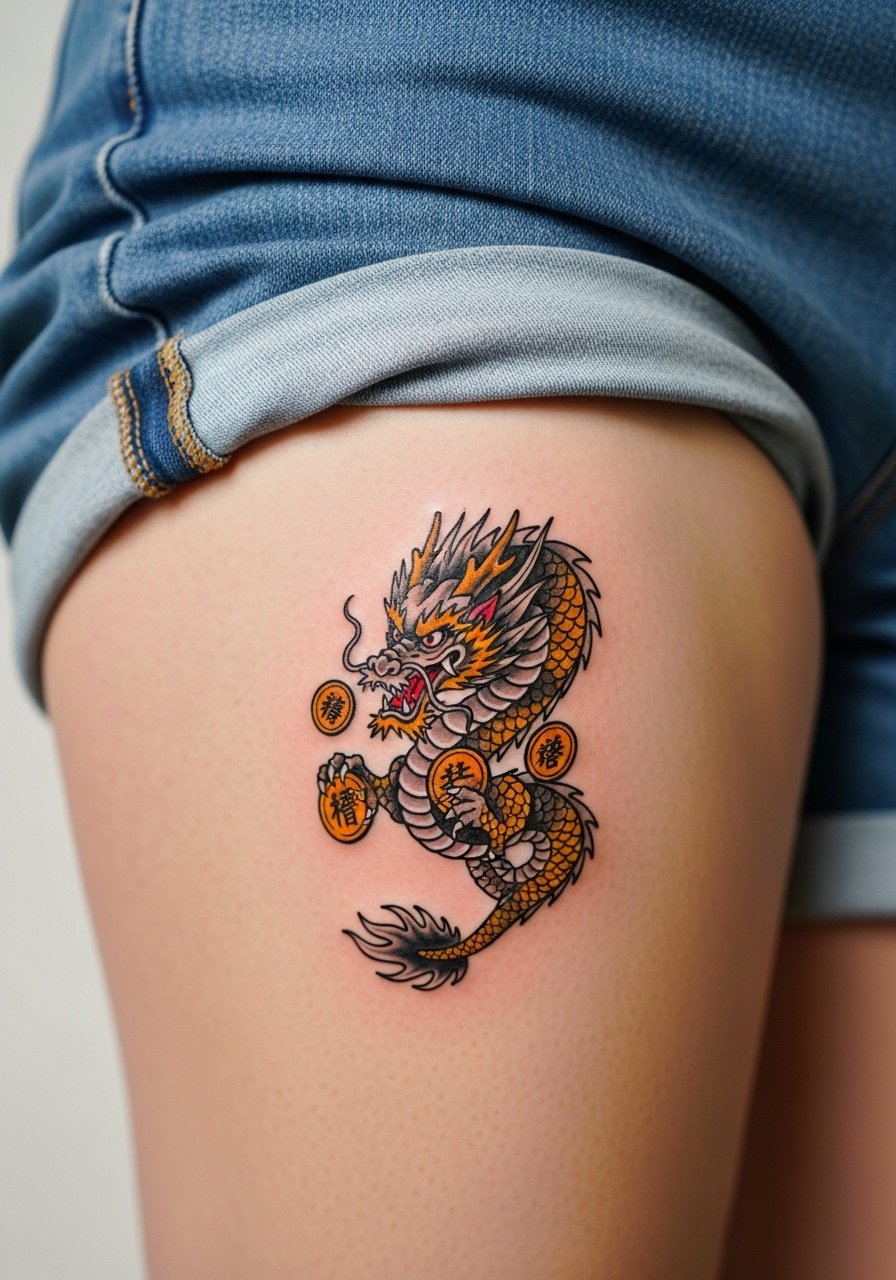
Thigh placements allow slightly larger micro pieces with confident color and story. Neo-traditional lines here age well because the skin is lower friction and less exposed to sun. For consults ask for selective gold or yellow accents instead of full yellow saturation to avoid early fading. Session time is one to two hours depending on color layering. Pair this with high waisted shorts when you want to show off the piece. Watch for designs that overreach the planned scale; tighter placement can make the scene feel cramped as muscle tone shifts.
13. Medieval Chainmail Texture Micro Dragon for Reenactors
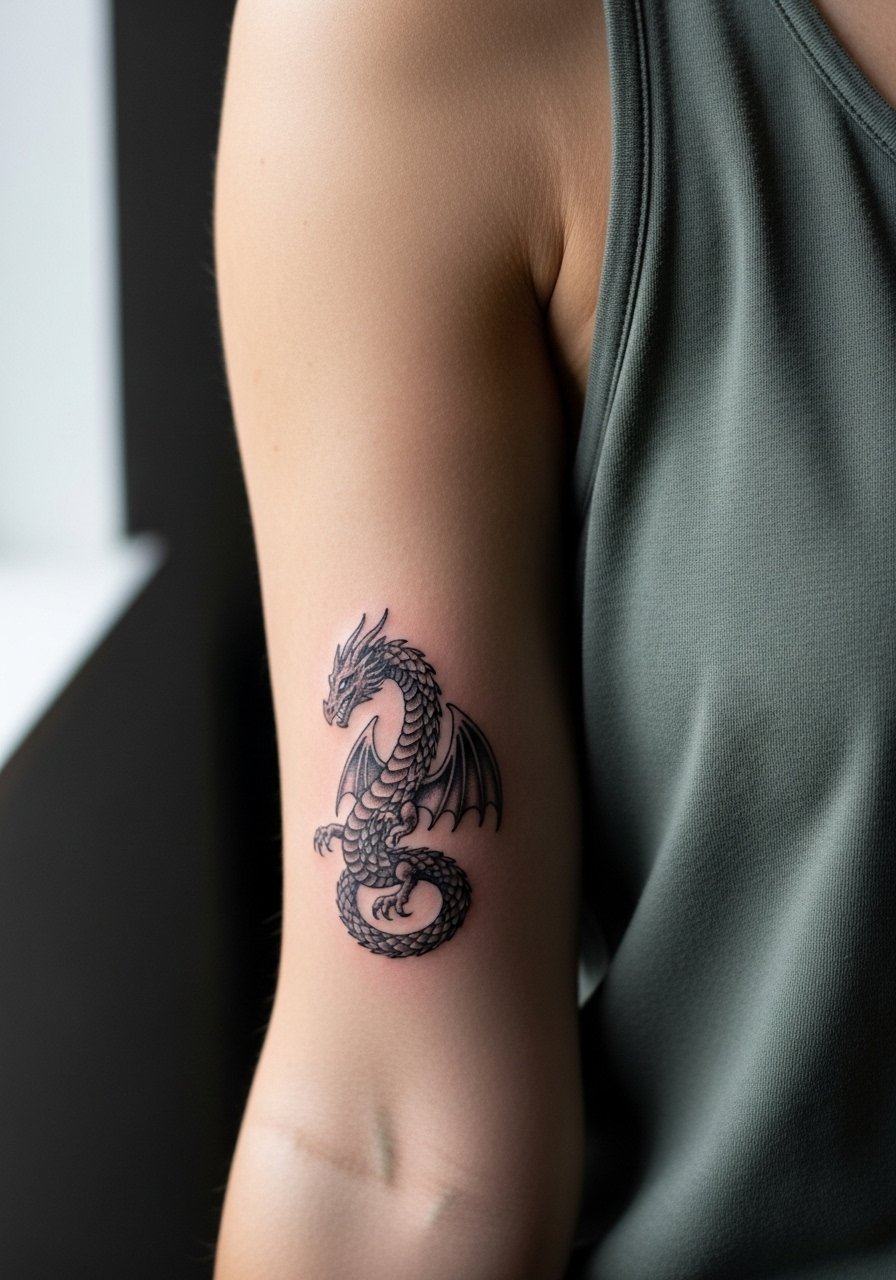
This is a niche approach that borrows historical texture to create scale detail at micro size. I recommend this for people active in reenactment or who want a period feel. Ask the artist to simplify chain links into alternating thicker lines and stippling so the pattern does not merge. Forearm placement is forgiving and the session is straightforward. The risk is over-detailing the chainmail into illegible texture, so prioritize rhythm over literal links.
14. UV-Reactive Micro Dragon for Blacklight Parties
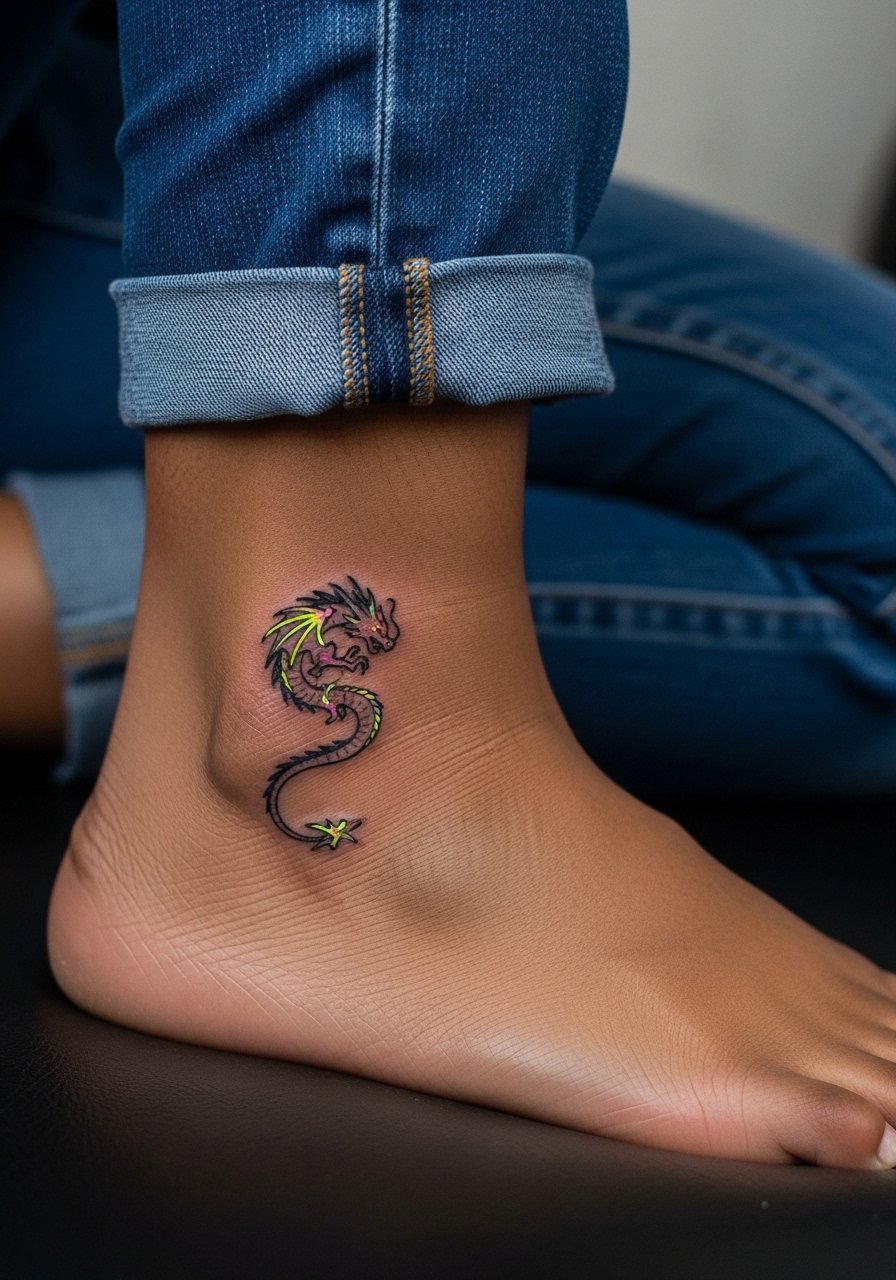
UV-reactive inks are a party-friendly option but they are experimental in longevity and visibility. If you want glow, discuss pigments and potential fading with the artist because UV inks can be less stable under normal sunlight. Placement on the ankle keeps the glow element discreet. Expect a single session. A common oversight is not asking about patch tests for pigment reactions, so always request a small skin patch first.
15. Prosthetic-Adaptive Micro Dragon That Fits a Limb
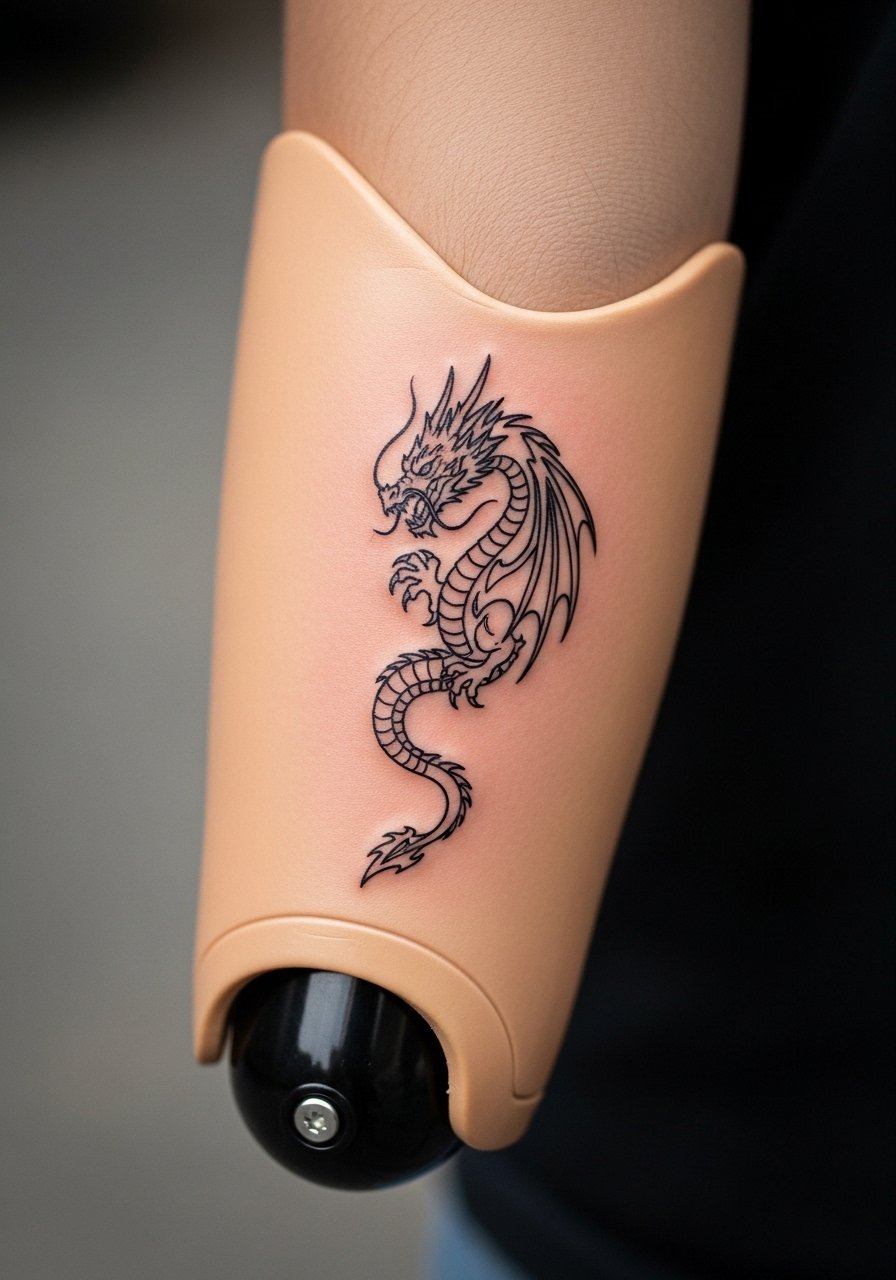
Adapting a design for prosthetics requires scale and motif planning so the dragon reads across materials. This is rare but rewarding. Tell your artist exactly where the joint lines or mounting hardware are so the curve of the dragon avoids seams. Sessions may be split depending on how much surface is skin versus prosthetic. The key mistake is copying a flat reference without re-mapping it to curved, mechanical edges.
16. Micro Blackwork Dragon Eye Near the Collarbone

A bold black eye punctuates the collarbone with drama without needing size. This placement hurts more than the upper arm but less than ribs. One short session usually suffices. Ask for strong saturation and a thin negative-space halo so the pupil reads sharply as it ages. For low-key framing try a halter crop top when you want the piece visible and necklaces that do not overlap the ink. Avoid adding tiny inner detail that will fill in over the first couple of years.
17. Micro-Realism Scale Fragment Behind the Ear for Subtle Edge

Doing discreet work behind the ear requires attention to framing and social visibility. Keep the motif under 2 centimeters and ask the artist for a high-contrast scale fragment rather than a full creature so it reads as an accent. Pain is mild to moderate. If workplace considerations matter remember this spot can be hidden by hair or revealed by a bun. The common error is pushing too much realism into a tiny zone and ending up with muddled shading.
Frequently Asked Questions
Q: Why do finger micro dragons fade faster than the same design on the forearm?
A: Fingers are high-friction and frequently washed, which abrades delicate single-needle ink faster. If you want longevity pick slightly heavier primary lines or blackwork fill, and plan a touch-up around the 12 to 18 month mark depending on activity.
Q: How should I budget for a micro dragon given rising shop minimums?
A: Prices vary by city and shop minimums, so get a clear minimum before booking and use small stencils from marketplaces as a reference when asking for scope. You can often save by booking during walk-in hours or by combining two small pieces into one appointment to make the session time worth the artist.
Q: Will a fine line ribcage dragon blur faster than a bold version?
A: Artists divide into two camps. One group says ribs stretch and breathing ruins fine detail within two years. The other says precise depth and spacing let fine line settle. It depends on your skin and the artist's track record on ribs, so ask where they land and consider slightly increased spacing if you pick fine line.
Q: Can I wear regular clothes to a thigh or ankle session?
A: Yes but bring clothing that gives the artist direct access. For ankles roll up jeans or bring cropped linen pants you can pull up, and for thighs wear loose shorts so the artist can shift fabric without pressure on the area.
Q: Are UV-reactive inks safe and worth it for a micro piece?
A: UV inks can be fun but they behave differently in light and may fade or change tone faster. If you choose UV, request a patch test and ask the artist about pigment stability. Keep expectations realistic about long-term color retention.
Q: How soon will a micro-realism claw on the wrist need a touch-up compared to a neo-traditional forearm piece?
A: Micro-realism on wrists often needs touch-up sooner because of thin skin and movement, while a neo-traditional forearm piece usually holds longer due to thicker skin and lower friction. Plan for a possible touch-up at year one for wrists and year two to three for forearms, depending on care and sun exposure.