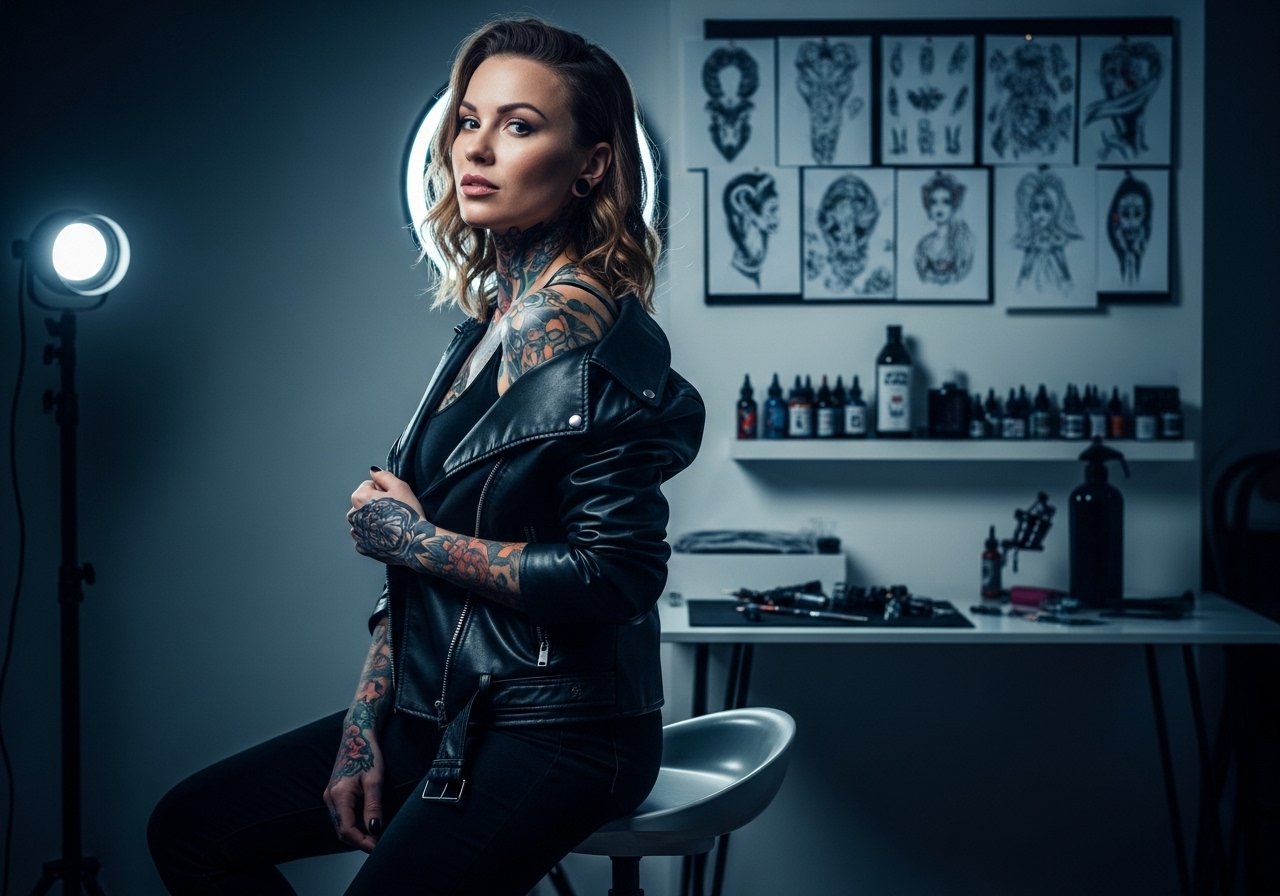
Fine line work is everywhere on saved boards and in short-form video, but behind-the-ear pieces live in a strange middle ground. The area hides under hair yet gets rubbed by collars and phone straps, and that reality changes how a tiny design settles over time. Below are 17 real options with what to ask at consults, how they age, and wardrobe notes that actually help you show them off. First up is a classic motif that reads electric even at micro scale.
1. Dainty Lightning Bolt Nodding to Music Fandoms
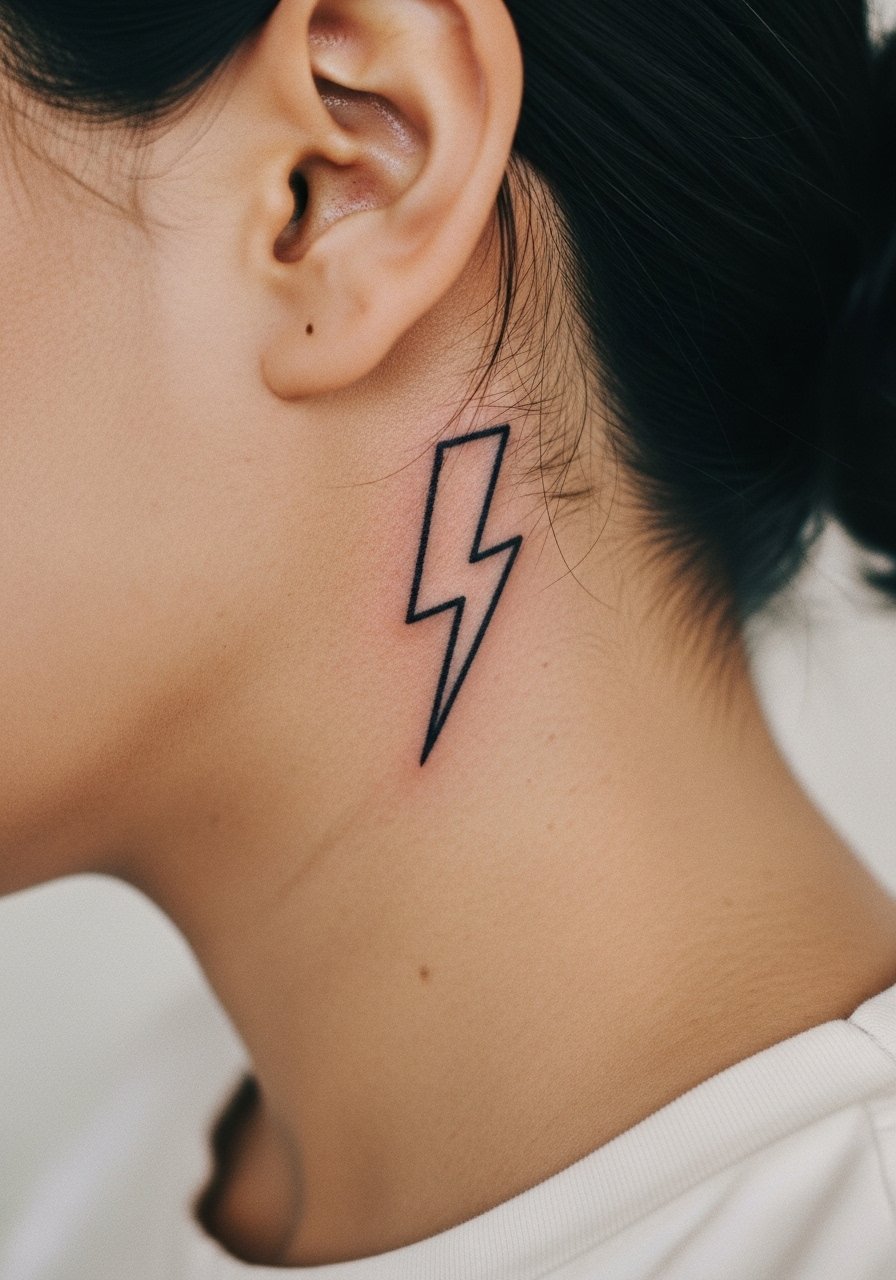
A small lightning bolt reads playful and personal at roughly one inch, and it works when you want a motif tied to a song, a band, or a moment. When you sit with your artist, ask for single-needle fine line and a tapered tail so the bolt keeps its point for years. Common mistake is packing too many tiny angles; those edges blur first. Expect light tenderness during the session and a touch-up window around year two for thin points. For showing it off, try a high ponytail scrunchie with layered necklaces so the neck reads intentional rather than accidental.
2. Tiny Turtle Silhouette for Longevity Symbolism
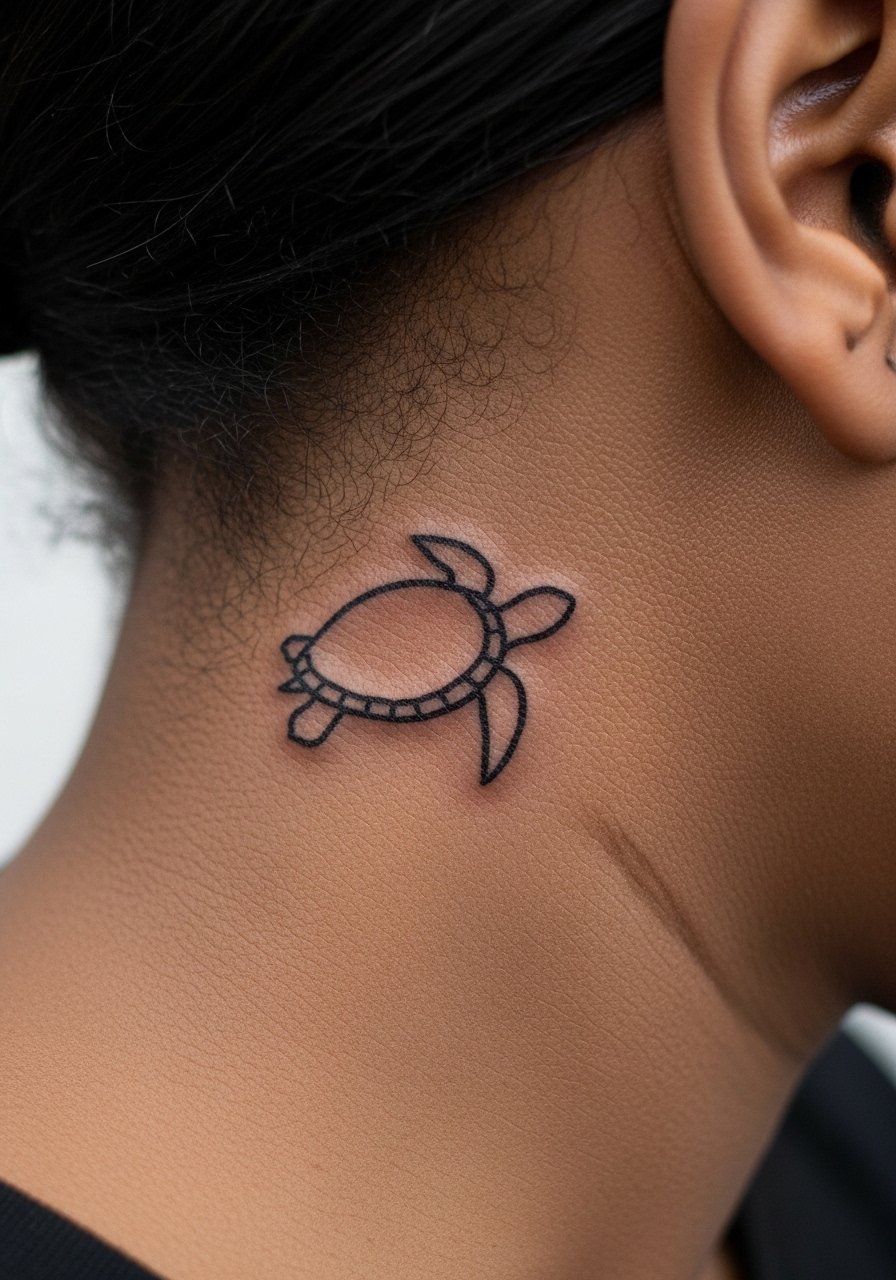
The tiny turtle under an inch gives a compact symbol of protection without crowding the ear contour. In consultation, ask the artist to push the main contour lines slightly thicker than micro details so the shell shape remains readable at two to five years. A common aging issue is making the shell too fussy; simplify the pattern into an outline and one internal dot for longevity. The session feels quick but expect the artist to change angles to follow the skin fold. Show-off pairing: an asymmetrical bob or a side part looks balanced with small stud earrings, and you can tuck hair with hair clips for a side part when you want it visible.
3. X-O Letters Across Both Ears That Play with Romance
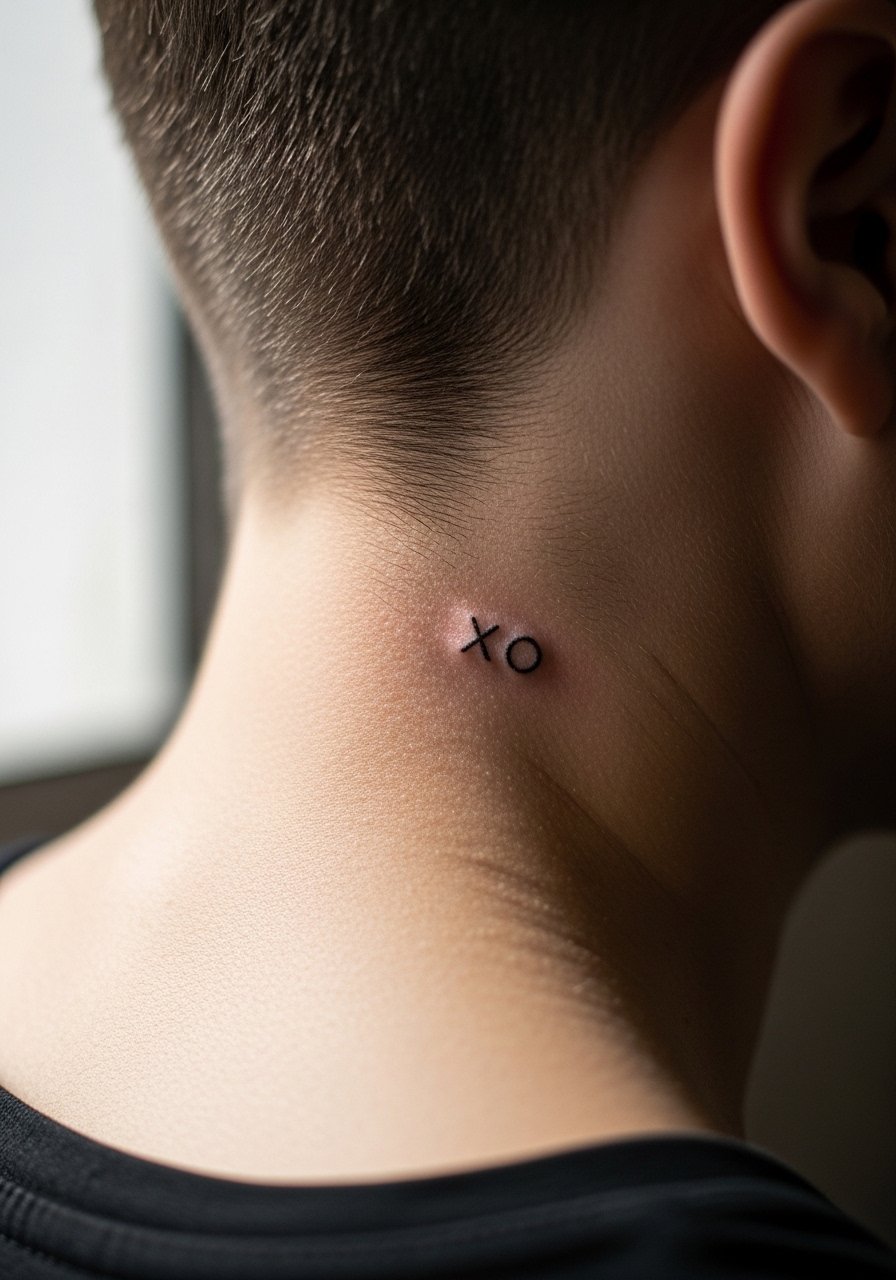
Putting X-O letters behind both ears creates a playful bilateral reference that reads best when each mark is 0.5 to 1 inch. Consultation note: request the exact script weight and letter spacing so both sides mirror without being identical copies. Artists debate whether mirrored micro script should be perfectly symmetrical or slightly different to match ear shape. One camp favors identical stencils for balance. The other camp adapts line weight per ear to account for curvature and movement. Ask which approach they use. Session-wise, plan for quick stencil checks and wear a V-neck blouse to keep the neck accessible without tugging hair.
4. Open-Ended Delicate Flame with a Twist
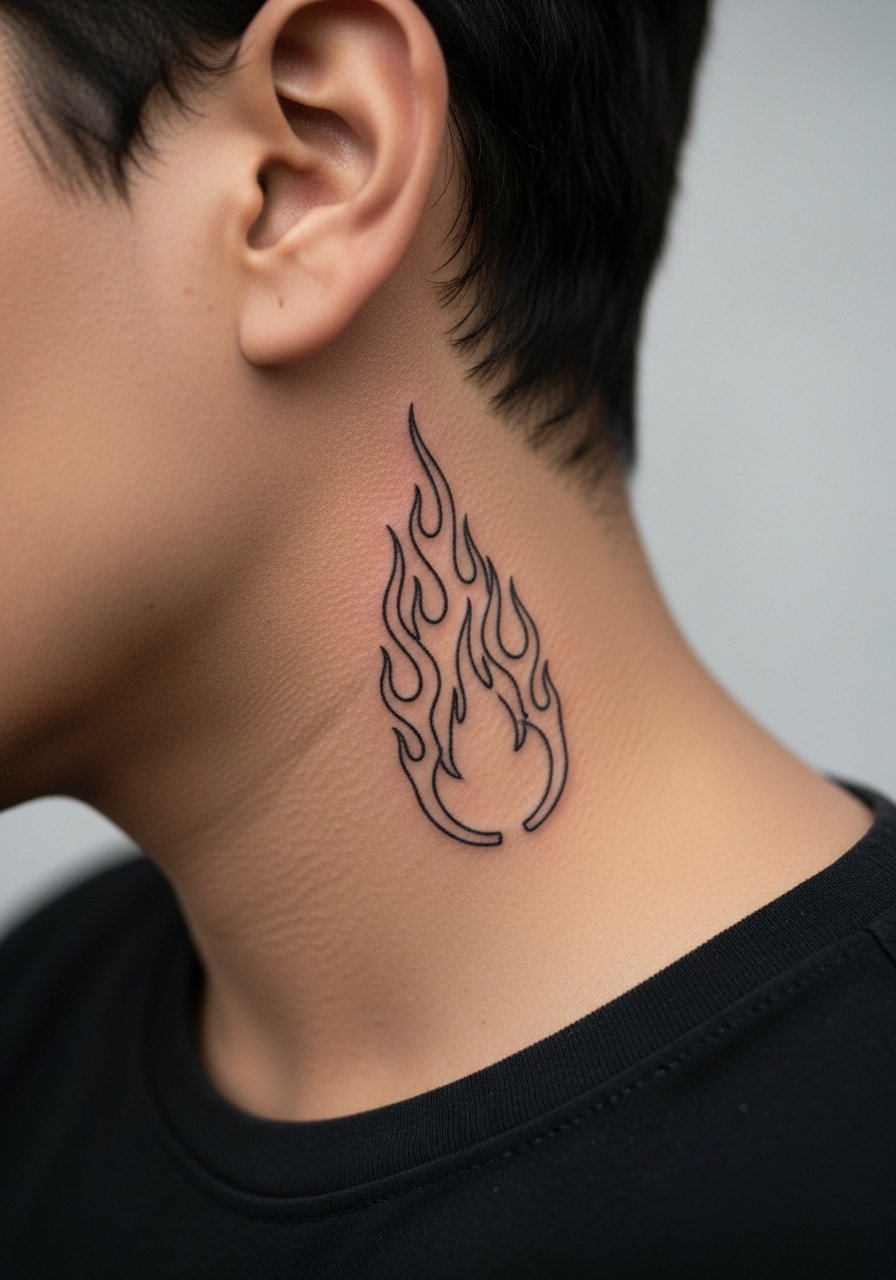
An open-ended flame gives heat without heavy blackfill, and the design can follow the ear curve so it looks like movement when you tilt your head. Tell your artist you want tapered ends and negative space inside the flame so the shape keeps breathing as it ages. The common error is filling the interior too densely; small solid fill in this spot tends to fade unevenly. Expect mild soreness from the skin movement and a touch-up at year two for thin tails. For nights out, pair it with a layered gold necklace dainty and a messy bun to frame the neck.
5. Single Fine Line Flower That Hides Under Hair
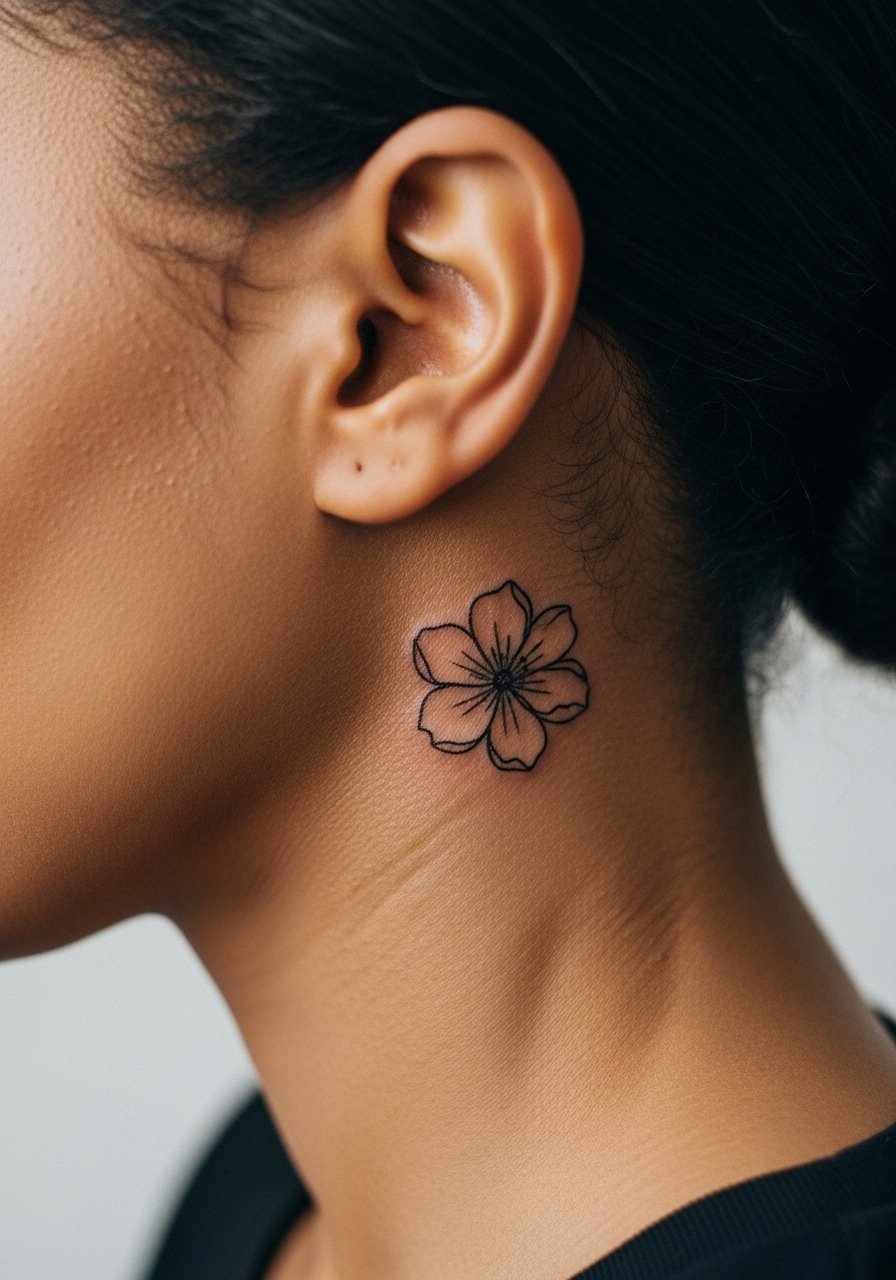
A one-inch floral works when you want a botanical that tucks under hair but appears when you sweep it up. During consult, specify single-needle stipple for petal texture and ask to keep sepals minimal so the silhouette stays readable. Most people over-detail the center, which turns into a gray smudge over time. For longevity, aim for clear, simple petals and a tiny stem. Session time is short and tolerable, though the area feels odd while the skin flexes. Style pairing: sweep hair into a loose ponytail and wear small gold hoop earrings to frame the bloom without covering it.
6. Minimal Meaningful Word Curved Along the Neck
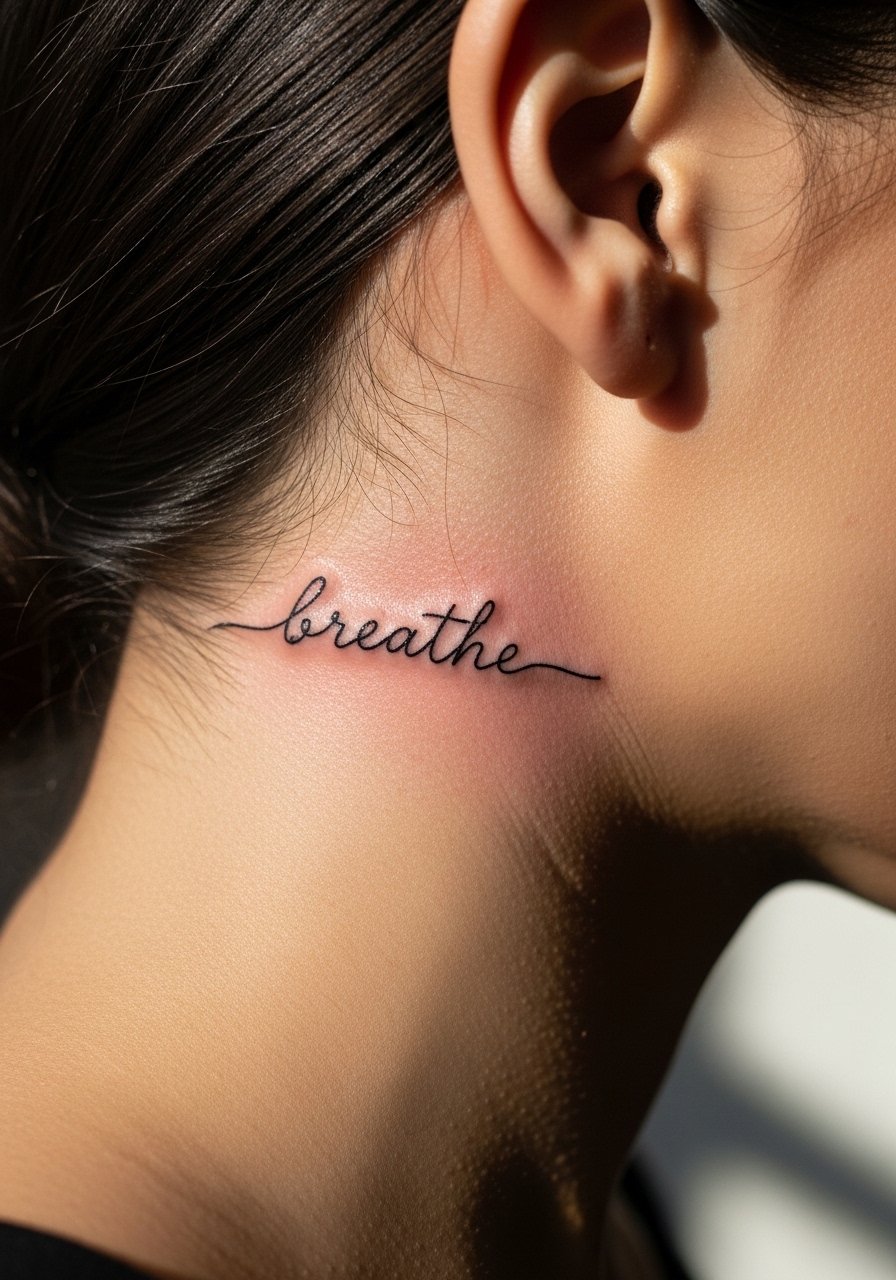
A short affirmation or single word follows the neck curve elegantly at 0.75 inch. Bring exact lettering you want and specify whether you prefer lowercase or small caps, because that determines needle spacing. The frequent mistake is requesting extremely thin cursive with many loops; those loops merge first. In planning, factor a touch-up around year two if you want the script to stay crisp. For session comfort, wear clothing that lets the artist reach the area easily, like a loose top with an open collar, and bring a hair clip set so they can pin hair cleanly.
Studio Day Picks
The designs above range from script to micro-illustrative, and a few prep items make the studio visit and first week smoother for neck-adjacent work.
- Stencil transfer paper kit. Lets you preview the placement on the neck so you can adjust size and curve before the needle touches skin.
- Topical numbing cream. Applied per instructions 30 to 45 minutes before eases sensitivity for the thinner skin behind the ear.
- Thin protective film roll. A small adhesive film protects the site from friction by collars and phone straps during the first couple of days.
- Fragrance-free gentle body wash. Cleanses the area without irritating the fine linework that many behind-the-ear pieces depend on.
- Aquaphor healing ointment. A thin layer in the first 48 hours helps keep the needle channels moisturized without clogging.
7. Delicate Fine Line Bouquet That Curves With the Ear
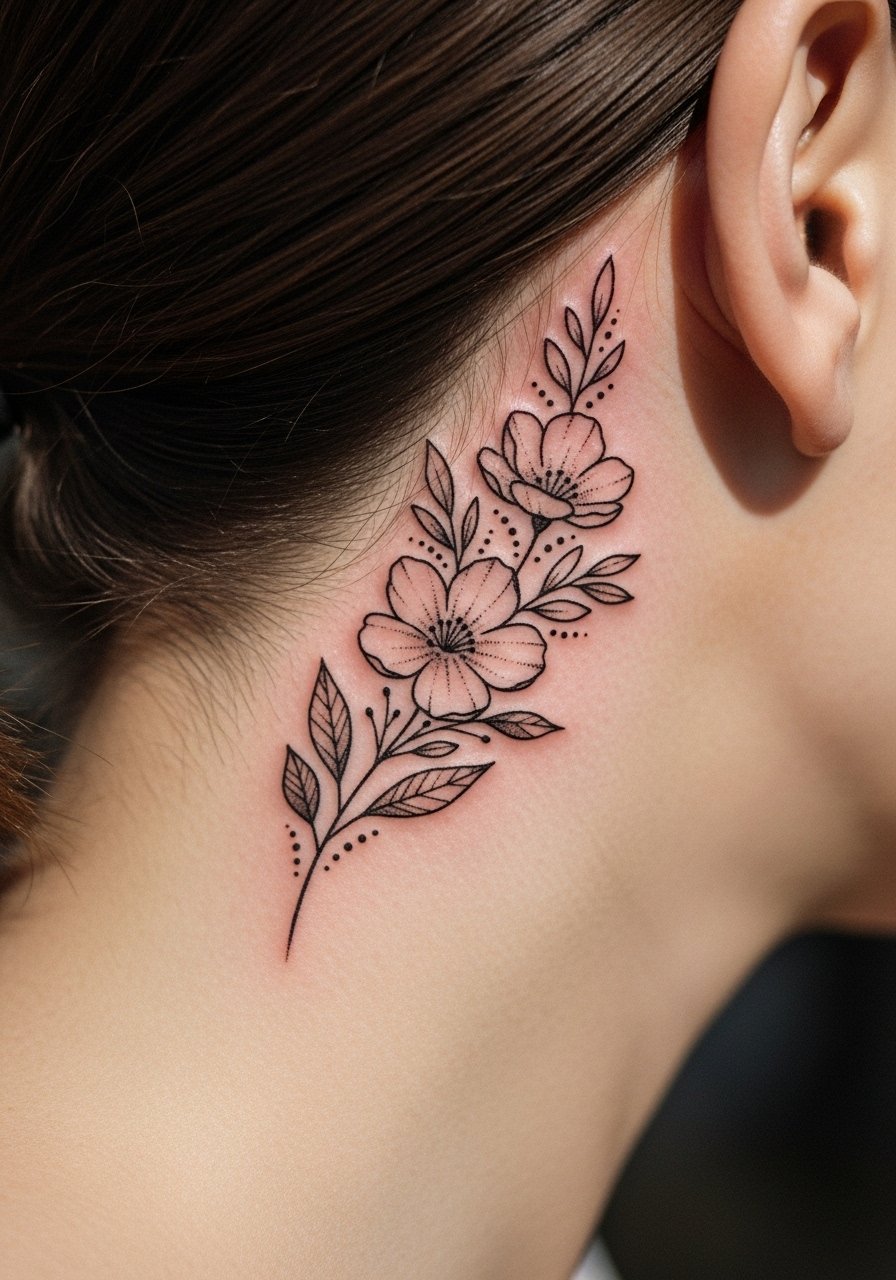
A tiny bouquet combines stems and a few blooms to give botanical complexity while staying compact. Tell your artist to use stipple shading sparingly and to space stems so they do not converge into a single gray patch. One durable version uses a primary outline with dot-work fills rather than continuous shading. Expect a 20 to 40 minute session and ask about touch-up timing if the stipple loses contrast. For sessions wear a loose ponytail or bun and bring a loose ponytail holder so hair stays clear without tugging the skin when removed.
8. Micro Butterfly Outline That Signals Change
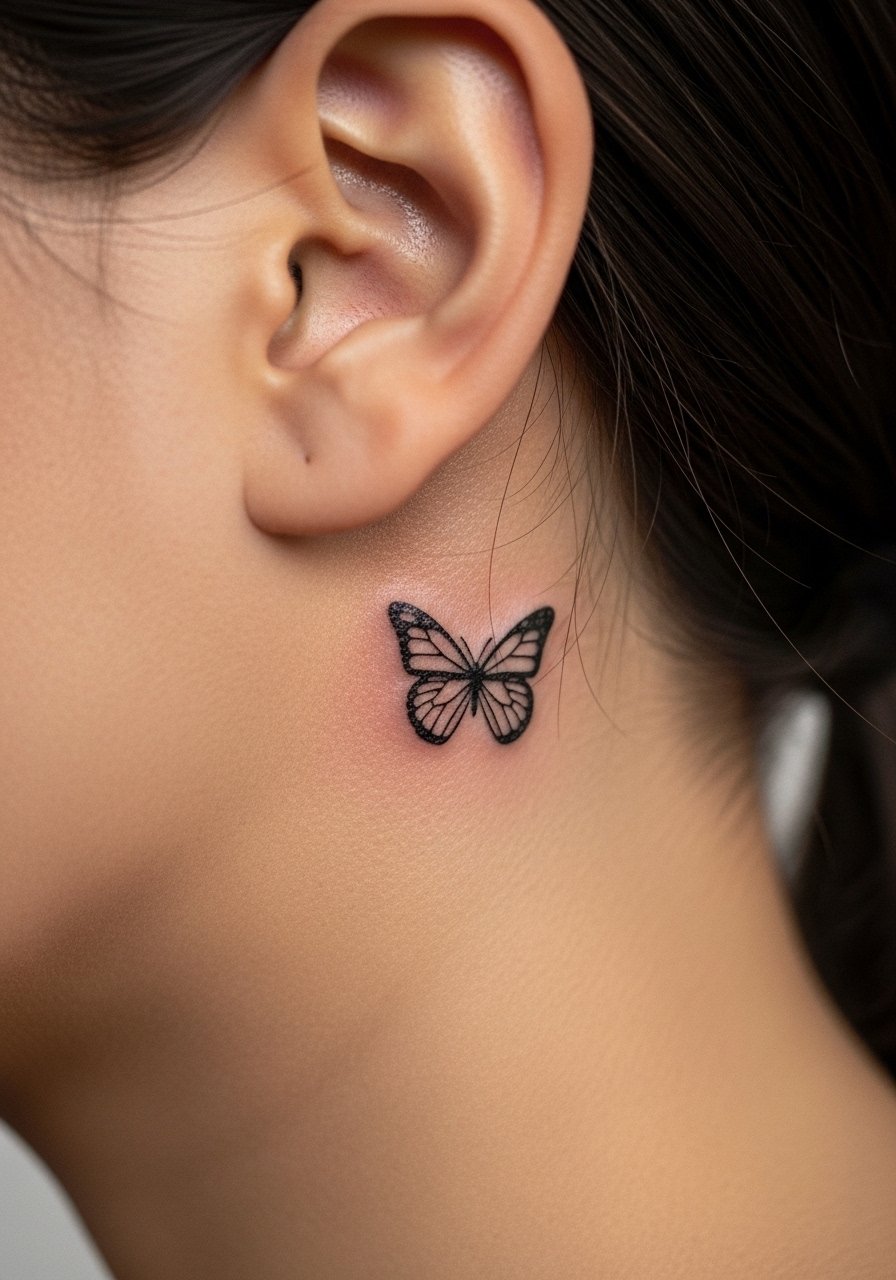
Butterflies read as transformation even at a small scale, but the wings need clean negative space to remain readable. Artists split into two camps on micro outlines. One camp keeps ultra-thin single-needle lines for a barely-there look. The other recommends slightly bolder outlines so the wings do not blur together within a few years. Ask which they prefer and why. Common mistakes are crowded wing veins. Session-wise this is quick, and the touch-up window is often at year two if you want crisp wing tips. For showing it off, an off-shoulder linen top or swept-back hair works well with a simple stud.
9. Heart with Arrow Piercing for Quiet Romance
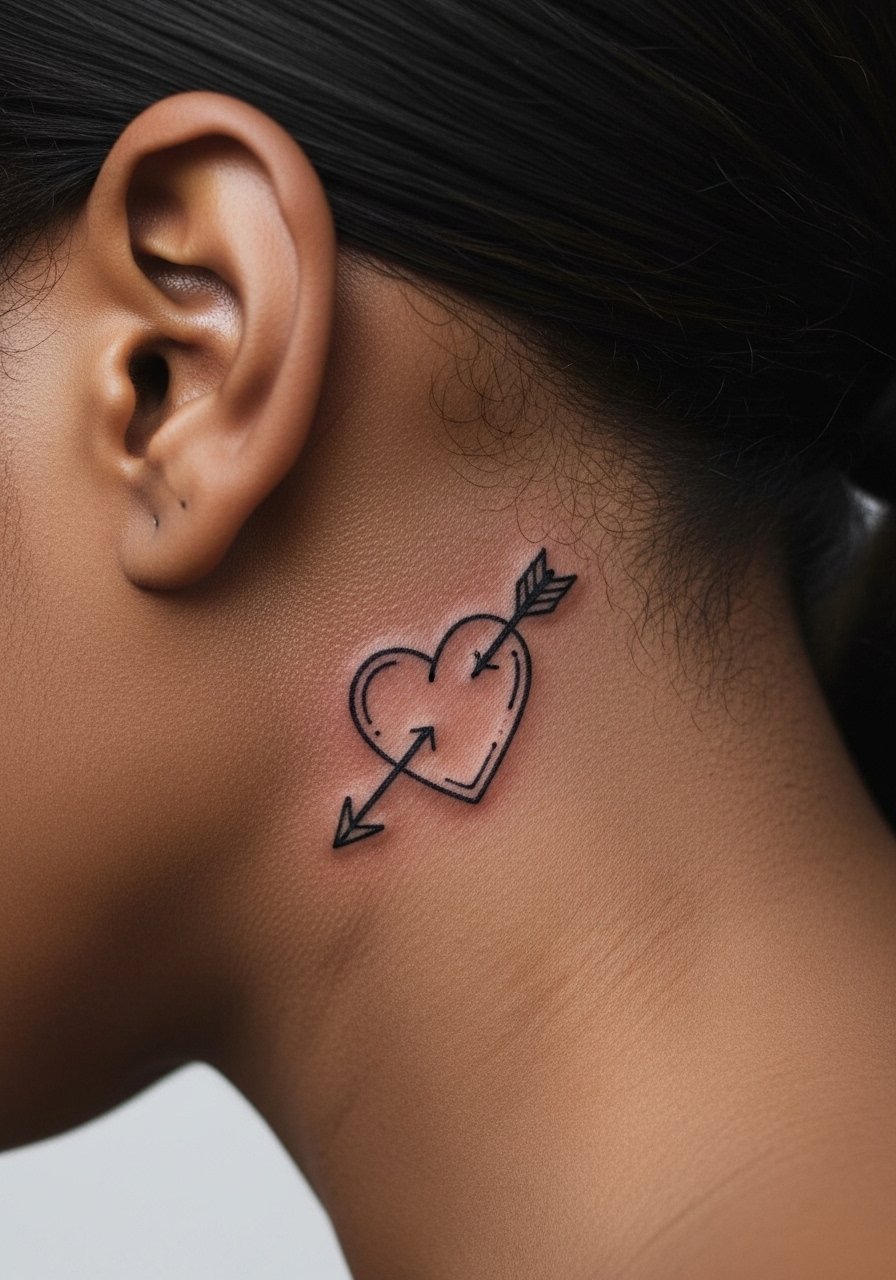
A 0.75-inch heart pierced by a fine arrow reads classic without taking much real estate. When you consult, ask for a single clean outline and a tiny gap between heart and arrow to preserve definition. People often request extra filigree around the heart, which blurs first because of depth limitations in that area. The placement can bruise mildly during the first day because the skin is thin. Expect a short session and plan for a touch-up in two to three years if you want the arrow shaft to stay crisp. Pair this with dainty stud earrings for balance when hair is swept back.
10. Star Cluster Micro Design for Celestial Whimsy
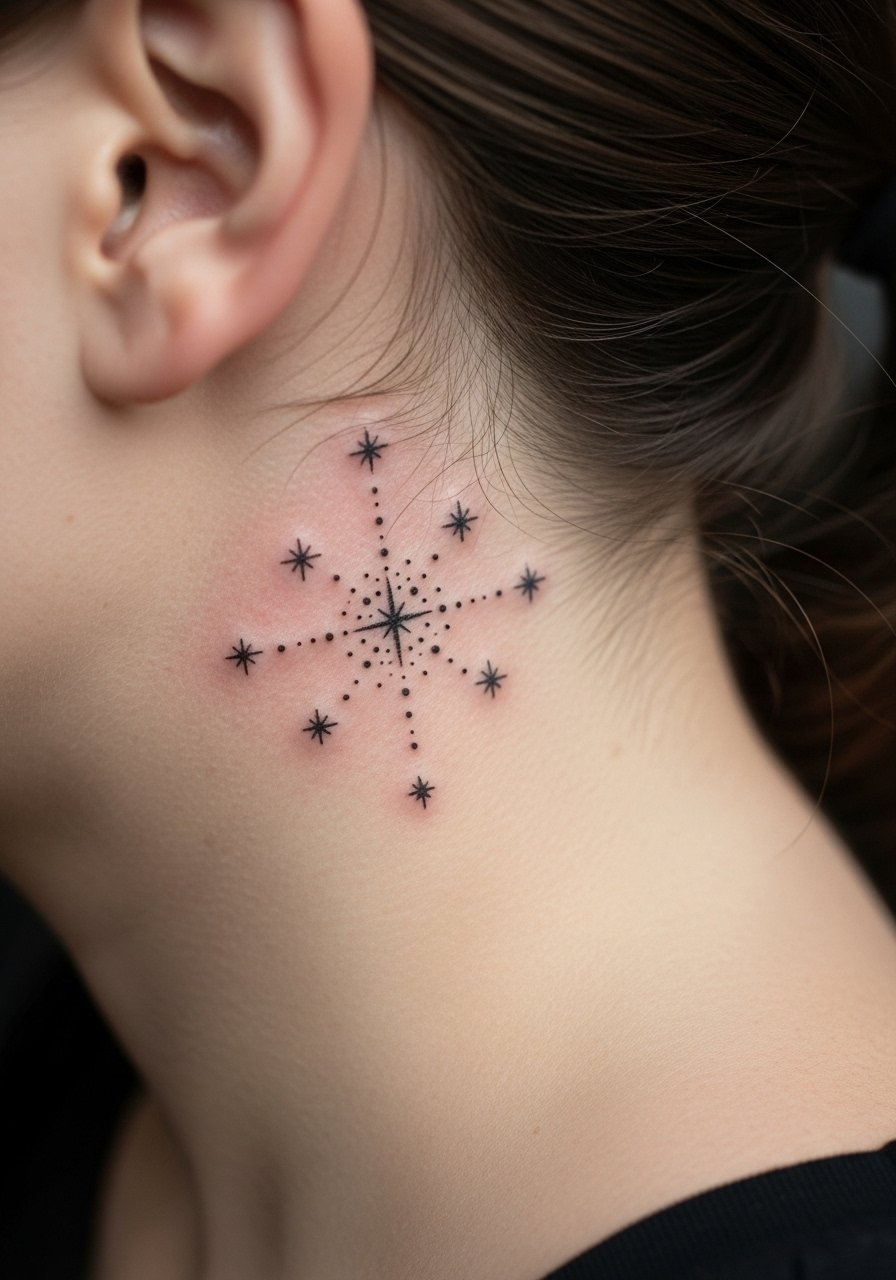
A cluster of tiny stars gives motion without needing a single focal point, and spacing is everything here. Ask your artist to vary star sizes and leave breathing room so the dots do not merge into a gray area. The common aging problem is placing stars too close together. During the session expect multiple quick needle passes but little prolonged discomfort. Dot work can soften by year two, so plan for a light touch-up if you want the dots to retain contrast. For an easy reveal, half-up hair with small hoop earrings frames the cluster nicely and keeps the effect intentional.
11. Ornamental Mini Pattern Near the Lobe
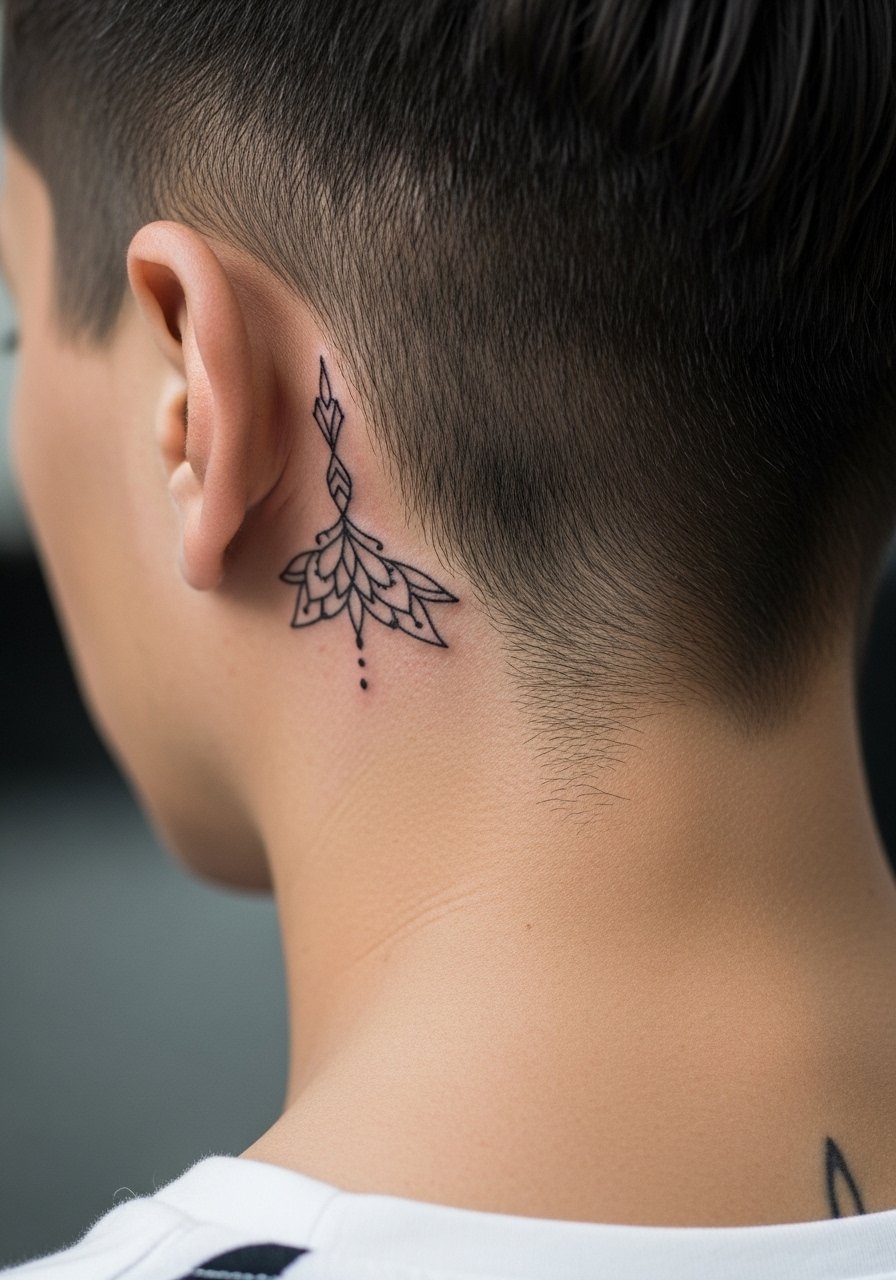
Ornamental pieces use repeating lines and tiny dots to create a decorative nod that sits near the earlobe. Tell your artist to avoid dense filigree so the motif keeps negative space; the small ornamental bands that age best have rhythm and gaps. An error is compressing ornament into a tiny oval; expand horizontally to follow the neck curve. The session is detail-focused and may take longer than a single icon. Expect touch-ups on any repeating dot work at year two. For styling, flowy scarves or hair half-up emphasize the pattern, and a flowy silk scarf neutral is an easy frame.
12. Vine Tendril That Follows Your Ear's Curve
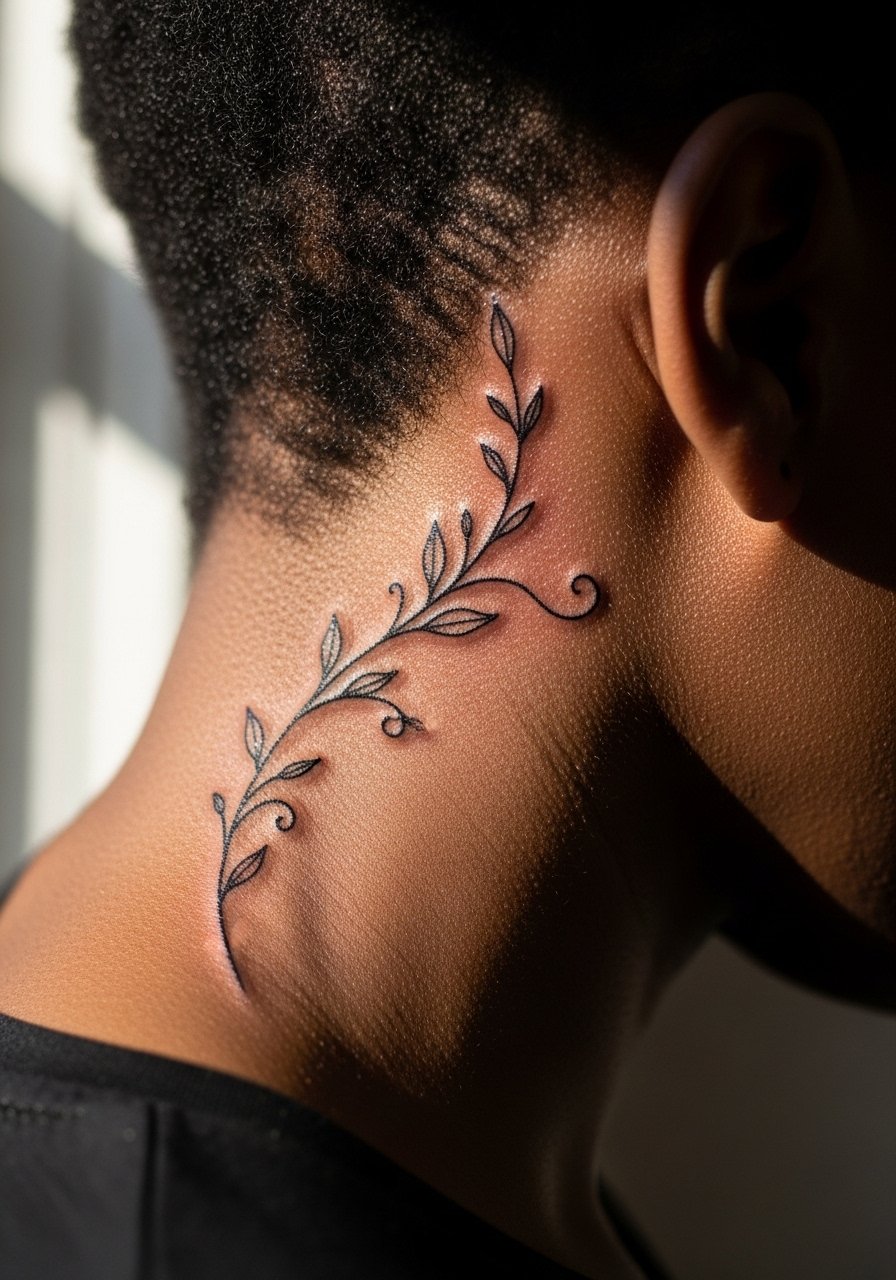
A tendril that snakes with the ear contour reads organic and moves naturally with hair. In consult, request that the main stem be slightly bolder than leaf veins so the overall silhouette keeps clarity. The mistake is adding too many tiny leaves; they create a mottled look after a few years. Skin movement can make touch-ups necessary at year three, particularly at points where the stem crosses a fold. During the session expect the artist to reposition you frequently to map how the vine sits when you turn your head. Pair it with a cream blouse and a wide headband soft for photos when you want the tendril visible.
13. Tiny Constellation Mapped to a Date
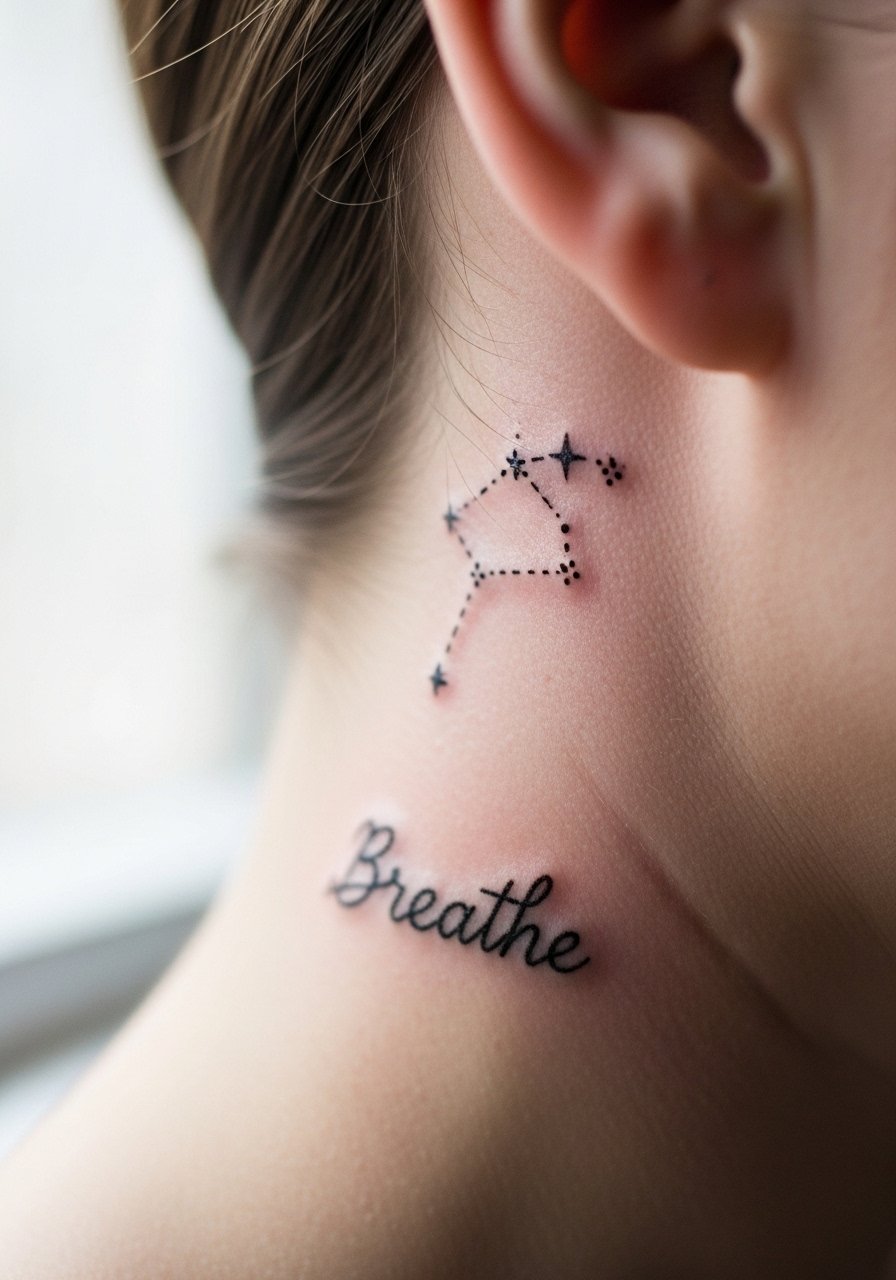
A micro constellation can double as a discrete coordinates or date marker in tiny numerals. If you include text, specify exact characters so the stencil matches what you want. Avoid tight clusters of dots that create a gray patch. The common mistake is placing text too near the dots; allow spacing so both elements age separately. The session is meticulous and may feel like intermittent pricks rather than a continuous burn. For show-off looks, a swept-back bun and simple hoops keep the neck clean while putting the constellation into frame.
14. Minimalist Icon Set for Playful Balance
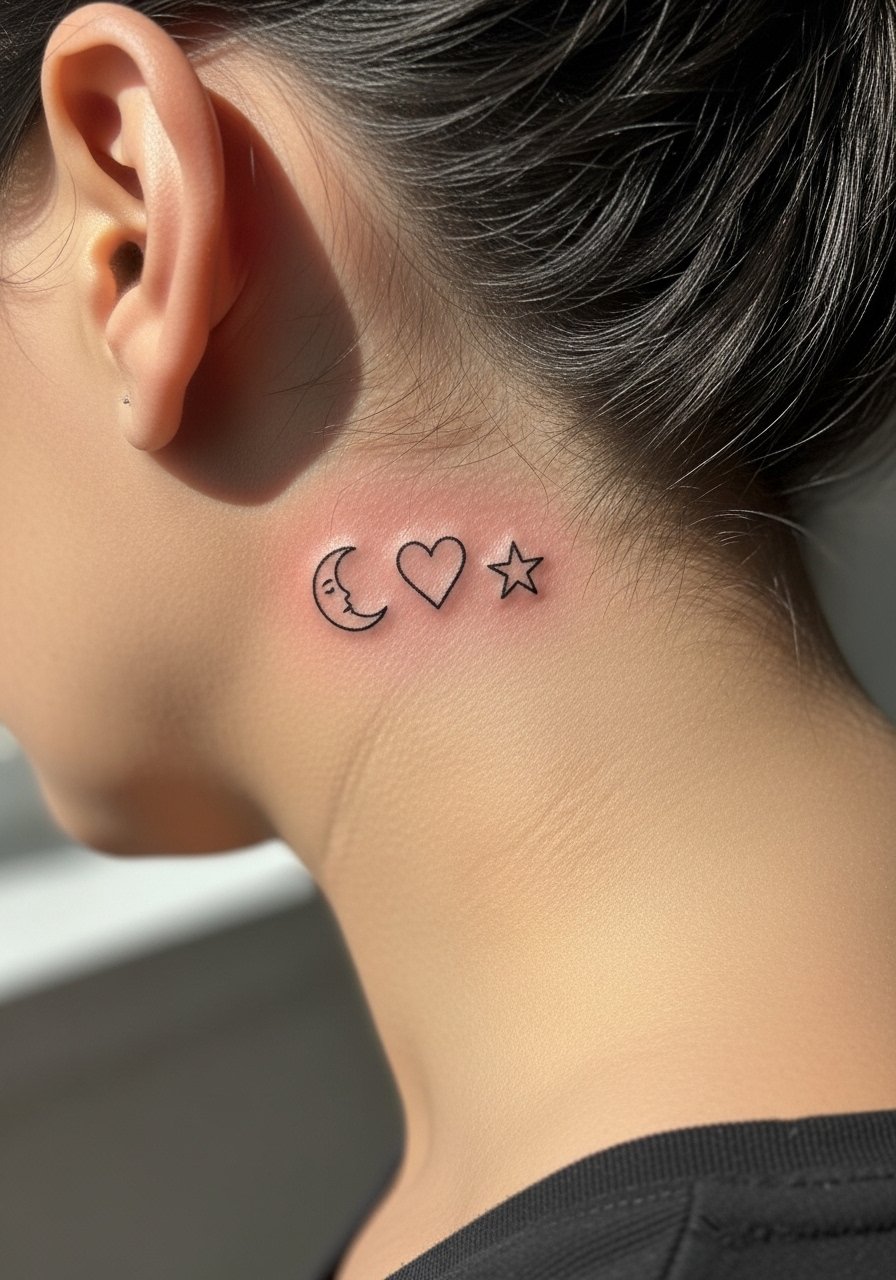
Grouping three tiny icons gives rhythm and balance behind the ear and reads like a curated set rather than stray marks. Tell the artist to keep icon spacing consistent and to vary dot sizes for interest. A mistake is making each icon too small; scale each to about half an inch so they remain identifiable. The session is piecemeal and surprisingly quick. Expect touch-ups at year two for micro dots if you want kept contrast. For wardrobe, an asymmetrical bob or side-swept hair with dainty stud earrings keeps attention on that area without overcrowding.
15. Single Needle Script Initial for Subtle Identity
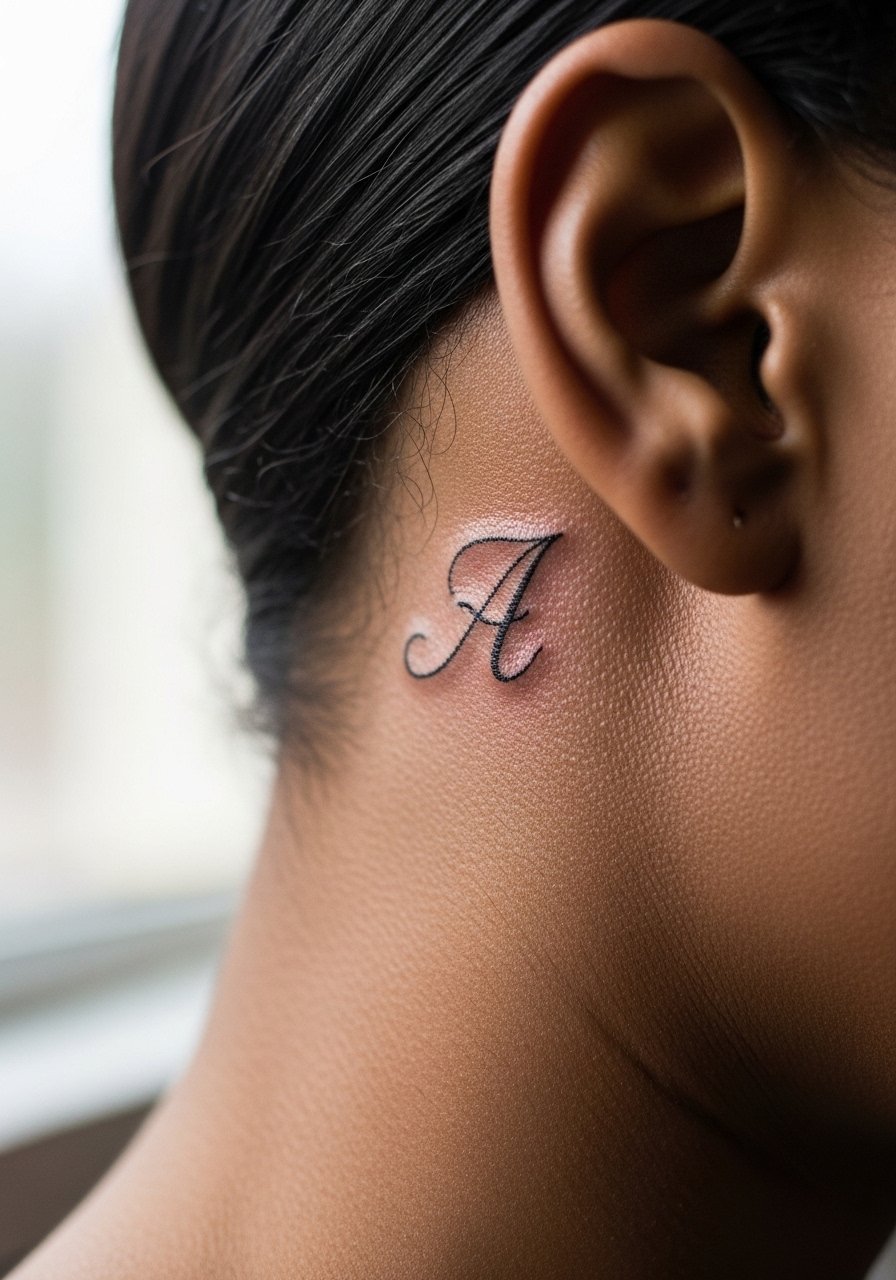
A single initial in fine script feels personal and low-commitment. During consult, provide the exact font and letter height. Artists often warn that very curly scripts with closed loops blur fastest. The safer route is a clean single-stroke letter with modest flourish. The session is brief, and the pain is minimal. Expect a touch-up in two to three years for the thinnest strokes. For session clothing, wear a loose top with an open collar so the artist can access the area without compressing skin, and bring a loose button-down shirt you can easily adjust.
16. Micro Geometric Motif for a Modern Edge
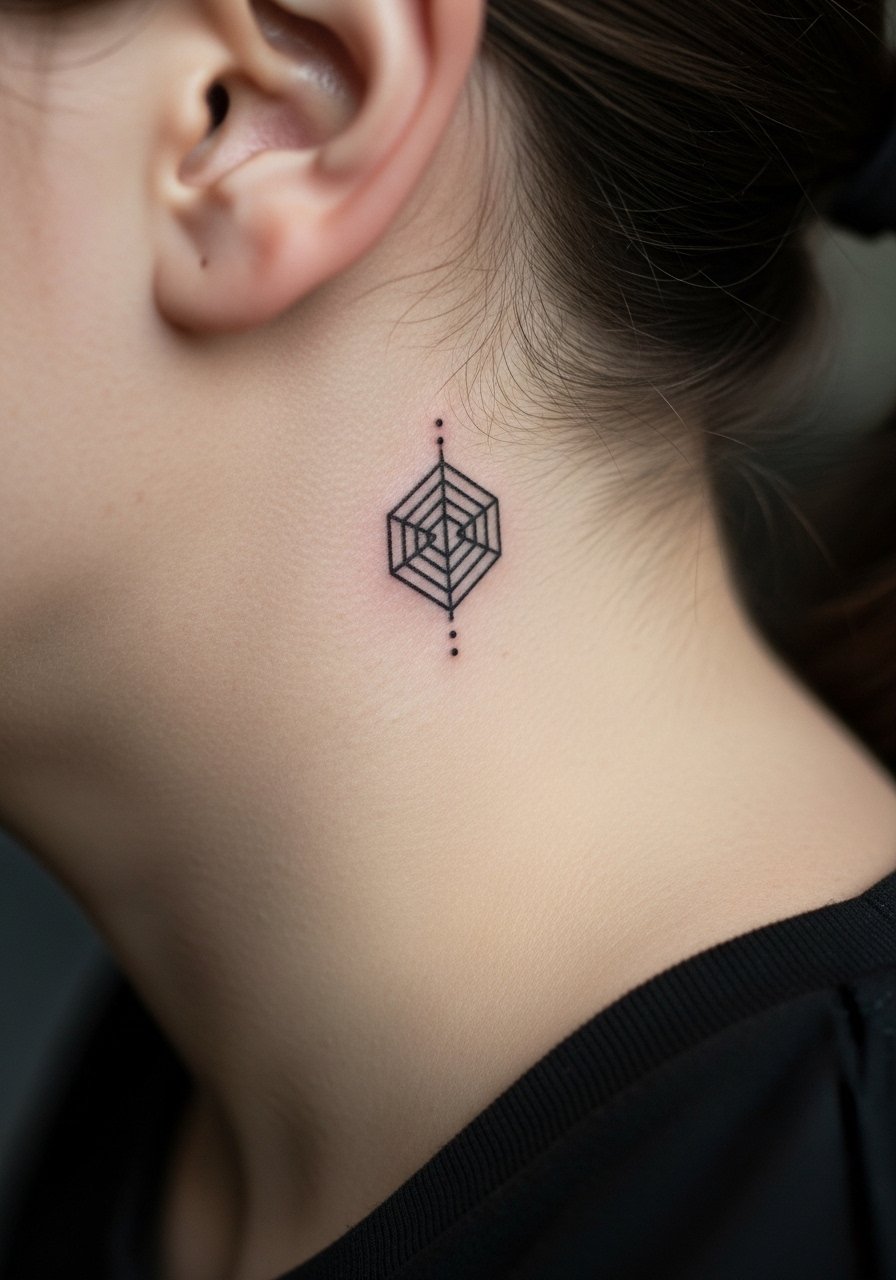
Geometric motifs translate well to this spot when lines have breathing room. In your consultation, ask the artist to increase spacing between parallel lines so density does not create blending over time. The common mistake is packing a complex grid into a one-inch area; scale up a touch for durability. Expect a quick session with precise needlework. Touch-ups are common if lines sit too close to each other. For showing it off, pair the motif with an off-shoulder linen top or a cropped tank that leaves the nape unobstructed.
17. Micro Animal Icon for a Playful Signature
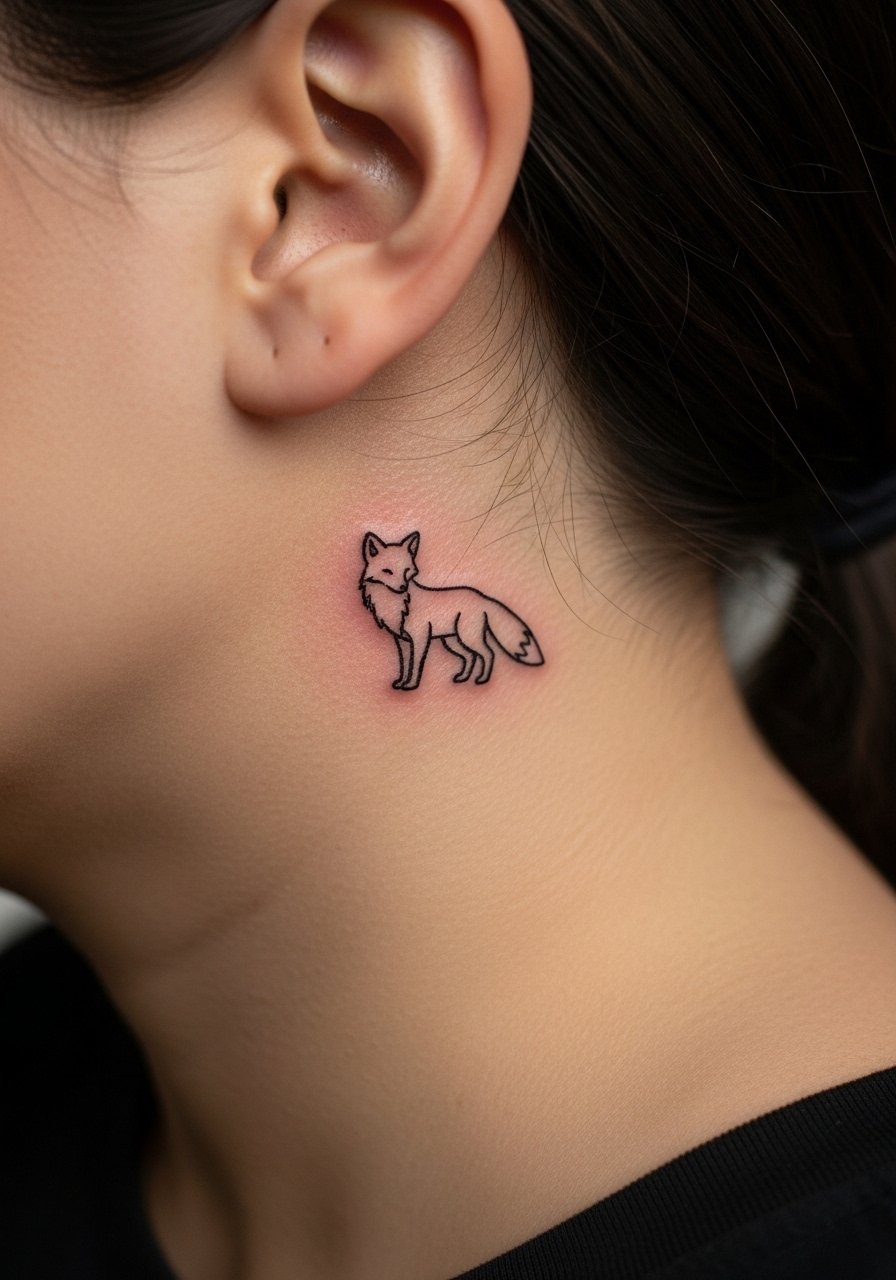
Micro animal silhouettes work when you want character without scale. Ask your artist to simplify the silhouette to its most recognizable shape and to avoid interior detail that will turn into texture loss. A typical mistake is adding eyes and fur lines in a design that is too small. Session time is short and the pain is minor, but that spot rubs against collars, so expect minor fading on the edge nearest clothing and a likely touch-up at year two. For wardrobe, a cropped tank top or side-parted hair highlights the tiny motif, and a cropped tank top women pairs well when you want it visible.
Frequently Asked Questions
Q: Will fine line behind-the-ear tattoos fade faster than bolder work?
A: Fine line often loses sharpness sooner than saturated blackwork because the ink sits in thinner channels. Some artists say fine line can hold for years if spaced well and placed on stable skin. Others argue that without thicker contouring the lines will soften by year two to three. A realistic plan is to expect a light touch-up around year two if you want crisp lines long term.
Q: How should I prep my hair and clothing for a behind-the-ear session?
A: Wear clothing that lets your artist access the neck without pulling at hair, like a loose top or a V-neck blouse. Bring clips or a soft headband to pin hair away cleanly. Avoid heavy perfume and make sure your neck is clean and free of lotions on appointment day.
Q: Are there special risks of blowout behind the ear?
A: Blowout risk is moderate because the skin behind the ear is thin and sits over mobile tissue. The main risk comes from overly dense work or very shallow needle depth. Ask your artist about their linework approach and touch-up policy so you know how they handle settling or slight spreading.
Q: Can I still wear necklaces and scarves while a behind-the-ear tattoo heals?
A: You can, but be mindful of friction. Avoid tight collars and rough scarf fabrics for the first week. Opt for loose scarves or wait until the initial scab phase passes. If you use accessories to frame the tattoo, pick smooth materials that do not irritate the healing area.
Q: Where can I browse more behind-the-ear inspiration and artists who specialize in fine line?
A: Search hashtags like #BehindEarTattoo and #FineLineEar on image platforms, or use a portfolio app to filter "behind ear fine line" for local shop options. Local studio queries like "[city] fine line behind ear" also turn up appointment availability and portfolios to review before booking.